
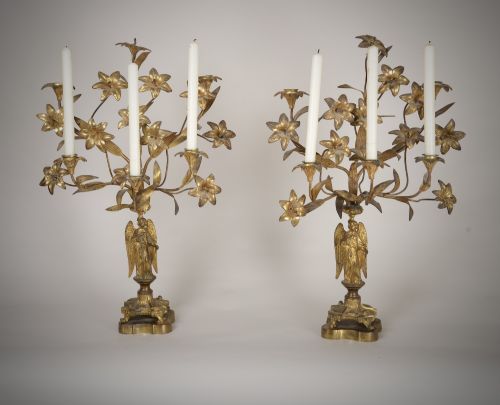


Gilt Ecclesiastical Candlestick
A gilt ecclesiastical candlestick brings sacred architecture into domestic rooms through gleaming metal and carved timber shaped for the altar.
Gilt Ecclesiastical Candlestick
A gilt ecclesiastical candlestick is a devotional lighting fixture designed for altars and church sanctuaries, now frequently adapted for domestic interiors as table lamps or decorative table stands. These pieces range from modest table-top heights to large floor candlesticks and paired candelabra.
The selections available here showcase a rich mix of European periods and regional aesthetics, predominantly featuring nineteenth-century items alongside eighteenth-century Spanish and Italian examples. Buyers frequently encounter pairs of altar-style sticks, pricket candlesticks with spikes for large candles, and pieces thoughtfully converted to electric lamps.
How they were made
Makers shaped these objects using foundational materials such as brass, gilt-brass, ormolu, and iron for the metalwork components. Carpenters and carvers also employed wood, gesso, and giltwood, applying gold leaf to enrich the surfaces.
Many items incorporate carved wooden elements finished with gold leaf or silver, while others utilise cast bronze and brass. Artisans combined joinery and metalcasting to build sturdy bases capable of supporting heavy altar candles.
Materials represented across the inventory include solid wood, gesso, iron, and cast brass, alongside rich applications of gold leaf and ormolu.
What varies in quality
Quality rests in the crispness of the carving on wooden shafts and the precision of the casting in brass or ormolu mounts. Finer examples display deep, hand-chased detail and genuine gold leaf that retains its warmth and texture over centuries.
Proportion and architectural balance dictate the visual success of the piece, distinguishing master-carved church furnishings from simpler workshop productions. The integrity of the original gilding and the preservation of structural elements further separate standard items from superior specimens.
The Gilt Ecclesiastical Candlestick Glossary
- Pricket candlestick
- A candlestick featuring a sharp metal spike at the top designed to secure a wax candle. This form is traditional on church altars.
- Giltwood
- Wood that has been coated with a thin layer of gold leaf or gold paint. It provides a luminous surface finish.
- Ormolu
- Finely chased and gilt bronze used for decorative mounts and objects. The technique was widely practiced in France.
- Gothic Revival
- An architectural and decorative style drawing inspiration from medieval forms. It appears frequently in nineteenth-century church metalwork.
Gilt Ecclesiastical Candlestick: Frequently Asked Questions
What is a pricket candlestick?
A pricket candlestick uses a sharp metal spike at the top rather than a socket to hold the candle in place. This traditional church design requires candles with a hollow base or pierced centre.
Such pieces are commonly found among nineteenth-century ecclesiastical items and often date to periods when large altar candles were standard.
How do I safely use converted church lamps?
Converted church lamps have been fitted with electrical wiring, often running through the centre of the original wooden or metal shaft. It is wise to have a qualified electrician check older wiring before daily use.
Position them on stable tables where the height and weight of the base will not pose a tipping hazard.
How do I distinguish eighteenth from nineteenth-century pieces?
Eighteenth-century examples, particularly from Spain and Italy, often display hand-carved wooden structures with deep gesso layers and worn gold leaf. Nineteenth-century pieces frequently utilise cast brass or incorporate Gothic Revival design motifs.
Examining the tool marks on the timber and the composition of the metal helps clarify the likely period of manufacture.
Were these always meant for homes?
These items were originally made for use in churches, chapels, and monastic altars during services and devotions. Their transition into domestic interiors happened later through antique collecting and modern lamp conversions.
Placing them in modern rooms preserves their sculptural presence while adapting them to domestic lighting needs.