
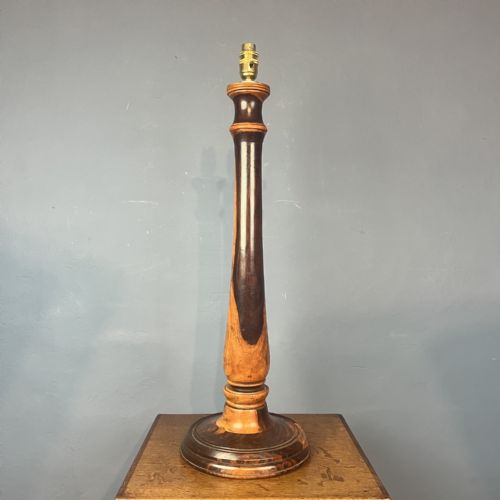




Large Wooden Candlestick
A large wooden candlestick brings immediate warmth and sculptural presence to a room, turning practical lighting into a commanding architectural focal point.

Large Wooden Candlestick
A large wooden candlestick provides substantial height and visual weight, frequently originating from church altars or stately domestic interiors. These impressive objects include altar-style candle holders, prickets, and converted standard lamps spanning the eighteenth, nineteenth, and early twentieth centuries.
The selections available here show significant regional and stylistic variety, ranging from Italian giltwood and French Chateau designs to English Baroque and George III style mahogany or oak pieces. Many survive in pairs, offering symmetrical balance for mantelpieces, sideboards, or large tables.
How they were made
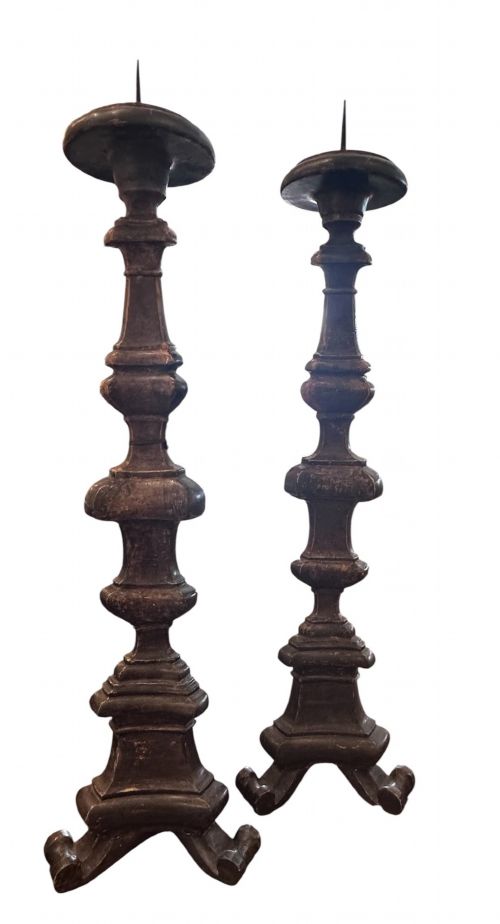
Carved wood forms the core of these pieces, often shaped into dramatic forms such as barley twists, fluted columns, or triangular bases. Artisans frequently applied gesso, silver leaf, giltwood, or polychrome paint to the wooden substrates to achieve rich decorative surfaces.
Many examples incorporate functional metal elements alongside the timber construction, such as brass sconces or pricket spikes designed to secure large candles safely. Marbleised finishes and patinated paint layers further demonstrate the careful surface treatments applied by period makers.
Listings feature wood, brass, gesso, and giltwood across styles from French Chateau and Baroque to Art Deco.
What varies in quality
Quality rests primarily in the crispness of the carving and the depth of the original surface treatment, whether genuine giltwood, silver leaf, or aged polychrome paint. Pieces with well-preserved surface textures and robust, heavy proportions command greater appreciation.
The integrity of the timber and the balance of the turning also distinguish finer examples from simpler utilitarian items. The presence of original brass hardware or intact structural elements further elevates the character of a piece.
The Large Wooden Candlestick Glossary
- Pricket
- A candlestick featuring a sharp metal spike at the top designed to impale and hold a candle securely in place. This form is particularly common on traditional altar sticks and church pieces.
- Giltwood
- Timber that has been coated with a thin layer of gold leaf or gold paint to create a rich, reflective surface. It appears frequently on Italian and Baroque decorative objects.
- Gesso
- A plaster-like mixture applied to wood surfaces as a smooth base for gilding or painting. Its application allows for intricate, raised decorative details.
- Barley Twist
- A spiral carving resembling a twisted strand of barley, popular in furniture and decorative turning during various periods. This dynamic form adds movement and visual interest to vertical wooden shafts.
Large Wooden Candlestick: Frequently Asked Questions
How do I clean a large wooden candlestick?
Dust the surface gently with a soft, dry cloth to protect delicate giltwood, silver leaf, or painted finishes. Avoid liquid cleaners and modern polishes that can strip aged patination.
Keep the pieces away from direct sunlight and excessive moisture to prevent the wood from warping or the gesso from cracking over time.
How can I tell an eighteenth-century stick from a nineteenth-century one?
Earlier eighteenth-century pieces often display deeper hand-carving, heavier proportions, and authentic Baroque or early altar-style forms. The timber grain and wear patterns typically show longer periods of natural oxidation.
Nineteenth-century and later revival pieces, such as George III style or Edwardian items, may exhibit slightly more uniform turning or different interpretations of historical ornament.
Can I use standard candles with these holders?
Many antique candlesticks feature metal sconces or prickets designed for specific historical candle sizes rather than modern tapered household candles. You may need to gently pare down the base of contemporary candles to fit securely.
Pricket sticks specifically require candles with a pre-drilled base or soft wax that can be pressed safely onto the central metal spike.