
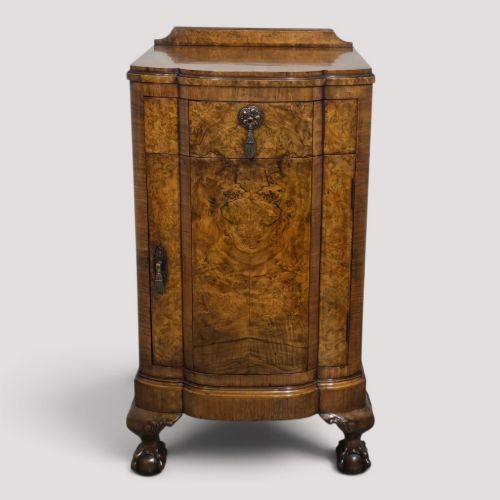
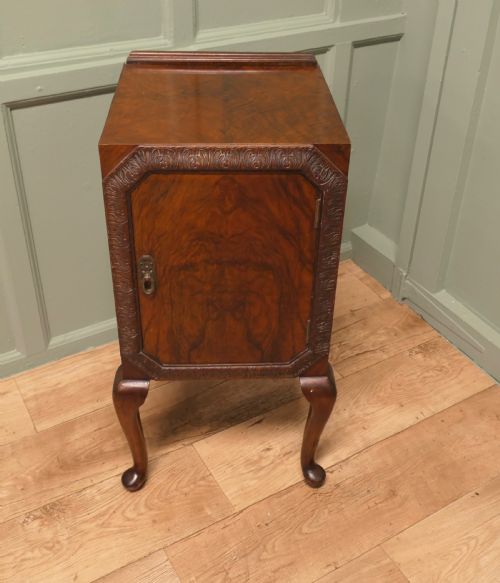
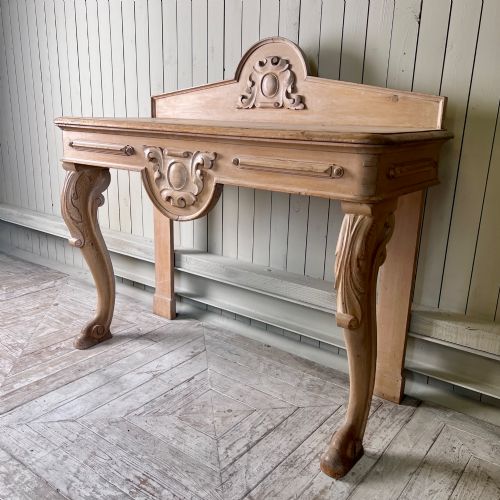
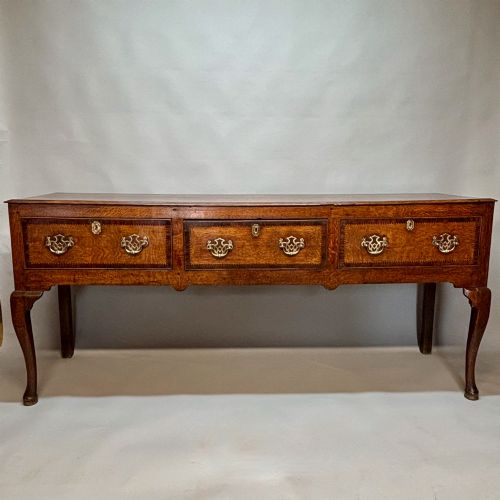
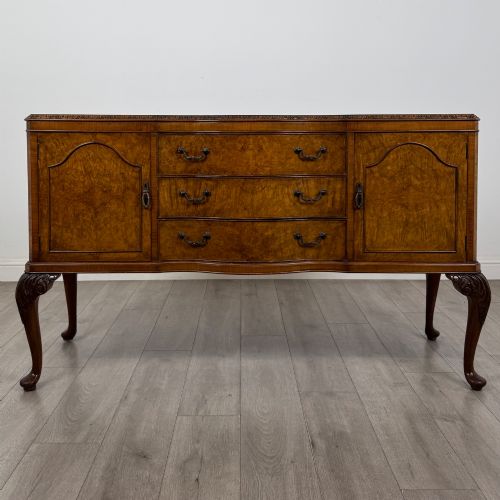
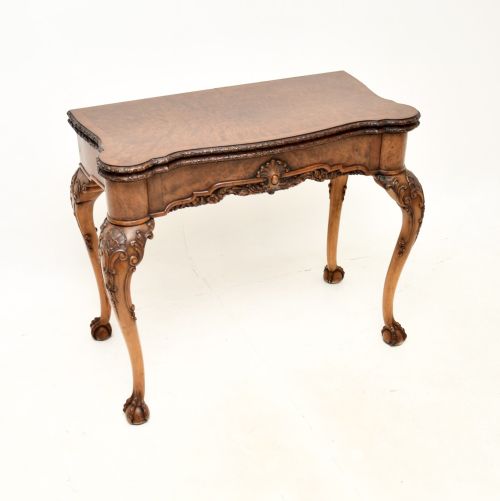
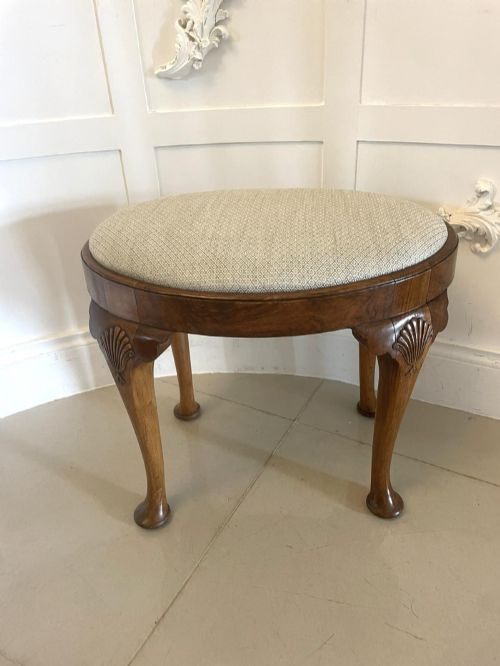
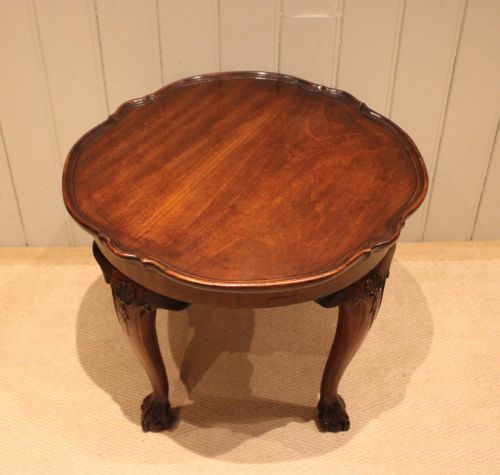

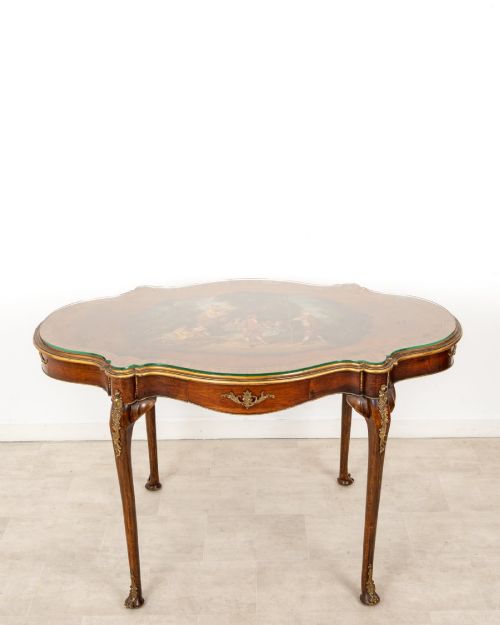
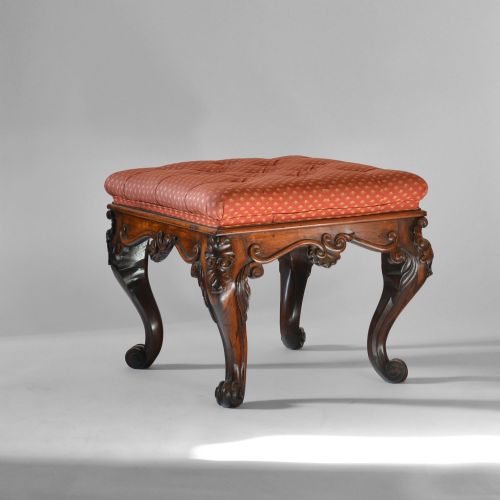
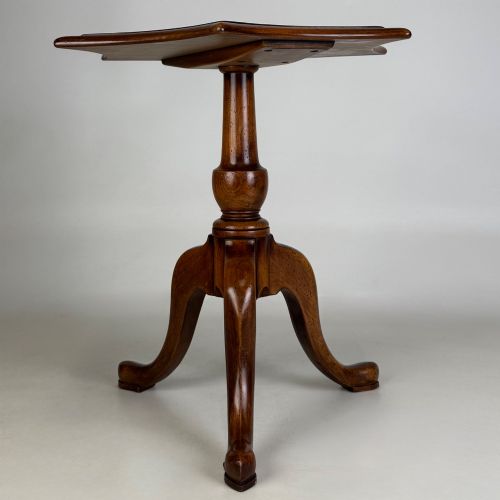
Carved Cabriole Table
These pieces take their name from the signature curving leg found across walnut and mahogany dining tables, desks and stools.
Carved Cabriole Table
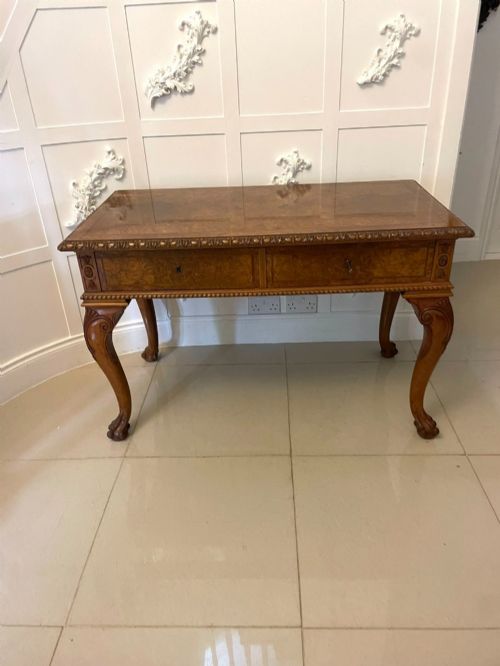
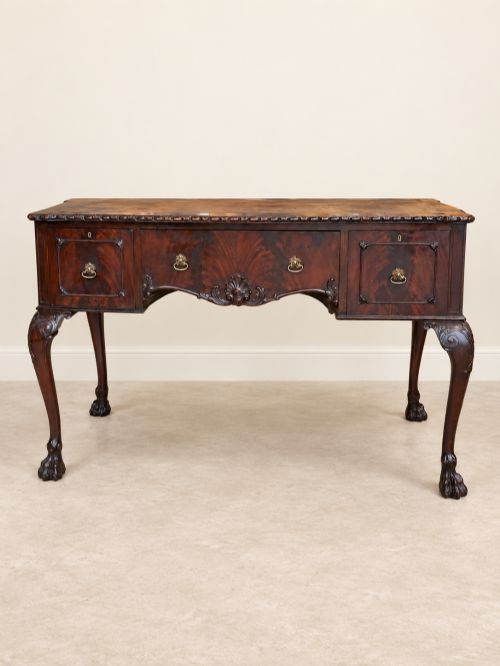
When you search for a carved cabriole table, you encounter furniture defined by a distinct double-curved leg profile that swells outward at the knee and tapers inward to a pad, claw, or scroll foot. The form appears across multiple centuries, stretching from Georgian originals through Victorian revivals and into early twentieth-century dining, occasional and console tables.
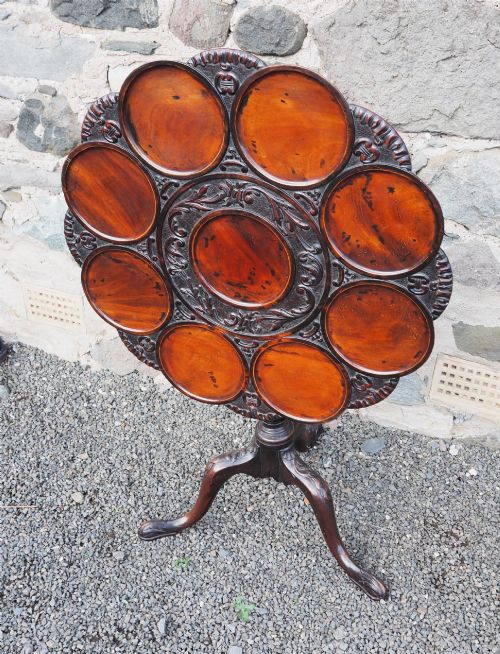
The selections available here range widely in function and scale, encompassing side tables, writing desks, and tea tables alongside dining furniture. Walnut and mahogany predominate, often paired with carved knees featuring shell, acanthus, or scroll motifs derived from Queen Anne and Chippendale traditions.
How they were made
Cabinetmakers fashioned these supports from solid hardwoods including walnut, mahogany, rosewood, and oak, frequently selecting figured burr veneers for table tops and drawer fronts. Legs were either carved directly from the solid timber of the frame or shaped and joined with pegged mortise and tenon construction.
Surface ornament relied upon hand-carved details at the knee, such as gadrooning, scallop shells, or foliage, combined with polished finishes like French polish or wax to accentuate the grain of the timber.
Listings feature dining tables, side tables, and desks spanning the Georgian, Victorian, Edwardian, and 1930s periods in walnut, mahogany, oak, and rosewood.
What varies in quality
The standard of carving determines much of the distinction between pieces, with sharper, deeper relief work on the knees indicating superior craftsmanship. Timber selection also dictates grade, as figured burr walnut and dense, well-grained mahogany command higher regard than plain domestic woods.
Structural integrity depends on the original joinery at the upper junction where the leg meets the apron, as well as the proportion and balance of the curves from every angle.
The Carved Cabriole Table Glossary
- Cabriole leg
- A furniture leg that bends outward in a convex curve at the knee and inward in a concave curve at the ankle, ending in a foot. This shape derives from ancient animal forms and became central to eighteenth-century design.
- Chippendale style
- A decorative manner originating in the mid-eighteenth century and revived later, characterised by ornate carving, cabriole legs, and influences from Gothic and Chinese designs. It appears frequently on chairs, tables, and desks from the Georgian period onward.
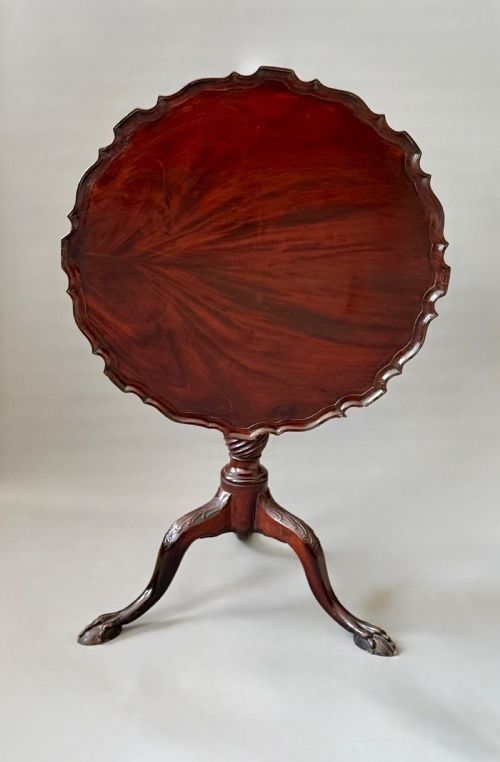
- Pie crust edge
- A raised, carved, and scalloped rim typically fashioned around the top of small circular tables or trays. The shaping mimics pastry crusts and requires precise hand-carving from a solid timber blank.
- Burr walnut
- A wood harvested from walnut tree growths or burrs that produces intricate, swirling grain patterns. Cabinetmakers prize this material for veneering prominent surfaces like table tops and cabinet doors.
- Drop flap table
- A table featuring hinged leaves that lower at the sides or ends to save space when not in use. These flaps are supported by swing legs or folding brackets.
Carved Cabriole Table: Frequently Asked Questions
What periods do these tables come from?
The pieces span several centuries, including eighteenth-century Georgian originals alongside Victorian, Edwardian, and 1930s revival interpretations. Each era adapted the foundational design with specific carving techniques and timber treatments.
Matching the construction details and timber types to known periods helps identify the likely age of an individual piece.
How do I care for a walnut surface?
Polishing with traditional beeswax maintains the moisture and sheen of walnut and mahogany without building up synthetic residues. Avoiding direct sunlight and sustained heat protects the timber and delicate veneers from drying or splitting.
Gentle dusting with a soft, dry cloth preserves the polished finish over years of daily use.
What is the difference between a console and a side table?
Console tables were traditionally designed to stand flat against a wall, frequently secured with brackets or featuring legs carved only on the front. Side tables are freestanding items finished on all four sides to sit anywhere within a room.
Both forms frequently incorporate the curved legs that define this category of furniture.
Are the table tops solid wood or veneered?
Makers utilised both solid timbers, such as mahogany and oak, and decorative veneers applied over secondary woods. Burr walnut surfaces are almost exclusively veneered to display the intricate grain patterns across the wide top.
Examining the edges and underside reveals the underlying construction method used by the cabinetmaker.