
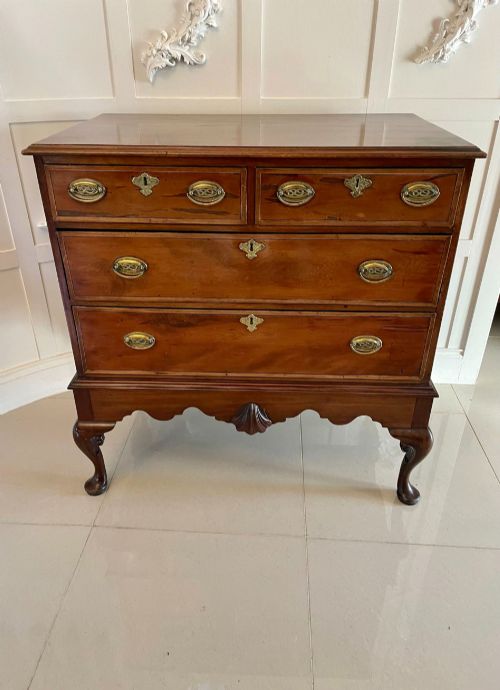
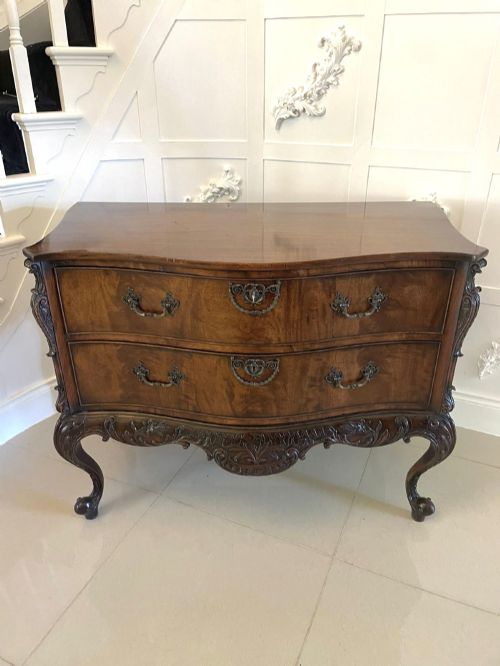
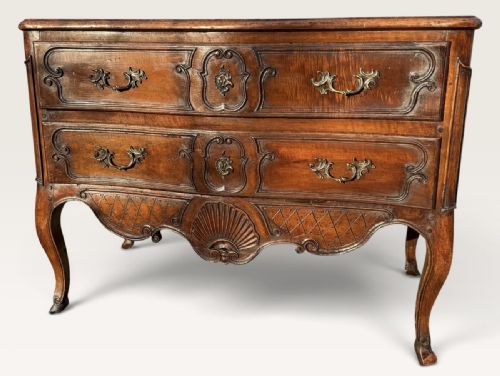
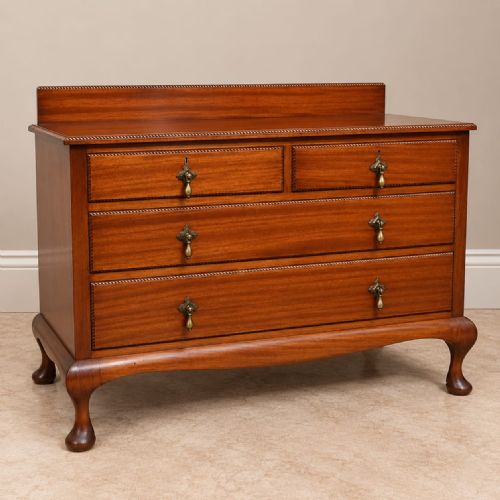
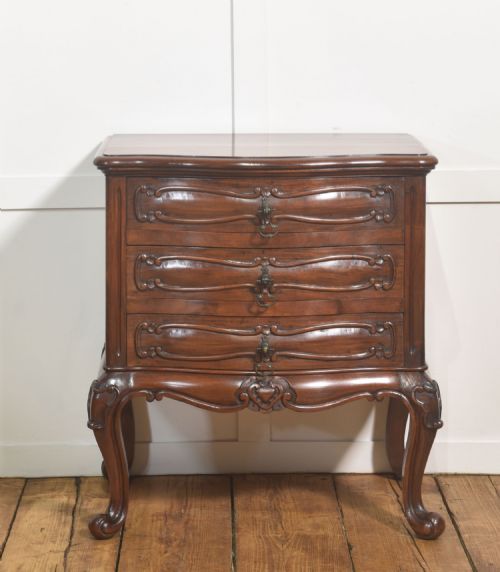
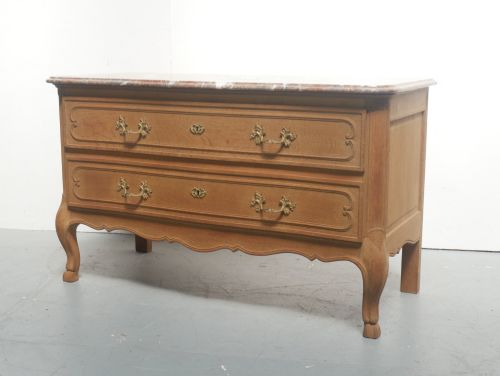
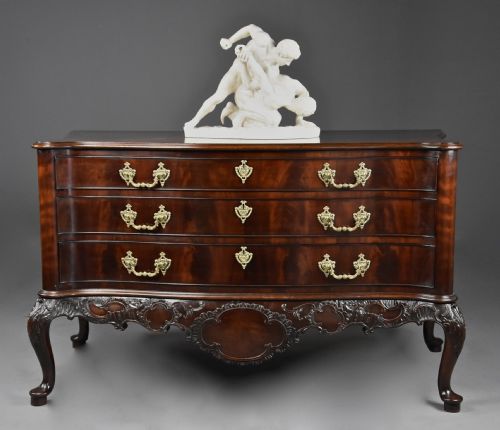
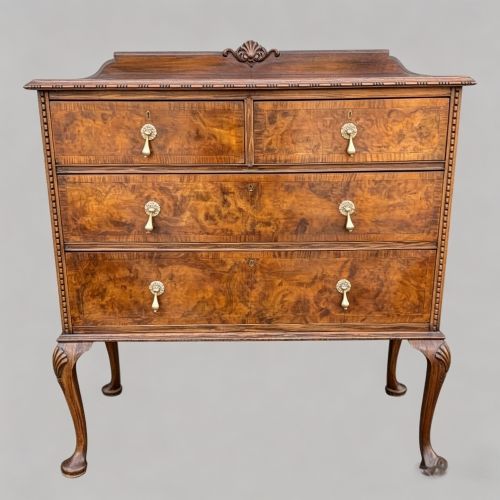
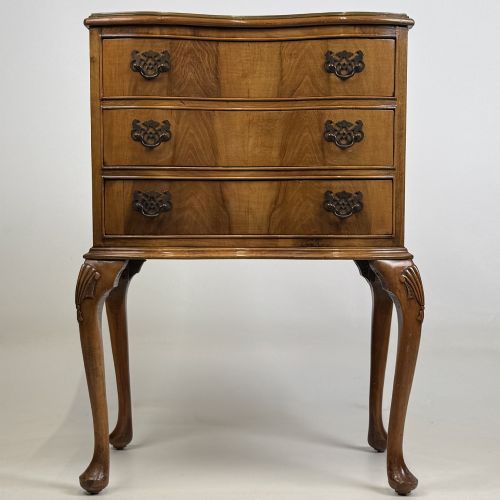
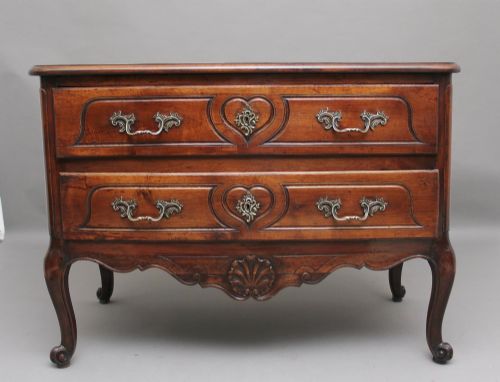


Carved Cabriole Leg Commode
These carved cabriole leg commode items are substantial storage chests and tables defined by curving supports, turning up chiefly in walnut and mahogany.

Carved Cabriole Leg Commode
A carved cabriole leg commode brings together low-slung storage forms and distinctively curved supports that sweep outward before tapering to a pad or scroll foot. When buyers search for this phrase, they encounter pieces ranging from eighteenth-century walnut examples originating in France and Portugal to later revival pieces from the Edwardian era and the early twentieth century.
The objects themselves function primarily as bedside tables, side cabinets, and serpentine chests of drawers. Walnut and mahogany dominate the offerings, frequently accompanied by marble tops, painted finishes, and decorative marquetry details that reflect Louis XV and Queen Anne influences.

Materials and construction methods
Cabinetmakers constructed these pieces using dense hardwoods like walnut, mahogany, fruitwood, and oak, often selecting burr veneers to create richly figured drawer fronts and tabletops. Structural stability relied on traditional joinery methods, allowing craftsmen to shape serpentine outlines and curved drawer fronts from solid timber or thick paneling.
Surface ornamentation involved hand-carving along the aprons and cabriole legs, occasionally complemented by applied brass hardware, marquetry inlay, or inset marble slabs. Painted wood variants utilised layered pigments and decorative motifs such as chinoiserie lacquer to achieve distinctive regional styles.
Carved Cabriole Leg Commode Retail Price Guide 2026
Typical asking prices for carved cabriole leg commode among the pieces listed under this phrase on Sellingantiques today, from the lower quarter to the upper quarter. They describe what is for sale here now, not the wider market.
Listings feature walnut, mahogany, and oak pieces spanning the eighteenth century to the nineteen-thirties.
Distinguishing quality across examples
The standard of a piece depends on the crispness of the hand-carving along the legs and apron, alongside the selection of timber used for the veneers. Superior examples display carefully matched grain patterns on serpentine fronts, where the wood figure flows naturally across the drawer divisions rather than appearing mismatched.
Construction integrity also separates finer items from standard production, visible in the precision of the drawer linings, the integration of heavy marble tops, and the balance of the proportions. Original brass handles and sound structural framing without excessive restoration indicate a higher grade of craftsmanship.
Maple and Co
The Carved Cabriole Leg Commode Glossary
- Cabriole leg
- A furniture leg that curves outward at the knee and tapers inward toward the foot, mimicking animal limbs. This form became central to eighteenth-century design and subsequent revival periods.
- Commode
- A low chest of drawers or cabinet designed for domestic storage. The term encompasses various French, Italian, and English forms appearing on this page.
- Serpentine
- A furniture front or top that curves outward in the centre and inward at the sides. This shape requires advanced woodworking skill to execute properly.
- Marquetry
- The art of applying pieces of veneer to a structure to form decorative patterns and pictures. Makers utilised contrasting woods to create intricate surface designs.
- Bombe
- A swollen or bulging convex shape characteristic of advanced continental case furniture. This profile demands meticulous shaping of both wood and drawers.
Carved Cabriole Leg Commode: Frequently Asked Questions
What is a cabriole leg commode?
A cabriole leg commode is a low storage chest or cabinet supported by curved legs that mimic an animal's limb. These pieces span eighteenth-century continental designs to twentieth-century revivals.
They combine practical drawer storage with ornamental shaping, making them suitable for bedrooms and living spaces.
How do I identify eighteenth century pieces?
Eighteenth-century examples typically feature hand-cut dovetails, solid timber construction, and authentic regional patination developed over centuries of use. The carving on these older pieces tends to show organic tool marks rather than mechanical uniformity.
Examining the internal drawer construction and secondary woods helps confirm the period of origin.
Where were these commodes made?
The listings show origins spanning France, Italy, Portugal, and Britain. Regional aesthetics dictate whether a piece follows a strict Louis XV serpentine outline or an English George III mahogany format.
Local timber availability, such as olive wood in Italy or walnut in France, heavily influenced the regional appearance.
How do I care for marble top commodes?
Marble surfaces require regular dusting with a soft cloth and immediate cleaning of acidic spills to prevent staining. Avoid harsh chemical cleaners that can dull the polished stone finish.
The wooden base should be maintained with appropriate furniture wax applied sparingly according to the timber type.