



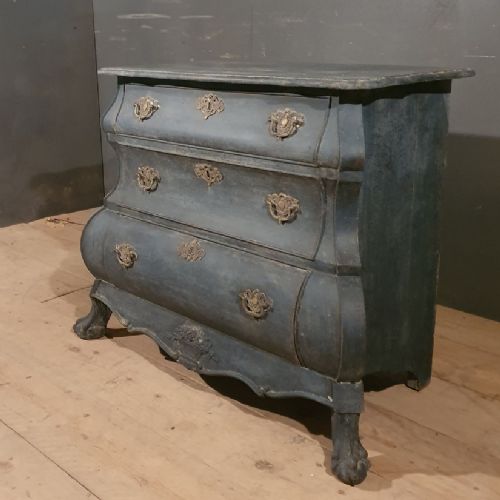


Dutch Bombe Commode
A Dutch bombe commode is a swelling serpentine chest of drawers that commands a room with its bold, rounded silhouette.
Dutch Bombe Commode
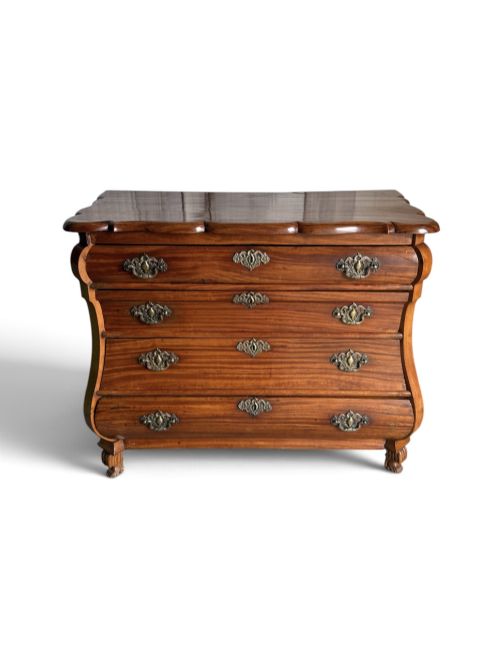
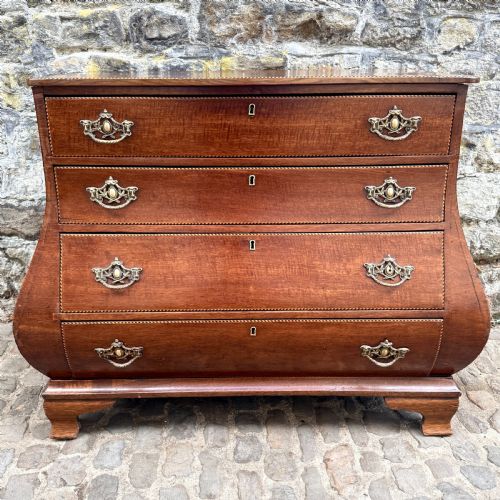
When you search for a dutch bombe commode, you encounter substantial storage furniture characterised by convex curves that push outward on the front and sides. These pieces primarily take the form of chests of drawers and bureaux built with serpentine profiles.
The versions most commonly met span the eighteenth and nineteenth centuries, appearing in regional styles such as Dutch Baroque, Rococo, and colonial interpretations. Walnut, oak, and mahogany form the structural core of these imposing pieces.
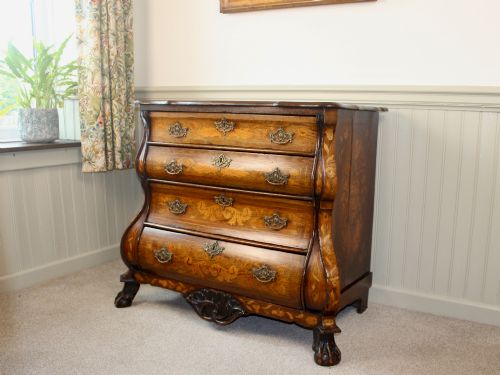
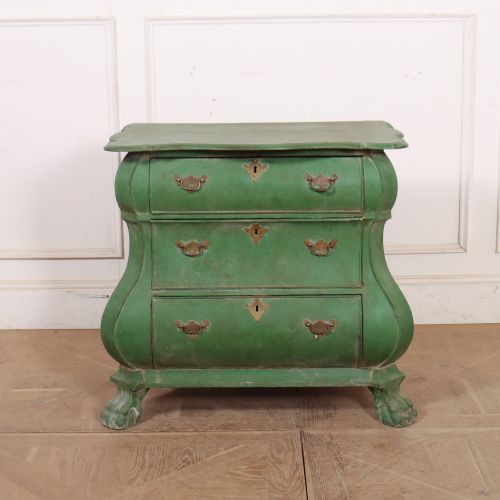
Makers shaped the heavy timber bodies with distinct swelling fronts supported on claw and ball or bracket feet. Surviving examples demonstrate the enduring appeal of this dramatic Continental form across multiple revival periods.
Materials and construction
Cabinetmakers constructed the carcasses of these commodes from sturdy timbers including oak, walnut, and mahogany, often applying richly grained veneers over the primary wood. Fruitwood and satinwood provide contrasting tones for intricate inlay work.
Marquetry and fruitwood inlay embellish the curved surfaces, depicting floral and scroll motifs that follow the swelling contours of the frame. Brass handles and escutcheons punctuate the drawer fronts, fixed securely to complement the heavy timber construction.
Painted wood finishes appear on select pieces, adding coloured or faux marble surfaces to the undulating exterior. Every curve requires precise joinery to maintain structural integrity across the bulging drawer fronts and sides.
Dutch Bombe Commode Retail Price Guide 2026
Typical asking prices for dutch bombe commode among the pieces listed under this phrase on Sellingantiques today, from the lower quarter to the upper quarter. They describe what is for sale here now, not the wider market.
Some commodes feature hidden compartments behind secret drawers, designed to outwit overly curious household guests.
Evaluating craftsmanship and condition
The refinement of the carving and the complexity of the marquetry distinguish superior examples from simpler utilitarian versions. Smoothly operating drawers that follow the difficult contours of the bombe shape indicate skilled cabinetmaking.
The choice of primary timber and veneer selection alters the visual impact, with figured walnut, solid satinwood, and olive wood elevating the status of a piece. Intricate fruitwood inlay that remains flush with the surrounding wood shows high technical execution.
Proportion and the handling of the swelling silhouette dictate the elegance of the commode. Pieces with harmonious curves and intact original brass mounts hold greater aesthetic presence.
The Dutch Bombe Commode Glossary
- Bombe
- A swelling or bulging outline characteristic of furniture fronts and sides developed in Continental Europe. This curving profile requires advanced cabinetmaking techniques to build robustly.
- Marquetry
- Decorative patterns formed by fitting together thin slices of wood veneer onto a structural surface. Craftsmen utilise various coloured timbers to create floral or geometric designs.
- Commode
- A low chest of drawers originating in France and adopted widely across the Netherlands. These pieces serve both storage and display functions in formal interiors.
- Serpentine
- A line or surface curving alternately inward and outward. This contour adds movement to the facade of storage furniture.
- Escutcheon
- A flat plate surrounding a keyhole to protect the surrounding wood. These brass fittings often feature decorative casting.
Dutch Bombe Commode: Frequently Asked Questions
How do I date a bombe commode?
Examining the secondary timbers inside the drawers and the style of the marquetry helps determine the age of the piece. Eighteenth-century examples often display native oak linings and hand-cut dovetails.
Later nineteenth-century and Edwardian revivals utilise machine-sawn elements and different veneer thicknesses. Comparing the primary wood choice and hardware style against known period characteristics clarifies the timeline.
Where should I place a commode?
These pieces require adequate floor space to showcase their swelling profiles without blocking walkways. Hallways, living rooms, and large bedrooms suit their substantial presence.
Keeping them away from direct sunlight protects vulnerable walnut and mahogany veneers from fading. Stable indoor humidity preserves the timber and prevents the marquetry from lifting.
Are all these chests made of solid wood?
Most commodes utilise a stable secondary wood like oak for the main carcass and drawer linings. Fine timbers such as walnut, mahogany, and satinwood are applied as veneers over this core.
Solid wood construction does appear on select regional pieces, particularly in satinwood or oak. Veneering allows craftsmen to utilise striking grain patterns across the curved surfaces without risking structural split.
How do I clean the wood surface?
Dusting regularly with a soft, dry cloth prevents particulate buildup on the intricate marquetry and carved sections. Avoid using modern silicone sprays that damage historic finishes.
Applying a traditional beeswax polish periodically nourishes the wood and maintains the natural sheen of the timber. Gentle care preserves the patina developed over centuries.