

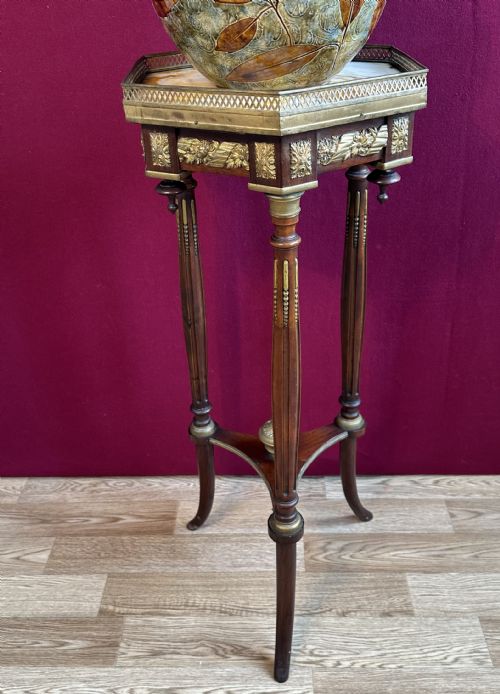


Carved Brass Jardiniere
A carved brass jardiniere brings gleaming metallic texture and structured botanical display to a room, drawing the eye with patterned relief.
Carved Brass Jardiniere
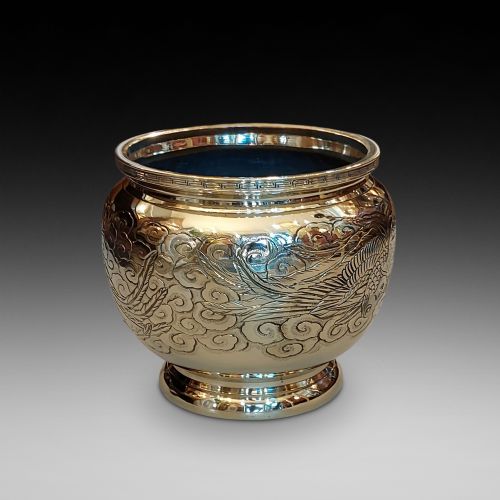
A carved brass jardiniere is a vessel designed to hold plants and flowers, appearing across periods from the Victorian era back to the nineteenth century. These items manifest as bowls, table stands, and bucket forms intended to elevate interior greenery.
The selections on this page span diverse cultural and stylistic influences, including Victorian Orientalism and Qing Dynasty craftsmanship. Buyers will encounter both standalone tabletop bowls and larger floor-standing planters.
While brass forms dominate the search, related items in bronze, copper, walnut, and mahogany also appear within the listings. Each piece serves the dual purpose of botanical container and decorative focal point.
How they were made
Metal vessels are shaped through techniques such as casting and hand-beating, creating durable bodies capable of holding damp soil and plants. Brass and bronze components often receive detailed surface work through chiselling and engraving.
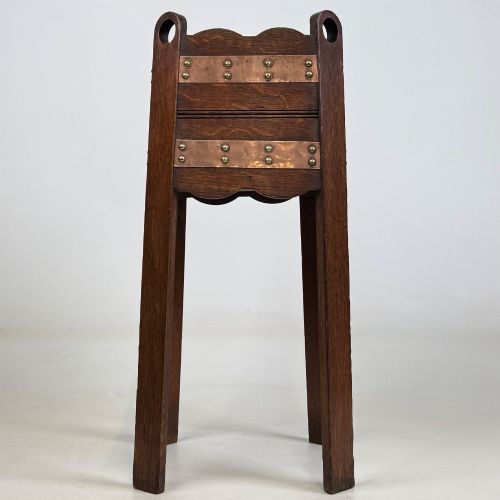
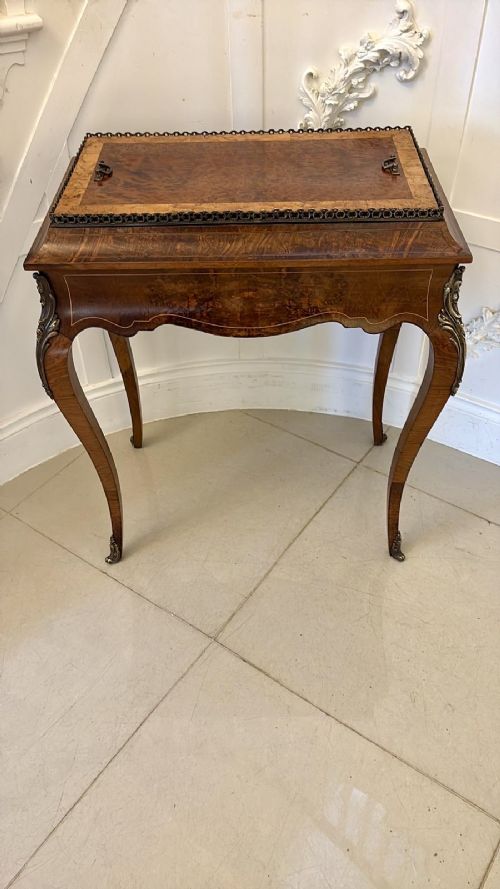
Wooden elements utilise traditional cabinet-making methods, incorporating timbers like walnut, mahogany, and oak often paired with metal bands or liners. These mixed-media constructions combine structural wooden frames with corrosion-resistant metal bowls.
Materials recorded on this site include brass, bronze, copper, walnut, mahogany, oak, marble, and ebonised wood across Victorian and nineteenth-century periods.
What varies in quality
The distinction between standard items and finer examples lies in the crispness of the surface ornament and the depth of the metalwork relief. Superior pieces exhibit precise chasing and substantial metal weight rather than shallow stamping.
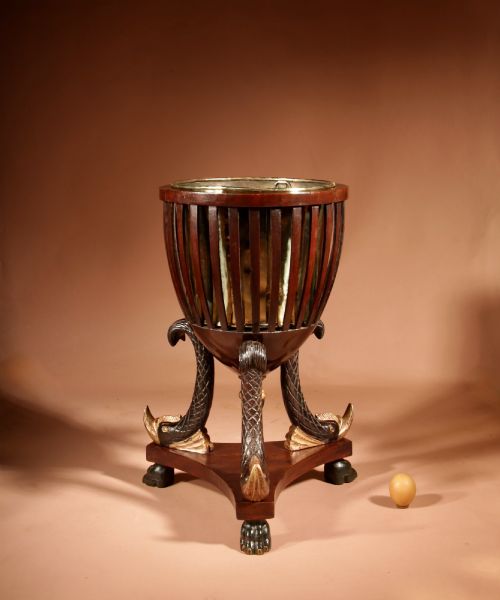
Material selection also dictates overall grade, with heavy bronze castings and well-figured walnut or mahogany frames representing more ambitious workshop production. Original structural integrity and harmonious proportions separate utilitarian containers from decorative showpieces.
The Carved Brass Jardiniere Glossary
- Jardiniere
- An ornamental pot or stand for holding plants or flowers. This term derives from the French word for gardener.
- Chasing
- A metalsmithing technique where a hammer and punches are used to push metal into relief from the front. This process creates fine surface patterns and pictorial details.
- Cloisonne
- An enamelwork technique where metal wire is soldered to a metal body to create cells filled with paste and fired. Chinese examples frequently display intricate floral or geometric motifs.
- Ormolu
- Gilded bronze mounts applied to furniture and decorative objects, popular in French revival pieces. The finish provides a rich gold appearance on bronze substrates.
Carved Brass Jardiniere: Frequently Asked Questions
What is a jardiniere?
A jardiniere is a decorative container designed to hold potted plants or cut flowers indoors. They function primarily as ornamental vessels for interior display.
Historically, these pieces sat on tables, pedestals, or directly on the floor depending on their overall scale and weight.
How were brass jardinieres used?
These vessels were placed in principal rooms to bring living greenery and flowering plants inside during the nineteenth century. They often featured metal or ceramic liners to protect the exterior material from water damage.
Beyond holding plants, some deeper buckets served alternative domestic purposes such as log holders or wine coolers.
How do I style a jardiniere at home?
A jardiniere works effectively as a centrepiece on a large table or sideboard filled with ferns or leafy foliage. Their metallic surfaces reflect light and contrast well with organic plant textures.
Larger floor-standing examples suit empty corners or hearth sides, functioning as sculptural elements even when left empty.
How do I date a brass jardiniere?
Dating relies on stylistic clues, construction methods, and the specific metal finishing techniques visible on the piece. Victorian examples often incorporate revival motifs or Orientalist influences.
Earlier nineteenth-century pieces may reflect French Empire or Regency design vocabularies through crisp cast mounts and classical proportions.