



Oriental Brass Cachepot
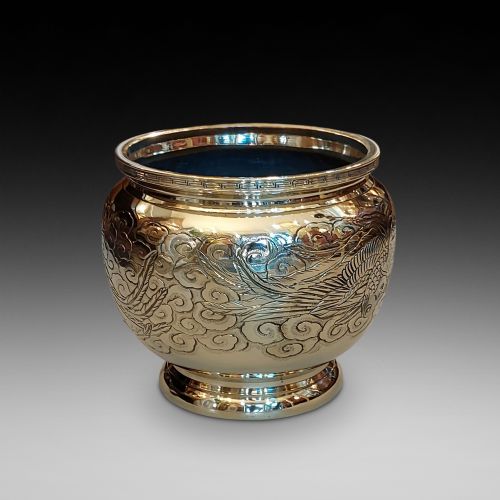
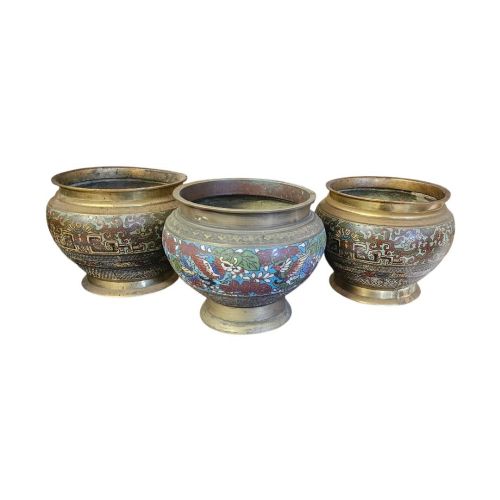
An oriental brass cachepot brings heavy bronze, polished brass and cloisonné enamel into a room to hold a favourite plant.
Oriental Brass Cachepot
When you search for an oriental brass cachepot, you are looking at heavy metal vessels designed to hold potted plants and flowers inside the home. These pieces cross paths with terms like jardinières, planter bowls and decorative bowls, spanning Japanese Meiji and Chinese Qing Dynasty origins.
The versions you are most likely to meet on this page date from the Georgian era through the Victorian and Edwardian periods up to nineteen ten. They arrive in brass, polished brass, bronze and copper, sometimes sitting on hardwood stands or decorated with champlevé and cloisonné enamel.
Forms range from small desk pots weighing under a kilogram to large display bowls scaling over two kilograms. Whether cast simply in brass or worked with intricate Asian motifs, each piece serves to elevate everyday greenery into a focal point.
How they were made
The makers behind these pieces cast heavy bronze and brass into deep bowls and planters, working the metal to hold water and soil safely. Polished brass surfaces shine with a bright finish, while cast bronze surfaces take on dark, patinated tones over decades of use.
Many examples incorporate detailed enamel work, using cloisonné and champlevé techniques to inlay colourful patterns across the bronze body. Hardwood stands sometimes accompany the bowls, shaped specifically to fit the rounded bases of the Chinese and Japanese pieces.
A heavy bronze bowl weighing over two kilograms makes a surprisingly solid home for a modest fern.
What varies in quality
The weight of the metal sets the baseline for quality, as heavier bronze and thick brass walls show a more substantial investment of material by the maker. Lighter bowls feel more utilitarian, while heavier vessels maintain structural rigidity and a satisfying heft.
The crispness of the casting and the precision of the enamel work divide standard decorative bowls from finer examples. Smooth polishes, tight enamel cells and well-integrated hardwood stands separate the work of skilled workshops from simpler production.
The Oriental Brass Cachepot Glossary
- Cachepot
- A decorative outer pot designed to conceal an ordinary flowerpot. These metal vessels keep moisture away from furniture surfaces.
- Jardinière
- A large ornamental pot or stand for plants and flowers. The term appears frequently alongside planter bowl in these listings.
- Cloisonné
- An enamelwork technique where thin wire creates raised barriers on a metal surface to hold coloured pastes. The piece is then fired and polished smooth.
- Champlevé
- An enamelling method where troughs or cells are hollowed out of a bronze or brass base and filled with enamel before firing.
- Meiji
- A period in Japanese history spanning the late nineteenth and early twentieth centuries. Pieces from this era often feature refined bronze casting and detailed surface decoration.
- Qing
- The final imperial dynasty of China, covering periods of prolific bronze and enamel production seen in these nineteenth-century bowls.
Oriental Brass Cachepot: Frequently Asked Questions
What is an oriental brass cachepot used for?
These metal vessels serve primarily to hold potted plants and greenery while catching drainage water from the inner pot. They sit on tables, desks and sideboards to bring metallic texture and botanical display into living spaces.
Historically, they protected fine wooden furniture from moisture and soil. Today, many collectors use them simply as decorative bowls or desk pots without any plants inside.
How do I clean a brass or bronze cachepot?
Dust the surface regularly with a soft, dry cloth to prevent grime accumulation in recessed patterns and enamel channels. Avoid harsh chemical cleaners that strip away the aged patina built up over generations.
If the piece is polished brass, a gentle metal polish restores the shine without harming the underlying brass body. Leave patinated bronze alone to preserve its historic dark finish.
How can I tell the difference between Chinese and Japanese pieces?
Chinese pieces often feature heavy bronze casting with intricate cloisonné or champlevé enamel work, sometimes accompanied by carved hardwood stands. They frequently date from the Qing Dynasty or the transition into the twentieth century.
Japanese items from the Meiji period tend to show crisp polished brass or refined bronze forms with distinct decorative motifs. Look for the weight and style of the metalwork to guide your assessment.
Are these bowls waterproof?
Most cast brass and bronze vessels hold water effectively, but older soldered joints or enamel-inlaid seams can develop hairline seepage over time. It remains wise to test the bowl with water before placing a live potted plant directly inside.
Using a hidden plastic liner inside the metal cachepot prevents moisture damage and protects the historic interior from mineral buildup.