

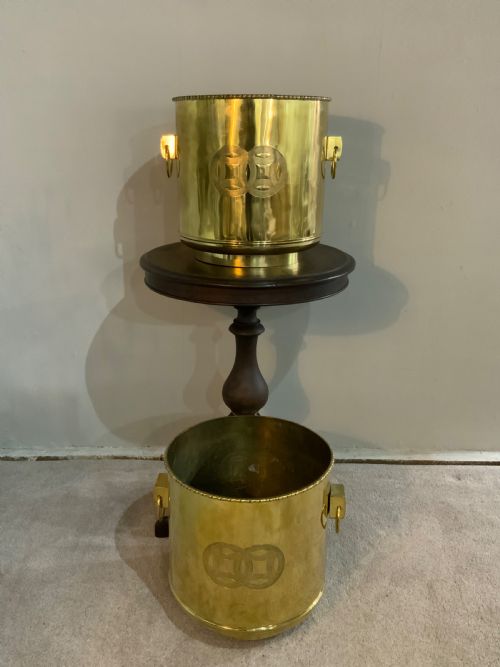

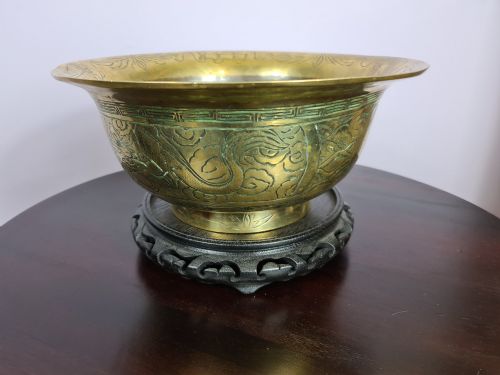


Engraved Brass Planter
These engraved brass planter pieces bring metallic warmth to a room, offering a decorative vessel for plants and flowers.
Engraved Brass Planter
An engraved brass planter is a sturdy container designed to hold potted plants while displaying decorative surface work. When you search for an engraved brass planter, you encounter items designed to sit upon tables or floors as interior botanical vessels.
The pieces on this page span the Victorian era, the nineteenth century, and the early twentieth century. You find cachepots, jardinieres, and large bowls originating from British, Indian, and East Asian traditions.
Victorian examples often feature heraldic crests or traditional European motifs, whilst Anglo-Indian and Meiji period vessels display intricate hand-engraved patterns. Forms range from heavy Chinese bowls to tall Victorian cachepots and Japanese bronze jardinieres.
How they were made
Makers shaped these vessels primarily from solid brass or bronze, sometimes combining copper-alloy bowls with wooden coopered elements like oak barrels. Artisans hammered, cast, and turned the metal to form the heavy walls required to hold soil and water.
Surface ornamentation relied on meticulous hand-engraving and chasing techniques. Craftsmen cut linear patterns, floral motifs, and crests directly into the metal surface using sharp graving tools.
Engraved Brass Planter Retail Price Guide 2026
Typical asking prices for engraved brass planter among the pieces listed under this phrase on Sellingantiques today, from the lower quarter to the upper quarter. They describe what is for sale here now, not the wider market.
One heavy Chinese bowl weighs over two bags of sugar.
What varies in quality
Quality depends heavily on the weight of the metal and the depth of the engraving. Thicker brass walls and heavier bronze castings indicate superior material substance.
The crispness and complexity of the hand-engraving separate standard production items from finer decorative pieces. Sharp, deep cuts demonstrate skilled craftsmanship, whereas shallow stamp work lacks definition.
The Engraved Brass Planter Glossary
- Cachepot
- An ornamental container designed to hold a flowerpot and catch drainage water. This French term translates literally as hide-pot.
- Jardiniere
- A large ornamental pot or stand for plants or flowers. It derives from the French word for gardener.
- Meiji Period
- The era in Japanese history spanning from 1868 to 1912. Metalwork from this time often shows high technical mastery.
- Coopered
- Made by a cooper using wooden staves held together with metal hoops. This technique appears in mixed-material pieces.
- Anglo-Indian
- A style describing decorative items made in India during the British Raj, combining local craftsmanship with British tastes.
Engraved Brass Planter: Frequently Asked Questions
What is an engraved brass planter used for?
These vessels serve primarily as decorative containers to house potted plants inside the home. They conceal standard plastic nursery pots while adding metallic texture to interior spaces.
Historically, they also functioned as table centrepieces or decorative bowls when not holding greenery.
How do I clean an antique brass planter?
Dust the vessel gently with a soft dry cloth to remove surface particles. Avoid harsh chemical polishes that strip away the aged patina accumulated over decades.
Keep the interior dry or use a separate liner to prevent moisture from damaging the historic metal.
How can I tell Victorian from Meiji pieces?
Victorian pieces frequently display European heraldry, crests, or classical revival motifs. They often use heavier cast brass construction.
Meiji period Japanese pieces display distinct oriental iconography, finer bronze alloy compositions, and specific surface textures characteristic of eastern metalwork.
Are these planters waterproof?
Many older metal vessels develop microscopic gaps or pinholes over long periods. Using a plastic saucer inside the planter protects the antique structure from standing water.
Checking the interior helps determine if a secondary liner is necessary for daily use.