
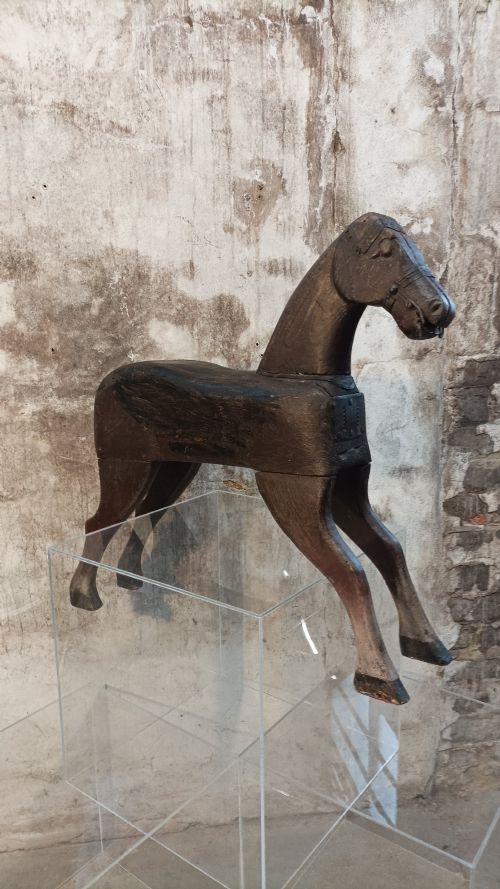
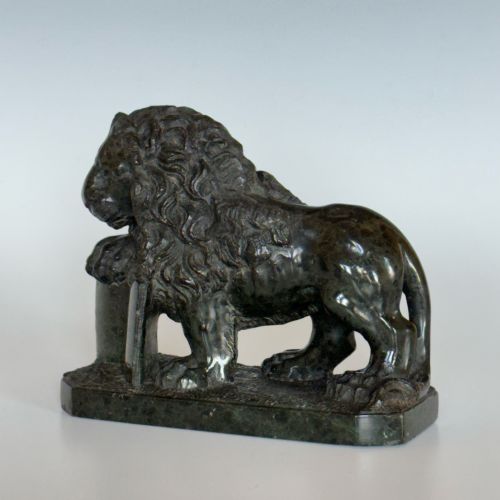
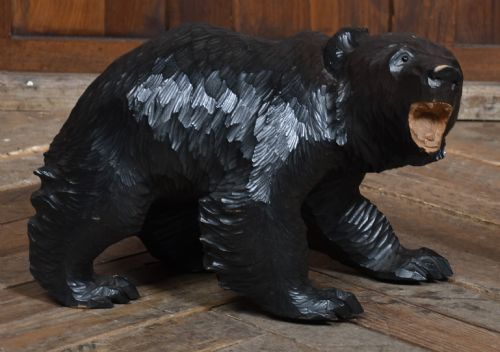

Carved Animal Statue
When you search for a carved animal statue, you are looking at centuries of hand-rendered fauna in wood and stone.
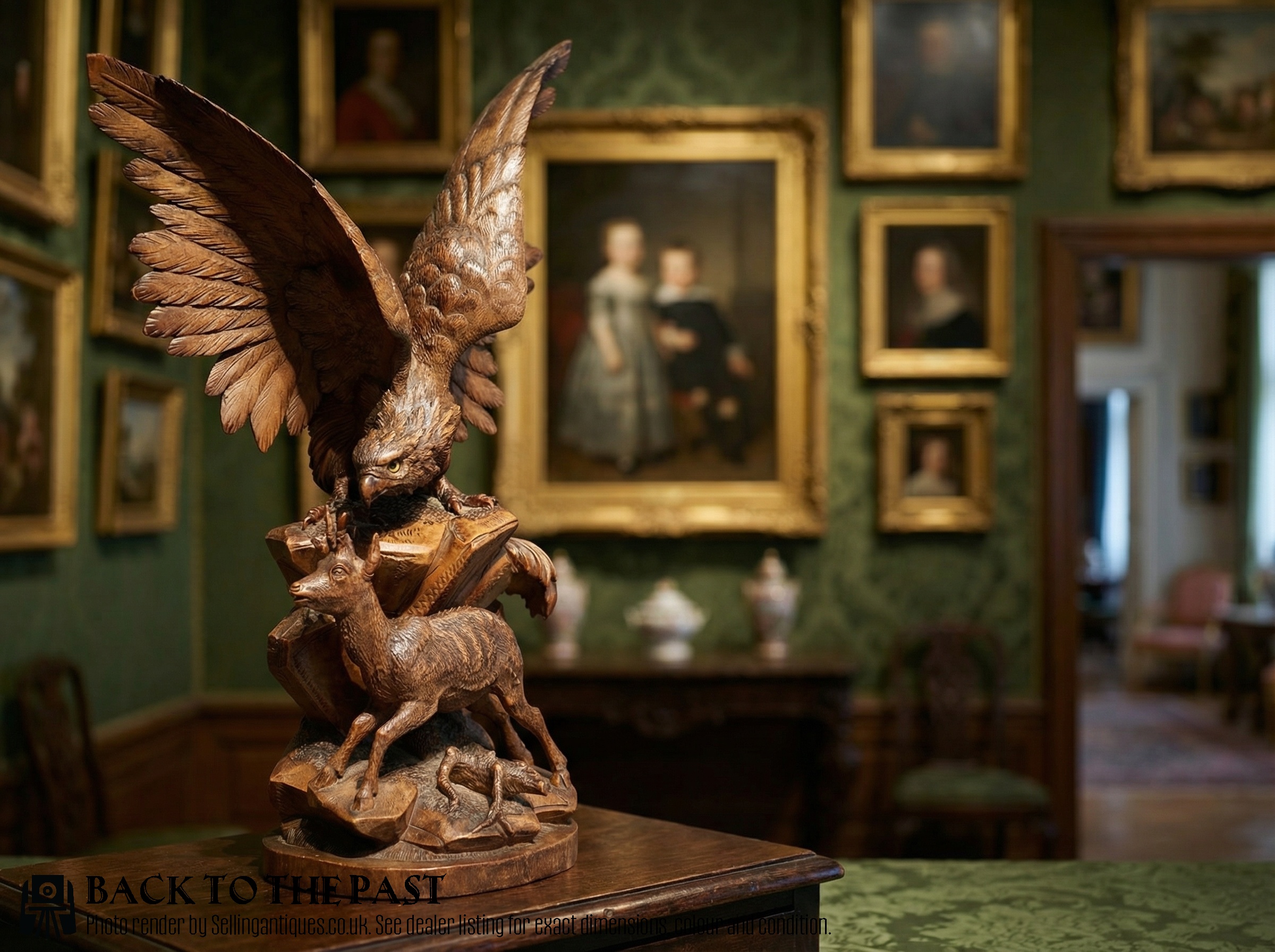
Carved Animal Statue
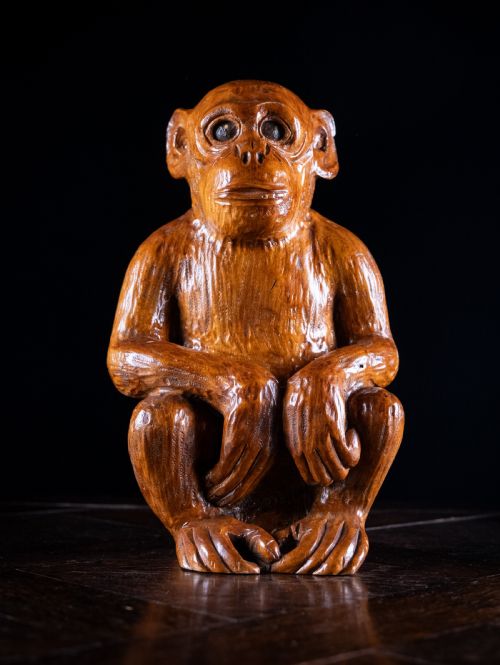
A carved animal statue encompasses sculptural representations of creatures rendered in timber, marble, soapstone and bone. These pieces range from compact decorative objects and bookends to substantial life-size figures created across multiple continents.
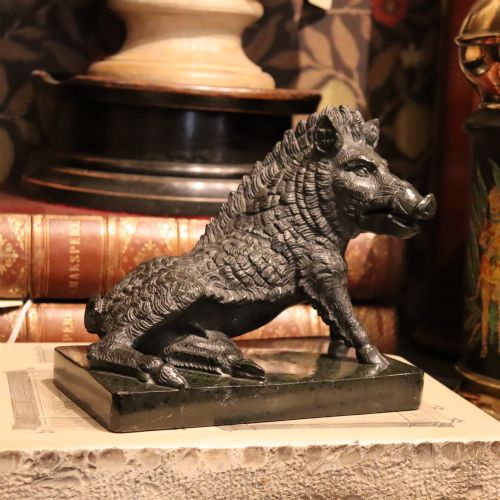
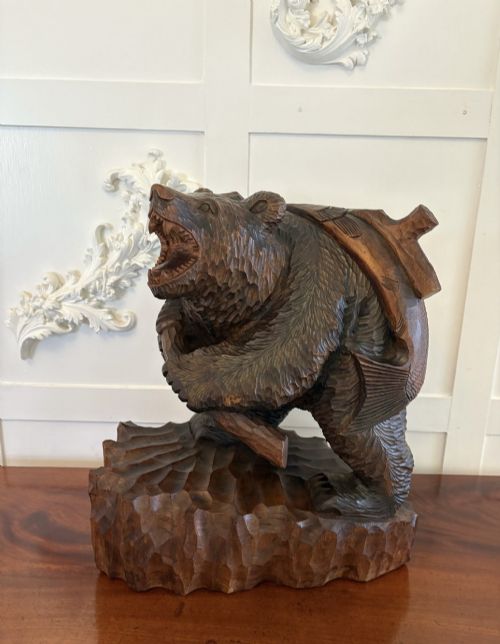
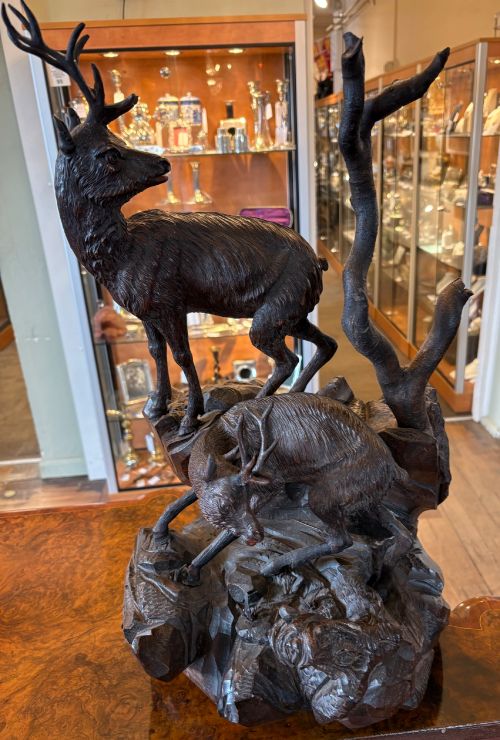
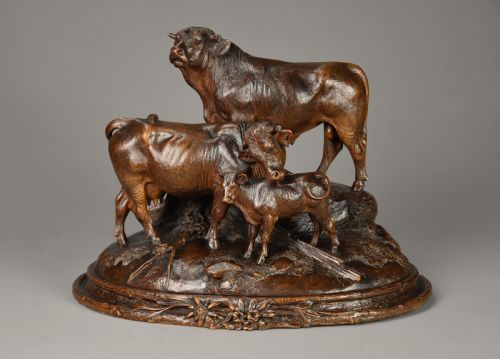
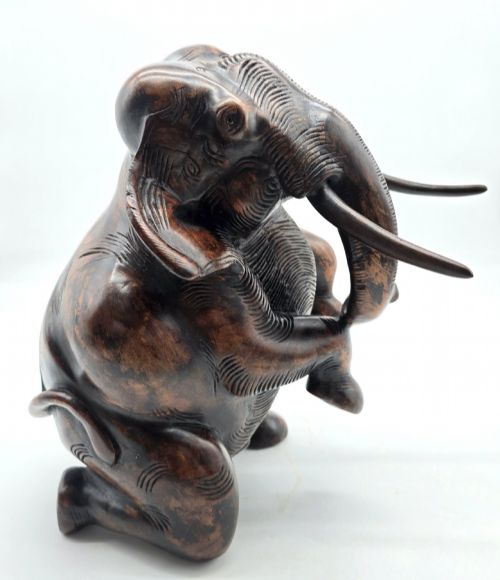
The versions most frequently encountered on this page originate from the nineteenth and early twentieth centuries. European Black Forest linden wood carvings, Anglo-Indian hardwood elephants and Grand Tour Italian marble models dominate the selection.
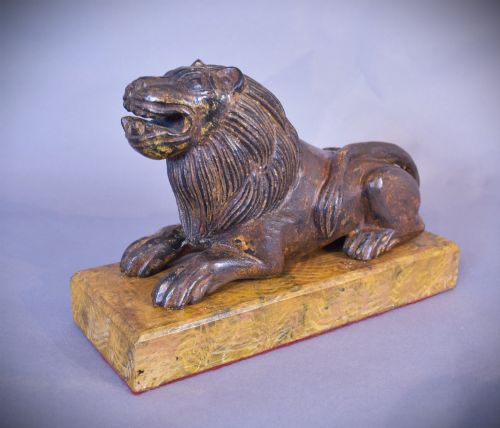
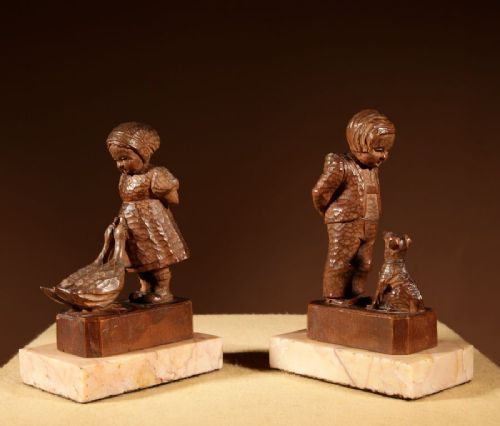
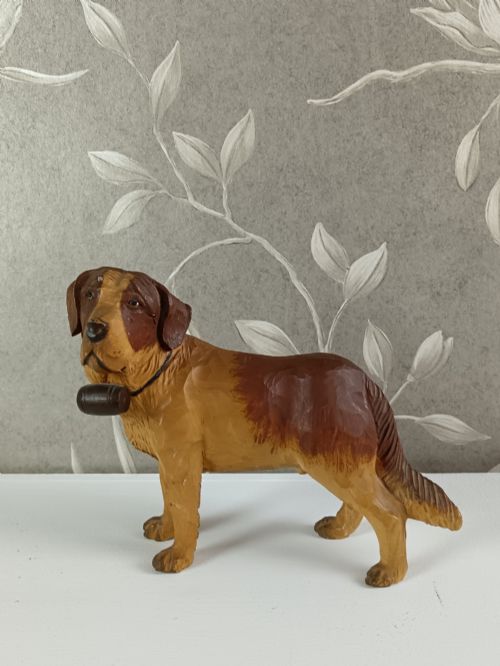
Formats include single anatomical studies of wild beasts, paired farm animals, and figures integrated into functional items such as bookends. Makers utilised distinct regional traditions to capture the likenesses of lions, bears, elephants and dogs.
How they were made
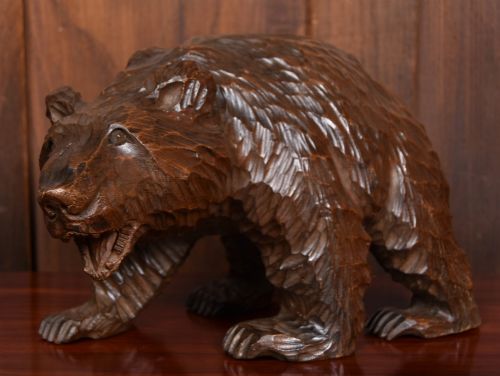
Wood pieces rely primarily on linden wood, walnut, teak and ebony, shaped with hand gouges and chisels. Artisans in regions such as Switzerland and Japan utilised fine-grained timbers to achieve detailed fur textures and muscular forms.
Stone works employ serpentine marble, Carrara marble, alabaster and soapstone. These minerals undergo sawing, chiselling and polishing to produce smooth Grand Tour models and architectural lion figures.
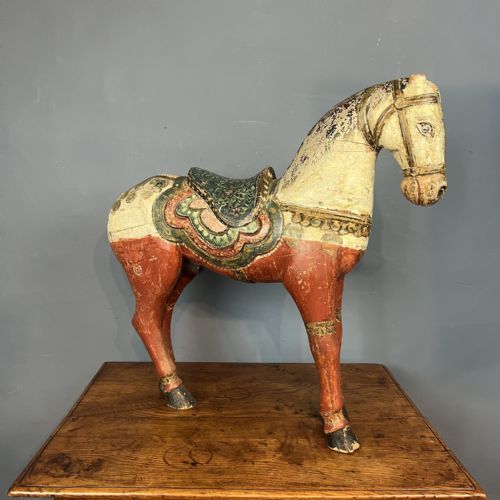
Surface treatments vary from polished bare timber and waxed hardwoods to polychrome paint applications and glass or stud eyes. Artisans occasionally combined carved wood with brass or mounted figures on marble bases.
Periods represented cover the seventeenth century through to the 1940s, with a strong concentration in the nineteenth century and 1900.
What varies in quality
Anatomical accuracy and proportion separate superior carvings from naive or stiff examples. The finest pieces demonstrate a deep understanding of bone structure and muscle tension, whether representing a deer or a wild stallion.
Carving depth and the treatment of surface details dictate distinction at the upper end of the range. Master carvers defined fur, manes and facial expressions with sharp, confident incisions rather than uniform, mechanical smoothing.
The selection of raw materials influences overall merit, from dense, unblemished hardwoods to finely veined serpentine marble. Signed works or pieces bearing maker stamps introduce documented provenance that elevates the status of a sculpture.
J Huggler·Bright And Sons·Eugene Emile Borga·Laszlo Hoenig
The Carved Animal Statue Glossary
- Black Forest
- A nineteenth-century Swiss and German style of wood carving focused on local fauna such as bears, deer and ibex. These sculptures often display realistic textures and deep undercutting.
- Grand Tour
- A nineteenth-century tradition where wealthy travellers collected classical Italian marble models of antique sculptures and animals. These souvenirs frequently employ green serpentine or white Carrara marble.
- Kibori Kuma
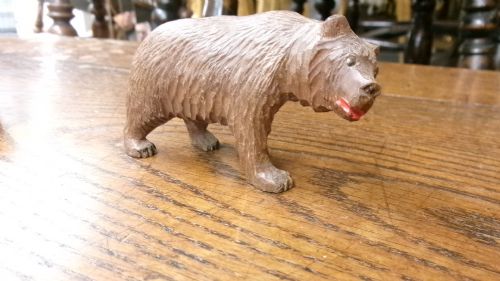
- A traditional Japanese style of hand-carved wooden bear originating from Hokkaido. These figures frequently depict bears holding fish in their mouths.
- Raj Period
- The period of British rule in the Indian subcontinent spanning the nineteenth and early twentieth centuries. Carvings from this era often feature elephants and native hardwoods like ebony and teak.
- Serpentine Marble
- A green, mottled magnesium silicate rock favoured for Italian carved animal models. Its smooth texture mimics ancient Roman stonework.
Carved Animal Statue: Frequently Asked Questions
What is a Black Forest animal carving?
A Black Forest carving is a wooden sculpture originating from Switzerland or Germany during the nineteenth century. These pieces usually depict bears, dogs, or deer with expressive poses and textured fur.
Carvers typically used local linden wood. The regional style is easily recognised by its dark waxed finish and naturalistic subjects.
How do I identify Grand Tour marble statues?
Grand Tour marble statues are nineteenth-century European souvenirs modelled after classical antiquities and Italian landmarks. They often feature green serpentine or veined Carrara marble.
These sculptures were collected by travellers on European tours. They typically depict lions, boars, or historical dogs mounted on polished stone plinths.
What woods were used for antique animal figures?
Antique animal figures were carved from a variety of timbers depending on the region of origin. European pieces frequently utilised linden wood and walnut for ease of detailed cutting.
Asian and African sculptures often employed denser tropical hardwoods such as teak, ebony, and other heavy varieties. These timbers allowed for smooth finishes and dark, uniform colouration.
How should I clean a wooden animal carving?
Cleaning wooden animal carvings requires a soft, dry cloth to remove dust from recessed carved areas. Avoid using water or chemical sprays that can strip historic wax finishes.
Applying microcrystalline wax occasionally helps protect the timber surface. Keep carved wooden pieces away from direct sunlight and radiators to prevent splitting.