


Brown Walnut Sculpture
These brown walnut sculpture pieces bring deep timber grain and expressive form into a room, offering immediate character through centuries of European carving traditions.
Brown Walnut Sculpture
When you search for brown walnut sculpture, you encounter a diverse array of carved wooden objects spanning from the seventeenth century through to the art deco period. These pieces encompass figurative studies, architectural terms, and functional items such as tobacco boxes and inkstands.
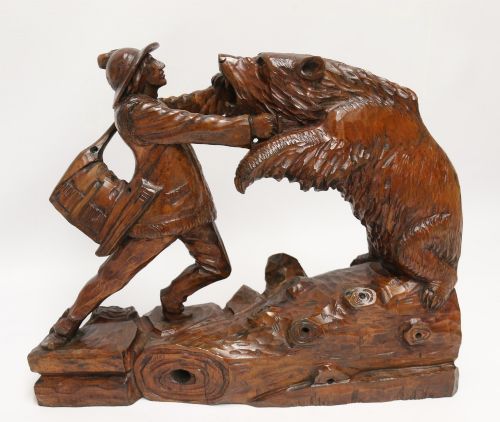
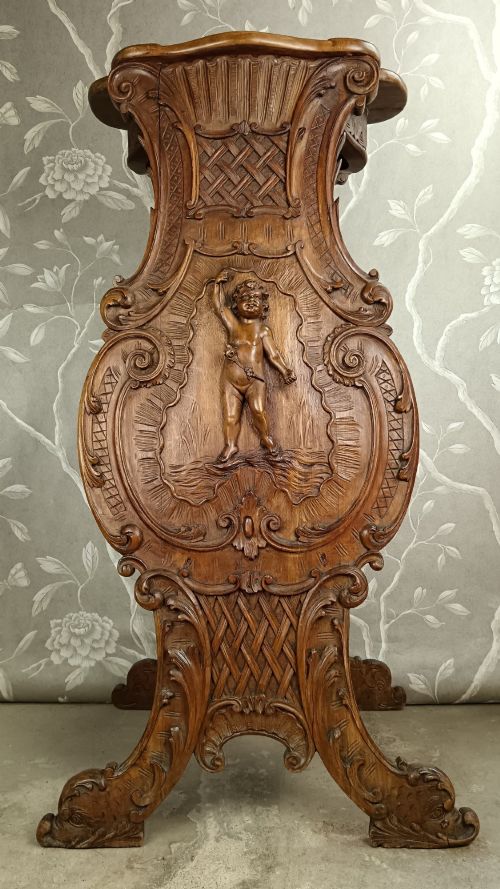
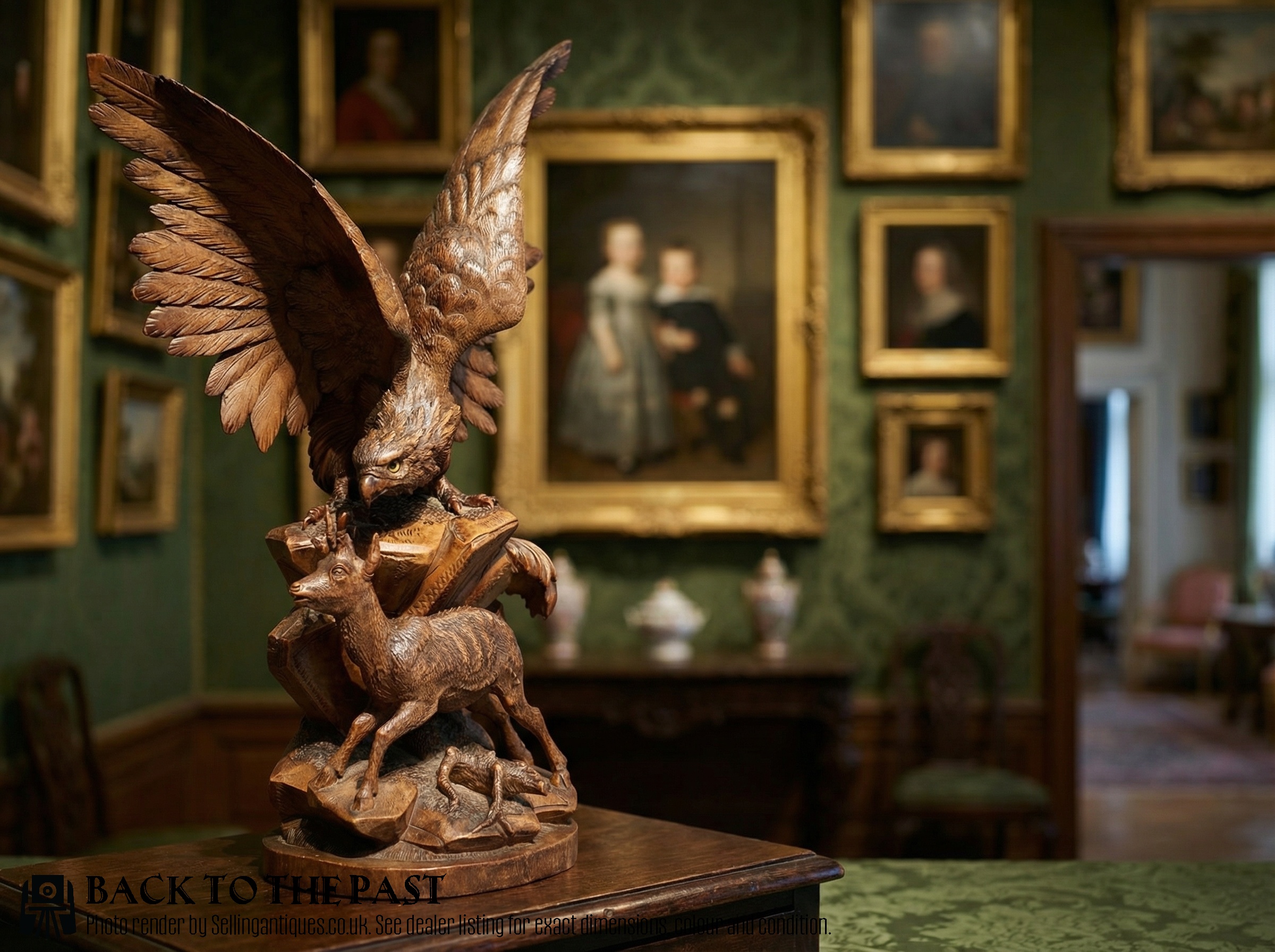
The most common examples on this page stem from the Black Forest tradition, typically depicting bears, birds, and dogs rendered in rich dark timber. Alongside these rustic animal subjects, Italian Renaissance Revival and Baroque styles appear as pedestals, wall masks, and religious figures.
Origins stretch across continental Europe, with notable works originating from Italian workshops as well as Swiss and German carving centres. The forms range from small tabletop novelties to large exhibition pieces and hall stands.
Materials and carving techniques
Makers utilised walnut, lindenwood, and assorted hardwoods, selecting timber for its dense grain and capacity to hold fine detail. Walnut provided the primary medium for these sculptures due to its deep colour and durability.
Carvers employed hand chisels and gouges to shape the timber, executing complex undercut foliage, animal fur, and human anatomy. Secondary materials such as glass occasionally appear in eyes or inserts on figurative works.
Assessing quality in carved wood
Quality rests upon the anatomical accuracy and depth of the carving, where master carvers achieved lifelike tension in muscle and expression. Softer, more rudimentary cutting lacks the vitality seen in exhibition pieces.
The preservation of the original timber surface and the complexity of the composition determine the standing of a piece. Finer works display crisp undercut details and thoughtful integration of the natural grain.
Luigi Frullini
The Brown Walnut Sculpture Glossary
- Black Forest
- A regional style of woodcarving originating from Switzerland and Germany during the nineteenth century. These works frequently depict local fauna in dynamic poses.
- Pedestal
- A structural support structure designed to elevate a bust or urn. They often feature carved classical ornamentation or naturalistic foliage.
- Term
- A pillar or pedestal tapering towards the base, surmounted by a carved bust or head. They derive from ancient boundary markers.
- Torchiere
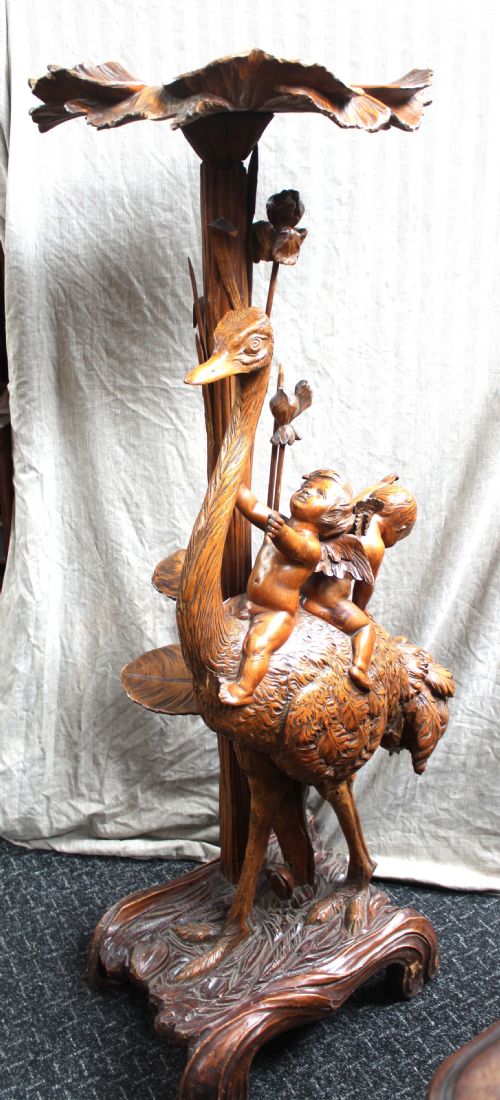
- A tall stand or candlestick designed to hold a light source. In sculpture, these take the form of carved figures holding aloft a platform.
- Acolyte
- An altar assistant represented in religious carvings. These figures frequently date from the eighteenth century or earlier.
Brown Walnut Sculpture: Frequently Asked Questions
How old are these sculptures?
The pieces span from the seventeenth century up to the early twentieth century. Most examples cluster around the nineteenth century and the height of the Black Forest carving tradition.
Earlier items from the seventeenth and eighteenth centuries typically reflect religious or Baroque influences. Later twentieth century pieces include art deco designs.
What is Black Forest carving?
Black Forest carving refers to decorative wooden objects produced in central Europe during the Victorian era. Animals such as bears and dogs form the primary subjects of these works.
These items range from small inkwells and tobacco boxes to large hall stands and furniture. The style is celebrated for its naturalistic depiction of fur and forest flora.
How do I care for walnut sculpture?
Maintain the timber by keeping pieces away from direct sunlight and sudden temperature shifts. Dry dusting with a soft brush preserves the carved details.
Avoid applying modern liquid polishes that can build up in the recessed cuts. Natural wax applied sparingly protects the historic surface.
Are these pieces solid walnut?
The sculptures utilise solid hardwoods including walnut, lindenwood, and oak. Master carvers carved directly into the block of timber.
Larger furniture elements and stands may combine walnut with secondary timbers for structural stability. The primary visible surfaces remain carved solid wood.