


Carved Altar Table
A carved altar table brings distinct architectural presence and history to a room, spanning Qing Dynasty traditions and Gothic Revival oak church pieces.
Carved Altar Table
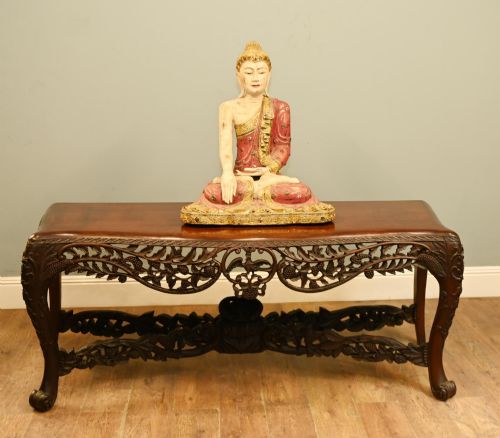
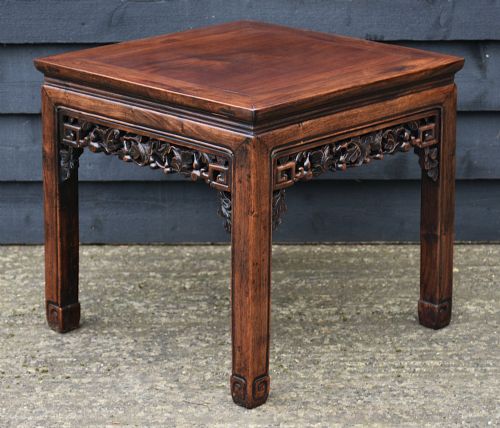
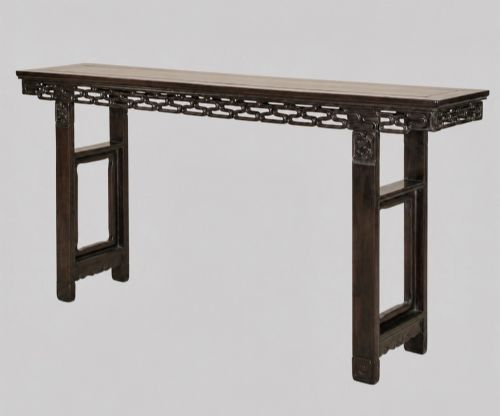
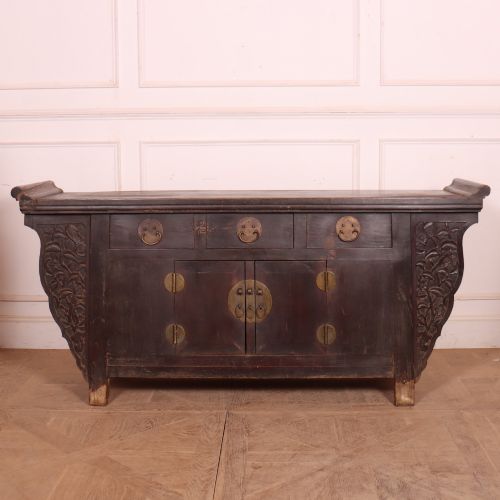
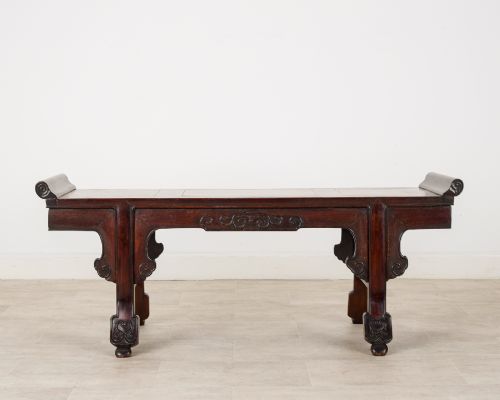
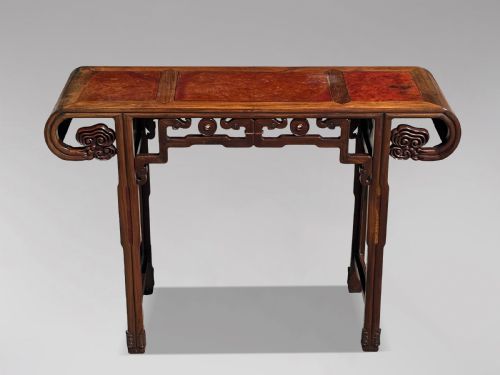
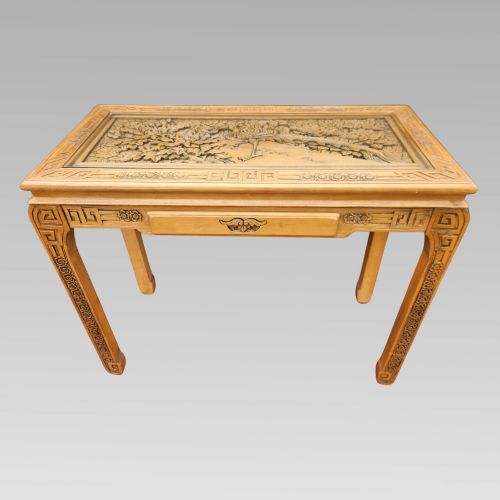
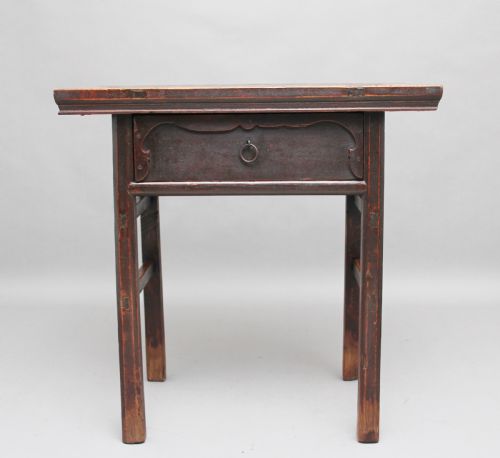
A carved altar table originates primarily from two distinct traditions: Chinese domestic and temple furniture, and European ecclesiastical settings. The Chinese examples, often associated with the Qing Dynasty, frequently display structured rectangular forms, scroll ends, and inset marble panels. European counterparts emerge from Gothic Revival and Victorian church contexts, taking shape in heavy oak or pitch pine.
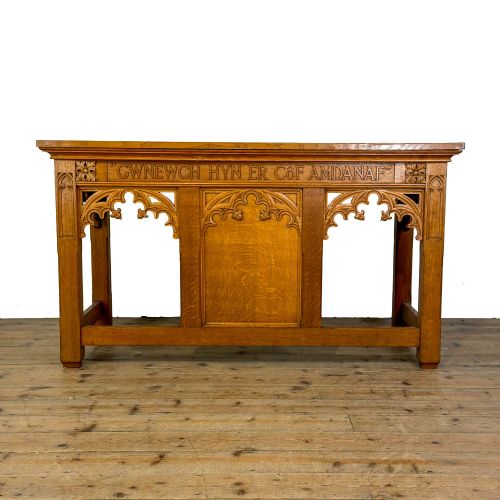
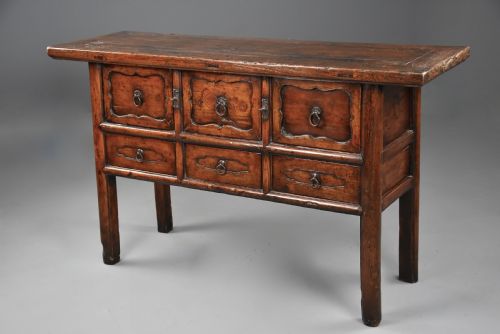
The versions met most frequently on this page are 19th-century Chinese hardwood tables and Gothic Revival oak pieces from chapel or church environments. These objects bridge the gap between functional surface areas and sculptural focal points, often sharing lineage with side tables, console tables, and benches.
How they were made
Construction relies heavily on dense timbers such as Asian elm, rosewood, hongmu, and oak. These woods are joined using traditional methods that accommodate movement and support heavy carved surfaces without metal fasteners.
Decoration is achieved through manual carving, relief work, and occasional surface treatments like red lacquer, giltwood, gesso, or silver leaf. European ecclesiastical pieces lean toward architectural tracery and linenfold patterns, while Chinese pieces utilise organic motifs and scrolling flanges.
Listings span the 18th, 19th, and early 20th centuries, uniting Chinese hardwood furniture with European Gothic Revival oak church pieces.
What varies in quality
The distinction between ordinary and exceptional pieces rests upon the crispness of the hand carving and the selection of timber. Dense, well-figured rosewood or thoroughly seasoned oak yields a superior tactile and visual depth that softer or more utilitarian woods lack.
Proportion and integrity of the original structure dictate standing within the range. Pieces retaining their original surface patination, uncompromised joinery, and balanced proportions command greater appreciation than those with heavily refinished surfaces or altered dimensions.
The Carved Altar Table Glossary
- Altar table
- A raised flat surface traditionally utilised for rituals or display, characterised by an elongated rectangular shape and often featuring upturned scroll ends.
- Qing Dynasty
- The final imperial dynasty of China, spanning from the seventeenth to the early twentieth century, known for intricate hardwood carving and formal domestic furniture styles.
- Gothic Revival
- An architectural and decorative movement drawing inspiration from medieval ecclesiastical design, prevalent in nineteenth-century oak furniture and church furnishings.
- Elm
- A tough, interlocking-grained timber frequently utilised in regional Chinese and European vernacular furniture for its resilience and distinctive grain patterns.
- Giltwood
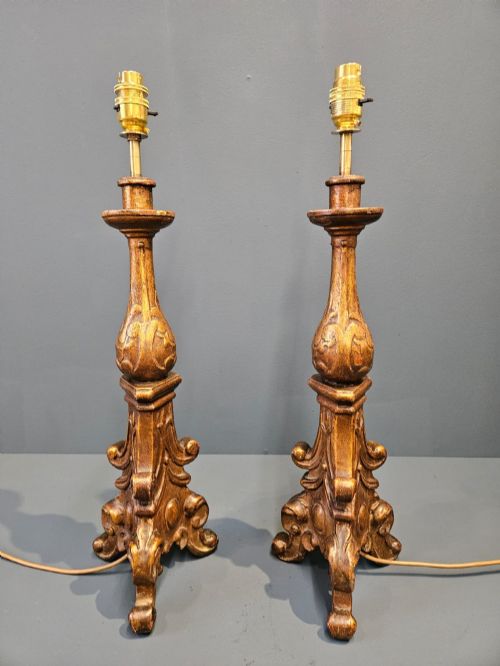
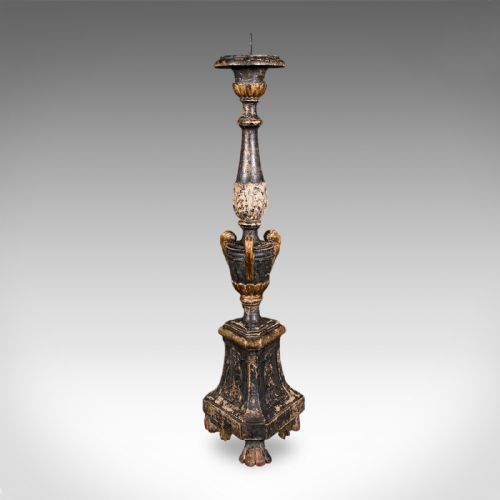
- Timber treated with a thin layer of gold leaf or gesso gilding, commonly found on European decorative tables, mirrors, and lamps from the eighteenth and nineteenth centuries.
Carved Altar Table: Frequently Asked Questions
What is a carved altar table used for?
Originally serving sacred functions in temples or churches, these tables were designed to hold ceremonial objects, candles, and offerings. In a modern interior, they function as striking console tables, hallway furniture, or display surfaces for lamps and decorative items.
Their narrow profile and elevated height make them particularly useful behind sofas or along long corridors where standard tables take up too much floor space.
What is a Gothic Revival altar table?
Gothic Revival tables draw inspiration from medieval architecture, constructed primarily from solid oak or pitch pine. They frequently incorporate pointed arch motifs, quatrefoils, and heavy structural framing associated with nineteenth-century church and chapel interiors.
These pieces reflect the Victorian revival of ecclesiastical craftsmanship, mirroring the architectural theories of designers such as A.W. Pugin.
How do I live with an antique altar table?
Living with these pieces involves placing them against walls where their architectural silhouettes can be appreciated without obstruction. Because they were built for display and ritual, pairing them with balanced lighting or simple decorative objects preserves their proportion.
Maintenance requires basic care suitable for antique wood and gilt surfaces, avoiding direct sunlight and excessive humidity to protect the finish.