


Rosewood Altar Table
These rosewood altar table pieces bring traditional Chinese craftsmanship to a room, offering striking form and rich timber tones.
Rosewood Altar Table
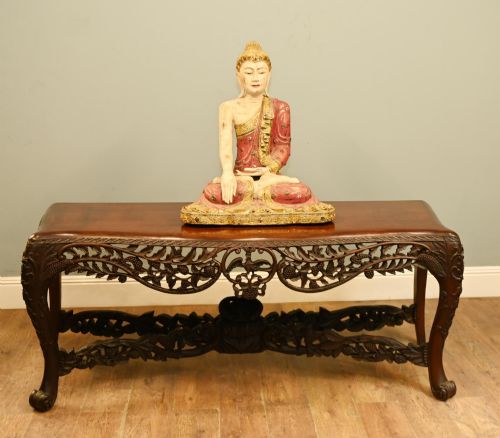
A rosewood altar table is a distinctive form of Chinese furniture designed historically for ritual use but valued today for domestic display. When you search for a rosewood altar table, you encounter pieces that double as console, side, or low tables within living spaces.
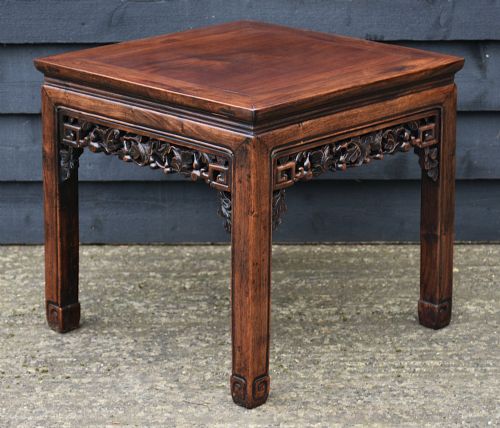
Forms vary from narrow rectangular altar tables to centre tables, low tables, and scholar's stands. Each piece demonstrates the restrained elegance characteristic of traditional Chinese woodworking traditions preserved through the late nineteenth century.
How they were made
These tables are constructed from heavy Asian hardwoods, specifically rosewood and hongmu, often enhanced by carved details. Artisans utilised dense timbers capable of supporting intricate joinery without the need for extensive metal fixings.
Select examples incorporate inset rouge marble panel tops, providing a cool, smooth contrasting surface to the dark timber frame. Mother-of-pearl inlay also appears on certain pieces, adding subtle ornamentation to the carved hardwood structures.
Listings span the nineteenth century, featuring specific dates of eighteen seventy, eighteen eighty, and nineteen hundred under Qing Dynasty styles.
What varies in quality
The standard of a rosewood altar table depends heavily on the crispness and depth of the carved woodwork. Deeper, more resolute carving on the apron and legs elevates a piece above simpler utilitarian versions.
Selection of the timber itself dictates much of the visual weight, with tightly grained hongmu and figured rosewood commanding attention. The integration of contrasting elements, such as inset marble panels, further distinguishes finer examples from plain timber builds.
The Rosewood Altar Table Glossary
- Rosewood
- A heavy, dense timber with a rich grain and deep colour, prized for fine furniture construction. It forms the primary material for many nineteenth-century Chinese tables.
- Hongmu
- A category of dense, fragrant Asian hardwoods often translated as red wood. It appears frequently in traditional Qing Dynasty scholar pieces and altar tables.
- Qing Dynasty
- The final imperial dynasty of China, spanning from sixteen forty-four to nineteen twelve. Pieces from this era often display traditional carved motifs and dark hardwood construction.
- Altar Table
- A traditional Chinese table form featuring an elongated rectangular top, historically placed against a wall for ceremonial displays. Today, collectors utilise them as sophisticated console tables.
Rosewood Altar Table: Frequently Asked Questions
What is a rosewood altar table used for?
Historically, these tables stood against interior walls to hold ceremonial objects, ancestral tablets, or decorative arrangements. In modern settings, they function effectively as console tables in hallways or display surfaces in living rooms.
Their narrow profile allows them to fit comfortably in compact spaces while providing a distinct architectural focal point.
How do I identify a Qing Dynasty table?
Identification relies upon observing traditional Chinese construction methods, dense tropical hardwoods like hongmu or rosewood, and period-specific carving styles. Most examples date from the nineteenth century.
Examining the underside and joinery helps confirm the period execution alongside the characteristic dark timber patination.
Are these tables made entirely of solid wood?
Yes, traditional pieces utilise dense Asian hardwoods throughout their structural frames and carved components. Some variations incorporate inset panels of rouge marble within the wooden top.
The substantial weight of the timber defines the tactile experience of handling these tables.
How should I care for a rosewood surface?
Maintain the timber by dusting regularly with a soft, dry cloth and avoiding placement near direct heat sources or strong sunlight. Natural waxes can be applied sparingly to nourish the dense grain.
Protecting inset marble panels from acidic spills ensures the contrasting surfaces remain clear and unblemished.