


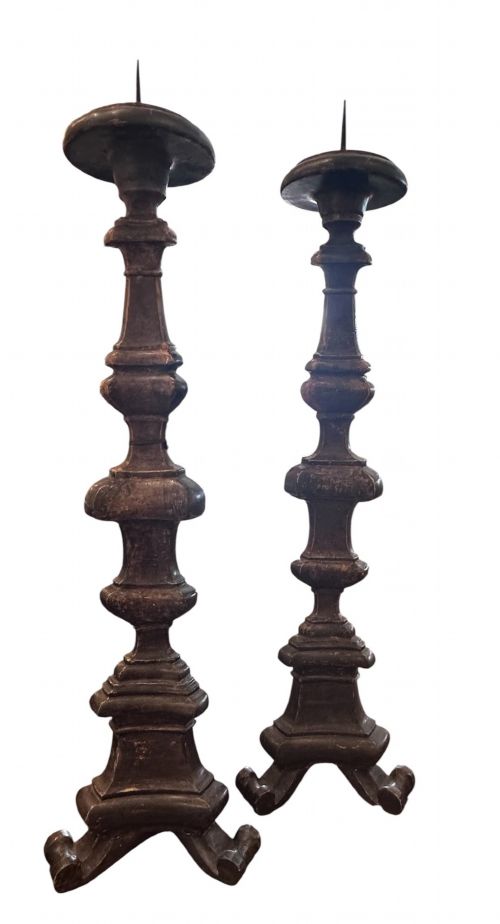


Carved Altar Candle Holder
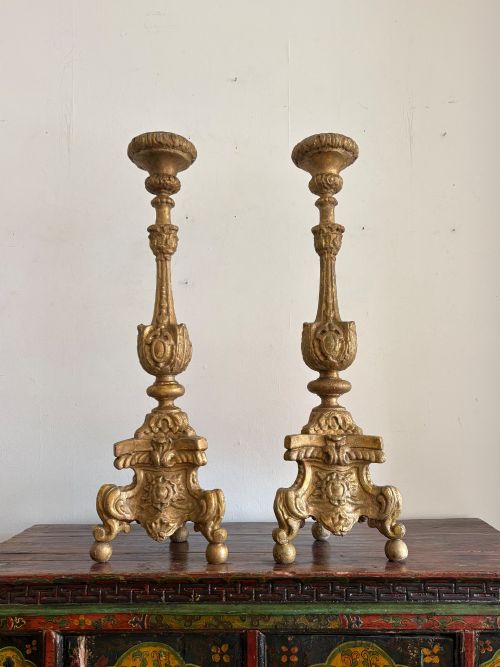
These carved altar candle holder pieces bring centuries of continental and English church craftsmanship into domestic settings through rich giltwood and turned timber forms.
Carved Altar Candle Holder
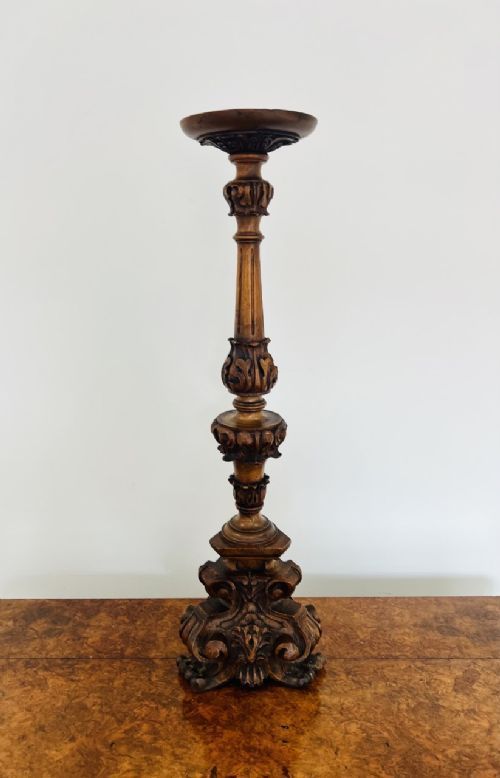
A carved altar candle holder typically takes the form of a tall pricket stick, candlestick, or torchere designed for sacred or grand domestic spaces. The pieces gathered here span the seventeenth through to the early twentieth centuries, drawing heavily upon Baroque and Neoclassical design vocabularies.
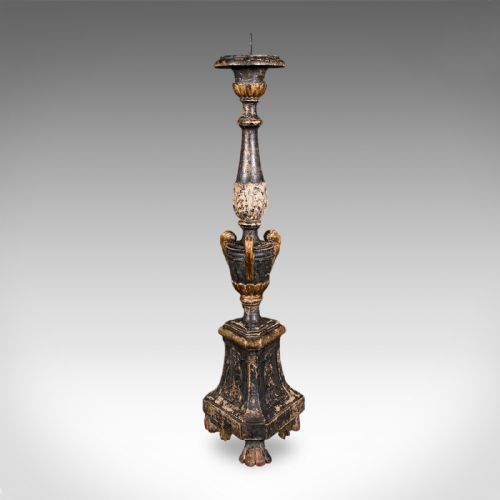
The version most commonly met on this page is the pair of Italian or French wooden sticks finished in giltwood, silver leaf, or polychrome paint. These range from modest tabletop heights to imposing floor-standingtorcheres exceeding seventy centimetres.
Makers and workshops across Italy, France, and England produced these items in oak, pine, walnut, and gessoed timber, frequently incorporating barley twist columns or carved figural elements such as angels.
How they were made
Wood forms the primary structural material, worked from solid timbers including oak, pine, walnut, and treen. Turnery techniques created balanced shafts, while hand carving shaped decorative details like acanthus leaves and fluting.
Surfaces were frequently coated in gesso before receiving layers of gold leaf, silver leaf, or polychrome paint. This preparation provided a smooth ground for burnishing and gilding, creating the characteristic reflective sheen seen on Baroque examples.
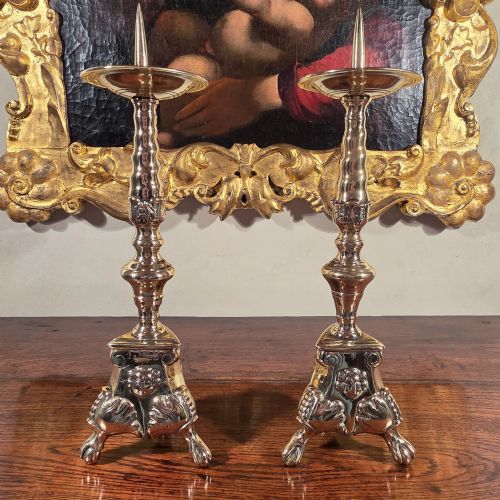
Several listings include dedicated pricket sticks that require stubborn candle stubs to be spiked directly onto iron points, just as seventeenth-century sacristans did.
What varies in quality
Quality rests primarily in the crispness and depth of the hand carving rather than mechanical uniformity. Pieces displaying deeply undercut foliage, finely articulated figures, and balanced proportions sit at the upper end of the range.
The integrity of the original surface preparation also dictates value, with genuine gesso and gold leaf ageing through stable craquelure rather than modern repainting. Heavier timber turnings and substantial architectural proportions generally distinguish finer workshop production.
The Carved Altar Candle Holder Glossary
- Pricket
- A sharp metal spike on top of a candlestick designed to secure a candle rather than drop it into a socket. This form appears frequently on eighteenth-century church altar pieces.
- Giltwood
- Timber coated with a thin layer of gold leaf or gold paint over a prepared gesso ground. It provides a reflective surface favoured in Baroque design.
- Torchere
- A tall ornamental stand or candlestick designed to hold a light source high above the floor. These often feature substantial turned wooden shafts and carved tripod bases.
- Gesso
- A plaster-like mixture applied to wood surfaces to create a smooth base for gilding or painting. It allows for crisp carved details to remain sharp under metallic leaf.
- Baroque
- An ornate artistic style originating in Italy that emphasises movement, drama, and rich surface decoration. Many altar pieces on this page draw directly from this aesthetic.
Carved Altar Candle Holder: Frequently Asked Questions
What is a pricket candlestick?
A pricket candlestick uses an upright metal spike instead of a traditional socket to hold the candle in place. This design is typical of ecclesiastical and altar pieces from earlier periods.
Such sticks often supported large beeswax candles used in church services before transitioning into domestic decorative objects.
How do I clean giltwood?
Giltwood surfaces require gentle dusting with a soft, dry brush to prevent damage to the delicate gold leaf layer. Moisture and abrasive cleaners should be avoided entirely.
Preserving the original gesso and leaf finish maintains the historical integrity of these antique candle holders.
Are these candle holders wired for electricity?
Many examples remain in their original configuration as candle holders or prickets, though some have been adapted into lamp bases over time. Surviving structural alterations are usually noted in individual descriptions.
Buyers intending to use them for modern lighting often consult a professional restorer to ensure safe wiring through the turned wooden shafts.
How are 18th century pieces distinguished?
Eighteenth-century examples typically display hand-carved details in pine, oak, or giltwood with traditional gesso preparation. Their forms reflect Baroque or Neoclassical proportions found in continental workshops.
Turned elements and weight distribution also offer clues to their age and regional origin.
Where were torcheres placed?
Torcheres functioned as grand floor-standing light supports placed in corners or alongside furniture in formal rooms. Their height allowed them to illuminate large spaces effectively.
Today, they serve as sculptural elements that retain their vertical presence in domestic interiors.