
Victorian Walnut Stand
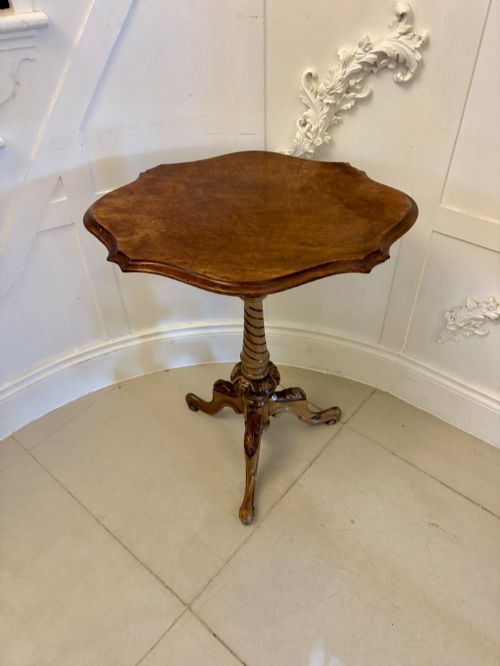
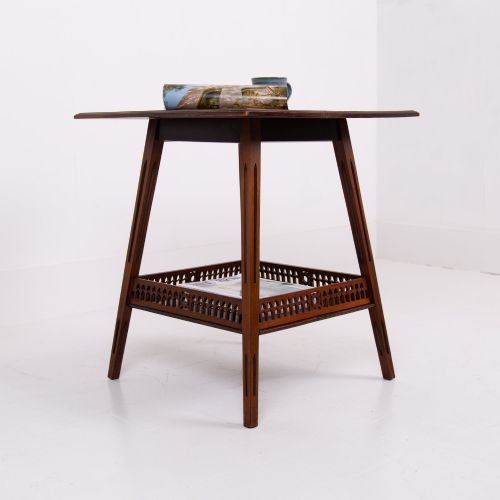
When sourcing a victorian walnut stand, collectors acquire functional nineteenth-century furniture crafted to display books, sheet music, lamps or decorative objects.
Victorian Walnut Stand
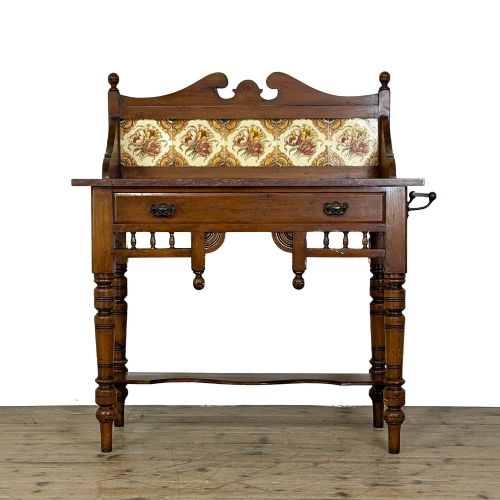
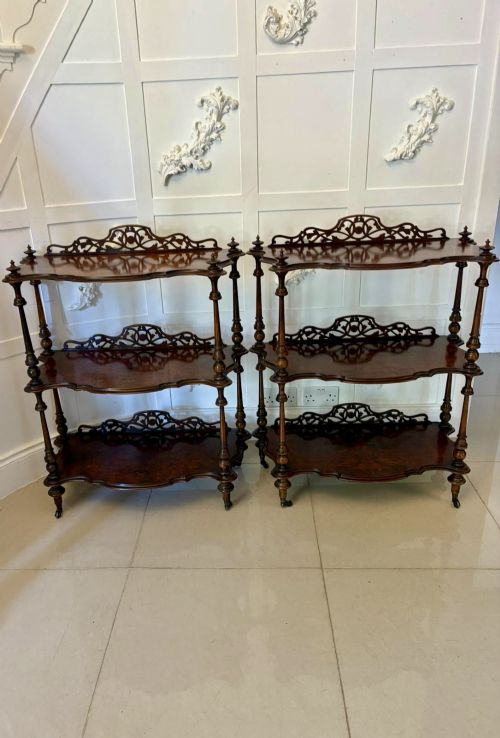
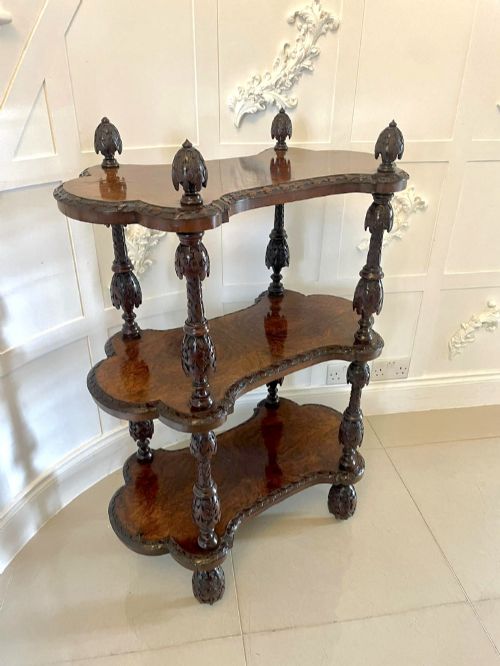
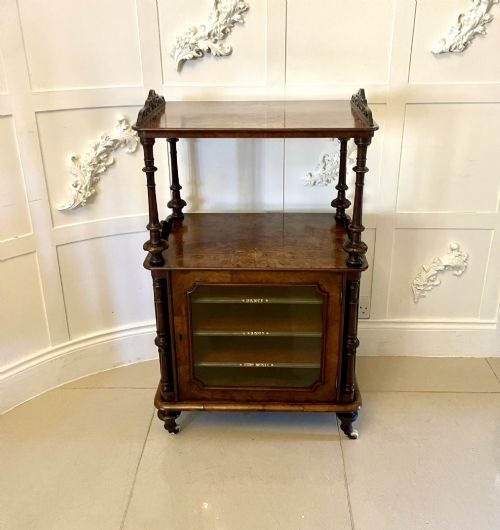
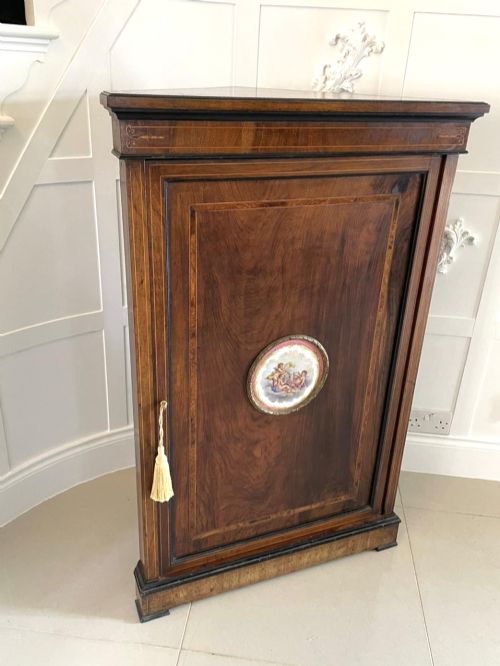
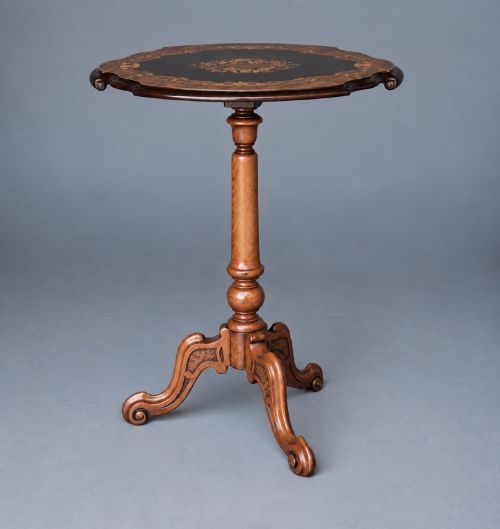
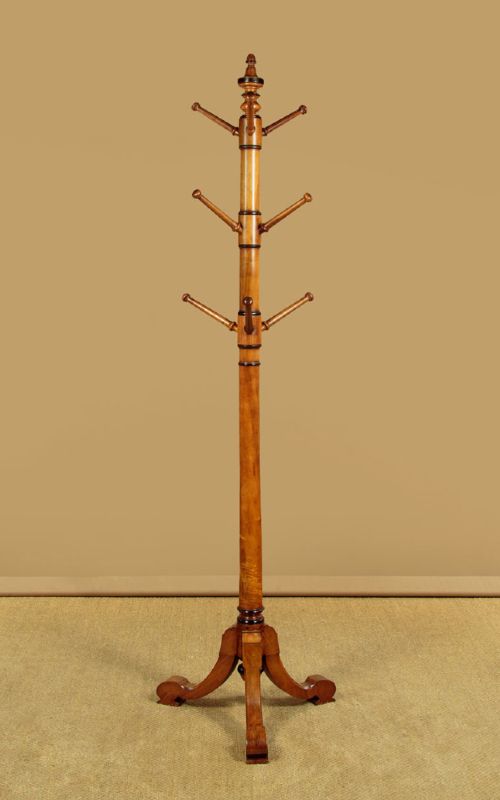
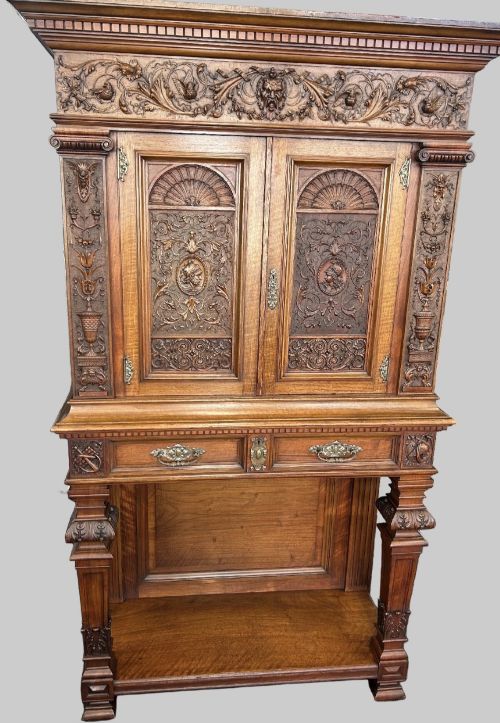
A victorian walnut stand encompasses diverse nineteenth-century forms designed for specific household tasks, ranging from multi-tiered whatnots and music cabinets to revolving bookstands and occasional lamp tables. These functional pieces served domestic spaces in the mid-to-late nineteenth century, accommodating books, magazines, drinks or lighting.
How They Were Made
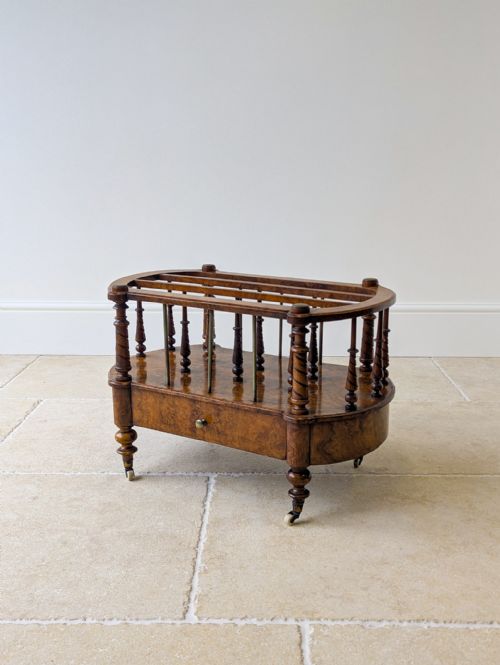
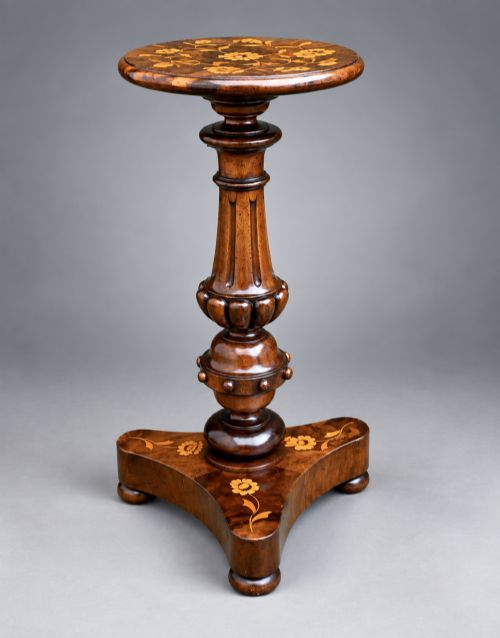
Cabinet makers utilised solid walnut and figured burr walnut veneers over secondary timbers, often framing shelves and compartments with turned bobbin galleries or barley twist supports. Marquetry inlay, brass mounts and occasional marble tops appeared on higher-status examples to catch the light in formal reception rooms.
Structural joinery prioritized stability for upright forms like whatnots and music stands, employing tripod bases, corner brackets or robust central pedestals. Surviving surfaces demonstrate hand-finished French polish applied over dense walnut grains.
What Varies in Quality
The tier of craftsmanship separates standard utility furniture from exceptional cabinet work, visible in the selection of burr veneers with lively grain patterns rather than plain timber. Marquetry details, applied brass or ormolu mounts, and finely turned galleries indicate a higher workshop standard.
Structural integrity and proportion dictate value, where slender supports remain rigid and multi-tiered whatnots maintain balanced weight distribution. Pieces bearing signatures from known retail houses demonstrate superior joinery and material selection compared to anonymous workshop output.
Gabriel Viardot·Shoolbred & Co·William Birch·Maple & Co
The Victorian Walnut Stand Glossary
- Canterbury
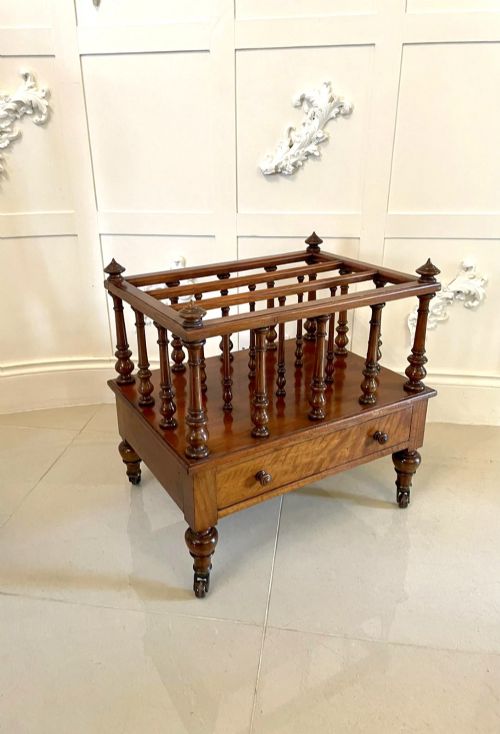
- A low multi-partitioned stand designed originally for sheet music and later adapted for newspapers or magazines. It often incorporates a single lower drawer and feet fitted with castors.
- Whatnot
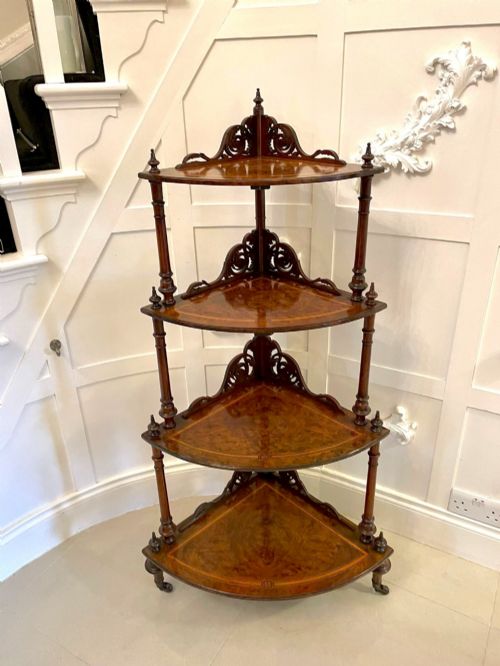
- An open shelved piece of furniture intended for the display of ornaments and curiosities. Victorian iterations frequently feature three or four graduated tiers supported by turned columns.
- Burr Walnut
- Timber taken from the gnarled growth of a walnut tree, yielding highly decorative swirling grain patterns. Cabinet makers sliced this wood into thin veneers for decorative table tops and cabinet fronts.
- Marquetry
- The art of applying pieces of veneer to a structure to form decorative patterns or pictorial designs. Victorian makers used varied woods to create floral motifs across table tops and cabinet doors.
- Ormolu
- Gilded bronze mounts applied to furniture edges, feet and key escutcheons. This decorative technique added metallic contrast to dark walnut surfaces during the mid-nineteenth century.
Victorian Walnut Stand: Frequently Asked Questions
How do you use a whatnot today?
A whatnot serves well in modern interiors as an open display shelving unit for books, ceramics or potted plants. Its graduated tiers provide vertical storage without overwhelming smaller floor spaces.
Place one in a living room corner or hallway to exhibit collections of decorative objects. The open structure keeps rooms feeling light while offering multiple display surfaces.
What distinguishes burr walnut?
Burr walnut derives from a tree growth deformity that produces intricate, swirling grain patterns filled with small knot clusters. Cabinet makers prized this figured wood for surface veneers on prominent furniture areas.
Unlike straight-grained walnut, burr sections catch the light differently and offer striking visual depth. Makers framed these panels with plain walnut borders to emphasise the central figuring.
How are different Victorian styles identified?
Identifying Victorian styles involves observing decorative motifs, construction forms and historical influences across the nineteenth century. Early pieces often retained heavier proportions, while later decades embraced lighter Arts and Crafts or Aesthetic Movement aesthetics.
Details like barley twist turns, bobbin galleries, or Japanese-inspired joinery point toward specific decades and design movements. Comparing these elements against known production dates clarifies the era of manufacture.