


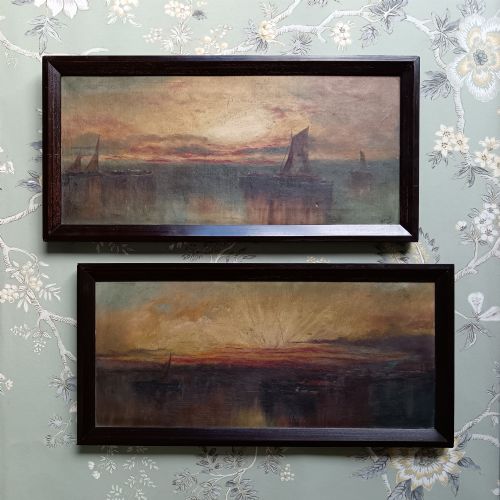
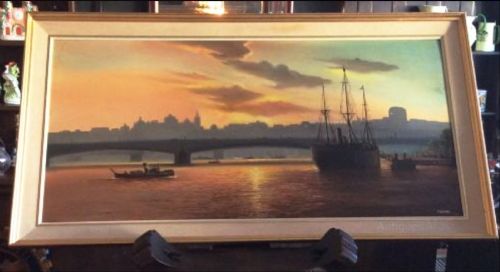
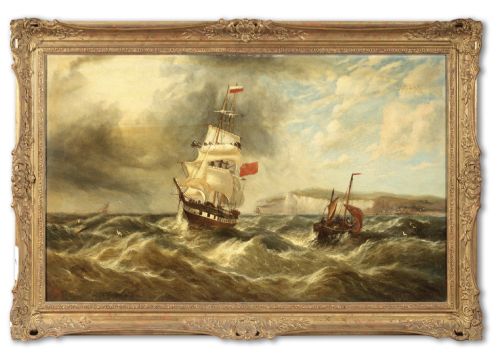
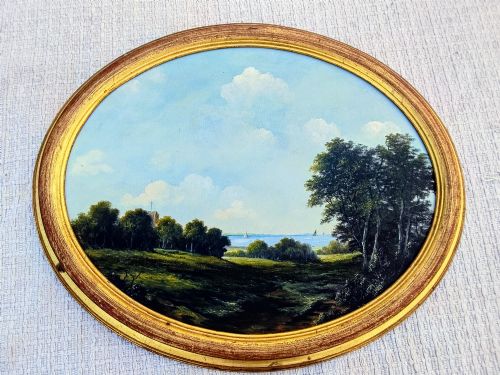
Canvas Marine Wall Art
Canvas marine wall art brings the drama of the open sea and historic harbours straight into your interior.
Canvas Marine Wall Art
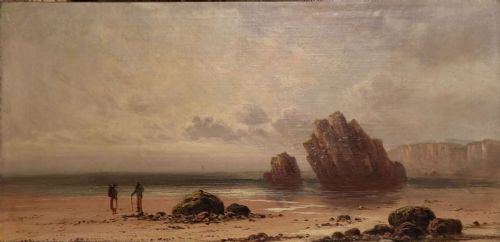
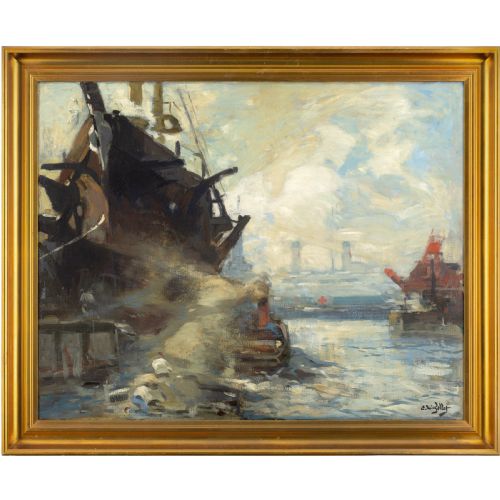
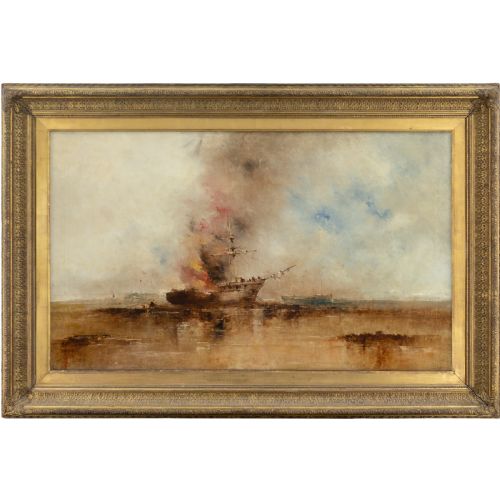
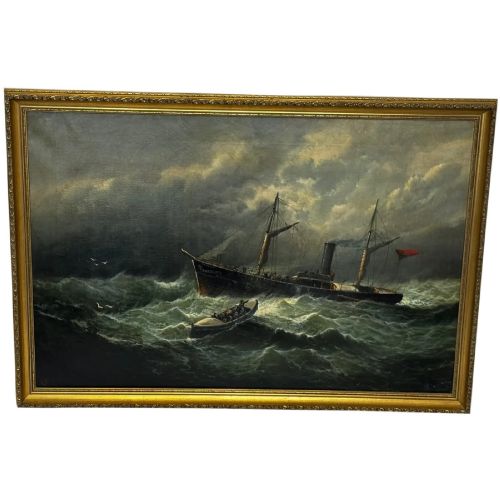
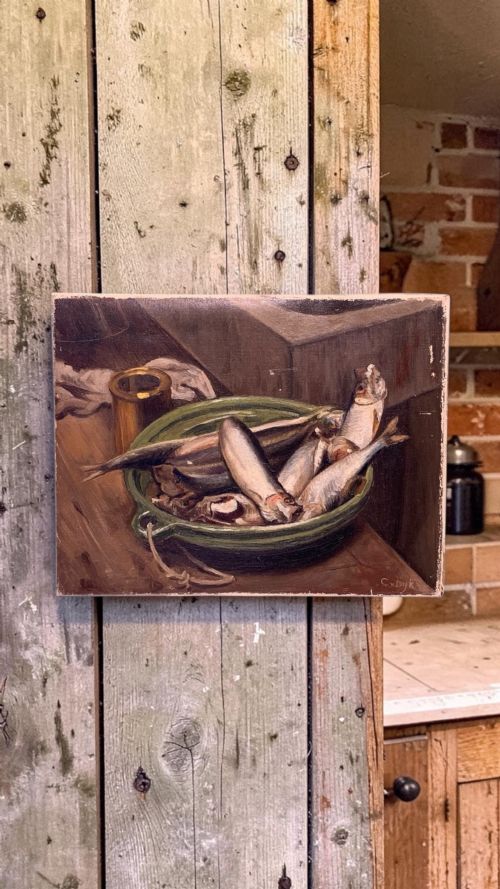
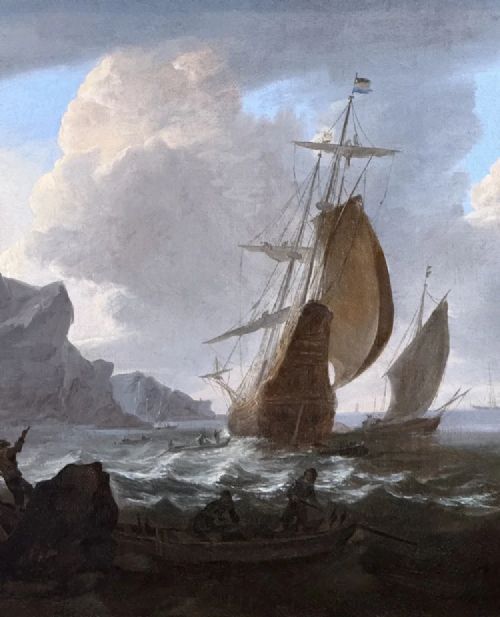
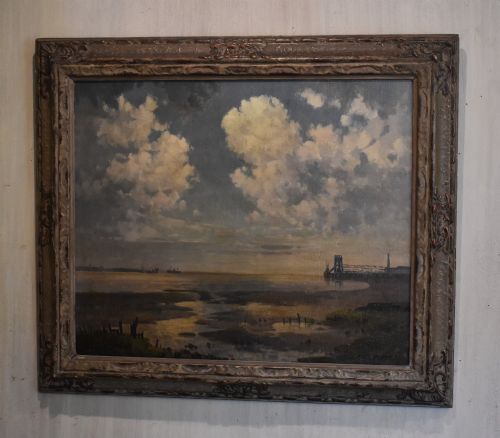
Canvas marine wall art captures maritime history, coastal landscapes, and seafaring vessels through oil paint on stretched canvas and wooden panels. These works span from the nineteenth century into the mid-twentieth century, recording everything from turbulent gales and shipwrecks to calm river estuaries.
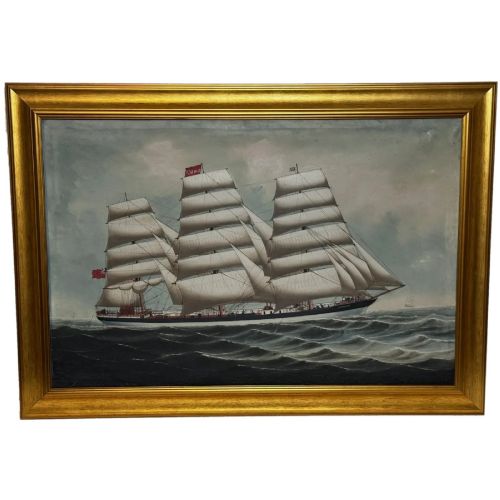
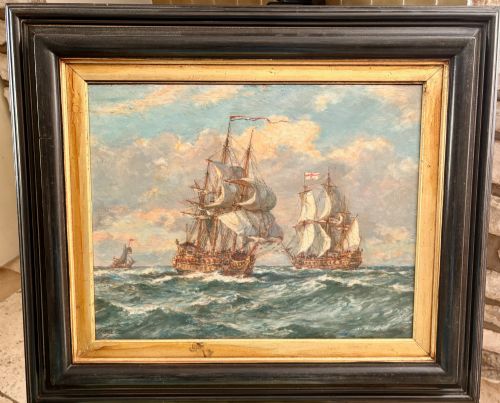
The most frequent pieces you will encounter on this page are nineteenth-century oil paintings depicting British merchant ships, coastal fishing boats, and dramatic seascapes. Victorian and Edwardian maritime art dominates the selection, alongside twentieth-century interpretations by regional and continental artists.
Subjects range from specific historical vessels like the Crimea troopships and wartime hospital vessels to expansive views of the River Thames and rugged Cornish cliffs. Whether framed in period giltwood or presented on board, these works function as historical windows into naval and commercial shipping.
How they were made
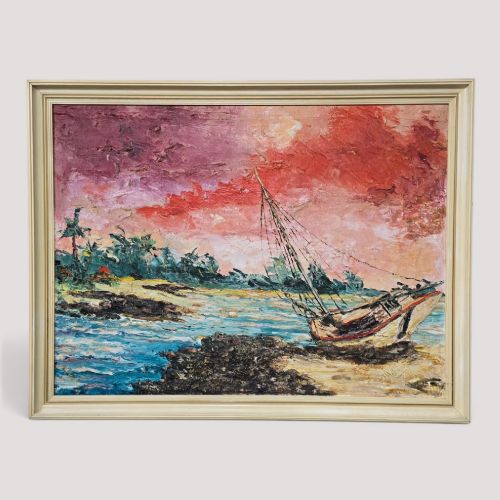
Artists built these marine scenes primarily using oil paint applied to woven canvas stretched over wooden frames, occasionally substituting rigid wood panels for support. The application varies from smooth, detailed nineteenth-century brushwork recording rigging and hull architecture to heavy impasto textures capturing churning coastal waves.
Period framing plays a crucial role in the presentation, utilising carved giltwood and painted wood mouldings that often date to the original creation of the painting. Varnish layers applied over the dry oil paint protected the surface from marine environments while deepening the tones of the sea and sky.
Listings feature oil on canvas and wood supports spanning the nineteenth and twentieth centuries.
What varies in quality
The distinction between standard decorative maritime paintings and superior works rests on the artist's precise understanding of maritime architecture, rigging, and atmospheric conditions. Master painters accurately render the weight of a three-masted schooner and the natural movement of water in a gale, whereas lesser hands produce rigid, generic vessel shapes.
Condition and originality also dictate the standing of a piece, particularly the stability of the canvas and the preservation of the original oil layers. Works retaining their period giltwood frames and clear provenance command greater attention from collectors than those subjected to heavy later restoration.
John Wilson Carmichael·Abraham Hulk I·Charles Napier Hemy·Bernard Gribble
The Canvas Marine Wall Art Glossary
- Impasto
- A technique where oil paint is laid on the canvas in very thick layers, usually thick enough that the brush or painting-knife strokes are visible. This method adds tangible physical depth to crashing waves and textured coastal rocks.
- Barque
- A sailing vessel with three or more masts having the fore and mainmasts square-rigged and the mizzenmast fore-and-aft rigged. Nineteenth-century maritime art frequently records these sturdy wooden cargo carriers.
- Pierhead painting
- A specific genre of ship portraiture, often commissioned by sea captains, depicting a vessel arriving at or departing from a named port. These works prioritize accurate architectural and nautical detail over artistic interpretation.
- Giltwood
- Wood that has been coated with a thin layer of gold leaf or gold paint, commonly used for nineteenth-century picture frames. The reflective finish enhances the warm tones within marine sunset and sunrise scenes.
- Seascape
- A work of art depicting the sea, distinct from a landscape by focusing primarily on coastal waters, open ocean, or maritime activity. These compositions balance the expansive elements of water and sky.
Canvas Marine Wall Art: Frequently Asked Questions
How do I date an old marine painting?
Dating relies on examining the riggings and types of the ships depicted, the canvas preparation, and the framing style. Victorian and Edwardian maritime art often carries signatures, exhibition labels, or biographical dates of the artist on the reverse.
Changes in maritime technology, such as the transition from wooden sailing barques to steam-powered vessels, provide reliable chronological markers for narrowing down the decade of creation.
What is a pierhead painting?
A pierhead painting is a specialised port portrait created to record a specific commercial ship, often commissioned by its master or owner. These works emphasise accurate details of the hull, sails, and flags rather than purely dramatic weather.
They frequently feature the vessel just outside a named harbour, serving as historical documentation of nineteenth-century merchant fleets and seafaring trade.
How should I hang canvas art?
Canvas marine paintings require stable indoor environments away from direct sunlight and excessive humidity to protect the organic fibres and oil paint layers. Secure picture wire attached to sturdy wooden frame members ensures safe wall mounting.
Allowing adequate breathing space around period giltwood frames prevents physical damage and highlights the craftsmanship of the original display housing.
What distinguishes marine art from seascapes?
Marine art specifically incorporates human elements of the sea, such as sailing ships, rescue boats, naval battles, and bustling port activities. Seascapes focus primarily on the natural environment of the coastline, waves, and open water without necessarily featuring vessels.
Many nineteenth-century works blend both categories, placing detailed merchant barques within turbulent coastal weather.