


British Marine Artist Painting
A british marine artist painting brings coastal air and maritime history straight to your wall, capturing harbours and open water with enduring skill.
British Marine Artist Painting
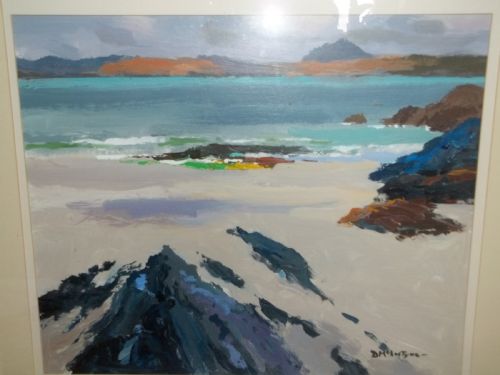
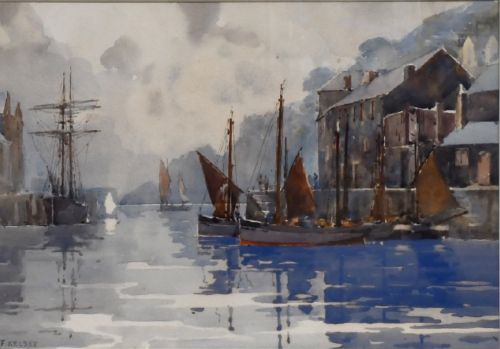
A british marine artist painting captures coastal life, harbours, and open waters across the nineteenth and early twentieth centuries. These works record busy fishing ports, quiet estuaries, and historic vessels under shifting skies. You will encounter coastal scenes from Cornwall, Whitby, and Venice created by named painters.
The pieces listed here predominantly take the form of watercolour paintings on paper, alongside selected oil works. Many examples arrive framed behind glass with traditional gold mounts to protect the delicate medium. Subjects range from Scottish coastal seascapes to bustling Cornish harbours like Looe and St Ives.
Materials and techniques
These works rely primarily on watercolour applied to paper, capturing the translucent qualities of sea and sky. Artists built up transparent washes alongside opaque highlights to render water, clouds, and distant shorelines with precision. Selected pieces utilise oil paint on canvas or panel to achieve deeper tones and heavier textures for shipping scenes.
Framing materials traditionally involve wood combined with gilt or gold mounts that complement the palette of the painting. Protective glass shields the vulnerable paper surfaces from moisture and dust over decades of display. Signatures, monograms, and dates often appear directly in ink or watercolour within the lower corners of the composition.
Paper and watercolour dominate the material selection, supported by wood frames and traditional gold mounts.
Distinguishing quality
The strength of a composition rests on the artist's handling of light, atmosphere, and maritime architecture. Finer works demonstrate a confident grasp of perspective in rigging, hull structures, and the restless movement of coastal tides. Weaker examples may rely on formulaic sky washes and static vessel placement without capturing the specific character of the location.
Condition plays a central role in the standing of any paper-based work from the Victorian or Edwardian eras. Strong works retain their original pigment intensity without excessive fading or harmful foxing across the sky. The quality of the accompanying mount and frame further reflects how carefully the piece has been preserved.
Frank Kelsey·F J Aldridge·Ernest F Hill·George Stanfield Walters·William Tatton Winter·William Lee Hankey·Rowland Henry Hill·George Stainton·John D Walker·James Aitken
The British Marine Artist Painting Glossary
- Watercolour
- A painting method where the paints are made of pigments suspended in a water-based solution. This technique allows for luminous washes that suit depictions of sea and sky.
- Gilt mount
- A decorative border finished in gold leaf or gold-coloured metallic paint placed around the artwork. It separates the painting from the frame and enhances the visual depth.
- Monogram
- A motif made by overlapping or combining two or more letters to form a single symbol used by an artist to sign a work. This form of identification frequently appears on nineteenth-century watercolours.
- Estuary
- The tidal mouth of a large river, where the tide meets the stream. Painters frequently selected these locations for their combination of shipping traffic and varied coastal light.
- Seascape
- A type of artwork that depicts the sea, ships, or coastal views. It forms the primary subject category for the maritime paintings gathered here.
British Marine Artist Painting: Frequently Asked Questions
How should I frame a watercolour?
Protect watercolours behind glass with acid-free mounts to prevent permanent damage from humidity and airborne pollutants.
Keep these paintings away from direct sunlight to preserve the original strength of the pigments.
What subjects appear in these works?
Artists focused heavily on British coastal ports, fishing villages, and working vessels navigating tidal waters.
Views extend beyond British shores to include Mediterranean locations such as Venice.
How do I identify the artist?
Look closely at the lower corners of the paper for signatures, monograms, or dated inscriptions left by the painter.
Examine the reverse of the frame or backing board for old gallery labels and handwritten notes.
What periods do these paintings represent?
The selection spans the nineteenth century through the Edwardian era and into the early twentieth century.
Movements such as British Impressionism and the Newlyn School heavily influence the later works.