


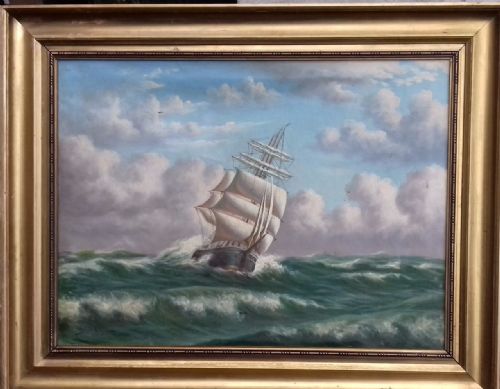


Tall Ship Oil Canvas
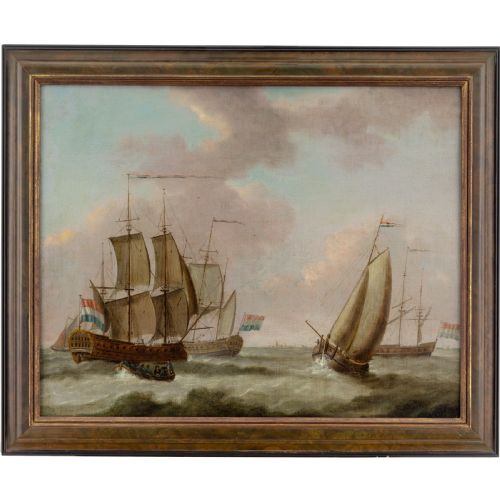
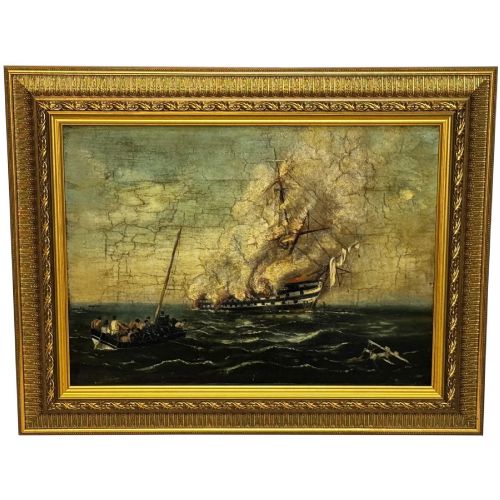
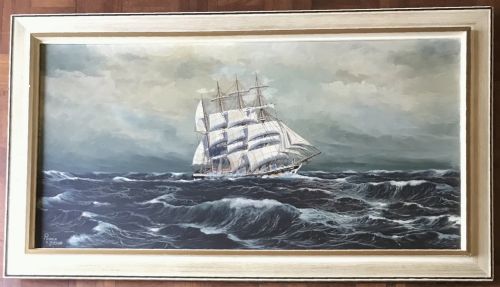
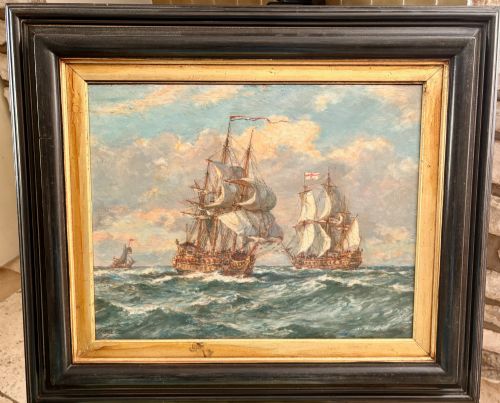
A tall ship oil canvas captures the movement of historical vessels under full sail across open water, bringing classic maritime atmosphere directly to a room.
Tall Ship Oil Canvas
A tall ship oil canvas represents a specific genre of marine art focusing on traditional sailing vessels such as barques, frigates, and ships of the line. Buyers seeking a tall ship oil canvas will find works depicting named vessels, sea battles, harbour scenes, and coastal voyages.
The selections available here span multiple eras, most frequently originating from the nineteenth century, the Edwardian period, and Georgian times. These paintings range from detailed ship portraits to dramatic storm scenes rendered in oil paint on canvas.
Makers and artists represented in this tradition include recognised painters such as Bernard Gribble, John Callow, Joseph Heard, George Stainton, Dion Pears, and V Dybdal. Each artist brings a distinct approach to capturing rigging, hulls, and maritime light.
Materials and construction
These works are executed in oil paint upon stretched canvas, utilising the pigment's capacity for rich colour blending and luminous marine effects. The physical support relies on wooden stretchers that hold the canvas firm during the painting process.
Many surviving examples are housed within their original frames featuring materials such as gesso, gold leaf, and traditional gilding on wood. These frames provide structural definition and complement the maritime subject matter.
Listings feature canvases spanning from the eighteenth century to the mid-twentieth century, utilising oil paint, wood, and gold leaf.
Assessing quality in maritime painting
Quality in these works rests upon the artist's technical precision in depicting maritime architecture, rigging accuracy, and hull proportions. Master hands capture the dynamic movement of water and atmospheric weather conditions with convincing depth.
The preservation of the original oil paint surface and the condition of the canvas support influence the overall integrity of the piece. Period frames finished with gold leaf or gesso also contribute to the completeness of the object.
Bernard Gribble·John Callow·Joseph Heard·George Stainton·Dion Pears·V Dybdal
The Tall Ship Oil Canvas Glossary
- Oil on canvas
- A painting technique where pigment suspended in drying oil is applied to a woven fabric support. This combination allows for lasting colour retention and subtle tonal gradations.
- Giltwood
- Wood that has been decorated with a thin layer of gold leaf. This material is standard for traditional picture frames enclosing marine art.
- Gesso
- A plaster-like mixture applied to wooden frames as a base before gilding. It provides a smooth surface for subsequent gold leaf application.
- Barque
- A sailing vessel with three or more masts having square-rigged fore and main masts and a fore-and-aft rigged mizzenmast. This vessel type appears frequently in nineteenth-century marine art.
- Ship portrait
- A specific genre of maritime painting commissioned to record the exact appearance of a named vessel. These works prioritize accurate depictions of flags, rigging, and structural details.
Tall Ship Oil Canvas: Frequently Asked Questions
What periods do these paintings come from?
The available selection primarily encompasses nineteenth-century works alongside pieces from the Georgian, Regency, and Edwardian eras. Mid-century examples also appear within the collection.
These dates reflect the historical periods when maritime painting flourished as a major artistic genre documenting naval and merchant shipping.
How do I identify a ship portrait?
A ship portrait typically focuses on a specific named vessel, often shown from the side to display its full rigging and hull structure. Backgrounds frequently feature recognizable landmarks, lighthouses, or naval engagements.
Many of these works include inscriptions or historical documentation identifying the exact ship and its operational era.
What framing is common for these canvases?
Period frames frequently incorporate wooden construction finished with gesso, gold leaf, or traditional gilding. These decorative elements were designed to complement the maritime subject matter and enhance the visual presence of the painting.
Original frames remain desirable components that contribute to the historical context of the artwork.
How should I care for an oil on canvas?
Oil paintings require stable indoor humidity and protection from direct sunlight to prevent the canvas from sagging and the pigments from fading. Dusting should be done gently with a soft, dry brush without applying pressure.
Professional conservation should be sought if the canvas requires cleaning or structural repair.