





Canvas Harbour Artwork
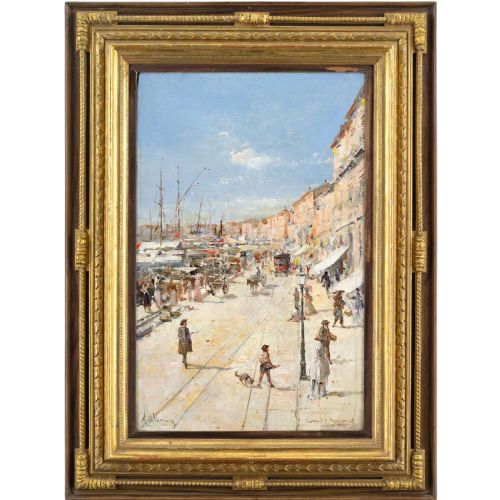
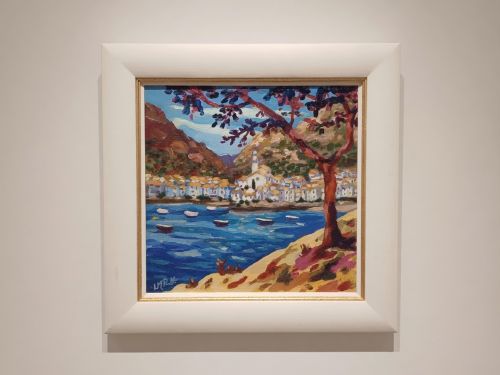
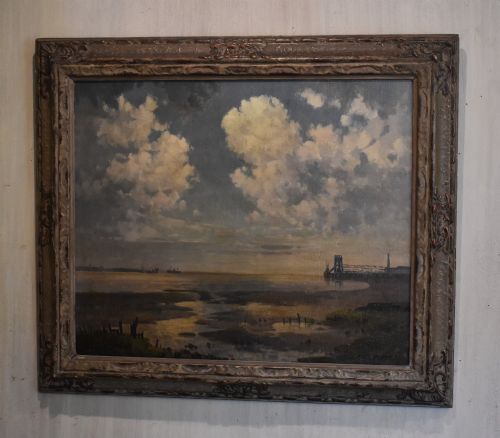
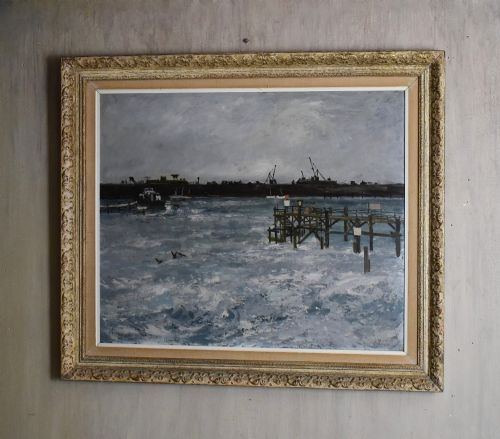
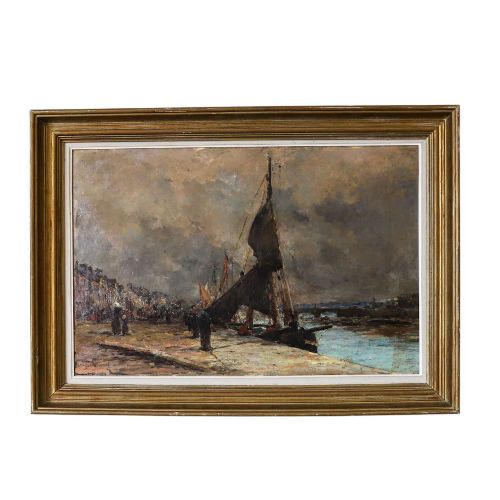
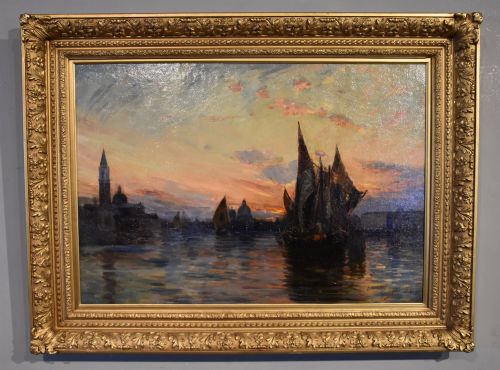
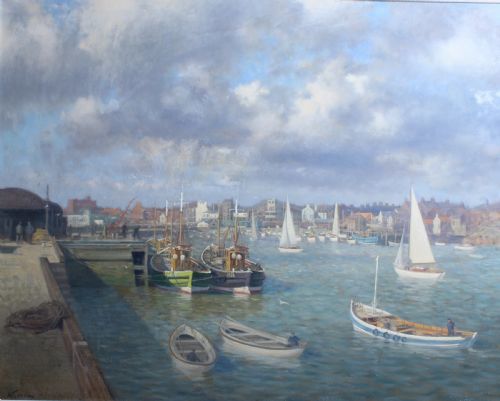
When you search for canvas harbour artwork, you find oil paintings depicting coastal quays, trading vessels and tidal waters.
Canvas Harbour Artwork
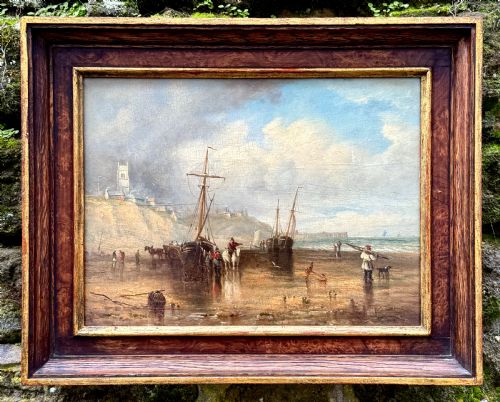
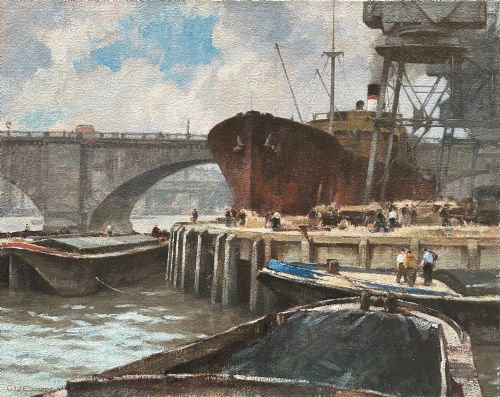
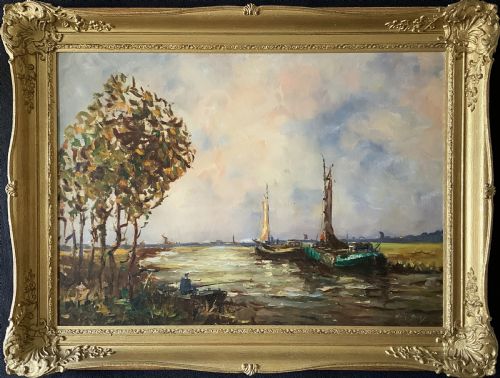
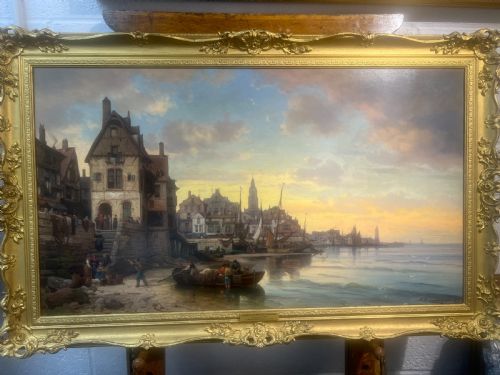
Canvas harbour artwork comprises oil paintings on canvas and board depicting maritime scenes, coastal quays, and shipping vessels from the nineteenth and twentieth centuries. The selection ranges from Victorian maritime watercolours and impressionist port studies to mid-century abstracts and Edwardian coastal landscapes.
Buyers encounter British and continental European views, including Cornish fishing ports, Mediterranean harbours, and industrial river scenes. The works span periods from the eighteen-hundreds through to nineteen sixty, capturing changing light on water, sail boats, and trading vessels.
Materials and Technique
Artists painted primarily in oil on stretched canvas or wooden board, applying pigment with brushes or palette knives to build texture and tone. Many pieces retain their original wooden frames, frequently enhanced with gilt or gold leaf finishes that complement the maritime subject matter.
The application of oil paint allows for subtle blending of light on sea and sky, while board supports offer rigidity for smaller plein air studies executed directly at the dockside.
Several canvases record the exact day a ship sailed into Toulon or when a bomber targeted Rouen.
Evaluating Quality
Quality rests upon the artist's command of light, atmosphere, and spatial depth within the maritime setting. Stronger works capture the specific movement of water and atmospheric conditions of the port rather than relying on formulaic vessel placement.
The preservation of the original oil surface and the harmony of the framing contribute to the standing of a piece. Hand-carved or period gilt frames that suit the era of the painting elevate the overall presentation.
Kenneth Cozens·Eugène-Louis Gillot·James Kay·Augusto Alberici·Clive Browne·Peter Brannan·Paul Bret·Thomas Creswick·Willem Bos·Charles Euphraisie Kuasseg·Thomas Hodgson Liddell·Walter Goodin·Paul-Jean Anderbouhr·Charles William Wyllie·William Edward Webb·Edward Matthew Elliott·Gyrth Russell·Jean-Baptiste Olive·Raymond Picque·Fred Pailhes·George Turland Goosey·Adrian Van Porten·Stanley Leader·Donald McIntyre·James Webb
The Canvas Harbour Artwork Glossary
- Plein air
- Painting executed outdoors to capture natural light and direct observations of the harbour. This method underpins many impressionist coastal works.
- Gilt frame
- A wooden picture frame coated with gold leaf or metallic paint. These frames are period accessories that complement nineteenth and twentieth-century oils.
- Maritime painting
- Artwork focusing on ships, harbours, coastal views, and the sea. It encompasses both commercial shipping and tranquil coastal inlets.
- Impressionism
- An art style focused on accurate depiction of light in its changing qualities. Works in this vein emphasise loose brushwork over sharp detail.
Canvas Harbour Artwork: Frequently Asked Questions
What periods do these paintings cover?
The works span from the nineteenth century through the mid-twentieth century, with particular concentration in the Edwardian era and the decades following nineteen hundred.
Artists across these periods recorded changing maritime architecture, historic sailing vessels, and bustling commercial quays in Britain and Europe.
How should I care for an oil painting on canvas?
Keep the artwork away from direct sunlight and steady extremes of room temperature to protect the canvas and oil pigments from degradation.
Dust the surface gently with a dry, soft brush and avoid using liquid cleaners on either the canvas or the frame.
Are these works signed by the artists?
Many of the pieces feature visible artist signatures or inscriptions detailing the specific harbour, port, or coastal location depicted on the canvas.
Documentation on the reverse or within titles often provides further context regarding the painter's lifespan and school.
What framing is typically included?
Most works arrive in period wooden frames, frequently finished with gilt or gold leaf that matches the era of the painting.
These surrounds range from simple moulded wooden profiles to ornate decorative frames appropriate to nineteenth and twentieth-century aesthetics.