
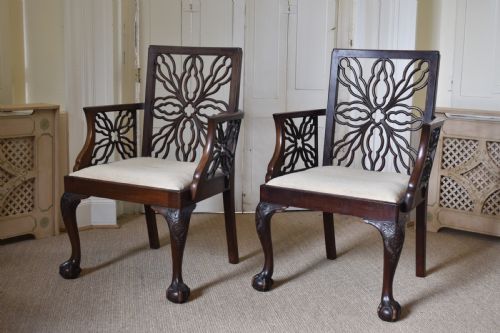
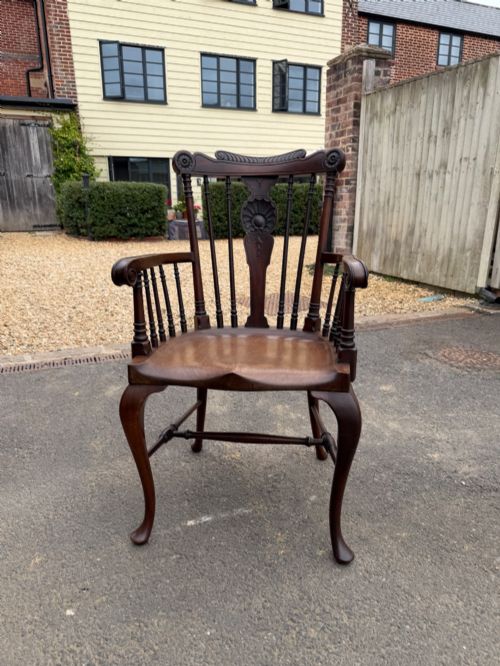
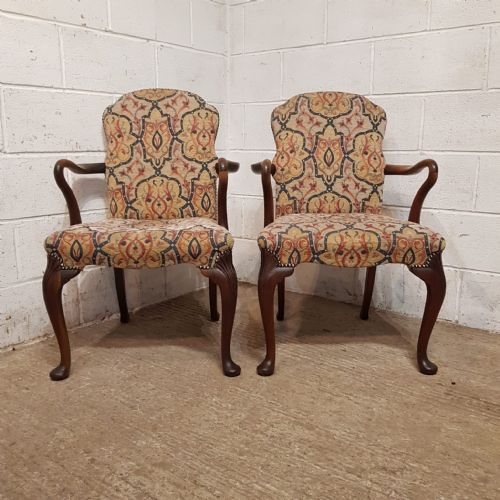
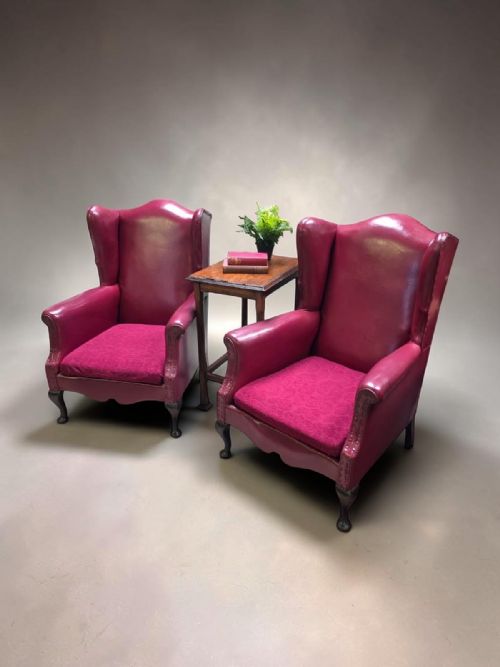
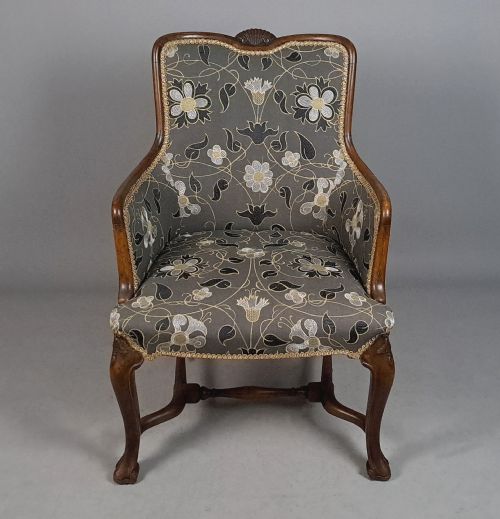
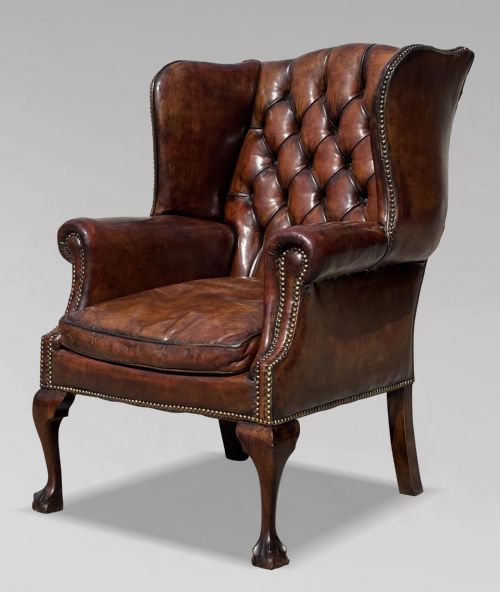
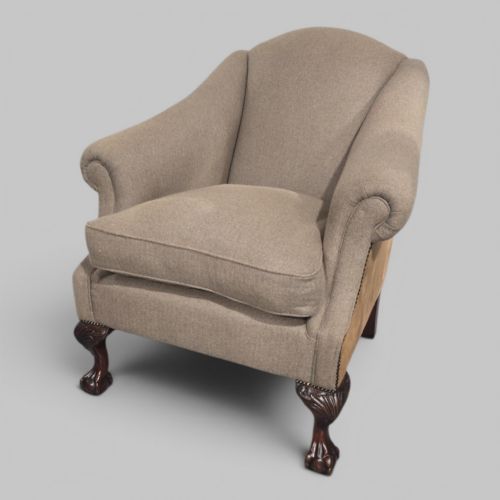
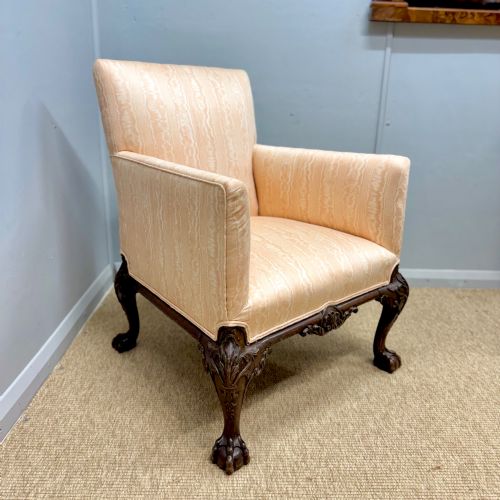
Cabriole Leg Library Chair
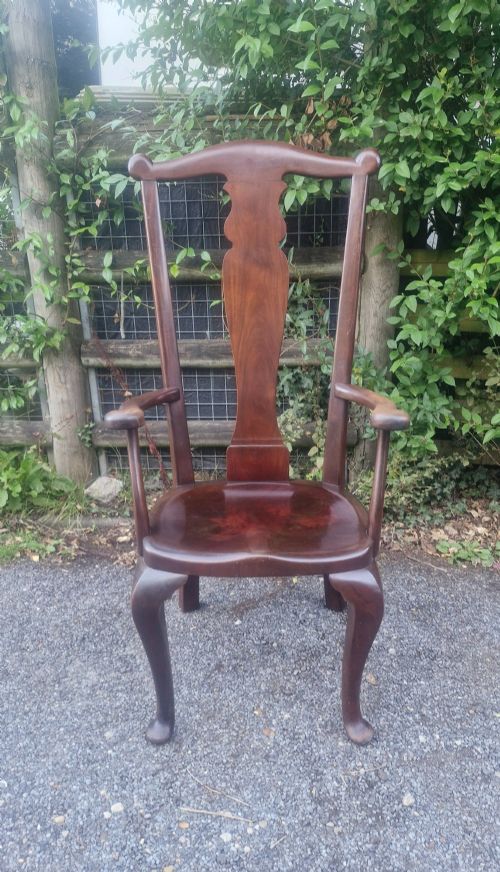
A cabriole leg library chair brings substance and comfort to a study, uniting sturdy timber frames with graceful curved supports.
Cabriole Leg Library Chair
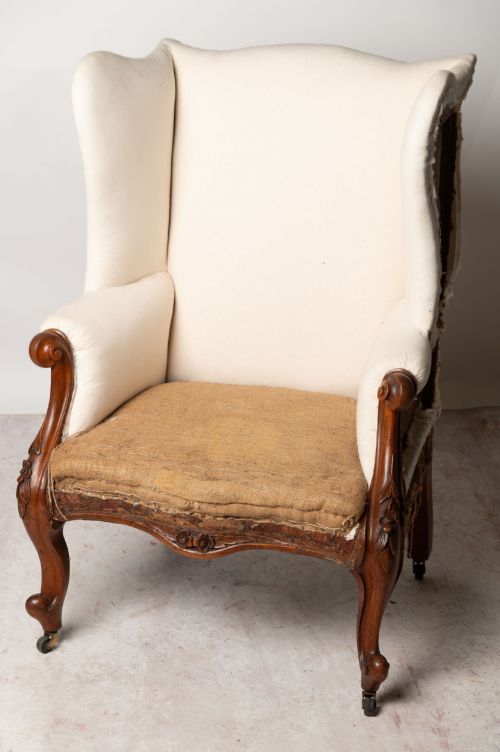
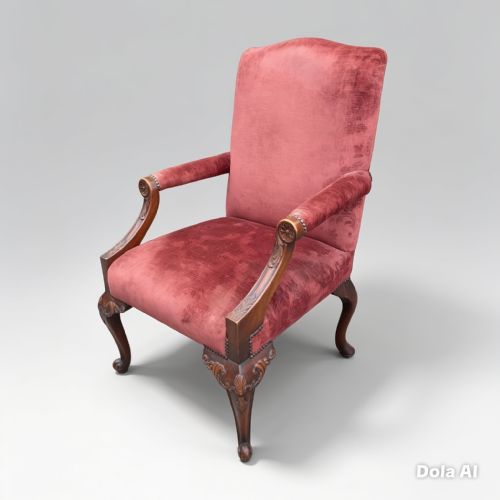
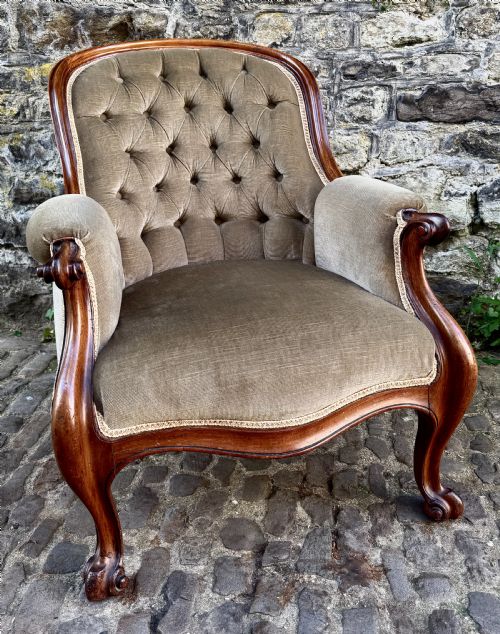
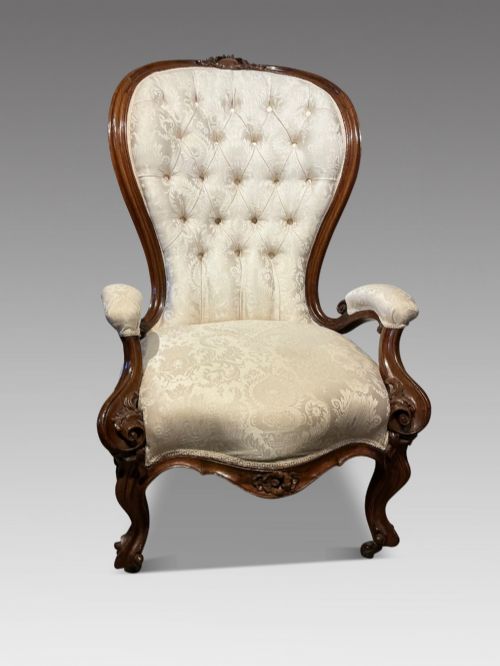
When you search for a cabriole leg library chair, you encounter sturdy seating designed for reading rooms and studies, drawing on centuries of cabinet-making traditions. These pieces combine robust frames with distinctively curved legs that swell at the knee and taper at the foot.
The versions you meet most frequently on this page stem from the nineteenth and early twentieth centuries, though earlier Georgian examples and later revivals appear regularly. They manifest primarily as armchairs, desk chairs, and wingbacks suited for long hours at a table or beside a bookshelf.
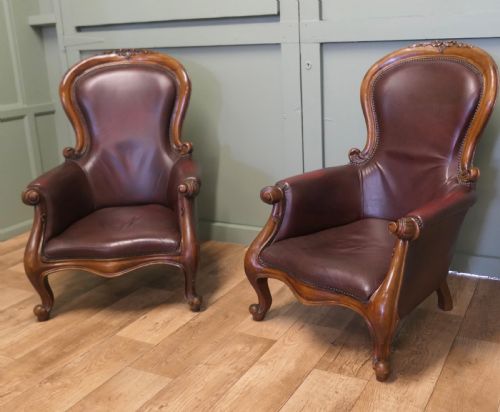
Makers across different eras adapted these forms in mahogany, walnut, and rosewood, often pairing the exposed wooden frames with leather or upholstered seats. Whether rendered in a strict period idiom or a later revival style, each piece balances structural weight with organic curves.
Materials and Construction
Cabinet-makers relied heavily on dense hardwoods like mahogany and walnut to carve the sweeping contours of the cabriole leg without compromising structural integrity. These timbers were selected for their strength and grain, allowing workshops to shape arms, crest rails, and scrollwork with precision.
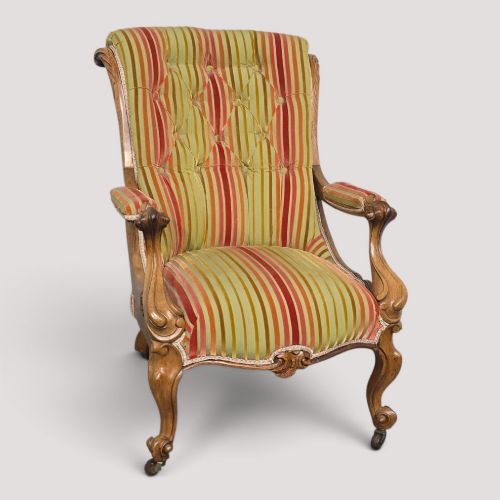
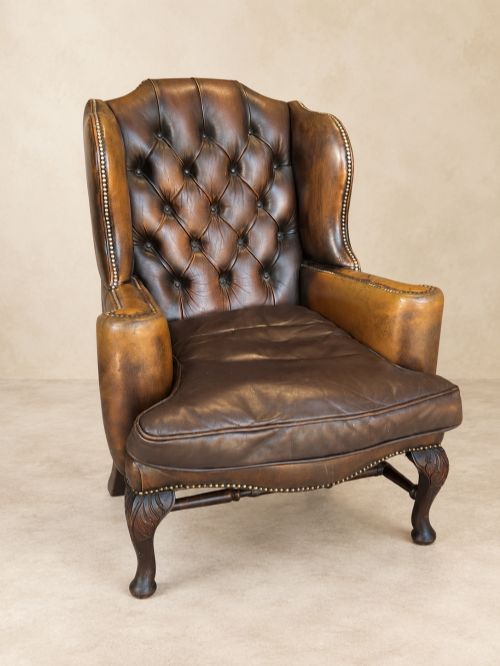
Upholstery techniques combined traditional webbing and horsehair stuffing with leather, velvet, or damask coverings, secured by careful hand-tacking. Many desk and library chairs incorporated brass hardware, castors, and button-backed panels to enhance durability and daily comfort.
Some library chairs hide discreet brass castors beneath their scroll feet, allowing scholars to glide silently across study floors.
The Measures of Quality
Quality rests in the crispness of the timber carving and the harmony of the proportions, particularly where the leg meets the seat rail. Superior examples show fluid lines and careful joinery that conceal the underlying frame while supporting heavy daily use.
The choice of covering materials and the execution of the upholstery dictate the finish of the piece. Fine library chairs maintain firm internal stuffing and high-grade leather or textile surfaces that age gracefully through decades of service.
The Cabriole Leg Library Chair Glossary
- Cabriole leg
- A furniture leg that curves outward at the knee and inward at the ankle, ending in a pad, claw, or hoof foot. This form derives from classical animal legs and became a defining feature of eighteenth-century design.
- Gainsborough chair
- An upholstered armchair with an open frame, padded armrests, and short cabriole legs, designed for writing desks and parlours during the Georgian period.
- Wingback armchair
- A high-backed seat featuring protective side panels designed to shield the occupant from drafts and retain fireplace heat. Early versions often stand upon carved cabriole legs.
- Spoon back
- An upholstered chair back shaped in a concave oval contour resembling the bowl of a spoon, popular during the Victorian era. This design conforms to the sitter's spine for ergonomic support.
- Scroll arm
- An armchair arm that curves outward and downward in a tight spiral scroll. This detail appears frequently on nineteenth-century gentleman's chairs.
Cabriole Leg Library Chair: Frequently Asked Questions
What is a cabriole leg library chair?
A cabriole leg library chair is a sturdy seat built for studies or reading rooms, characterised by curved wooden legs that swell outward and taper toward the foot.
These chairs frequently feature upholstered leather or fabric backs, robust timber frames in mahogany or walnut, and armrests designed for prolonged reading or desk work.
How do I date a library chair?
Dating relies on examining the timber species, the sharpness of the carving, and the construction methods used within the seat frame. Eighteenth-century pieces display hand-carved details and native hardwoods, whereas later revival pieces often incorporate machine-cut joints and distinct nineteenth- or twentieth-century secondary woods.
Style markers such as scroll arms, spoon backs, and specific revival idioms also point toward distinct periods like the Victorian era or the early twentieth century.
Are these chairs comfortable for daily use?
Most library armchairs were engineered for prolonged sitting, offering generous proportions, supportive backrests, and padded armrests. Many feature sprung seats or dense traditional stuffing that supports upright posture at a desk.
Leather and upholstered variants provide durable surfaces that handle regular daily contact while maintaining their structural support.
Which woods were used to make them?
Mahogany and walnut form the vast majority of the wooden frames seen in these listings, prized for their strength and rich grain. Rosewood and oak appear less frequently, used to achieve darker tones or specific regional furniture styles.
These timbers were often polished to a high sheen, highlighting the natural figure of the wood across the cabriole legs and arm supports.