
Brass Stud Leather Armchair
A brass stud leather armchair brings substance to a room, offering deep comfort through buttoned hides and heavy timber frames.
Brass Stud Leather Armchair
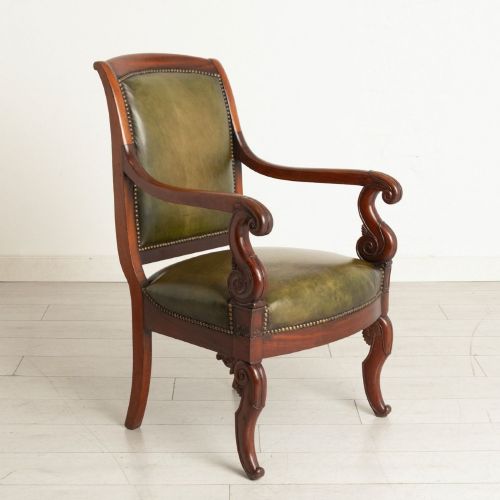
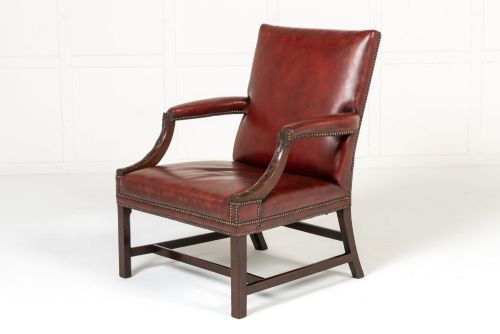
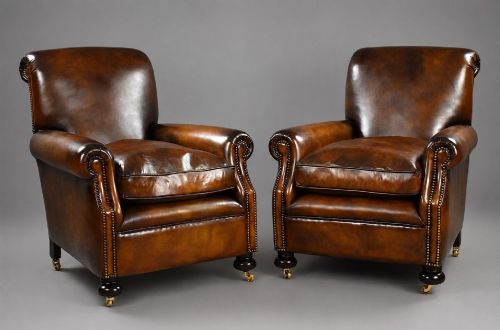
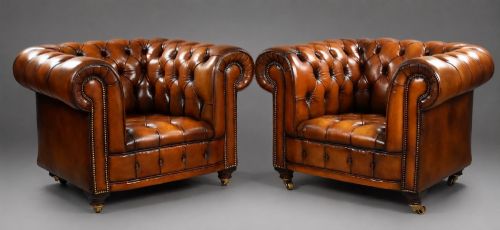
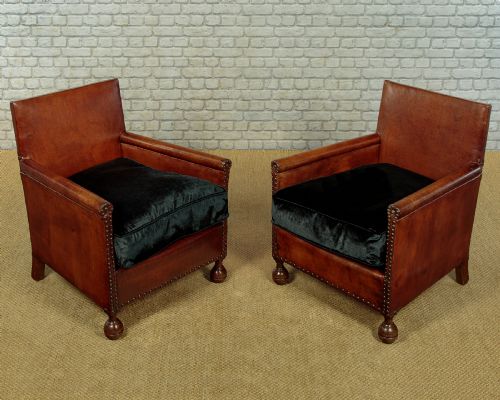
When you search for a brass stud leather armchair, you encounter a wide selection of seating designed for libraries, studies, and drawing rooms. The pieces span centuries of cabinetmaking, ranging from Georgian and Regency library chairs to late Victorian buttoned wing armchairs and 1920s club armchairs.
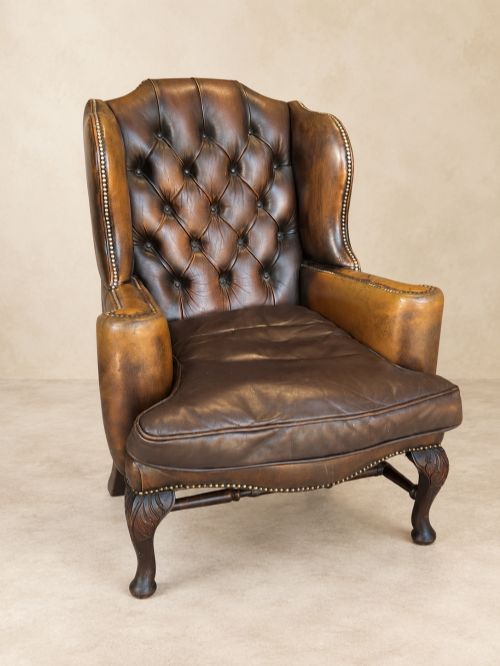
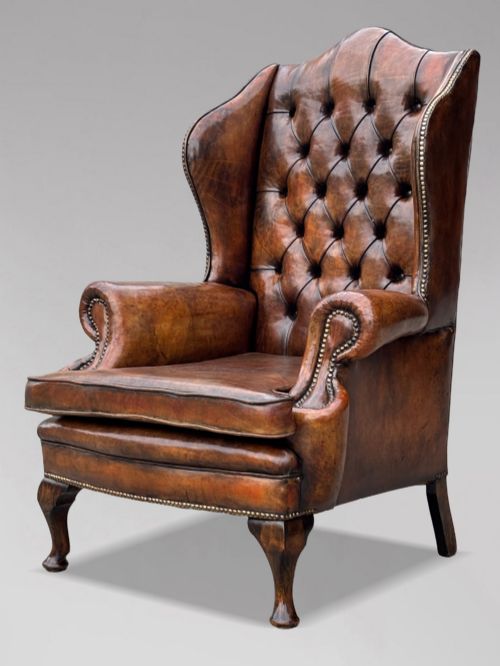
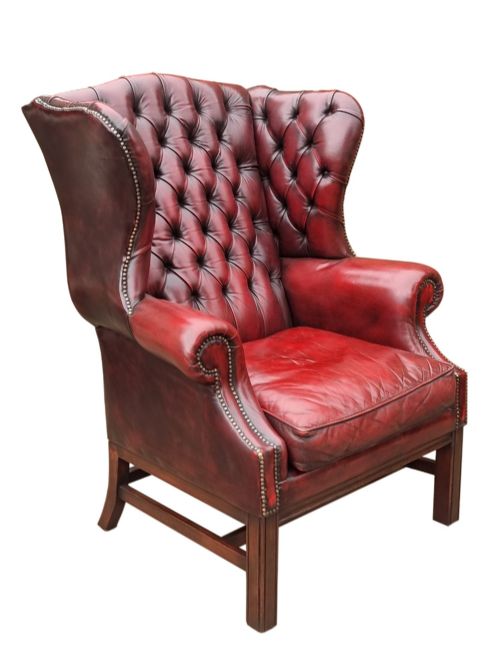
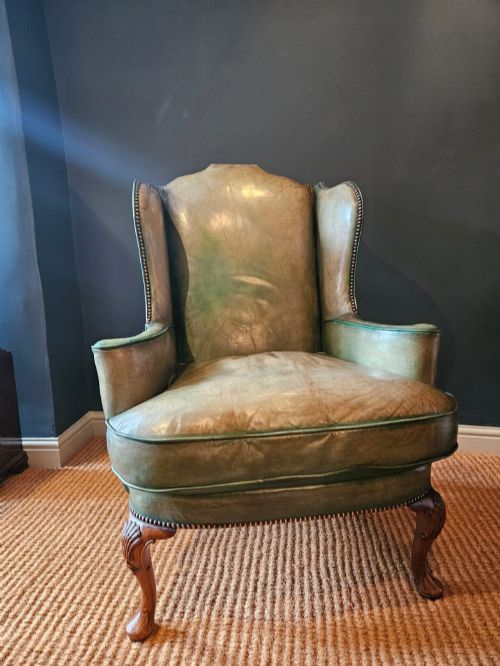
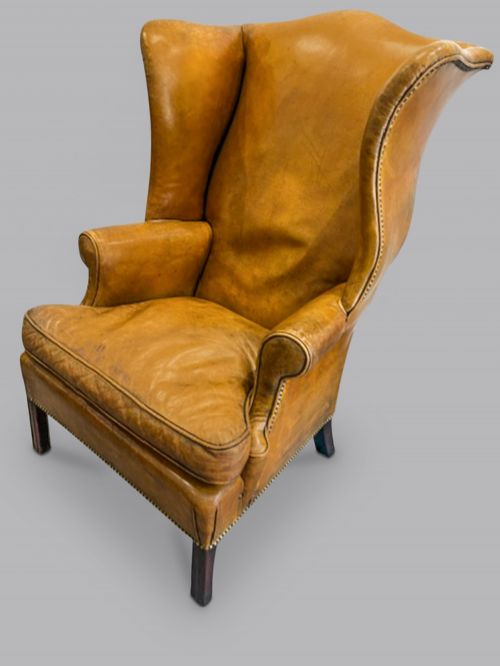
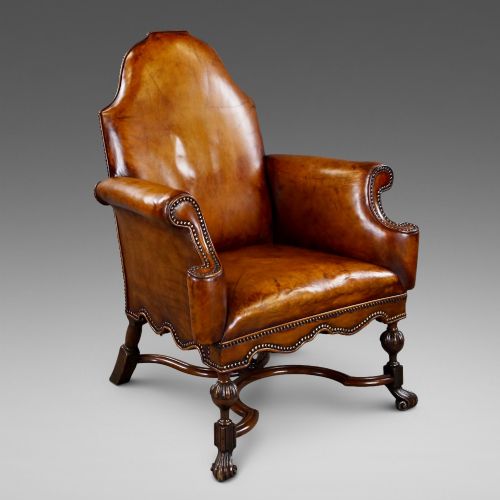
You are most likely to meet nineteenth-century brown leather wing armchairs and twentieth-century club models on this page. These versions combine sturdy wooden frames in mahogany, oak, or walnut with upholstered leather seats and backs finished with individual brass tacks along the borders.
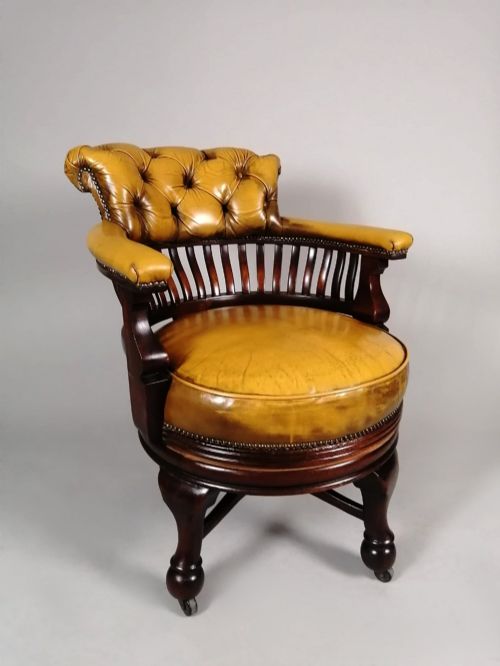
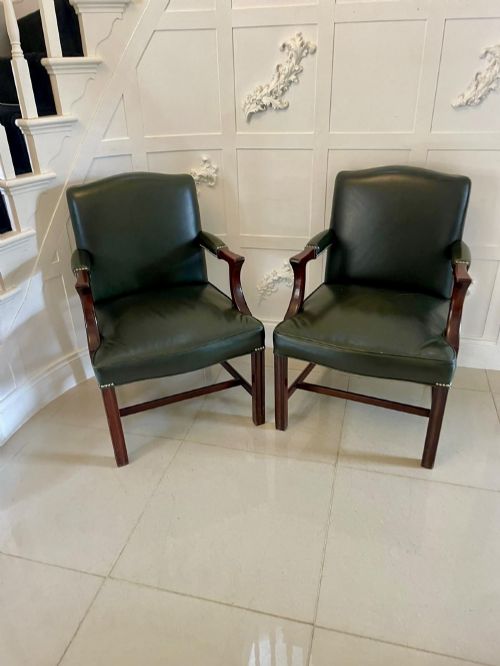
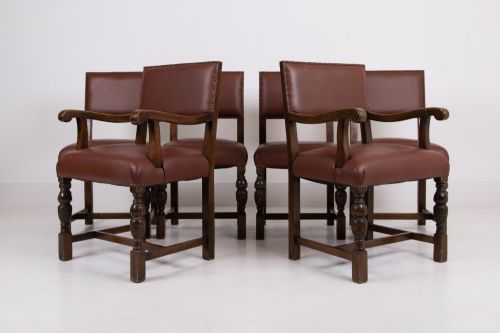
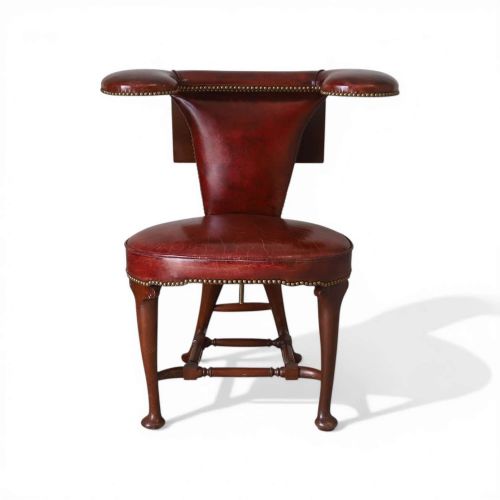
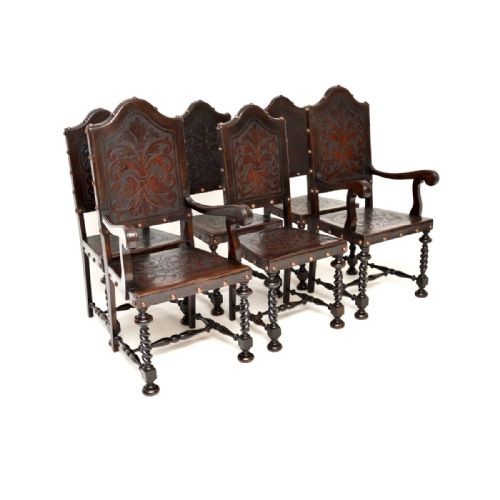
The inventory also includes specialised forms such as revolving desk chairs, reading chairs, and carver chairs intended for dining or office use. Each variety relies on traditional upholstery methods where the metal studs serve both to secure the hide and to provide a decorative border.
Materials and Construction
Cabinetmakers built the structural frames using hardwoods such as mahogany, oak, and walnut. These timbers provided the necessary strength to support heavy use in libraries and offices, often featuring carved cabriole legs, turned supports, or scroll arms.
Upholsterers stretched cattle hide over horsehair and webbing foundations, securing the leather with individual brass studs driven by hand along the seams. This method kept the padding firm while creating the distinctive metal-trimmed edge characteristic of traditional seating.
Listings include timber frames in mahogany, oak, and walnut paired with leather upholstery across multiple centuries.
Quality Variations in Seating
The distinction between ordinary and superior pieces lies in the choice of timber and the quality of the hide. Hand-dyed and hand-coloured leather patinates gracefully over decades, whereas lesser treatments flake or crack with age.
Joinery detail separates standard production from finer cabinetwork. Well-made frames display precise carving, solid hardwood secondary timbers, and neatly spaced brass tacks driven individually rather than in modern strip form.
The Brass Stud Leather Armchair Glossary
- Wing Armchair
- An upholstered seat featuring protective side panels designed to shield the sitter from draughts. These pieces often stand on cabriole or turned wooden legs.
- Club Chair
- A deep, low-slung armchair upholstered in leather, developed for comfort in nineteenth and twentieth-century reception rooms.
- Carver Chair
- An armchair intended for the head of a dining table or use at a desk, typically featuring open arms and a sturdy wooden frame.
- Cabriole Leg
- A furniture leg that curves outward at the knee and inward at the ankle, frequently ending in pad or claw feet on eighteenth-century designs.
- Buttoned
- An upholstery technique where indentations are pulled into the padding using twine secured with fabric or leather tufts.
Brass Stud Leather Armchair: Frequently Asked Questions
How do I date a leather armchair?
Dating relies on examining the timber frame, the upholstery foundations, and the wear patterns on the hide. Earlier pieces display hand-cut joinery and aged mahogany or oak, while twentieth-century examples often show different stitching and padding methods.
Looking underneath reveals the construction of the webbing and the type of screws or nails used. Comparing these details with known period styles helps narrow down the decade of manufacture.
How do I care for antique leather?
Leather requires regular dusting with a dry cloth and occasional treatment with appropriate balms to keep the hide supple. Avoiding direct sunlight and heat sources prevents the material from drying out and cracking.
Gentle maintenance preserves the natural patina built up over generations of use. Harsh chemical cleaners should be avoided entirely to protect the original dye and finish.
Where were library chairs used?
Library chairs were traditionally placed in private studies, gentlemen's clubs, and grand domestic libraries for reading and writing. Their sturdy frames and supportive wing or buttoned backs suited long hours of sitting.
Desk variants often included swivelling mechanisms or castors to allow easy movement around large tables and bookcases.