

Cabriole Leg Bedside Cabinets
Cabriole leg bedside cabinets are practical French and revival night storage pieces defined by curved supports, sought after for bedroom elegance.
Cabriole Leg Bedside Cabinets
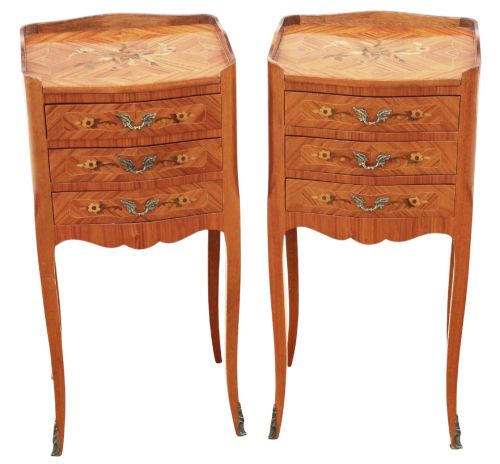
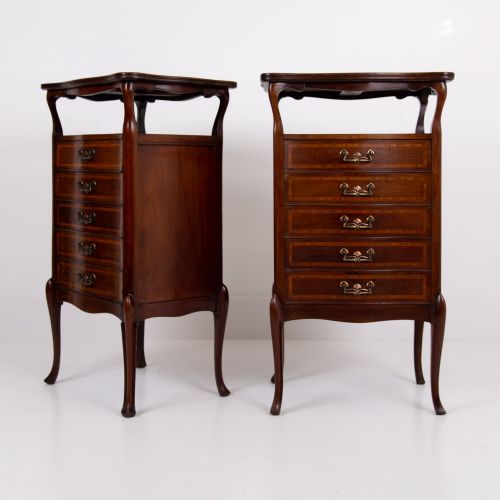
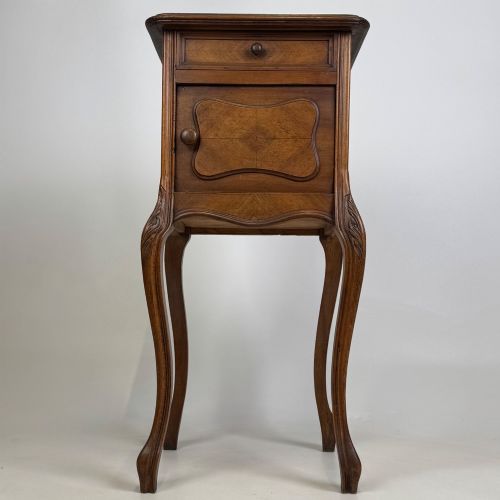
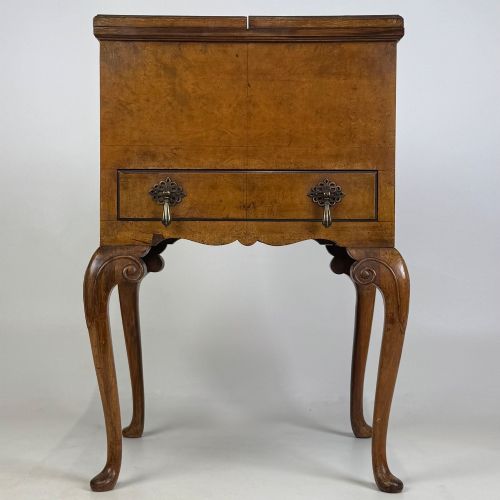
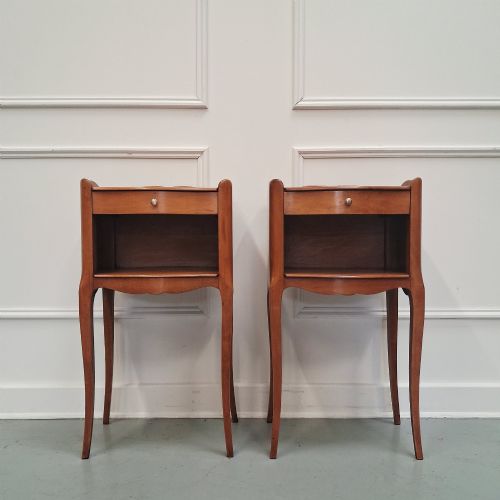
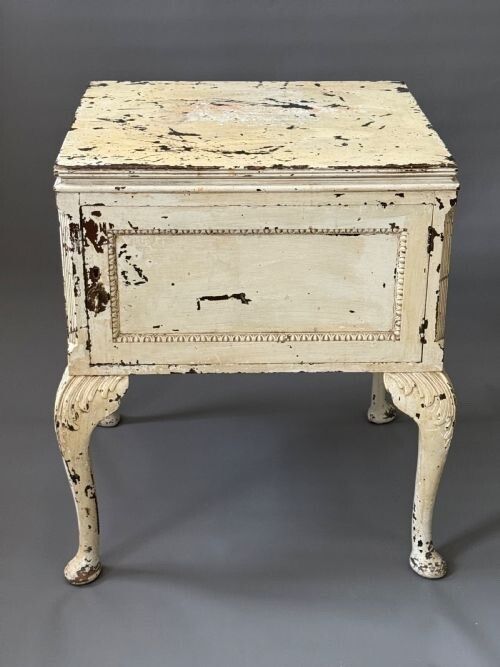
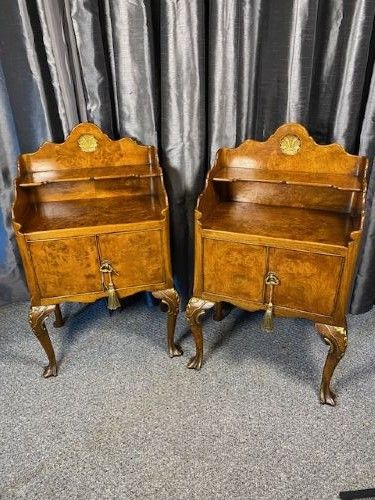
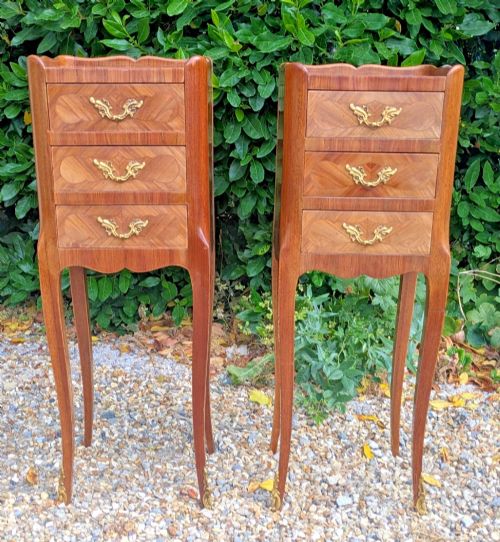
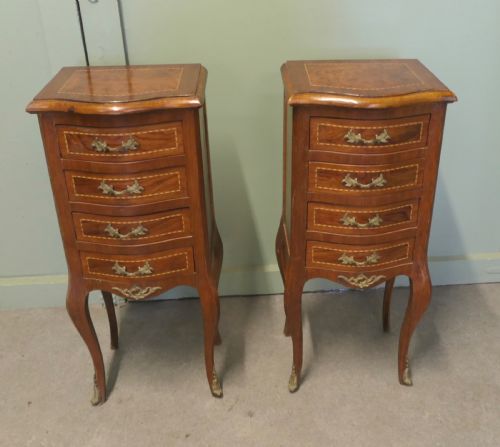
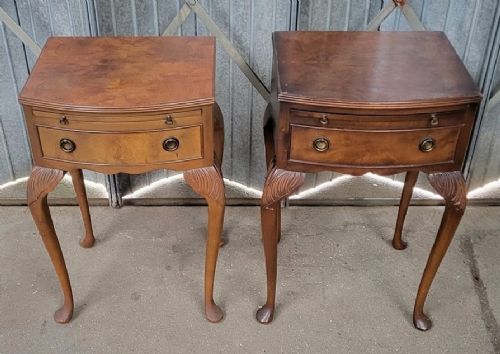
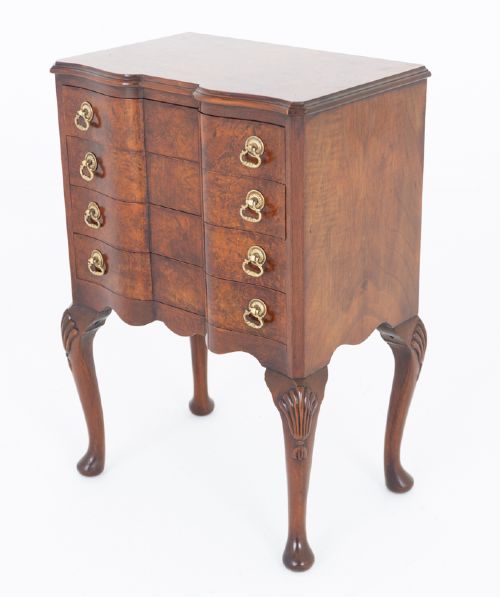
Cabriole leg bedside cabinets combine practical bedside storage with the distinctive curved support derived from eighteenth-century design traditions. These items emerge frequently in pairs, often configured as small cupboards or chests of drawers designed to sit beside a bed.
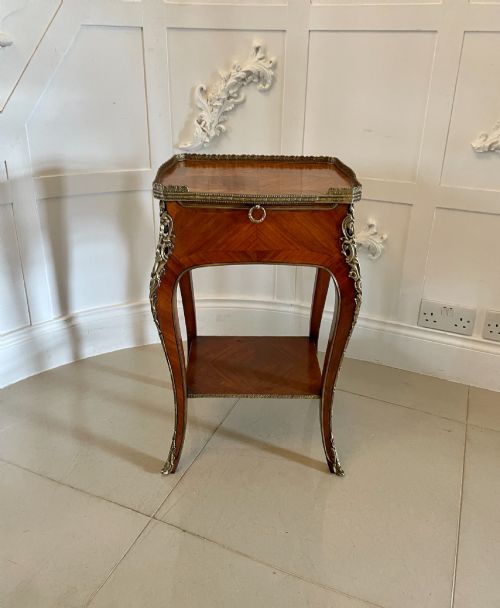
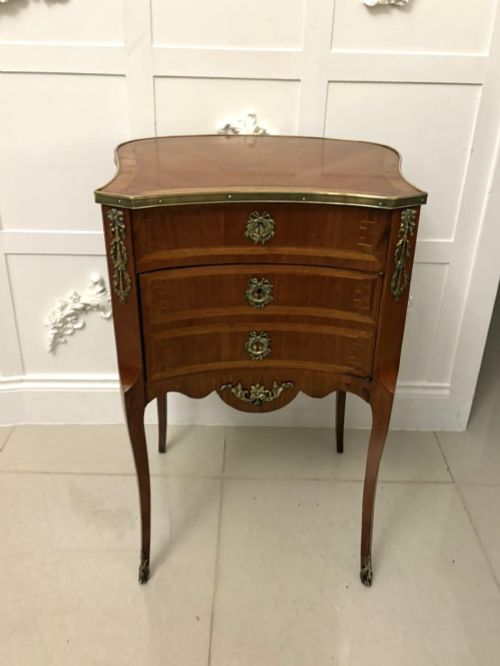
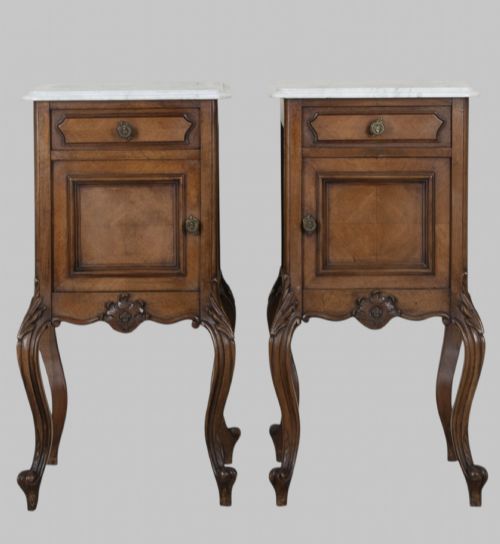
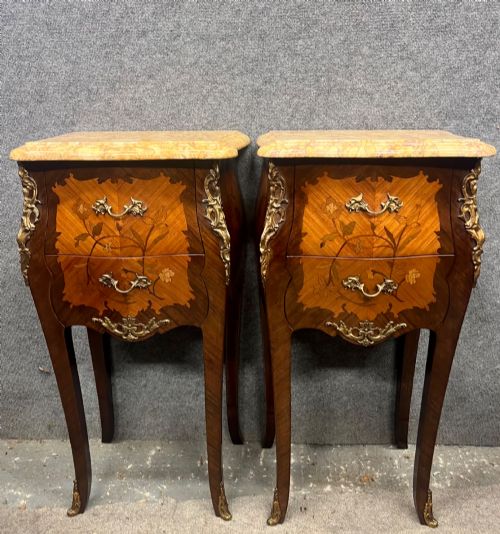
The selection on this page draws heavily from the twentieth century, alongside Edwardian and nineteenth-century examples. Forms span French Provincial and Louis XV styles, together with Queen Anne revivals, offering compact bedside tables and lamp tables with fitted drawers or marble tops.
How they were made
Cabinetmakers utilised timber frameworks of walnut, burr walnut, mahogany, oak, and kingwood, frequently enhanced by decorative marquetry inlay. Selected pieces incorporate marble tops and cast brass or ormolu mounts to accent the curved framework.
Construction relies on traditional joinery methods to shape the characteristic knee and ankle of the cabriole support. Surface finishes range from polished wood grains to painted treatments.
Cabriole Leg Bedside Cabinets Retail Price Guide 2026
Typical asking prices for cabriole leg bedside cabinets among the pieces listed under this phrase on Sellingantiques today, from the lower quarter to the upper quarter. They describe what is for sale here now, not the wider market.
Walnut and burr walnut dominate the wood selections across these bedside cabinets.
What varies in quality
Execution of the timber shaping and the precision of marquetry inlay dictate the distinction between standard production and finer workshops. Crisp definition in the carved knee of the leg and balanced proportions distinguish superior examples.
The choice of materials, such as figured burr walnut or substantial marble slabs paired with quality ormolu mounts, elevates the standard of the finished cabinet.
The Cabriole Leg Bedside Cabinets Glossary
- Cabriole leg
- A furniture support that curves out at the knee and tapers inward to an ankle, mimicking animal limbs. This form became prominent during the eighteenth century and returned in later revival periods.
- Marquetry
- Decorative veneer work arranged in geometric or pictorial patterns across a wooden surface. Craftsmen assemble thin slices of contrasting timber to form intricate designs.
- Ormolu
- Gilded bronze mounts applied to furniture for decorative accent. This technique provides metallic contrast against dark woods like kingwood and mahogany.
- Chevet
- A French bedside cabinet or nightstand designed for bedroom storage. These pieces frequently feature a small cupboard door or stacked drawers.
- Serpentine
- A furniture front or top shaped with a convex centre flanked by concave curves. This contour adds visual movement to bedside chests and tables.
Cabriole Leg Bedside Cabinets: Frequently Asked Questions
What periods do these cabinets date from?
The listings span from the late nineteenth century through the Edwardian era and into the nineteen-twenties and thirties. Revival styles dominate the selection.
Most pieces reflect historical French and English design idioms rather than original eighteenth-century manufacture.
Are these cabinets usually found in pairs?
Many examples appear as matching pairs, which suits symmetrical bedside placement. Single cabinets also feature across the inventory.
Buyers often encounter near pairs that share similar dimensions and wood grains rather than originating from the exact same workshop batch.
What materials are used for the tops?
Surfaces include polished wood such as walnut or mahogany, alongside fitted marble slabs. Some marble tops integrate a serpentine or shaped edge.
Timber tops frequently display marquetry inlay or matched wood veneers.
How do I identify French styles here?
French Provincial and Louis XV revival pieces exhibit sweeping curves, subtle marquetry, and occasionally ormolu mounts. Proportions tend to remain neat and compact.
Queen Anne style items share curved supports but typically follow simpler English revival lines.