
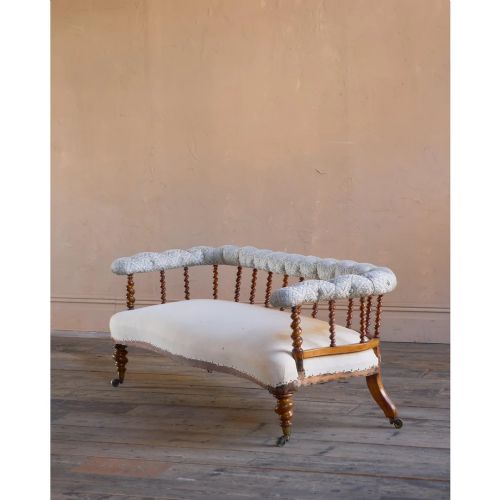
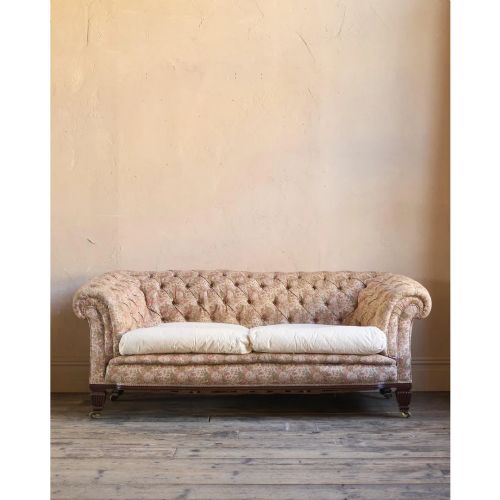
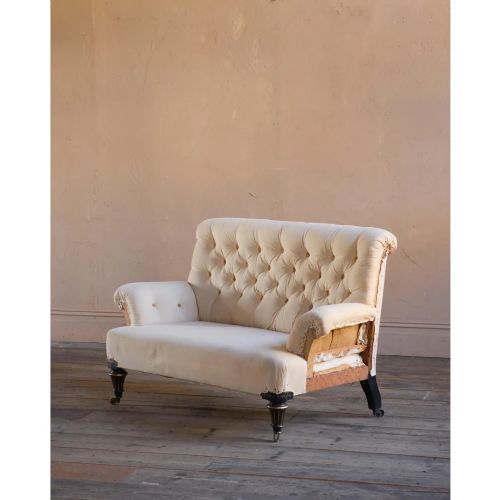
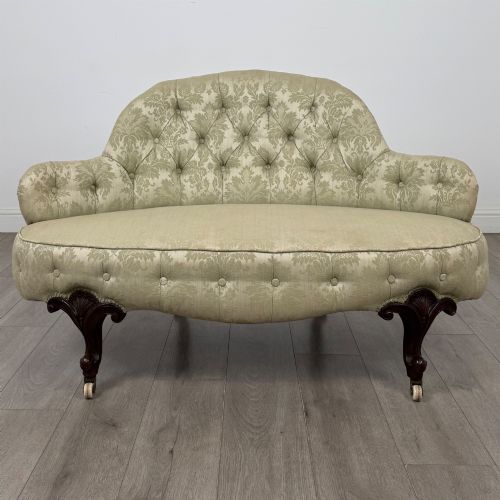
Buttoned Back Settee
A buttoned back settee offers deep upholstery and tailored tufting, bringing nineteenth-century comfort and architectural presence into a room.
Buttoned Back Settee
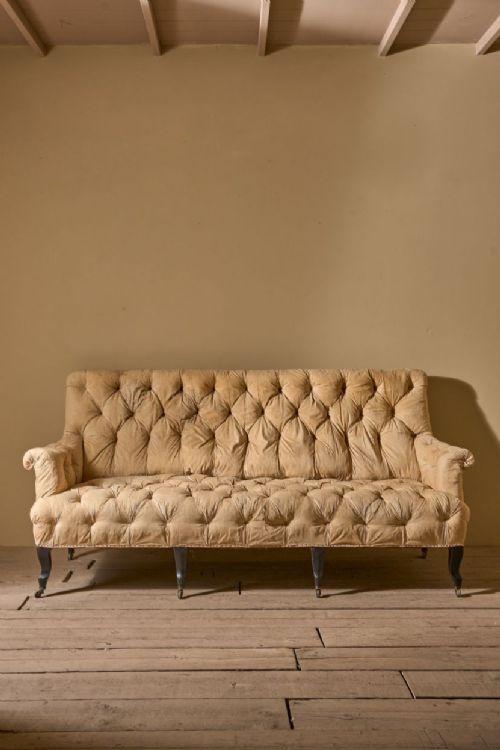
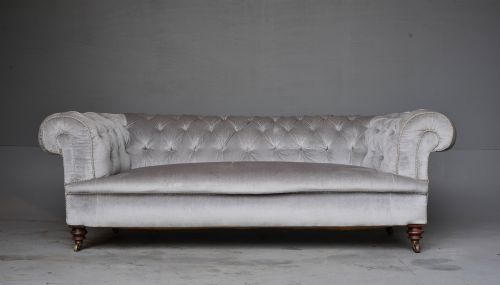
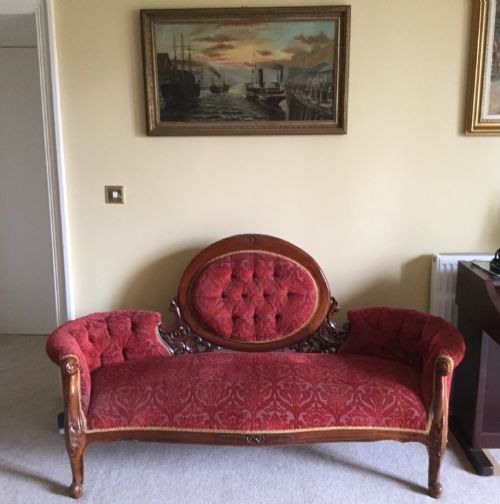
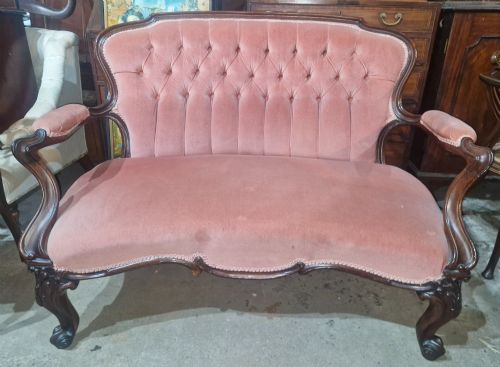
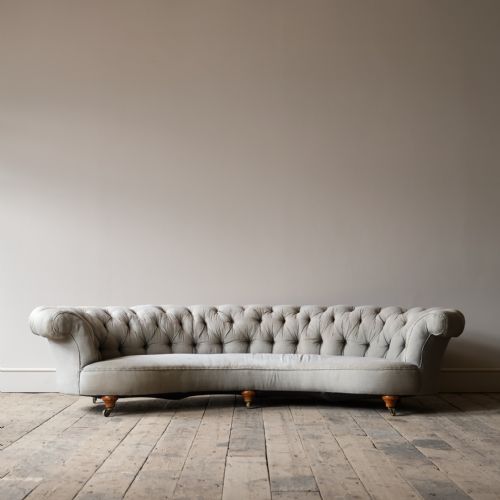
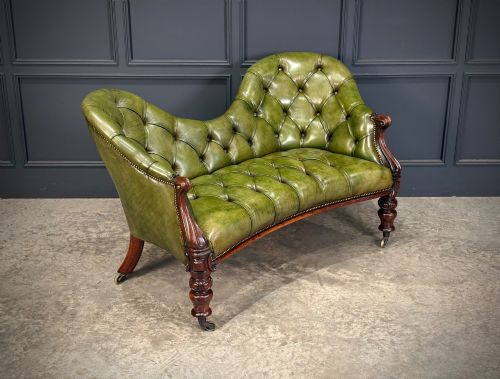
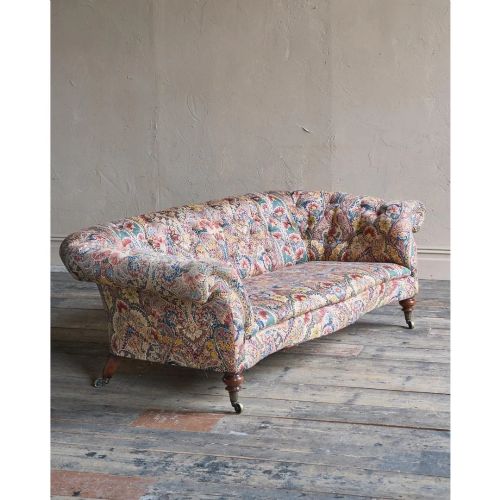
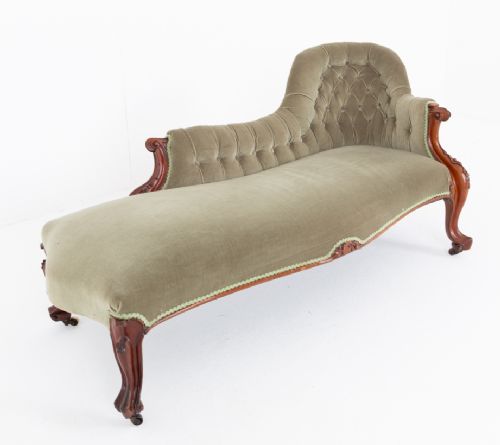
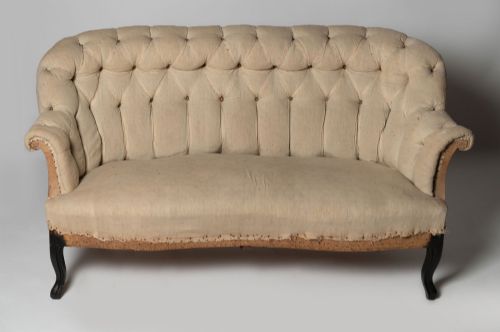
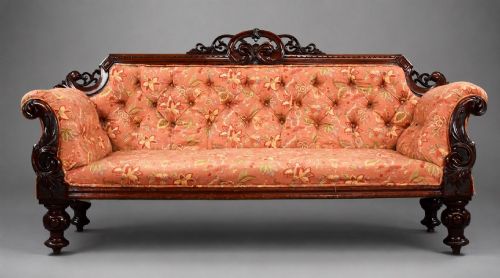
A buttoned back settee is an upholstered seating form defined by tufted upholstery, where recessed buttons pull the fabric or leather into a tight grid of padded diamonds. When searching for a buttoned back settee, buyers encounter nineteenth-century forms ranging from Victorian Chesterfords and spoon-back sofas to Napoleon III salon seating and low chaise longues.
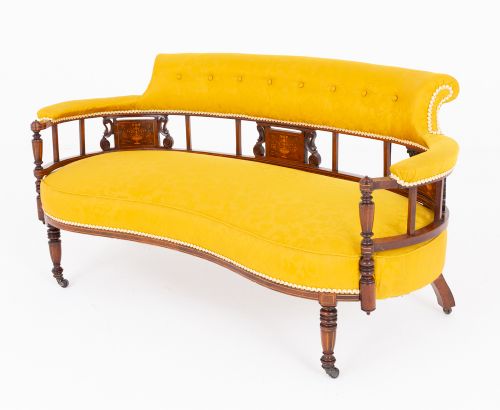
The pieces appearing on this page span the Victorian and Edwardian eras alongside mid-nineteenth-century French designs, constructed primarily from mahogany, walnut, and rosewood frames. Formats vary from traditional two-seater and three-seater Chesterfords to corner sofas, window seats, and double-ended settees suited to formal reception rooms.
Victorian examples dominate the selection, often featuring robust hardwood frames paired with deep springing and rolled arms. Buyers select these settees for their combination of architectural woodwork and tactile textile finishes, whether covered in aged leather, velvet, or contemporary brocade.
How they were made
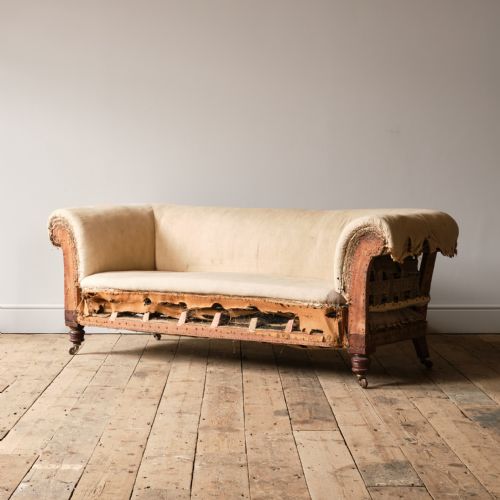
Makers built these settees around sturdy hardwood frames of mahogany, walnut, or rosewood, often carving details directly into the exposed show-wood elements such as cabriole legs, scroll arms, and crest rails. Joinery relied on traditional mortise and tenon techniques to support the heavy internal tension required for sprung seats.
Upholsterers built up the deep padding using natural stuffings secured over interlaced webbing and coiled steel springs, before pulling the final leather, velvet, or fabric tightly across the face with rows of deep twine-secured buttons. Brass castors frequently fitted to the feet allowed these heavy wooden and upholstered structures to move across carpets.
Many nineteenth-century settees roll around on tiny brass wheels, ready to sprint across the carpet at the slightest domestic realignment.
What varies in quality
Quality in a buttoned back settee rests in the integrity of the underlying woodwork and the precision of the tufting layout. Superior examples exhibit crisp, hand-carved mahogany or rosewood frames that remain rigid, whereas lesser pieces show timber fatigue or loose joinery at the stress points of the arms and back.
The execution of the buttoning separates workshop standards, requiring evenly spaced tension that maintains a uniform diamond pattern across the curves of the backrest. The choice of primary material - such as dense Victorian walnut or heavy hand-dyed leather - dictates the longevity and tactile weight of the finished piece.
Howard and Sons·C. Hindley and Sons·Jackson and Graham·Holland and Sons·Hampton and Sons of Pall Mall
The Buttoned Back Settee Glossary
- Chesterfield
- A large upholstered sofa characterised by arms and back of the same height, traditionally featuring deep button tufting. This form remains a staple of nineteenth-century seating design.
- Chaise Longue
- An elongated chair or day bed designed for reclining, combining a backrest with a single raised end. Victorian examples often feature carved rosewood or walnut frames.
- Spoon-Back
- A chair or settee backrest shaped in the concave contour of a spoon, popular during the mid-Victorian period. It provides ergonomic support to the spine.
- Brocade
- A rich, shuttle-woven fabric featuring raised patterns, frequently utilised in nineteenth-century upholstery. It adds textural contrast to polished hardwood frames.
- Ebonised
- Wood treated to imitate ebony through staining or painting, common in Aesthetic Movement furniture. This finish creates a dark, uniform surface.
Buttoned Back Settee: Frequently Asked Questions
What is a buttoned back settee?
A buttoned back settee is a nineteenth-century upholstered seating form featuring tufted upholstery secured with recessed buttons.
These pieces range from Victorian Chesterfield sofas to French Napoleon III salon seating and rosewood chaise longues.
How were nineteenth-century settees constructed?
Craftsmen built these frames using dense hardwoods like mahogany, walnut, and rosewood, incorporating internal steel springs and webbing.
Upholsterers then layered natural stuffings beneath leather, velvet, or fabric, securing the characteristic tufts with heavy twine.
Where did people place these settees?
These settees served as principal seating in Victorian drawing rooms, parlours, and formal reception spaces.
Their substantial proportions and finished backs allowed them to sit centrally within large rooms as well as against walls.
How do I identify a Victorian settee?
Victorian pieces typically exhibit dark hardwood frames, exposed carved show-wood, and deep button-tufted upholstery.
Stylistic markers include scrolled arms, turned legs fitted with brass castors, and robust proportions associated with mid-to-late nineteenth-century manufacture.
Can I use a settee in a modern interior?
A buttoned back settee anchors contemporary living spaces by introducing historic craftsmanship and tactile materials.
Many pieces tolerate modern upholstery textiles or raw leather treatments while retaining their original nineteenth-century frames.