

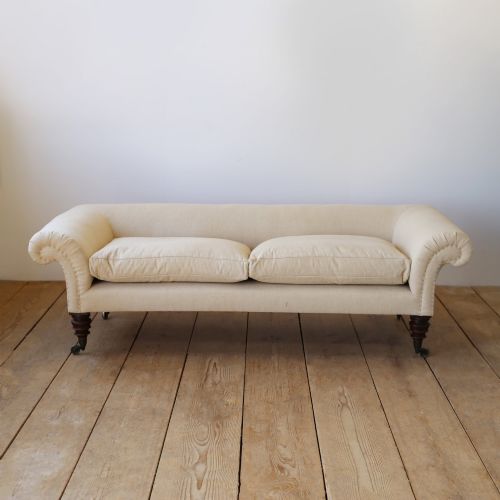


Neutral Upholstered Sofa
A neutral upholstered sofa brings calm texture and classic seating to a room, ranging from country house comfort to French carved elegance.
Neutral Upholstered Sofa
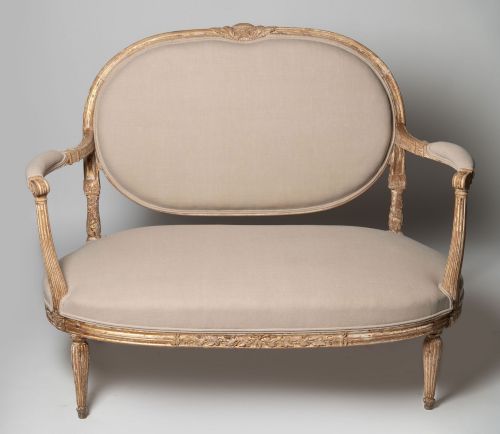
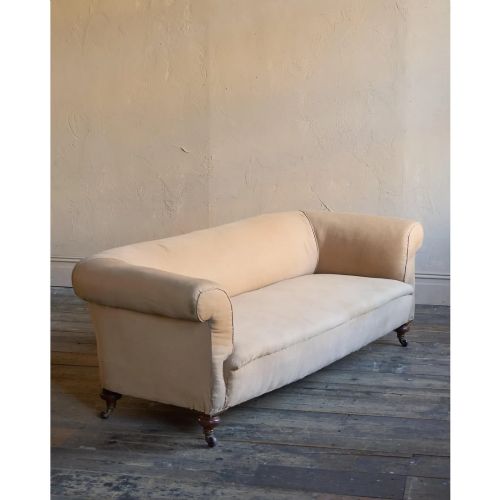
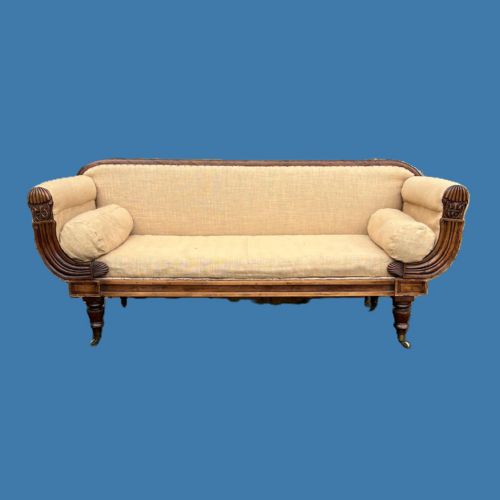
A neutral upholstered sofa provides understated seating through pale linen, calico, or simple fabric covers over traditional frames. When you search for a neutral upholstered sofa, you encounter diverse forms spanning the eighteenth, nineteenth, and Regency periods.
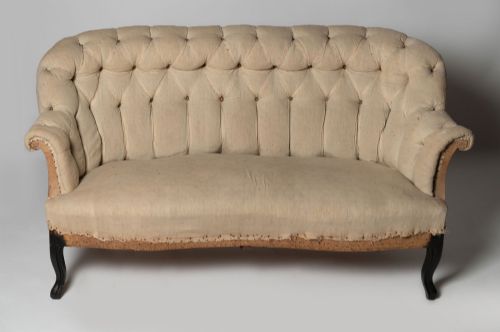
The most common examples on this page are nineteenth century French sofas, country house pieces, and buttoned small settees. Makers and workshops from these eras produced everything from simple wood frameworks to elaborate walnut and simulated rosewood designs.
Beyond standard sofas, the selection includes chaise longues and settees shaped by styles such as Louis XVI, Italian Rococo, and George IV. Each piece relies on neutral textile coverings to highlight the underlying woodwork, brass details, and carved silhouettes.
How they were made
Frames rely on solid timber foundations of beech, walnut, and wood, shaped by hand to form curved settees and rigid campaign structures. Joinery techniques secure the structural integrity of these nineteenth and eighteenth century frames before any textile work begins.
Upholstery involves applying linen, calico, or fabric directly to the frame, often incorporating buttoning and concealed storage compartments within the seating. Brass elements sometimes accent the woodwork or support mechanisms on specialised forms like chaise longues.
Some nineteenth century chaise longues hide secret storage compartments beneath the upholstery, perfect for stashing midnight reading material.
What varies in quality
Quality rests primarily in the execution of the timber frame, distinguishing simple country house construction from refined French revival carving. Wood selection, such as figured walnut or simulated rosewood, dictates the visual weight of the seating.
The sophistication of the upholstery work separates standard pieces from superior examples, particularly in the precision of buttoning and the choice of durable linen or fabric. Balance in period styling, whether Regency or Louis XV Revival, completes the measure of a finer sofa.
Howard and Sons
The Neutral Upholstered Sofa Glossary
- Calico
- A plain-woven textile often used as a base layer for upholstery before a final cover is applied. It provides a neutral foundation common in period seating.
- Buttoned
- An upholstery technique where stitches pull the fabric tight against the stuffing to create a patterned, indented surface. This appears frequently on high back small sofas.
- Simulated Rosewood
- A wood painted or stained to imitate the rich grain and deep colour of genuine rosewood. Craftsmen utilised this technique during the George IV period.
- Campaign Sofa
- Portable furniture designed for travel, featuring robust timber frames and collapsible elements. These pieces reflect nineteenth century practicality.
Neutral Upholstered Sofa: Frequently Asked Questions
What is a neutral upholstered sofa?
A neutral upholstered sofa is a period seating option covered in plain linen, calico, or simple fabric. These pieces span the eighteenth and nineteenth centuries, offering versatile styles for traditional interiors.
They combine wooden frames made from beech, walnut, or timber with subdued textile choices. This combination allows the historic silhouettes to blend into various room schemes.
How do I identify a Regency sofa?
Regency sofas feature specific stylistic traits from the early nineteenth century, often incorporating dark woods and classical proportions. Look for details like simulated rosewood finishes and brass accents.
They reflect a distinct shift away from earlier Rococo excesses towards cleaner, more architectural lines. Examining the woodwork helps distinguish them from later Victorian productions.
Where were these sofas used?
These seating pieces originated in various European drawing rooms, country houses, and formal parlours. French country homes and grand English estates alike utilised them for daily reception and relaxation.
Specialised forms like chaise longues were placed in bedrooms or private sitting rooms for reclining. Campaign versions were built for travel and military use.
How do I live with antique upholstery?
Living with antique upholstery involves appreciating the natural ageing of fabrics like linen and calico. Regular, gentle care preserves the integrity of the original textiles and interior stuffing.
Positioning the furniture away from direct sunlight protects the neutral fabrics from fading. These pieces function well in modern spaces by providing historical contrast and tactile comfort.