
Deep Tufted Sofa
A deep tufted sofa brings generous comfort and substantial presence to a room, built around a dense framework of upholstery and buttons.
Deep Tufted Sofa
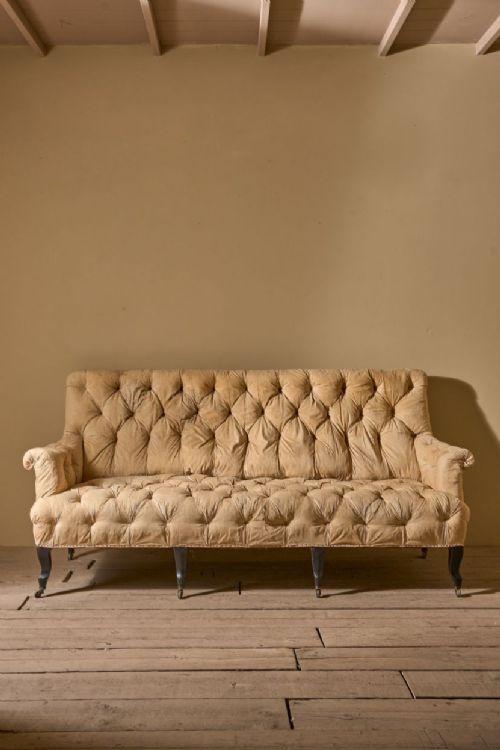
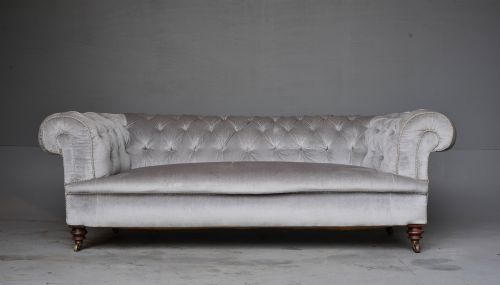
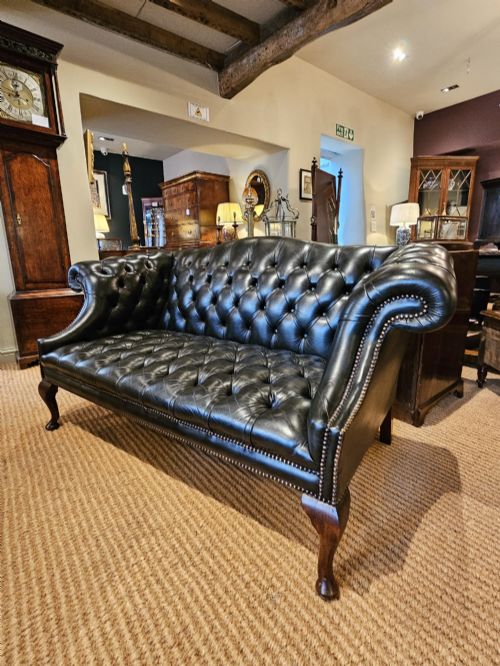
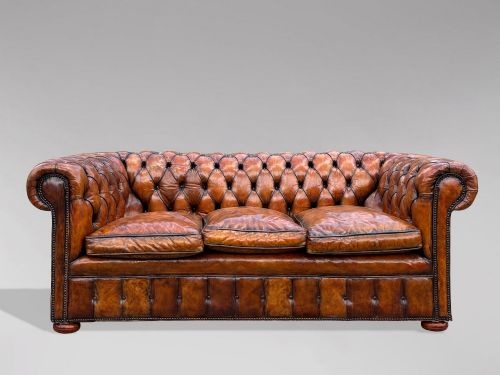
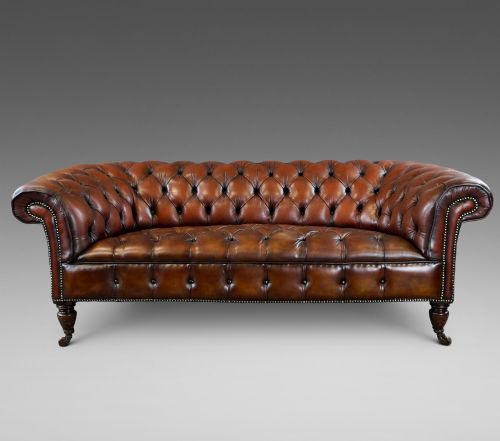
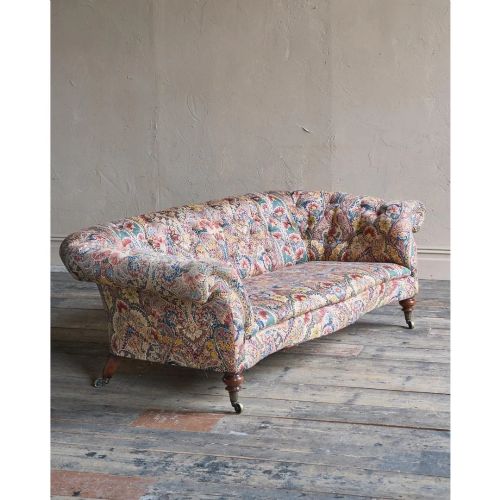
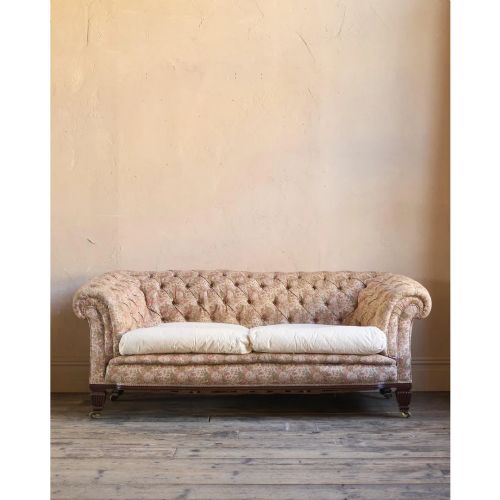
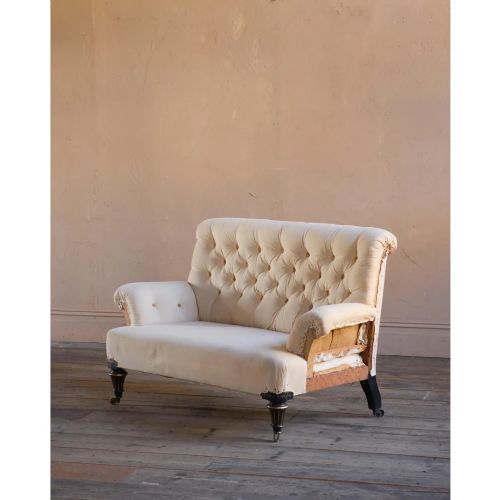
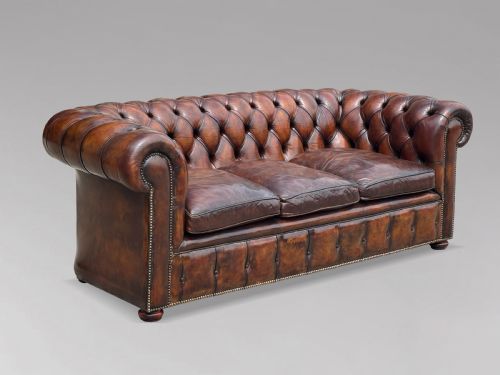
A deep tufted sofa encompasses heavy upholstered seating designed for relaxation, most commonly encountered as a Chesterfield in nineteenth century British contexts. These forms rely on buttoning across the back and arms to secure the deep padding beneath.
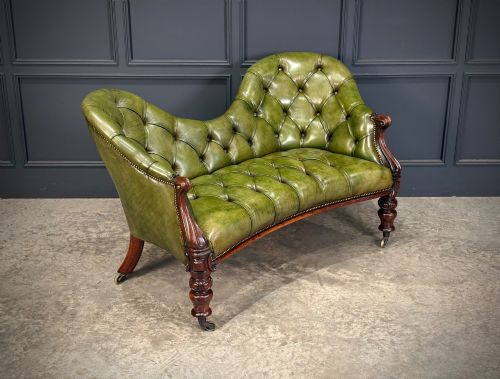
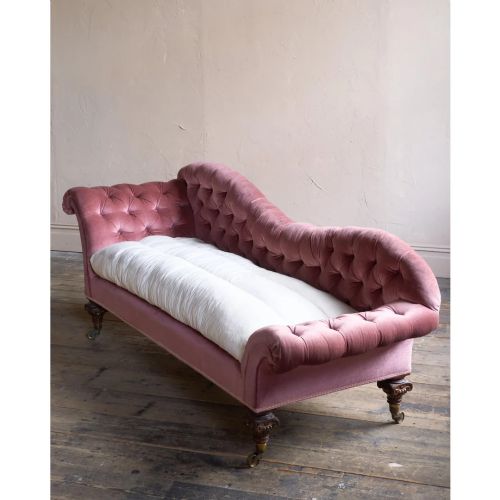
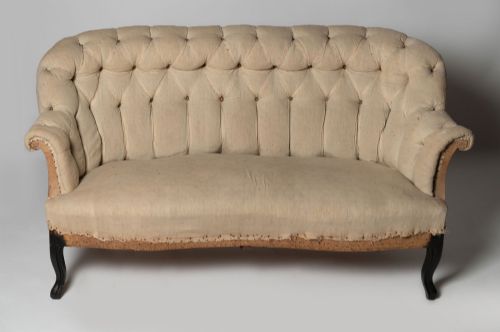
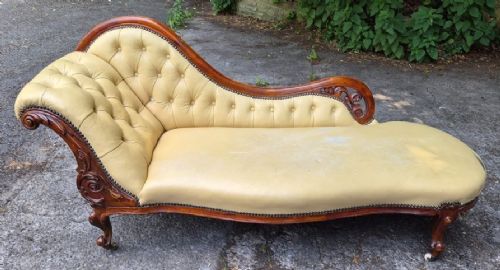
Beyond the classic Chesterfield shape, the selection includes Victorian double spoon-back sofas, Napoleon III buttoned high back models, and chaise longues. These pieces emerge from the nineteenth and early twentieth centuries, constructed in forms ranging from compact two-seaters to large three-seater proportions.
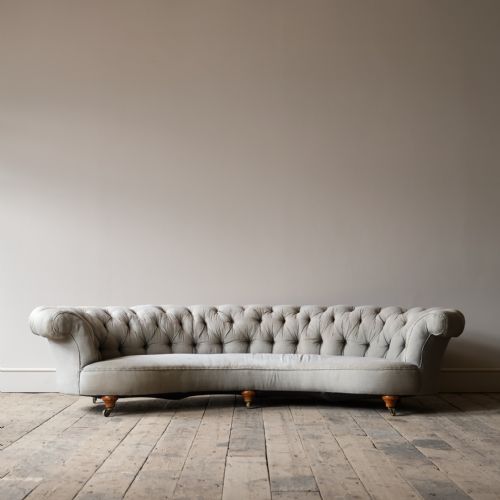
Makers such as Howard and Sons, Jackson and Graham, and Hampton and Sons appear among the nineteenth century examples. Frameworks take various structural paths, including corner sofas, kidney shapes, and open arm styles.
How they were made
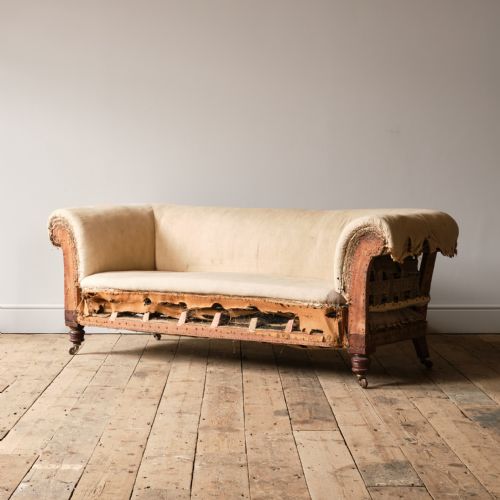
Construction relies on substantial timber frames fashioned from mahogany, walnut, and general hardwood to support heavy internal stuffing. Traditional execution incorporates horsehair filling and loose coil springing to maintain resilience beneath the upholstery layer.
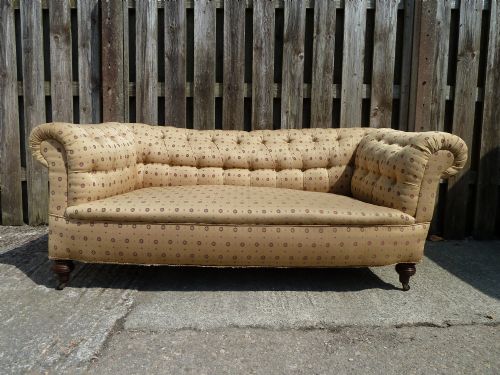
Surface treatments combine robust leather with textile options like velvet, fabric, and blue damask. Button tufting secures these materials deeply into the stuffing, while exposed wooden elements incorporate carved mahogany and brass details on legs.
One piece arrives in raw leather awaiting a custom hand-dyed colour choice, like commissioning a bespoke suit from a century ago.
What varies in quality
The integrity of the internal stuffing and coil springing dictates the tactile response and longevity of the piece. Hand-dyed leathers and raw hides prepared for bespoke finishing show distinctions in hide selection and surface depth.
Cabinetwork precision in the underlying hardwood frames and the finesse of the button-tufting pattern separate workshop output. Pieces associated with established makers demonstrate superior joinery and proportional balance within the upholstery.
Howard and Sons·Jackson and Graham·Hampton and Sons
The Deep Tufted Sofa Glossary
- Chesterfield
- A traditional upholstered sofa style characterised by arms and back of the same height, featuring deep button tufting. This form remains a staple of nineteenth century seating design.
- Buttoning
- The technique of pulling strings or twine through padding to secure buttons at regular intervals, creating diamond-shaped indents in the leather or fabric. It maintains the internal stuffing structure.
- Chaise Longue
- An elongated upholstered chair designed for reclining, often featuring a single backrest at one end. Examples integrate scroll arms or carved wooden frames.
- Horsehair
- Traditional stuffing material harvested from animal manes and tails, valued for its springiness and breathability. It provides durable internal support in antique upholstery.
- Spoon-back
- A chair or sofa back shaped like the bowl of a spoon, typically edged with carved wood framing. This design supports the sitter's spine in Victorian seating.
Deep Tufted Sofa: Frequently Asked Questions
What defines a deep tufted sofa?
A deep tufted sofa uses recessed buttons pulled tightly through thick padding to create a distinctive quilted surface across the back and arms.
This method secures the internal filling, such as horsehair, and creates firm support while allowing the upholstery to maintain its tailored shape over decades of use.
How do I care for antique leather upholstery?
Antique leather requires gentle conditioning to prevent the hide from drying out and cracking over time. Natural hand-dyed leathers respond best to traditional wax polishes applied sparingly with a soft cloth.
Keep these sofas away from direct heat sources and strong sunlight to preserve the original colour and supple texture of the material.
How can I tell a nineteenth century sofa apart from later pieces?
Nineteenth century examples generally employ heavy hardwood frames, hand-tied coil springs, and traditional horsehair stuffing that feels dense and responsive. The leather on these older pieces often shows a natural patina developed through generations of use.
Twentieth century reproductions or later adaptations tend to use modern foam fillings and lighter timber frames that alter the weight and sit of the piece.