
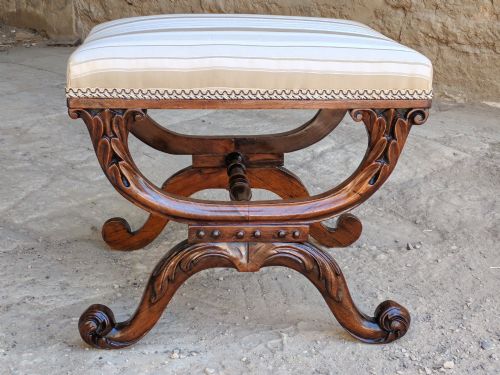


Rosewood Window Bench
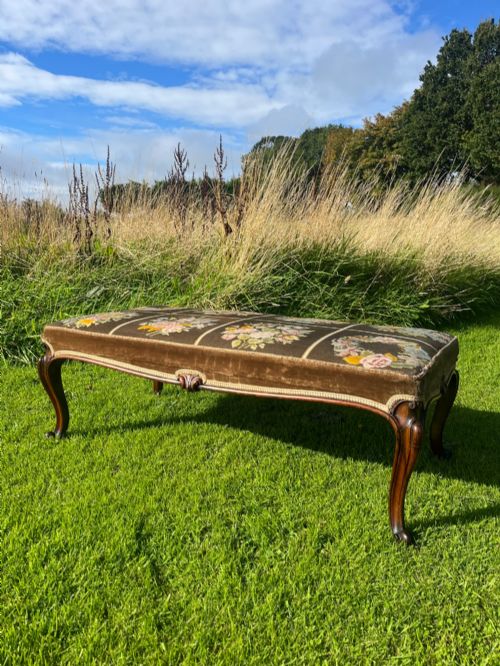
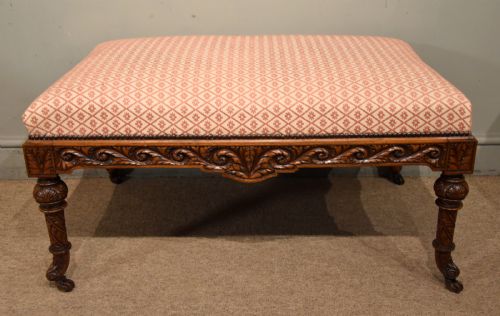
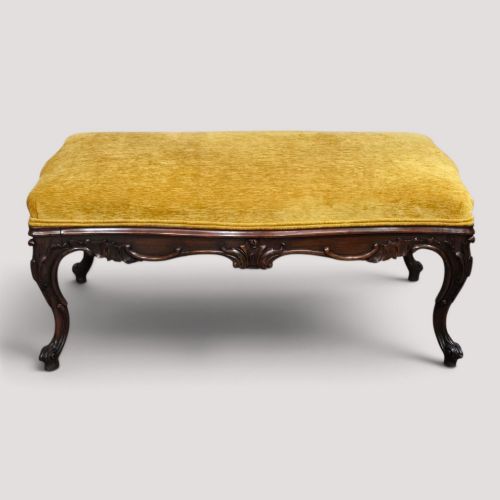
A rosewood window bench brings refined seating to a light-filled alcove, uniting dense tropical timber with period upholstery.
Rosewood Window Bench
A rosewood window bench is a sturdy seat designed for placement beneath a window or in a hallway, drawing upon forms like stools, settees, and daybeds. When searching for a rosewood window bench, buyers encounter pieces spanning the Georgian, Regency, and Victorian periods, alongside Chinese Qing Dynasty huali wood examples.
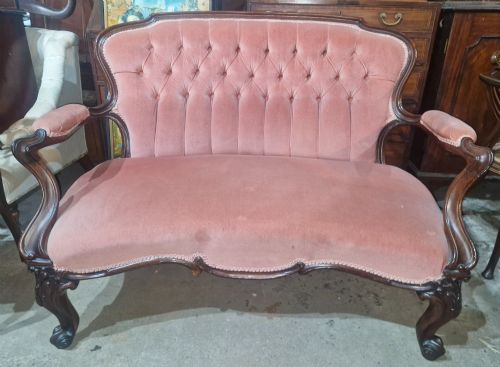
The selection ranges from large ottomans and music stools to scroll-back benches and upholstered window seats supported on cabriole legs. These items bridge the gap between functional seating and ornamental furniture, reflecting diverse stylistic influences from Neoclassical Revival to Anglo Indian traditions.
Victorian and mid-Victorian examples dominate the selection, frequently featuring carved frames and padded surfaces. Buyers also find simulated rosewood daybeds and paired antique window seats equipped with fabric or velvet upholstery.
How they were made
Construction relies heavily on dense rosewood and hardwood frames, sometimes enriched with giltwood or brass accents. Woodcarvers shaped the structural timber into scroll backs, cabriole legs, and decorative trims.
Upholstery techniques involved padding the seats with fabrics and velvet, securing the materials to accommodate regular use as dressing stools or window seats. Craftspeople also utilised huali wood and simulated rosewood finishes to achieve distinct visual textures.
Periods represented span Georgian, Regency, William IV, Victorian, and Qing Dynasty eras.
What varies in quality
Quality rests in the crispness of the timber carving and the structural integrity of the rosewood frame. Subtleties in proportion and the execution of scroll backs or cabriole legs separate standard items from superior pieces.
The choice of secondary materials, such as the grade of velvet or fabric upholstery and the inclusion of brass details, influences the overall refinement of the construction.
Charles Nosotti·Rudolph Ackermann
The Rosewood Window Bench Glossary
- Rosewood
- A dense, heavily grained hardwood prized for dark figuring and durability. It provides the primary structural and visual substance for these benches.
- Huali wood
- A fragrant Chinese hardwood utilised in Qing Dynasty seating. It shares the dense character seen in European tropical timbers.
- Cabriole leg
- A furniture leg that curves outward and then tapers inward, ending in a pad or scroll foot. This form appears frequently on Victorian examples.
- Simulated rosewood
- A painted or stained finish applied to a lesser timber to mimic the grain and colour of genuine rosewood. This technique appears on Regency daybeds.
Rosewood Window Bench: Frequently Asked Questions
Where should I place a rosewood window bench?
These benches suit light-filled window alcoves, spacious hallways, or dressing rooms where their carved frames and upholstered surfaces remain visible.
They also function as footstools or ottomans in living spaces, pairing utility with period character.
How do I care for the rosewood frame?
Keep the timber away from direct heat sources and strong sunlight to prevent the dense wood from drying out. Dust the carved surfaces regularly with a soft cloth.
Avoid using harsh chemical polishes that might damage the historical finish of the hardwood.
What periods do these benches represent?
The selection encompasses pieces from the Georgian and Regency eras, through the William IV and Victorian periods, up to the late nineteenth and early twentieth centuries.
Chinese Qing Dynasty examples in huali wood also feature alongside European revivals.
Are these benches comfortable for sitting?
Most variants include upholstered pads covered in fabric or velvet, designed for practical seating use.
Stools and window seats offer firm support, while daybeds and scroll-back benches provide structured lounging options.