
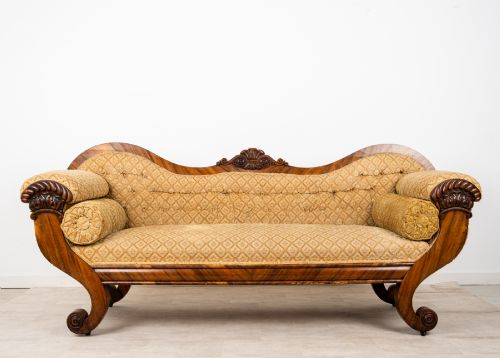

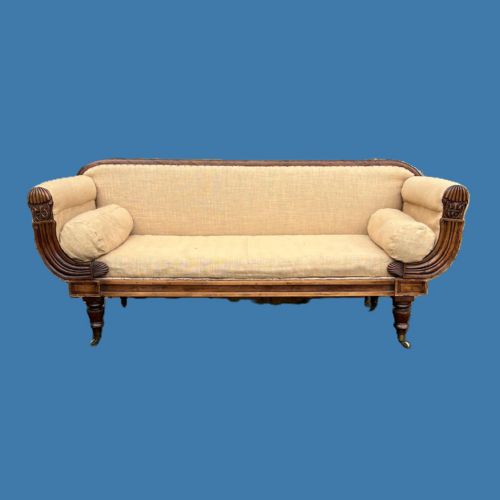
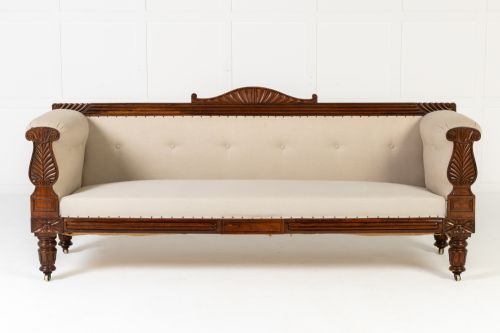


Rosewood Upholstered Settee
These rosewood upholstered settee pieces combine rich timbers with classic textiles, offering both historic seating presence and enduring interior elegance.
Rosewood Upholstered Settee
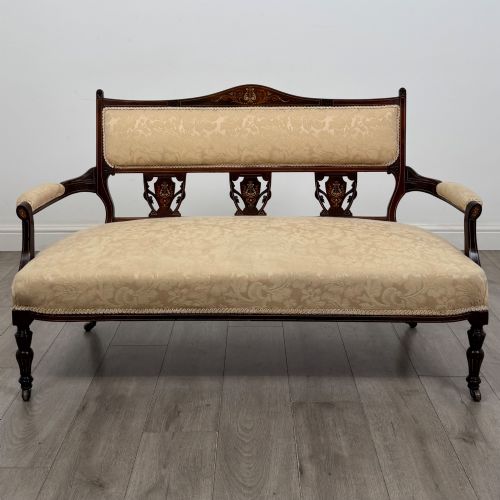
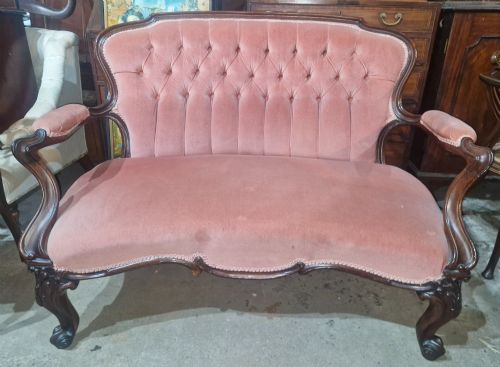
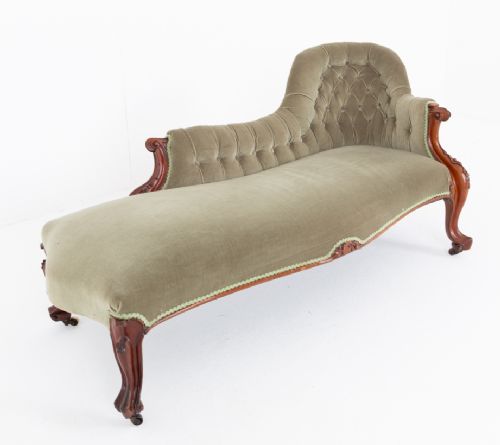
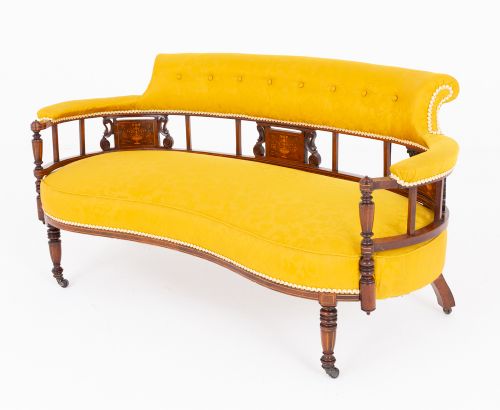
A rosewood upholstered settee is a substantial seating piece framed in dark timber and covered in textiles, appearing frequently across Victorian, Regency, and Edwardian periods. Buyers searching for a rosewood upholstered settee will encounter variations including carved scroll ends, spoon backs, and day bed forms.
The selection ranges from mid-nineteenth-century English designs to later inlaid examples, encompassing compact window seats and larger salon suites. These pieces bring period character to drawing rooms and reception spaces through distinct regional and stylistic interpretations.
How they were made
Craftsmen built the structural frames using solid rosewood or simulated rosewood, often incorporating intricate carved details, brass accents, and subtle inlay work. The woodwork supports heavy textile coverings including velvet, damask, and silk.
Upholstery techniques varied from deep buttoning to smooth tensioned fabric over sprung or stuffed foundations. Frames frequently display scroll shapes, spoon backs, or architectural lines established during the Regency and Victorian eras.
Listings include examples from the Regency, Victorian, and Edwardian eras, utilising rosewood, velvet, damask, and brass.
What varies in quality
Quality rests upon the crispness of the timber carving and the architectural proportion of the frame. Superior examples display tightly figured rosewood grain and balanced structural symmetry.
The integrity of the original woodwork relative to the upholstery scheme dictates the distinction between ordinary production and finer workshop output. Detail in inlay and joinery further separates standard pieces from exceptional ones.
H Goodall And Sons·James Shoolbred
The Rosewood Upholstered Settee Glossary
- Rosewood
- A dense, heavily figured timber valued for its deep colour and smooth finish. It forms the primary structural and visual medium for these settees.
- Chaise longue
- An elongated upholstered seat designed for reclining, combining the backrest of a settee with the extended length of a day bed.
- Simulated rosewood
- Timber painted or stained to imitate the grain and colour of genuine rosewood. This technique appeared on furniture from the Regency period onwards.
- Damask
- A reversible figured fabric traditionally woven with intricate patterns. It frequently appears as the covering material on period upholstery.
Rosewood Upholstered Settee: Frequently Asked Questions
How do I date a rosewood settee?
Dating relies on stylistic markers such as the transition from Regency classical lines to heavier Victorian carving and Edwardian inlay work. Secondary timbers and construction methods also help confirm the manufacturing period.
Evidence on this page shows pieces spanning the nineteenth and early twentieth centuries, where specific details like spoon backs or scroll ends point to distinct decades.
Are these settees suitable for daily use?
Period frames offer robust construction, though the suitability for daily seating depends on the internal foundation and the condition of the upholstery fabric. Many owners balance historic preservation with comfortable everyday placement.
Careful consideration of the frame stability ensures these pieces function well in modern interiors.
What does simulated rosewood mean?
Simulated rosewood is a decorative finish applied to an alternative underlying timber to replicate the rich grain and deep colour of genuine rosewood. This method offered an accessible alternative during the Regency era.
Pieces utilising this technique maintain the visual aesthetic of solid rosewood while employing different construction woods beneath the surface.