

Antique Green Sofa
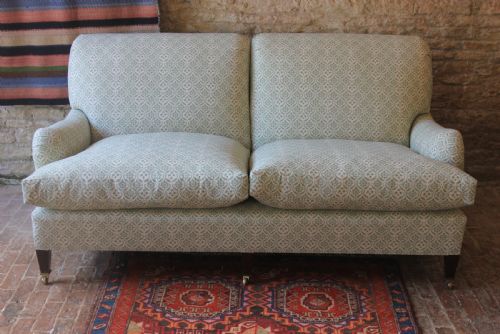
An antique green sofa brings depth and rich character to a room, offering a historic focal point that pairs traditional upholstery with enduring comfort.
What an antique green sofa is
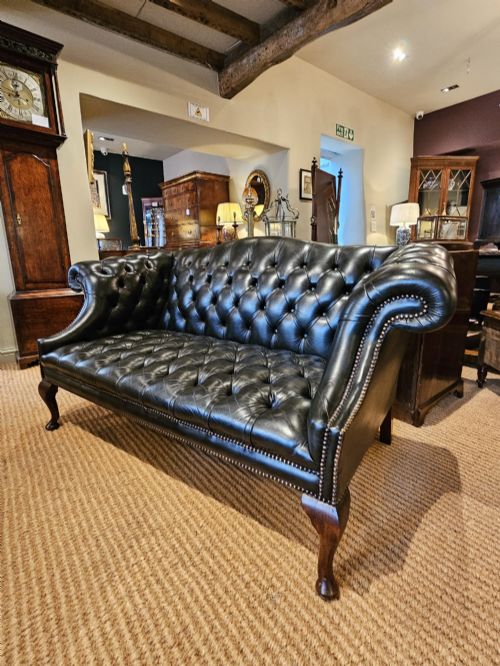
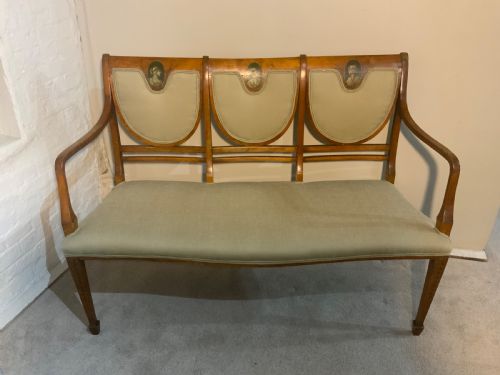
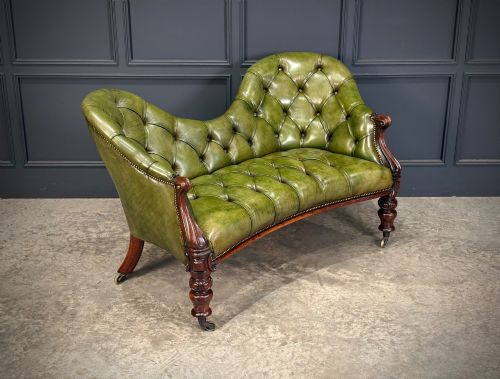
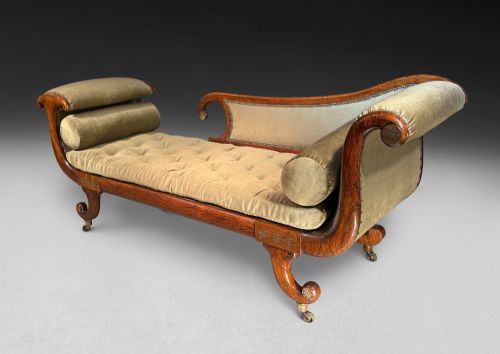
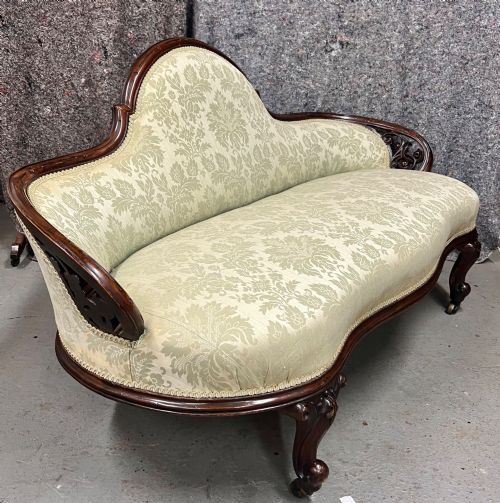
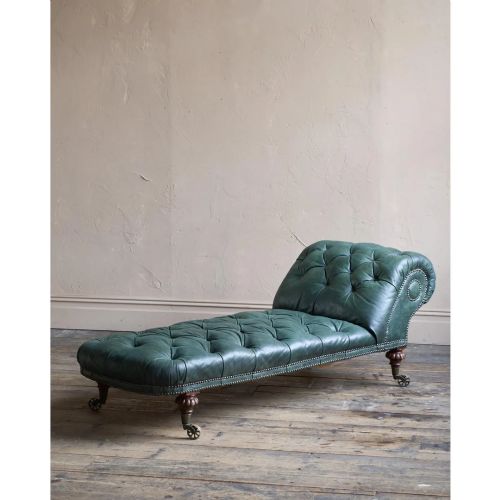
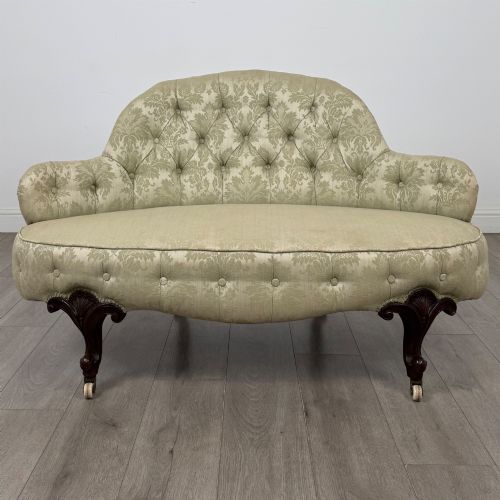
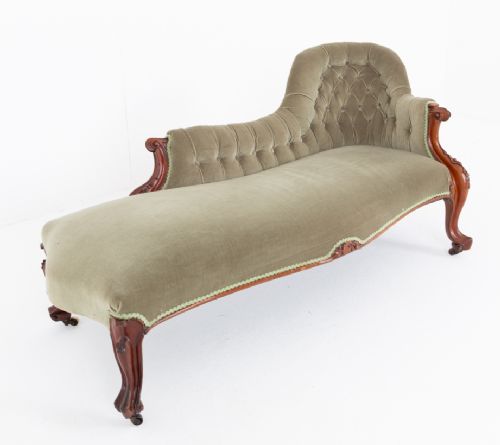
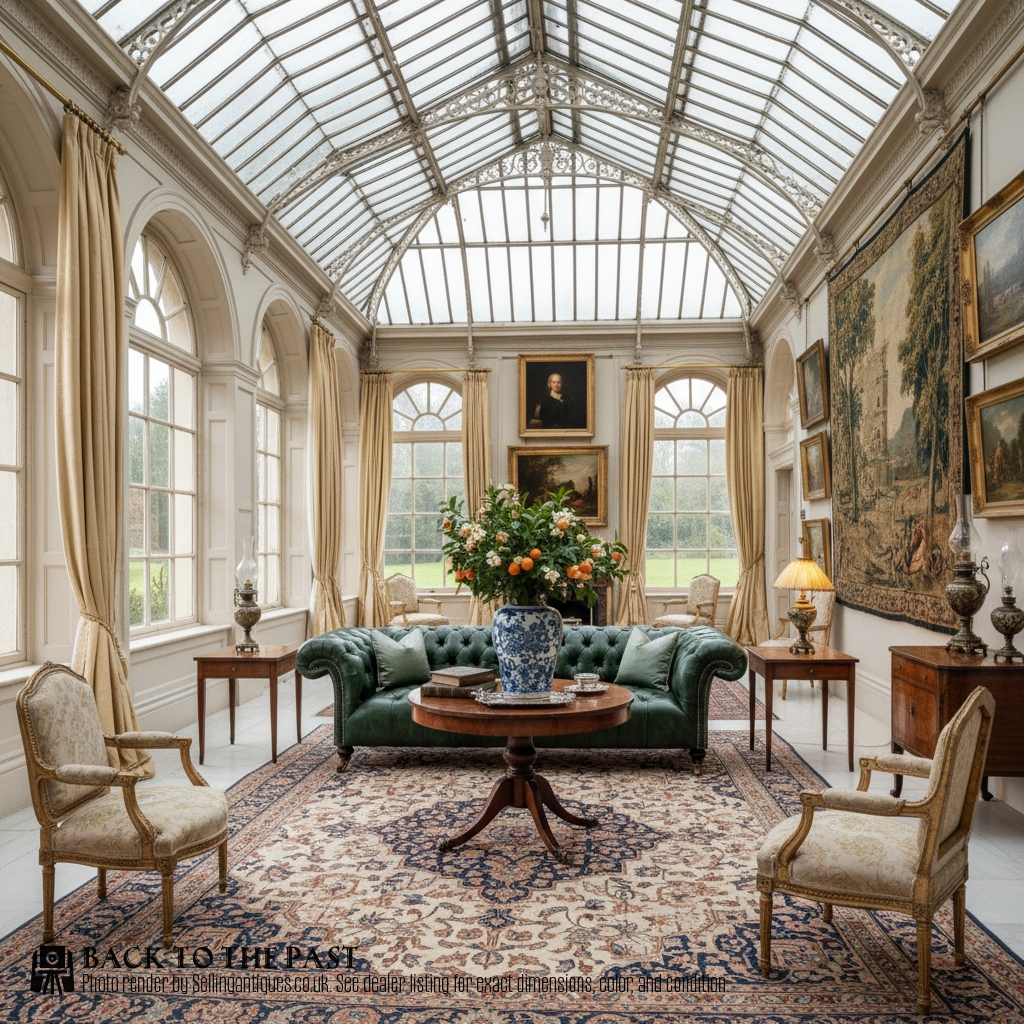
An antique green sofa encompasses Victorian and Edwardian settee forms upholstered in fabrics ranging from silk damask and velvet to deep green leather. These pieces span the nineteenth century, featuring styles from William IV and Victorian periods alongside substantial deep-buttoned Chesterfield designs.
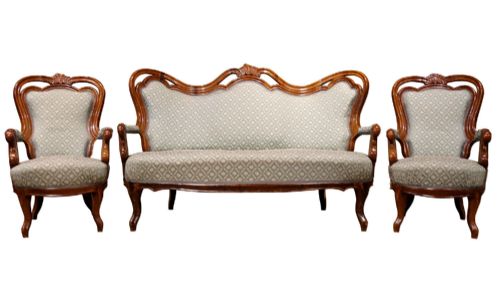
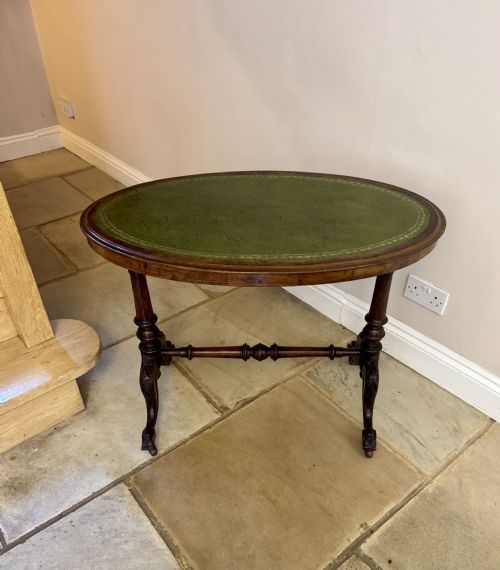
Buyers browsing an antique green sofa will most commonly encounter substantial walnut, mahogany, or rosewood framed settees, as well as heavily sprung library and drawing room couches. These seating forms carry the rich patination of nineteenth-century timber and textile work.
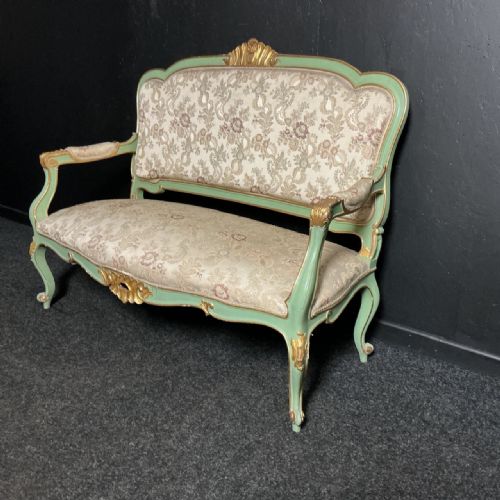
The selection ranges from elegant salon settees with exposed show-wood frames to generously proportioned Howard and Sons Chesterfield sofas designed for long-term domestic use.
How they were made
Makers constructed the structural frames of these settees using dense hardwoods such as mahogany, walnut, and rosewood, often combining them with turned or carved brass castors. Joinery relied on traditional mortise and tenon techniques to ensure lifelong stability under heavy daily use.
Upholstery methods involved hand-tied coil springs, horsehair stuffing, and heavy webbing secured to a robust beech or pine subframe before being finished in velvet, leather, damask, or woven fabric. Show-wood frames were hand-polished to accentuate the natural grain and colour of the timber.
Retail Price Guide 2026
Typical UK retail prices for green sofa, calculated from the Sellingantiques database of over a million retail prices indexed since 2003. This retail price guide relies exclusively on Sellingantiques data; no external sources or auction records are used, so the figures do not describe the wider market.
Many a Victorian settee hides decades of lost copper pennies and forgotten quill pens wedged deep beneath its hand-tied coil springs.
What varies in quality
Quality rests principally in the integrity of the timber frame, the complexity of the cabinetwork on the show-wood rails, and the resilience of the original internal stuffing. Pieces bearing maker stamps or retaining their first hair-stuffing and foundational webbing command greater appreciation among serious collectors.
The grade of the covering material and the precision of the hand-pleating or buttoning also distinguish finer examples from standard commercial workshop production of the period.
Howard and Sons
The Antique Green Sofa Glossary
- Chesterfield
- A deep-buttoned upholstered sofa traditionally characterised by arms and back of the same height. This form has remained a staple of British interior design since the nineteenth century.
- Settee
- A long upholstered seat for more than one person, typically featuring a back and arms. The term is frequently used interchangeably with sofa in nineteenth-century contexts.
- Show-wood
- The exposed polished timber portions of a chair or sofa frame, such as the crest rail or front legs, intended to be visible beneath the upholstery. Finer examples display carved detail and high-grade veneer.
- Damask
- A reversible figured fabric woven on a jacquard loom, frequently utilised in historic interior schemes. Silk and wool variations provide a subtle sheen that shifts with the light.
Frequently Asked Questions
How do I clean an antique green leather sofa?
Historic leather requires gentle maintenance using specialised conservation balms rather than modern chemical detergents. Regular dusting with a soft dry cloth prevents abrasive particles from settling into the grain.
Avoid placing these pieces near direct heat sources or strong sunlight, which can dry out the nineteenth-century hide and fade the green dye over time.
Are these sofas comfortable for daily use?
Nineteenth-century seating relies on hand-tied coil springs and traditional horsehair stuffing, which provides a firmer and more supportive sit than modern foam upholstery. Many buyers find them exceptionally comfortable for reading and relaxing.
If the internal webbing has slackened through decades of use, a professional upholsterer can restore the foundational tension without altering the exterior appearance.
How can I tell a Victorian settee from a William IV one?
William IV pieces often retain heavy, robust proportions with scrolled armrests and bold rosewood or mahogany timbers influenced by late Regency taste. Victorian examples frequently display more ornate floral carving, lighter show-wood frames, and varied Revivalist influences.
Examining the turning on the legs and the style of the show-wood moulding usually reveals the stylistic shift from the 1830s into the later Victorian decades.
What fabrics were originally used on these sofas?
Original nineteenth-century seating utilised heavy wool damask, silk velvet, embossed leather, and patterned woven textiles designed to withstand heavy domestic wear. Green was a popular interior colour throughout the Victorian period, frequently chosen for libraries and drawing rooms.
Surviving examples often feature later reupholstery that respects the historical weight and texture of the original covering.