
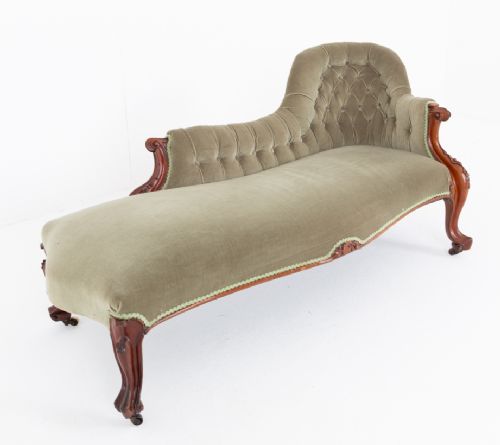


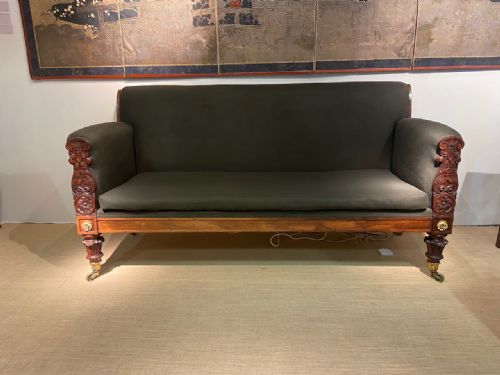


Green Velvet Settee
A green velvet settee brings rich texture and historic seating into a room, spanning periods from Regency to Edwardian.
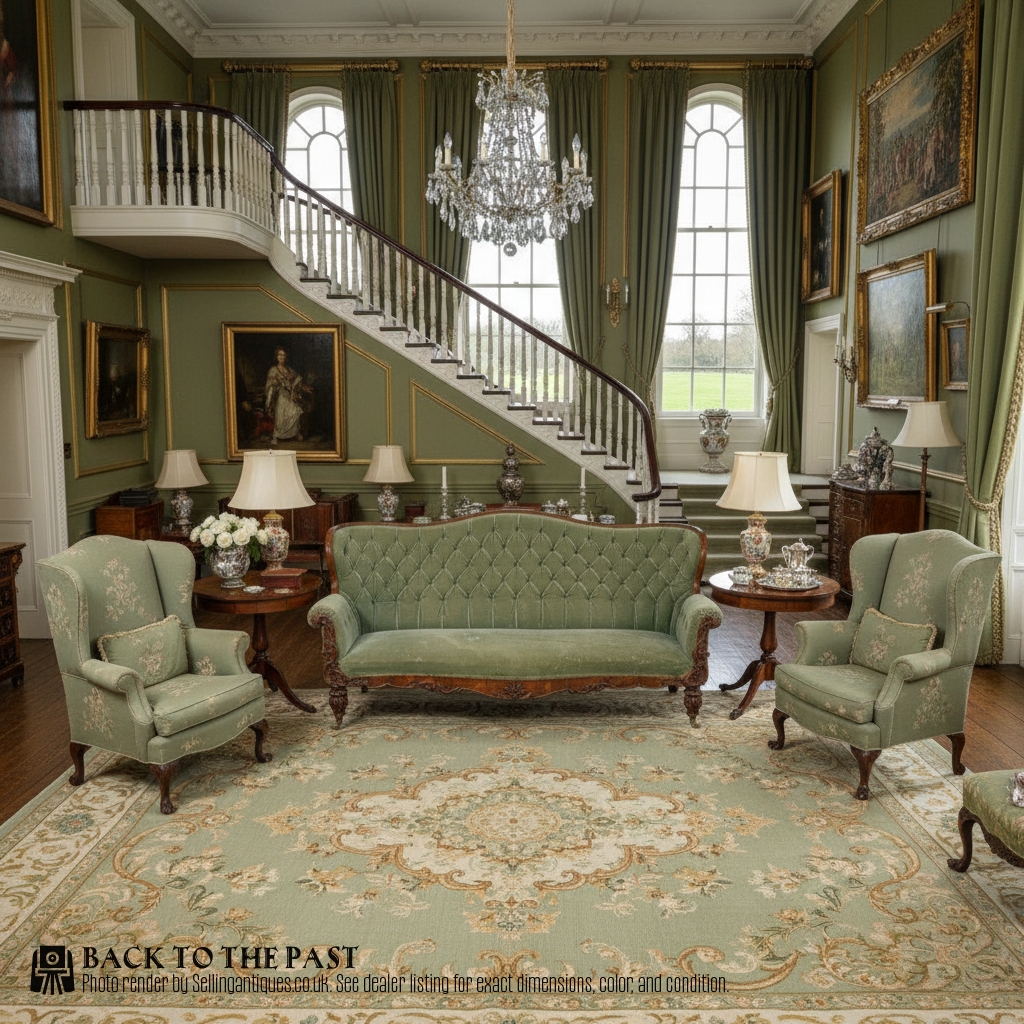
Green Velvet Settee
A green velvet settee is a cushioned seating form designed for multiple people, appearing across Victorian, Edwardian, and Regency periods. When searching for a green velvet settee, buyers encounter various styles including Chesterfield, chaise longue, and salon suite pieces.
The objects on this page include walnut framed settees, rosewood chaise longues, and mahogany framed upholstered settees. Origins range from English country houses to Swedish workshops, showing diverse regional interpretations of the form.
How they were made
Frames are constructed from solid hardwoods such as walnut, mahogany, rosewood, and ebonised wood. These woods provide the structural strength necessary for button back upholstery and sprung seating.
Upholstery utilises fabric and velvet, often secured with brass details. Frameworks incorporate carved elements and painted finishes reflecting styles from Louis XV Revival to Aesthetic Movement.
Materials recorded on this page include walnut, rosewood, mahogany, brass, and tapestry fabric alongside velvet.
What varies in quality
Quality rests upon the execution of the timber frame, distinguishing simple painted softwood or country house items from finely carved rosewood and walnut structures. The integrity of the wood and the precision of the joinery determine the baseline durability.
The refinement of the upholstery work creates distinction across pieces. Expert shaping of button backs and the selection of fabric grade elevate a standard seating form into a notable drawing room suite component.
Howard and Sons·Jas James Shoolbred·John Tesch
The Green Velvet Settee Glossary
- Chaise longue
- An upholstered sofa in the form of a chair with a long seat for reclining. This form appears frequently in Victorian and nineteenth-century inventory.
- Chesterfield sofa
- A large upholstered sofa traditionally featuring deep button back upholstery and rolled arms. Country house examples demonstrate this robust seating form.
- Drawing room suite
- A matching set of seating furniture designed for formal reception rooms. These suites combine settees and matching chairs in unified styles.
- Aesthetic period
- A late nineteenth-century design movement focusing on art for art's sake and often employing ebonised wood finishes. Pieces from this movement show distinct decorative restraint.
Green Velvet Settee: Frequently Asked Questions
Where were green velvet settees placed?
These settees served in formal reception spaces, drawing rooms, and country house parlours. They provided ample seating for guests and family members.
Larger salon suites and chaise longues occupied prominent central positions within the home, while smaller Edwardian sofas fitted into intimate corners.
How do I identify a Victorian settee?
Victorian examples frequently utilise dark woods like walnut, rosewood, and mahogany. Look for carved frames and button back upholstery characteristic of mid-nineteenth-century production.
Many pieces from this era align with revival styles, incorporating decorative elements from earlier historical periods.
What is an Aesthetic Period sofa?
Aesthetic Period sofas emerge from the late nineteenth century and often feature ebonised wood construction. They reflect a shift towards artistic design and refined surface decoration.
These pieces sometimes form part of a larger salon suite including matching chairs.
How do I live with antique velvet?
Antique velvet requires gentle care to preserve the pile and rich colour. Regular light brushing helps maintain the texture of the fabric.
Positioning the settee away from direct sunlight protects the green dye from fading over time.