





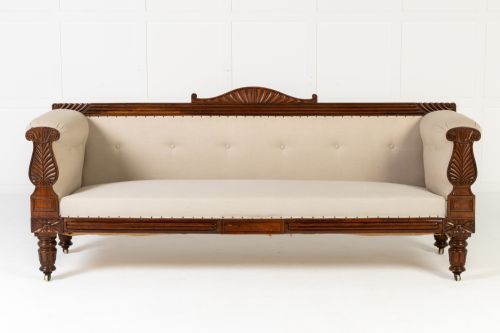


Antique Rosewood Settee
An antique rosewood settee brings rich grain and formal elegance to a room, offering a seating form shaped by nineteenth-century craft.
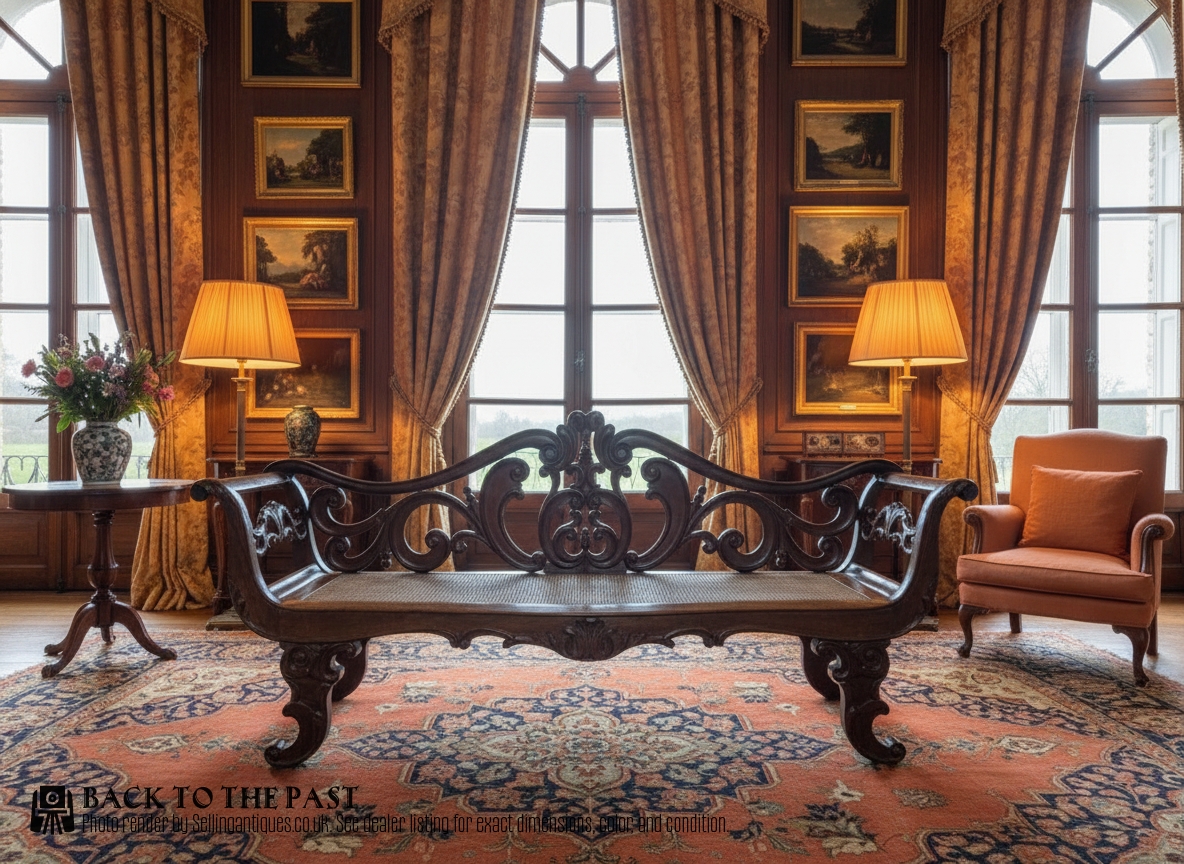
Antique Rosewood Settee
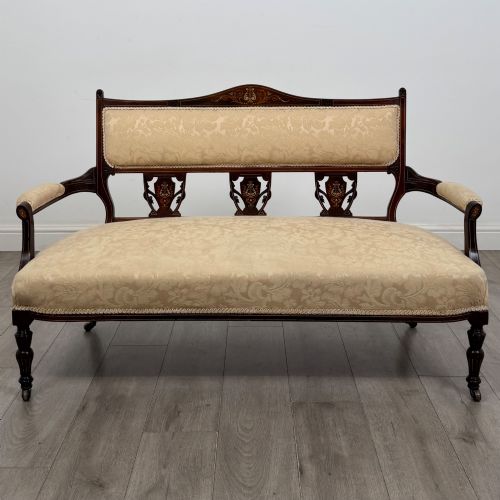
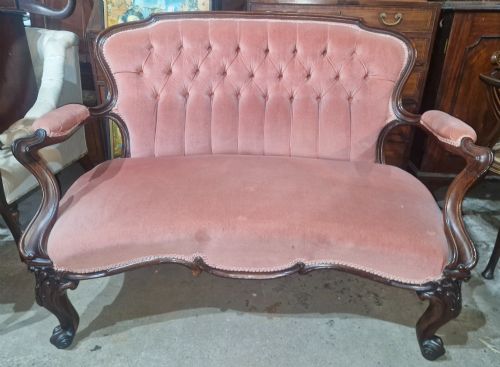
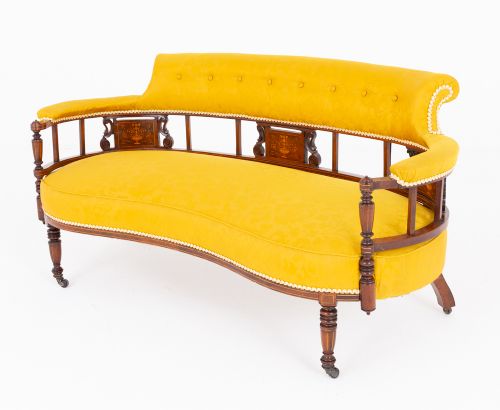
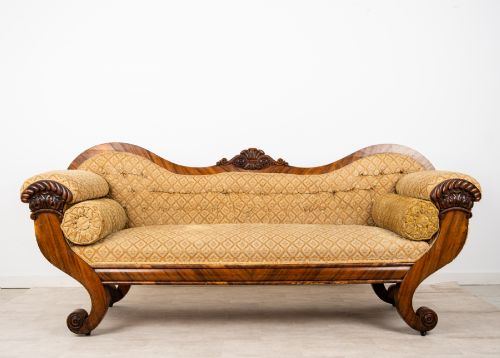
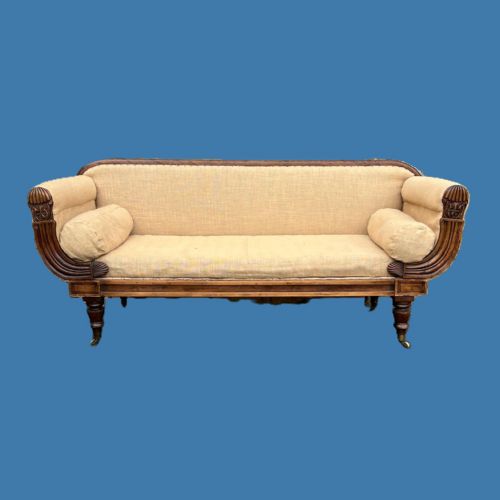
An antique rosewood settee encompasses nineteenth-century seating forms, from Regency scroll-end sofas to Victorian spoon-back settees and inlaid salon couches. The pieces appearing most frequently belong to the Victorian era, alongside Regency examples and later Edwardian variations.
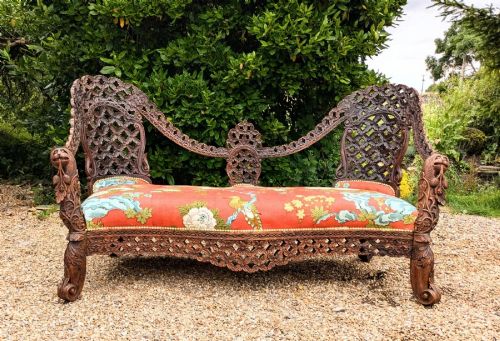
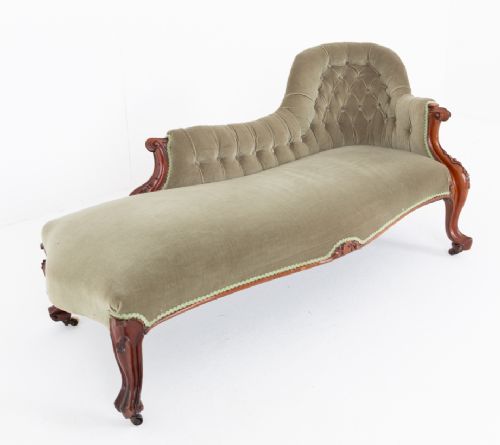
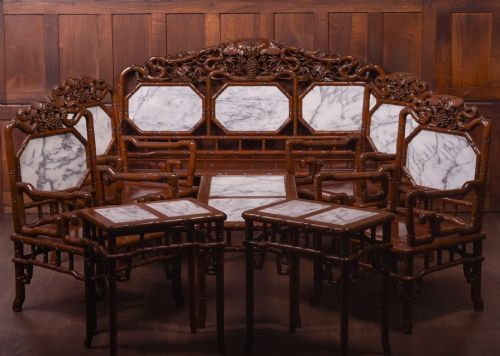
Makers shaped these seating forms into various configurations, including double-spoon-back settees, window seats, chaise longues, and Anglo-Indian colonial benches. Buyers encounter both solid rosewood frames and simulated rosewood surfaces, reflecting diverse regional workshops and periods.
How they were made
Carpenters constructed the primary frames from dense tropical hardwoods, applying genuine rosewood veneers or carving solid timber for prominent show-wood sections. Workshops also utilised simulated rosewood on native timbers to achieve the desired dark, figured appearance economically.
Upholsterers layered horsehair and wool stuffing over webbing or springs, securing the final cover with brass tacks or piping. Decoration often included intricate mother-of-pearl inlay, brass stringing, marquetry, and deeply carved scroll ends.
Antique Rosewood Settee Retail Price Guide 2026
Typical asking prices for rosewood settee among the pieces listed under this phrase on Sellingantiques today, from the lower quarter to the upper quarter. They describe what is for sale here now, not the wider market.
The listings on this page span the Regency, Victorian, and Edwardian periods, featuring both solid rosewood and simulated surfaces.
What varies in quality
Quality rests primarily on the depth and crispness of the hand-carved ornament, the grain configuration of the rosewood veneer, and the structural integrity of the joinery. Superior examples display balanced proportions, finely detailed scroll arms, and precise marquetry or brass inlay.
The sophistication of the original frame construction dictates the enduring rigidity of the piece under daily use. Finer variants utilise heavy-gauge rosewood throughout, whereas simpler country house items rely on secondary hardwoods finished to mimic the grain.
H. Goodall & Sons·James Shoolbred
The Antique Rosewood Settee Glossary
- Rosewood
- A dense, heavily figured timber valued for its deep reddish-brown colour and dark grain patterns. It polishes to a high lustre and forms the primary show-wood on nineteenth-century frames.
- Simulated rosewood
- Painted or stained grain applied to a secondary timber to imitate genuine rosewood. This technique appeared frequently on Regency and early nineteenth-century campaign or country house furniture.
- Spoon back
- An upholstered chair or settee back shaped like the bowl of a spoon, designed to fit the human spine. This style is particularly characteristic of early Victorian seating.
- Scroll end
- A sweeping, curved wooden terminal on the arms or ends of a sofa. Cabinet makers carved these forms from solid timber to accent Regency and Victorian designs.
- Marquetry
- Decorative patterns formed by fitting contrasting veneers into a prepared background. Makers applied this technique to Edwardian and late Victorian salon furniture.
Antique Rosewood Settee: Frequently Asked Questions
How do I identify a Regency rosewood settee?
Regency pieces often display classical lines with scroll ends, brass inlay, and simulated rosewood finishes dating from the early nineteenth century.
They rely on clean architectural forms rather than the heavy carving seen on later Victorian equivalents.
Were these settees used in formal parlours?
Yes, salon suites and upholstered couches served as principal seating in Victorian and Edwardian drawing rooms for entertaining guests.
Their decorative rosewood frames and damask or velvet upholstery reflected the social status of the household.
What is an Anglo-Indian rosewood settee?
Anglo-Indian pieces combine traditional British furniture forms with intricate indigenous carving executed in colonial workshops.
These items frequently feature dense floral motifs, deep relief work, and native padauk or rosewood construction.
How should I care for rosewood furniture?
Keep wooden surfaces away from direct sunlight and steady heat sources to prevent the rosewood veneer from drying or cracking.
Apply traditional beeswax sparingly and buff gently with a soft cloth to maintain the natural lustre.