
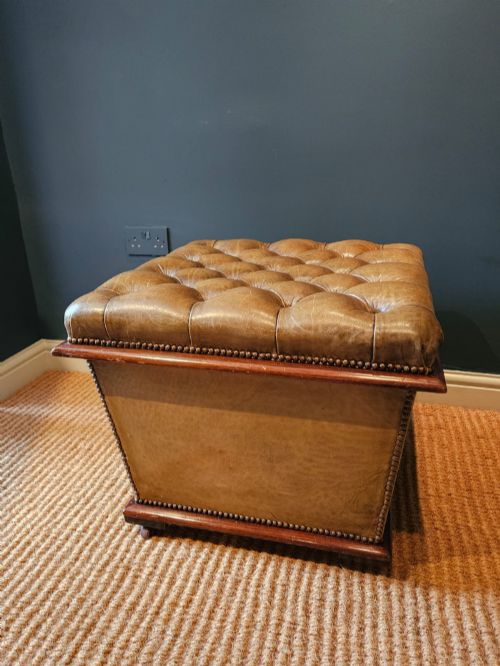


Button Tufted Footstool
Button tufted footstool pieces combine deep upholstery with solid timber frames, offering a firm surface to rest feet or use as a low table.
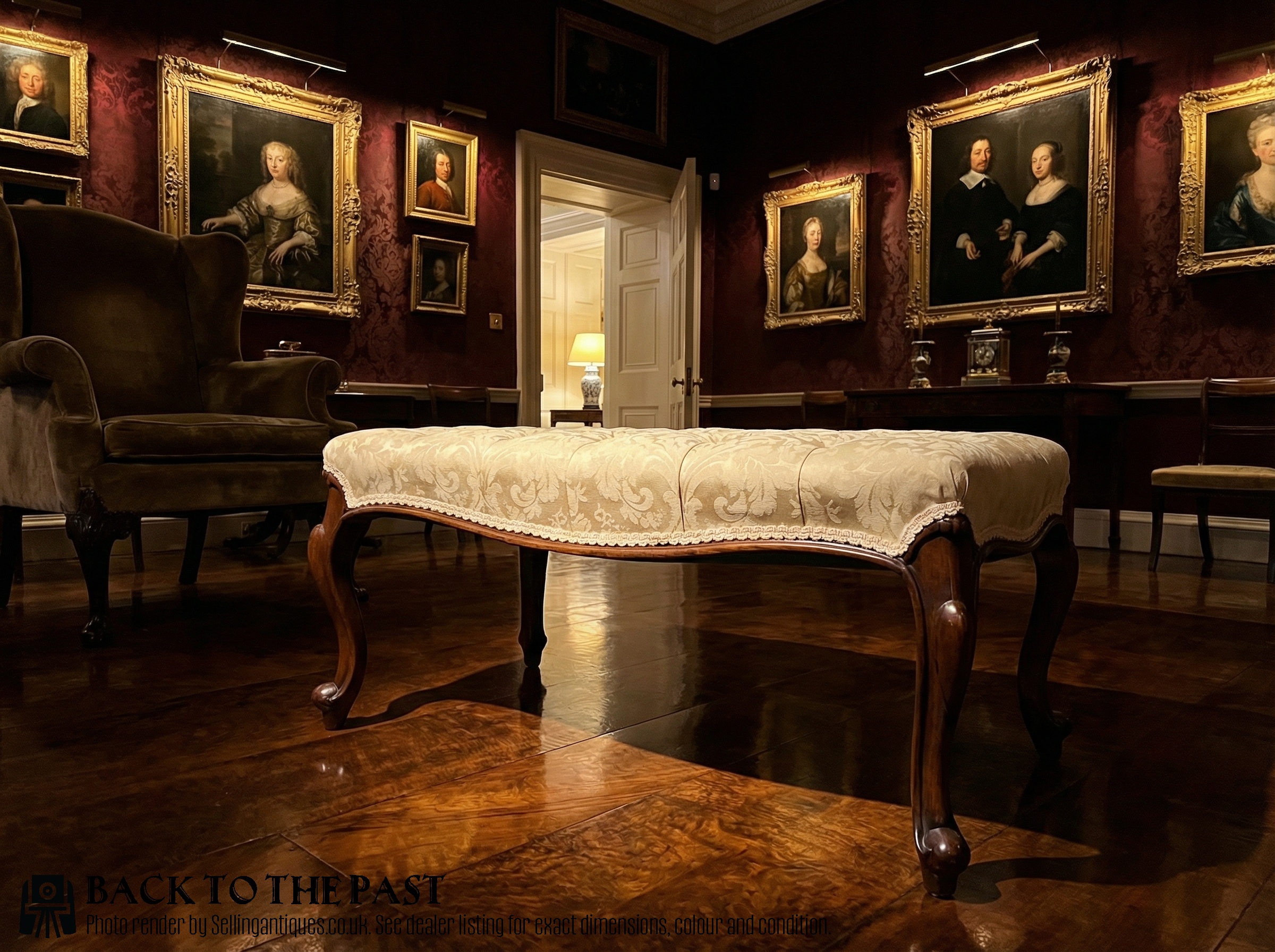
Button Tufted Footstool
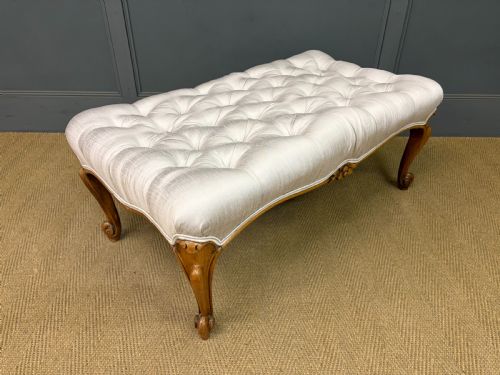
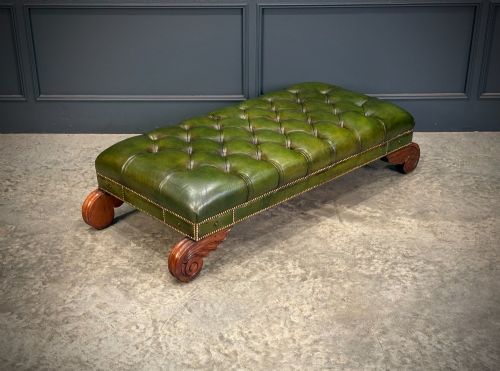
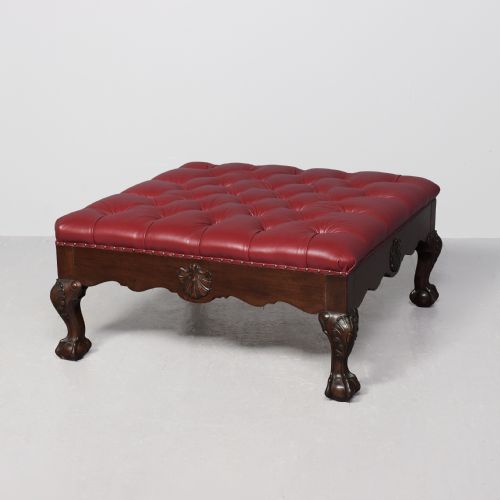
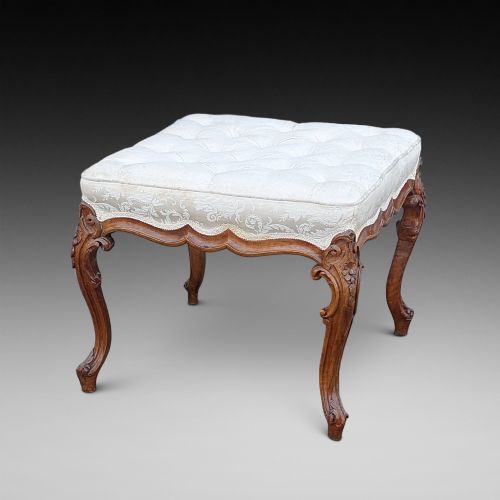
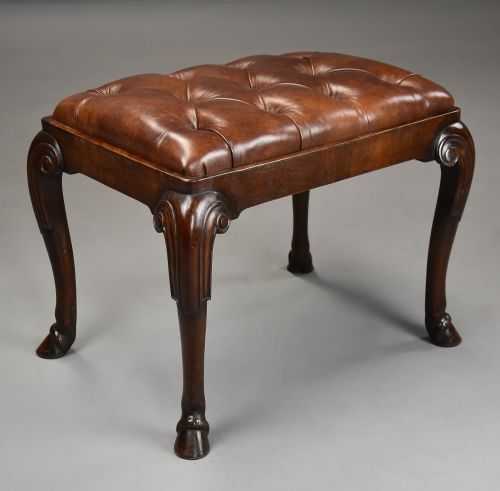
A button tufted footstool is a low seating piece characterised by indented upholstery held by tight stitches, commonly found in Victorian and Regency iterations across this selection. These items range from compact salon seats to grand country house ottomans scaled for large reception rooms.
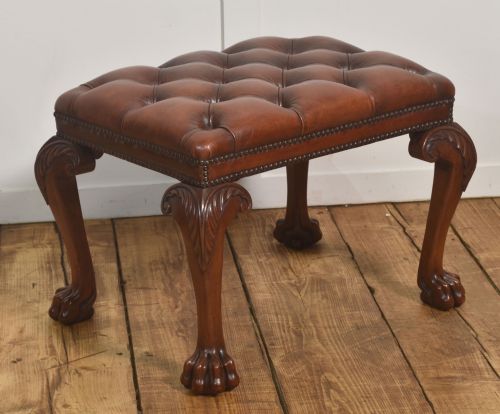
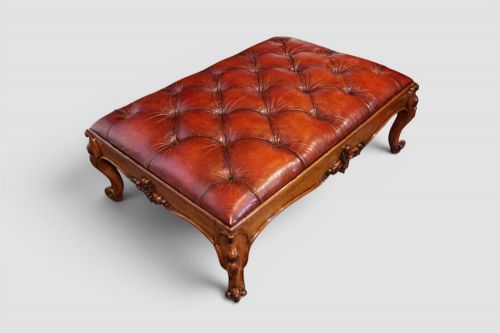
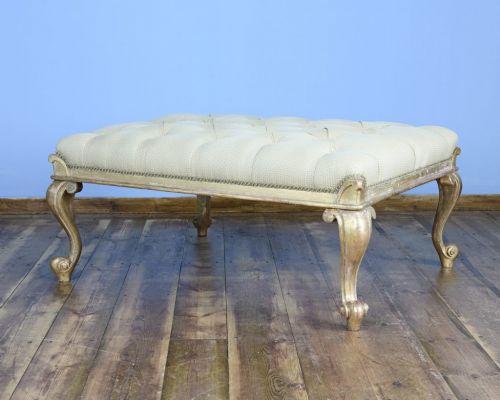
Most examples rely on timber frames made of mahogany, walnut, or rosewood, often shaped with cabriole legs or X-frames. Buyers encounter various forms, including rectangular window stools, square footstools, and long ottomans upholstered in leather or fabric.
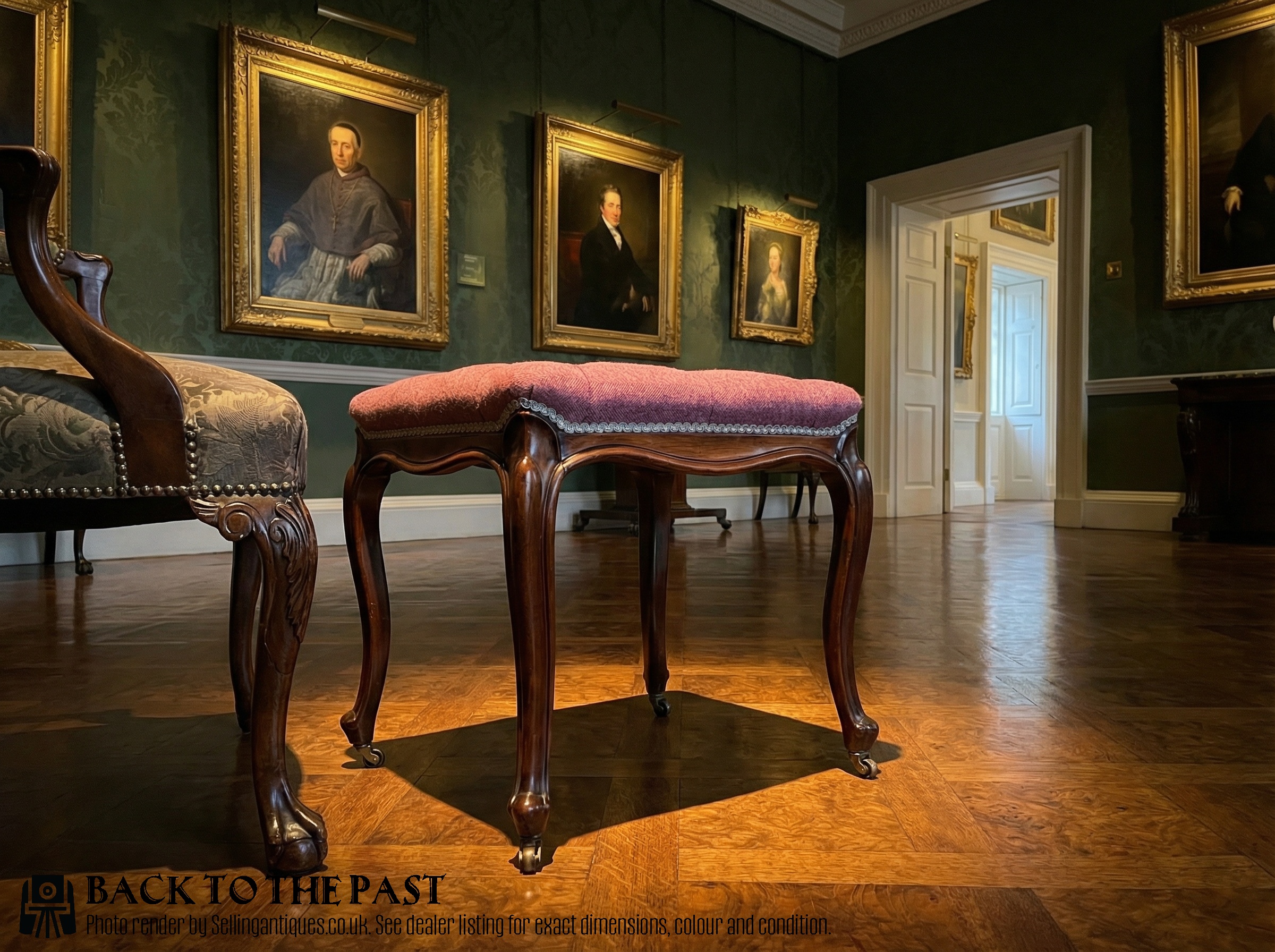
How they were made
Makers constructed the structural frames using hardwoods such as mahogany and walnut, frequently incorporating carved details like cabriole legs or parcel gilt accents. Joinery relied on traditional methods to support heavy daily use.
Upholstery involved securing horsehair or similar stuffing beneath leather or silk, pulled into deep indentations using twine and buttons. Brass-studded trim sometimes finished the edges along the timber base.
What varies in quality
The refinement of the timber carving and the scale of the piece determine the tier of the item, ranging from simple salon stools to grand country house ottomans. Wood selection, such as figured rosewood or dense mahogany, sets finer examples apart.
The precision of the deep buttoning and the choice of hand-dyed leather or traditional fabric define the standard of the upholstery work. Frames with integrated castors or elaborate revival styling represent higher execution.
James Shoolbred·A.M.E. Fournier
The Button Tufted Footstool Glossary
- Cabriole leg
- A furniture leg that curves outward at the knee and tapers inward to an ankle, common on Victorian and Queen Anne style stools. This shape mimics animal limbs.
- Button tufting
- An upholstery technique where stitches pass through padding and are secured with buttons to create deep geometric indents. This keeps stuffing evenly distributed.
- Ottoman
- A low, upholstered seat or footstool without a back or arms, often built on a large scale. These pieces function as seats or coffee tables.
- X-frame
- A furniture base constructed from two crossed diagonal members forming an X shape. This design provides sturdy support for low seating.
Button Tufted Footstool: Frequently Asked Questions
How do I date a button tufted footstool?
Dating relies on timber types, leg shapes, and upholstery styles recorded in the period evidence. Victorian examples often feature walnut cabriole legs, whereas Regency pieces utilise rosewood or green leather.
Changes in woods from mahogany to lighter oak or walnut help narrow the decade of manufacture. Consulting the listed periods provides a reliable guide to age.
Can I use an ottoman as a coffee table?
Large buttoned leather ottomans provide a flat, stable surface suitable for holding trays and books. Their sturdy timber frames support daily domestic use.
Many buyers repurpose these grand stools as alternative tables in sitting rooms. The durable leather tops withstand everyday placement of household items.
What is the difference between a footstool and an ottoman?
Footstools generally measure smaller and pair closely with armchairs or window seats. Ottomans are typically larger pieces designed to stand alone as central room furnishings.
Both share the signature button tufted upholstery seen across Victorian and Regency designs. Scale and placement dictate how each form was historically used.
What woods were used for these stools?
Cabinetmakers primarily utilised dense hardwoods including mahogany, walnut, and rosewood for frames. Some Victorian pieces also employ light oak or feature parcel gilt highlights.
These timbers provided the structural strength needed to support heavy upholstery and active daily seating. Finer woods often indicate higher status pieces.