
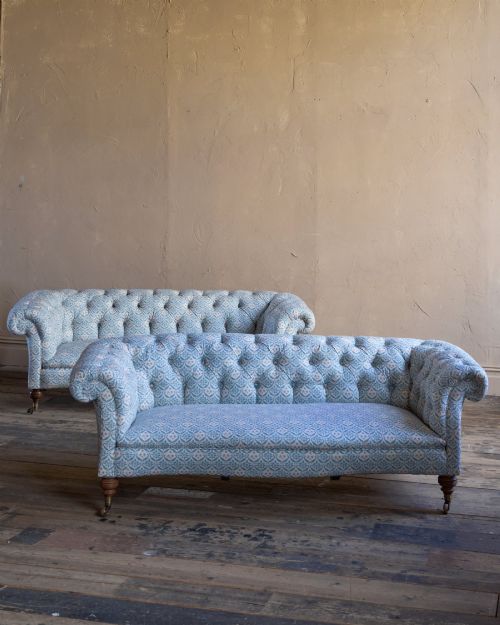
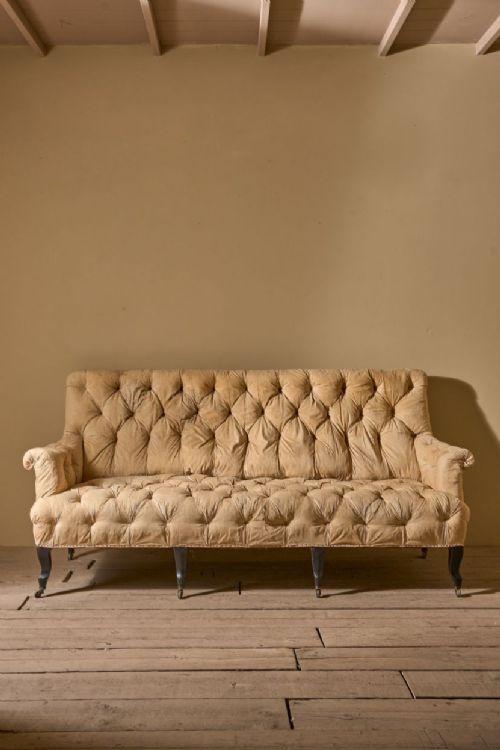
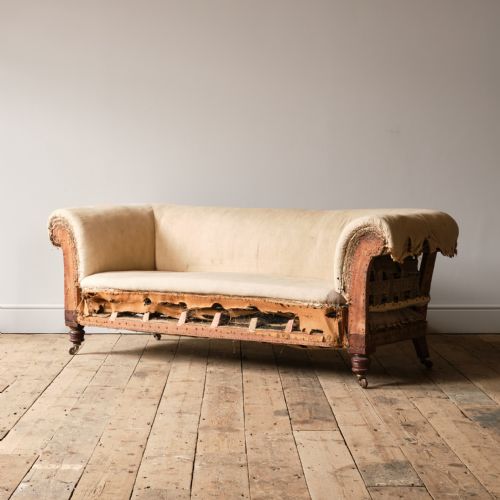
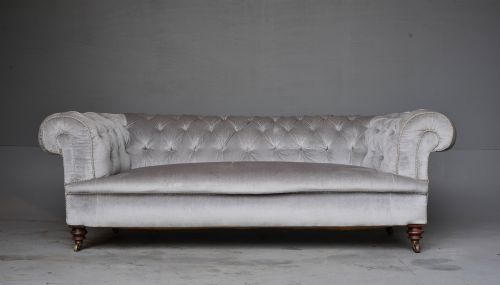
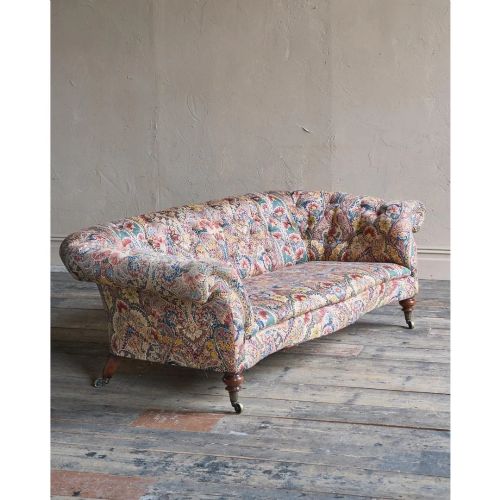
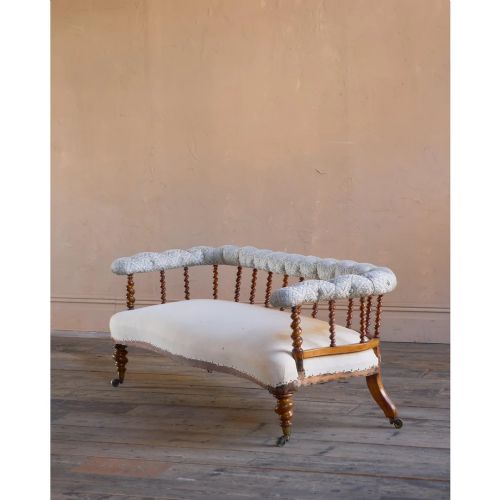
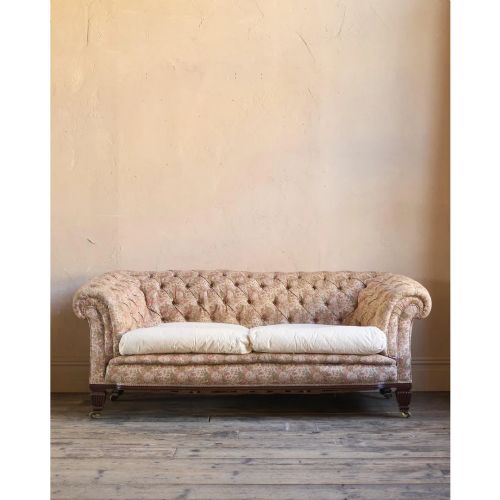
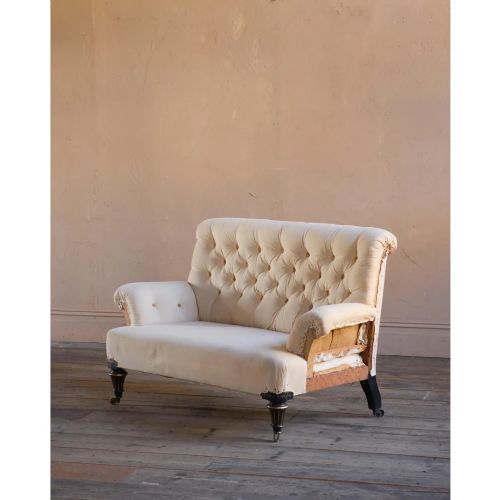
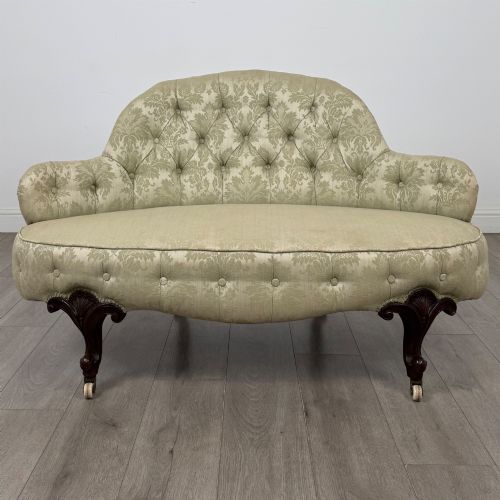
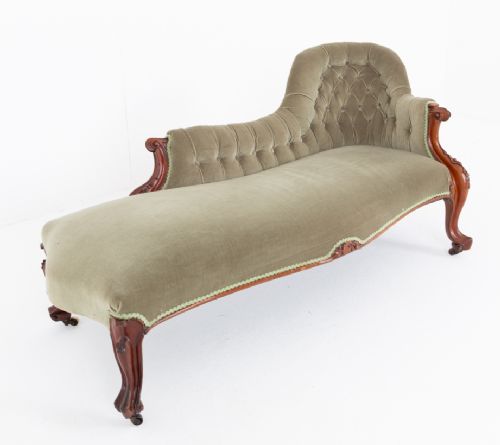
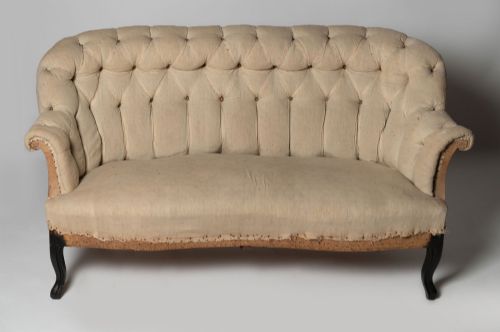
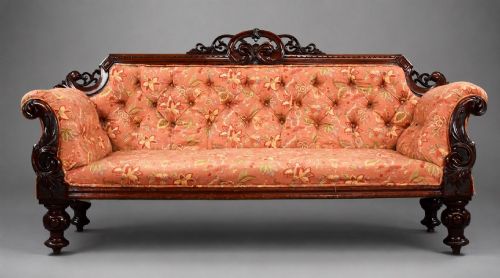
Button Backed Settee
A button backed settee is a deep-sprung nineteenth century seat designed for parlour comfort, combining structured woodwork with plush tufted upholstery.
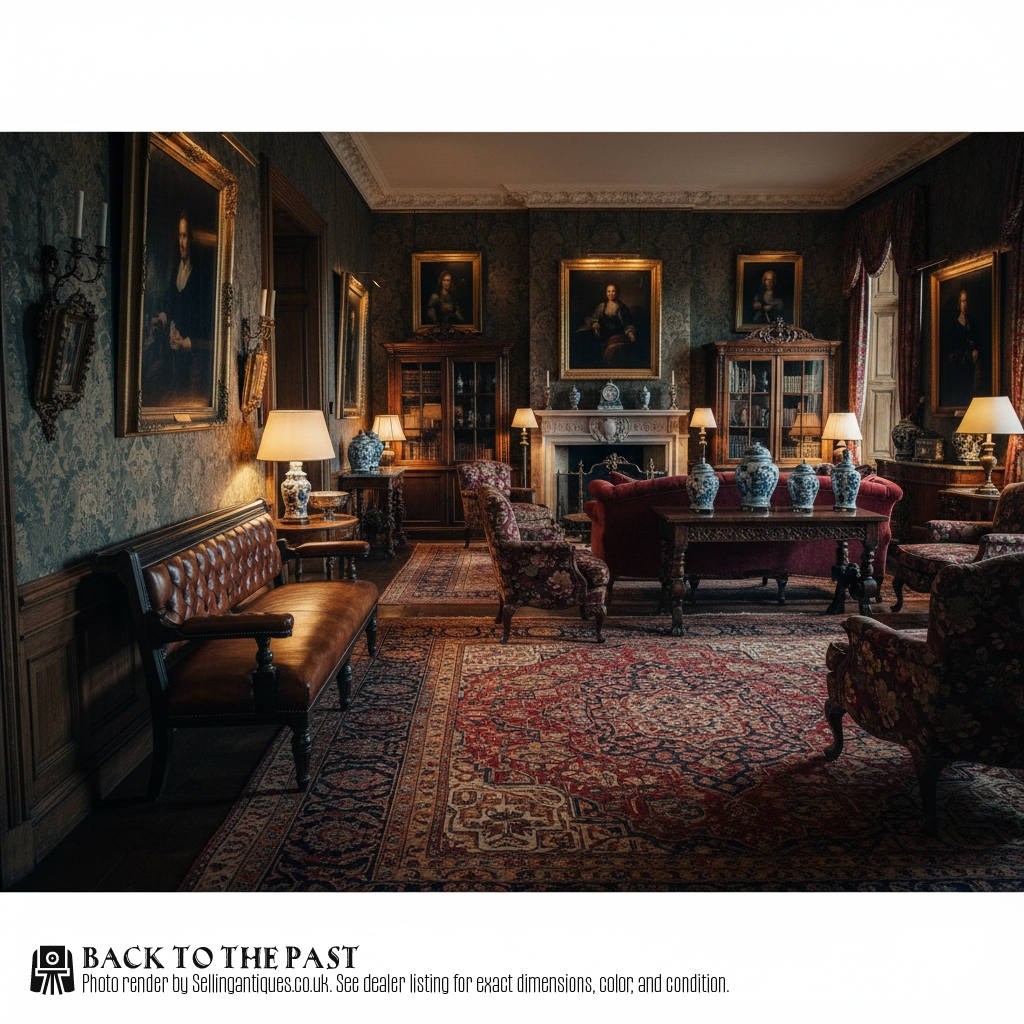
Button Backed Settee
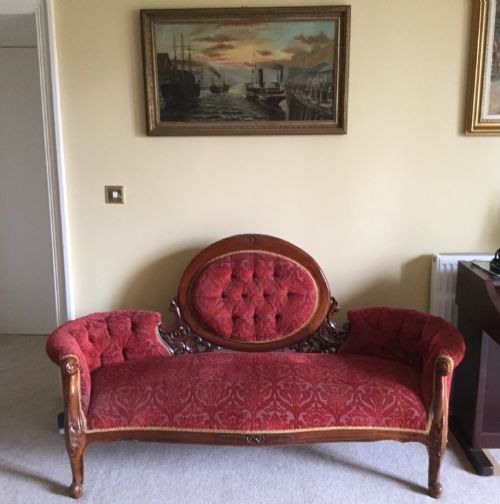
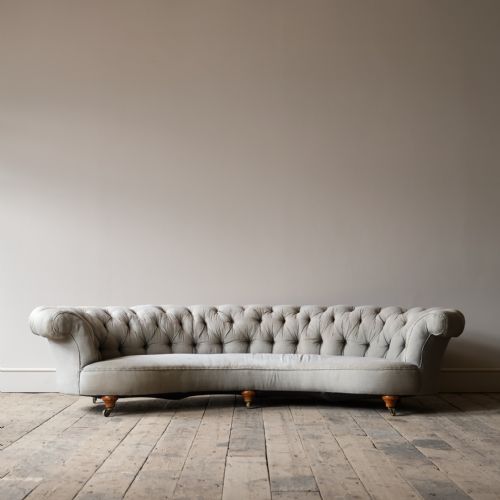
A button backed settee brings structured nineteenth century seating into a room, most often appearing as a Victorian Chesterfield or a French Napoleon III frame.
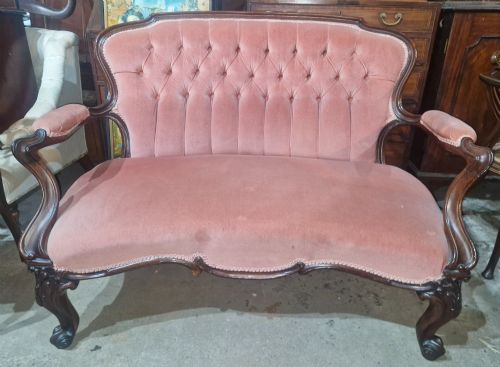
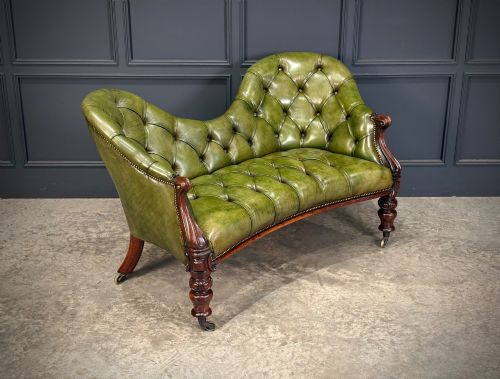
The selection ranges from mahogany and walnut framed window seats to large leather Chesterfoilds and rosewood chaise longues from the 1850s to the 1930s.
Makers such as Howard and Sons and Jackson and Graham shape the upper tier of these offerings, alongside French salon pieces and Edwardian examples.
Materials and construction
Frames rely on hardwoods including mahogany, walnut and rosewood, carved or ebonised to match Victorian, Edwardian and Aesthetic Movement tastes.
Upholstery involves deep tufting secured with fabric, velvet, brocade or leather over a sprung settee base and horsehair stuffing.
Materials documented across the pieces include mahogany, walnut, rosewood, brass, velvet, and leather.
Judging the work
Quality rests in the precision of the frame carving, the resilience of the sprung base and the tightness of the buttoning across the back.
Timber selection and original secondary woods indicate the workshop standard, distinguishing high-end London makers from standard regional production.
Howard and Sons·C. Hindley and Sons·A Jackson and Graham·Holland and Sons·Hampton and Sons of Pall Mall
The Button Backed Settee Glossary
- Chesterfield
- A large upholstered sofa with arms and back of the same height, traditionally featuring deep buttoning. This form anchors many nineteenth century drawing rooms.
- Chaise longue
- An upholstered sofa in the form of a chair with a long seat to support the legs. These pieces often feature an asymmetric scroll end.
- Brocade
- A rich jacquard woven fabric, often featuring raised patterns in silk or metallic threads. It appears frequently on Victorian and Edwardian salon seating.
- Ebonised
- Wood finished with a dark stain or lacquer to imitate ebony. This treatment defines many pieces from the Aesthetic Movement.
Button Backed Settee: Frequently Asked Questions
What is a button backed settee?
A button backed settee is a nineteenth century upholstered seat featuring deep tufting secured by buttons across the backrest. This method keeps the internal padding evenly distributed.
These pieces appeared in various forms, from Chesterfield sofas to low salon seats and chaise longues, during the Victorian and Edwardian eras.
How do I date a settee?
Dating relies on timber choices, such as rosewood and walnut in mid-nineteenth century frames, alongside stylistic cues from the Victorian, Edwardian and Napoleon III periods.
Maker stamps on the wooden frame or castors often provide a precise workshop origin and timeframe.
Where were these settees used?
Victorian households placed these settees in drawing rooms, parlours and formal reception spaces where guests gathered. They offered firm support combined with deep cushioning.
Smaller salon settees and window seats were intended for lighter sitting areas and bedrooms.
How do I care for leather upholstery?
Leather upholstery requires regular dusting and periodic conditioning to keep the hide supple and prevent cracking. Raw leather versions need careful initial dying and treatment.
Keep antique leather away from direct sunlight and heat sources to preserve the original finish.