



Tufted Leather Bench
These tufted leather bench pieces combine rich upholstery and sturdy timber or metal frames, offering both comfort and classic English seating character.
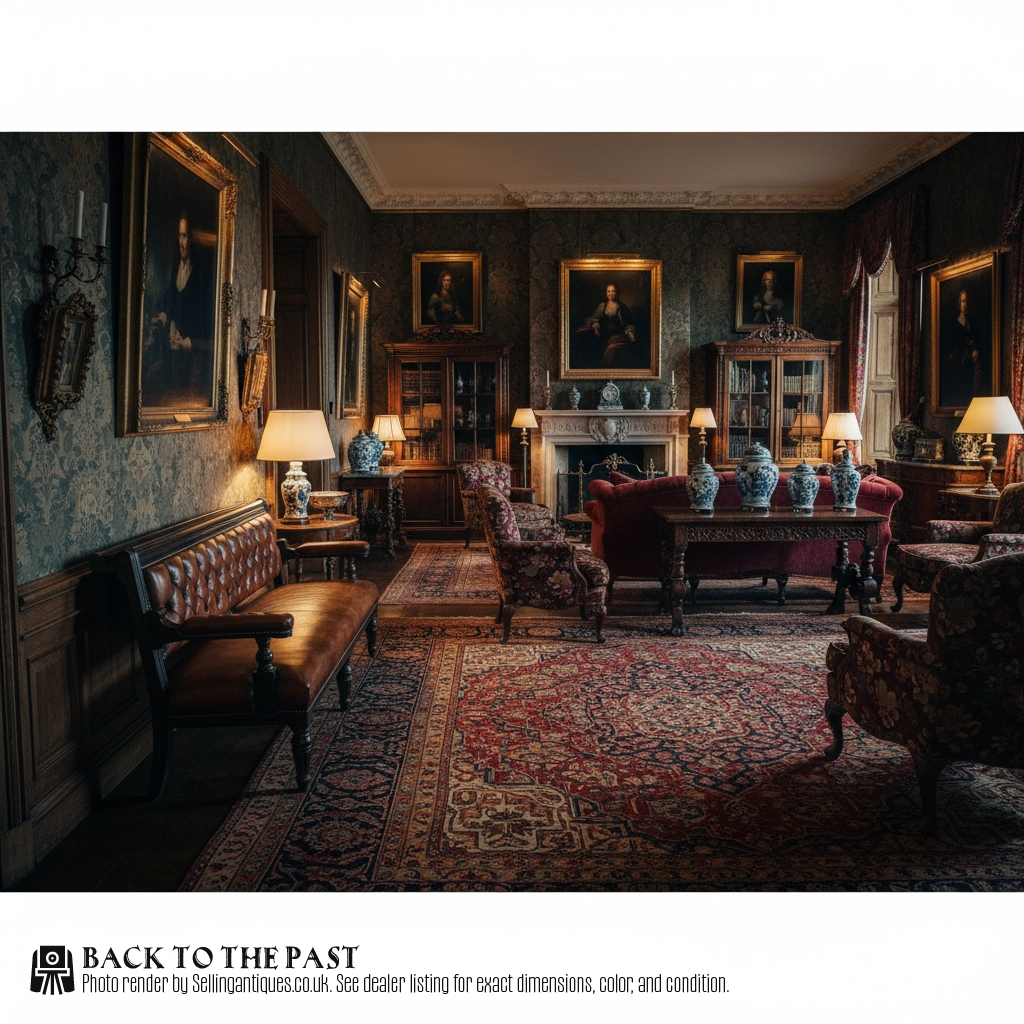
Tufted Leather Bench
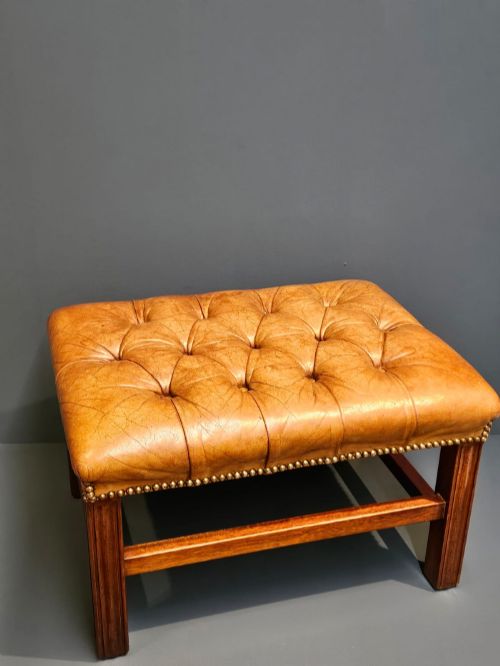
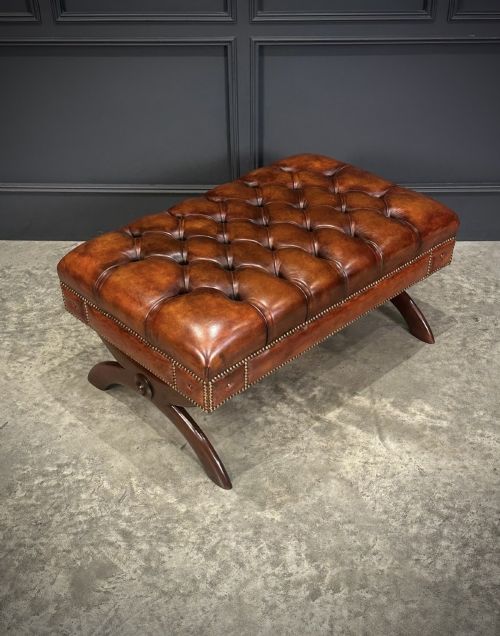
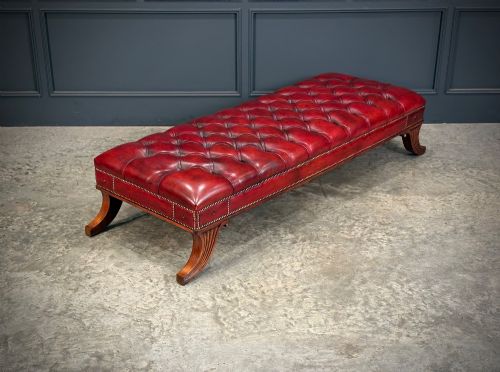
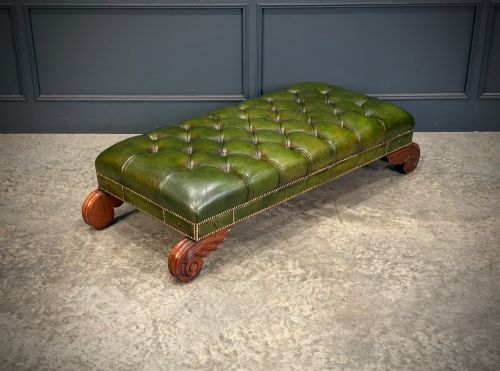
A tufted leather bench encompasses low footstools, long hall benches, and substantial club fenders designed around the hearth. When exploring this selection, buyers frequently encounter Victorian and Regency examples alongside early twentieth century interpretations.
The forms range from compact footstools to large country house ottomans and brass or cast steel club fenders with upholstered top rails. Mahogany, walnut, and oak frames support the buttoned leather surfaces across most pieces.
Traditional English seating emerges through styles spanning George III influences to Edwardian workshop output. Each variant serves a distinct domestic purpose, from fireside perches to central room coffee tables.
Materials and construction
Makers built the structural frames using durable hardwoods including mahogany, walnut, and oak, often incorporating detailed turning or fluted legs. Metal club fenders combine cast steel and brass frameworks with low-profile leather seating.
Upholstery relies on hand-dyed leathers secured with deep buttoning and brass studding techniques. This traditional method creates the distinctive tufted surface texture characteristic of period seating.
Tufted Leather Bench Retail Price Guide 2026
Typical asking prices for tufted leather bench among the pieces listed under this phrase on Sellingantiques today, from the lower quarter to the upper quarter. They describe what is for sale here now, not the wider market.
One recorded steel club fender originated directly from the notable In & Out Club.
Assessing quality and craftsmanship
Superior examples display dense timber framing and intricate joinery, while simpler pieces utilise straightforward painted or plain wood supports. The depth of the buttoning and the suppleness of the hand-dyed leather distinguish finer workshops from standard production.
Proportion and scale dictate the visual weight of each piece, with larger country house ottomans and matched pairs representing more ambitious commissions. Metalwork on club fenders ranges from heavy cast steel to lighter brass tubing.
James Shoolbred
The Tufted Leather Bench Glossary
- Club Fender
- A low fireside seat with a metal frame and a padded leather top rail. These pieces originated in gentlemen's clubs to provide perimeter seating around the hearth.
- Buttoning
- An upholstery technique where twine pulls the leather taut into recessed tufts, secured by buttons. This method keeps the internal padding evenly distributed.
- Ottoman
- A large, fully upholstered seat without a back or arms, frequently used as a central coffee table or footrest. Country house examples often feature extended lengths.
- Regency
- A stylistic period spanning the early nineteenth century defined by classical restraint and polished mahogany or rosewood frames. Pieces from this era often incorporate delicate leg turnings.
- Brass Stud
- A small decorative fastener used to secure the edges of leather upholstery to the wooden frame. These studs provide a neat border along the seat edges.
Tufted Leather Bench: Frequently Asked Questions
How do I care for antique leather?
Maintain the material by applying appropriate leather dressings periodically to prevent drying and cracking.
Keep pieces away from direct heat sources and strong sunlight to preserve the hand-dyed colour.
What is a club fender used for?
Club fenders provide perimeter seating around a fireplace while protecting occupants from excessive heat.
The padded top rail allows comfortable sitting near the hearth during colder months.
Are these benches suitable as coffee tables?
Larger upholstered stools and ottomans function well as central room tables when paired with a protective tray.
The firm buttoned surface supports decorative objects while maintaining traditional seating utility.
How do I distinguish Victorian from Regency styles?
Regency frames tend to display leaner classical proportions with refined mahogany turnings and restrained ornamentation.
Victorian pieces often introduce heavier walnut timbers, larger proportions, and more robust buttoned upholstery designs.