

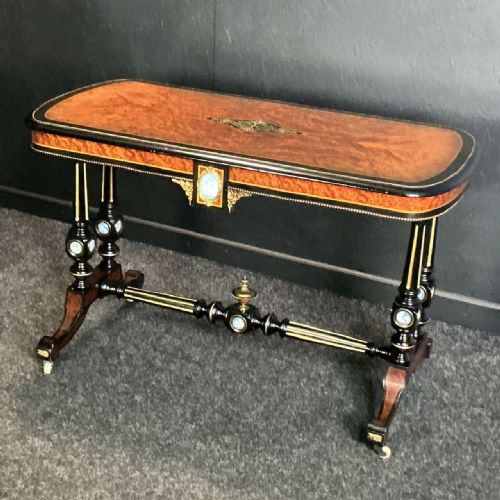
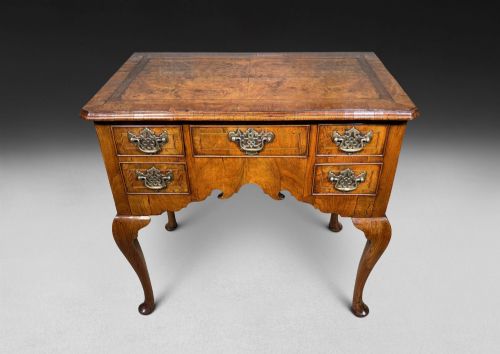
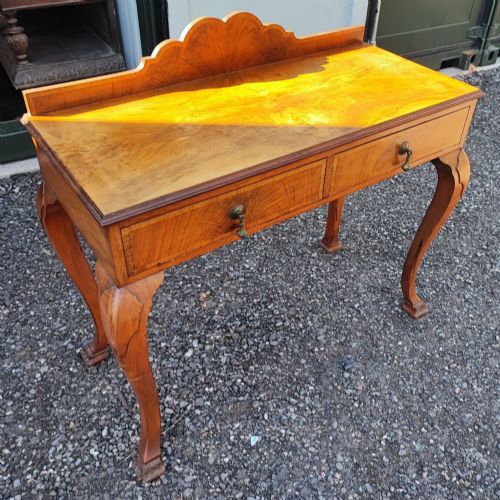
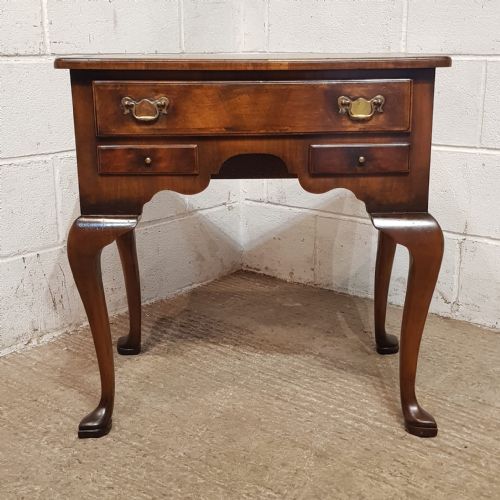

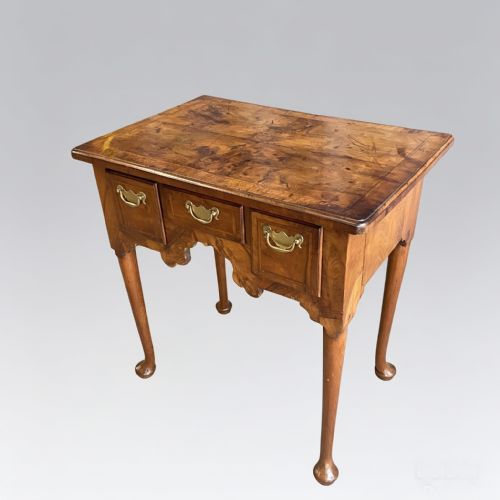
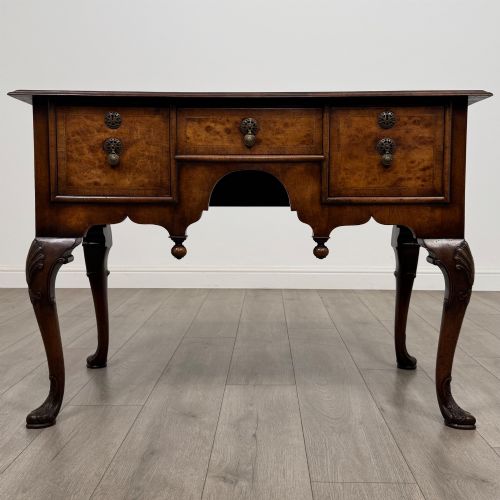
Burr Walnut Side Desk
Burr walnut side desk pieces combine rich, swirling grain patterns with practical proportions, offering both a functional writing surface and a striking focal point.
Burr Walnut Side Desk
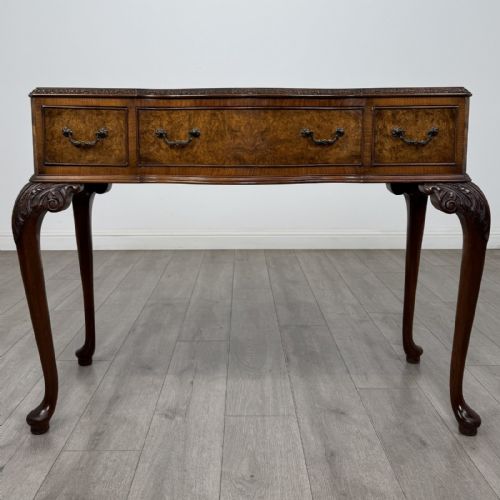
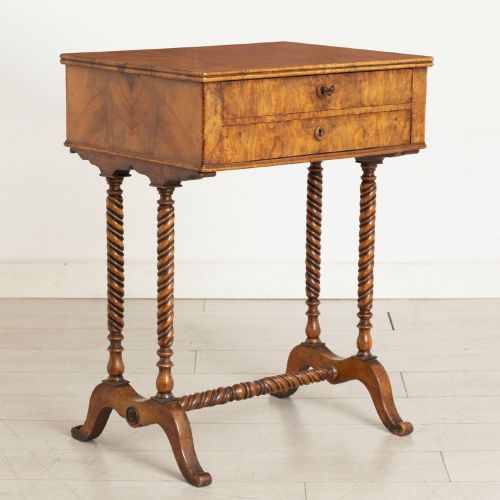
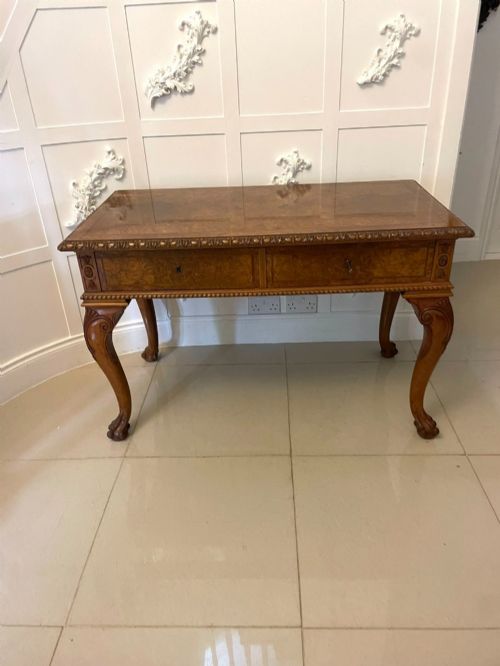
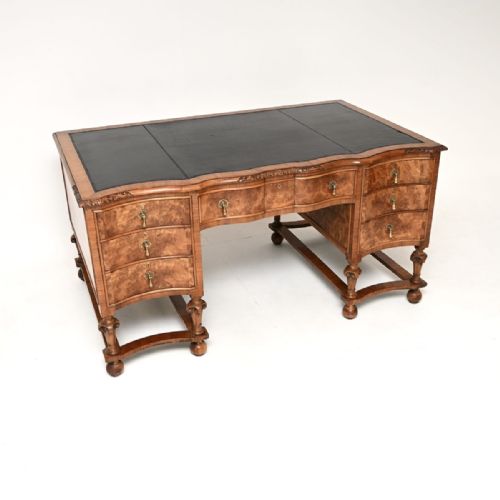
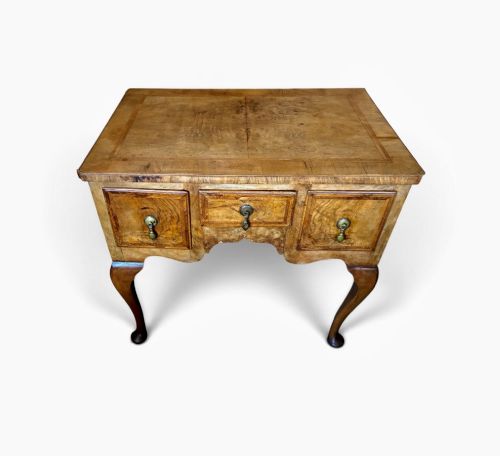
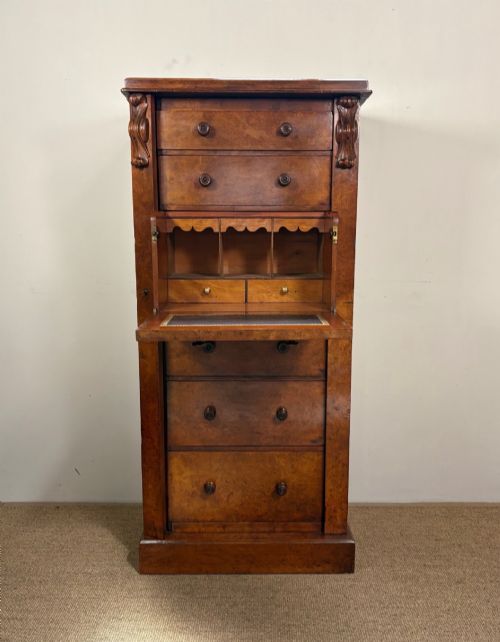
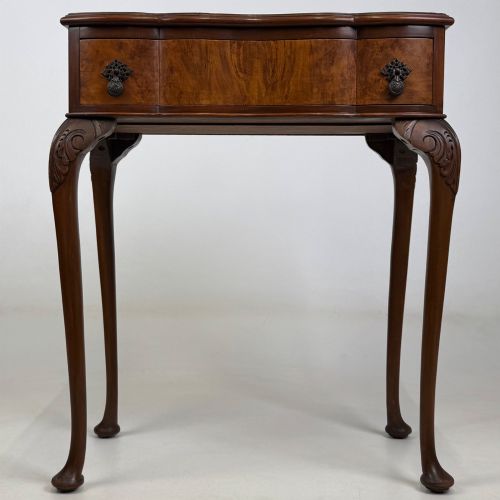
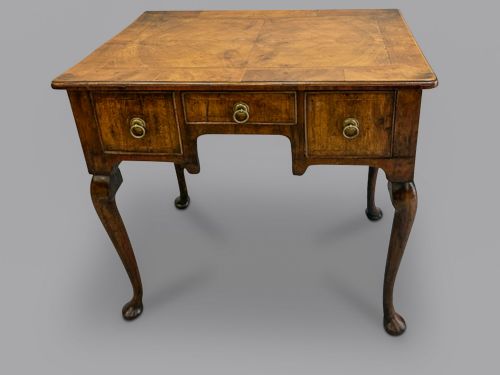
A burr walnut side desk encompasses versatile writing tables, compact lowboys, and console tables that combine the utility of a workspace with the decorative presence of a side table. Buyers seeking this phrase encounter items ranging from formal Georgian and 18th-century lowboys to Victorian and 1920s revival pieces.
The form frequently overlaps with writing desks, dressing tables, and console tables, reflecting how domestic furniture adapted across the 18th, 19th, and 20th centuries. On this page, the most common manifestations are 1920s tables, Victorian writing surfaces, and lowboys rooted in earlier Georgian styles.
Makers and periods represented span from early 18th-century craftsmanship to Art Deco and Queen Anne revival eras. The unifying characteristic across these varied forms is the application of highly figured burr walnut veneers.
How they were made
Craftsmen utilised walnut veneer, specifically burr walnut, applied over secondary woods such as oak and pine to create complex, swirling grain patterns on table tops and drawer fronts. This technique required precise cutting of tree growths to showcase intricate knot clusters.
Construction frequently incorporated brass mounts, ormolu details, and leather inset writing surfaces, paired with solid walnut or carved frames. Joinery methods evolved from early dovetailing on drawer construction to the robust framing seen in Victorian and 20th-century revival pieces.
Listings span the Georgian, Victorian, Edwardian, and Art Deco periods, encompassing both solid walnut and burr walnut veneer over oak.
What varies in quality
The visual impact of a burr walnut side desk depends heavily on the symmetry and depth of the veneer selection, where tightly clustered burls command greater visual attention. Lesser examples display plain walnut or disjointed grain matching across surfaces.
Structural refinement separates standard production from exceptional pieces, visible in the crispness of carved details, the quality of brass hardware, and the integrity of secondary timbers like oak. Finer desks demonstrate meticulous attention to drawer linings and stability across freestanding forms.
Charles Tozer·Maple and Co·Edward’s And Robert’s·Shoolbred and Co·Harry and Lou Epstein
The Burr Walnut Side Desk Glossary
- Burr walnut
- A wood veneer taken from the warted excrescence of a walnut tree, prized for its swirling, highly figured grain patterns. It is sliced thin and applied to carcass woods.
- Lowboy
- A small table with one or more drawers, originating in the early 18th century and commonly used as a dressing table or side table. These feature slender legs, often terminating in pad or cabriole feet.
- Ormolu
- Gilt bronze ornamentation applied to furniture, popular in revival styles. It adds metallic highlights to wood surfaces.
- Partners desk
- A large double-sided desk designed for two people to work opposite one another. These incorporate drawers and cupboards on both elevations.
- Davenport desk
- A compact Victorian writing desk featuring a sloping, leather-lined lid and drawers accessed from the side. They often incorporate interior stationery compartments.
Burr Walnut Side Desk: Frequently Asked Questions
What is a lowboy?
A lowboy is a small, table-like desk with drawers, typically standing on cabriole legs and originating in the early 18th century. They were originally used for grooming or light writing.
Over time, their elegant proportions made them popular as decorative side tables in hallways and living spaces.
How do I care for burr walnut?
Burr walnut furniture requires protection from direct sunlight and extreme humidity fluctuations to prevent veneer cracking and fading. Regular dusting with a soft, dry cloth maintains the polished surface.
Periodic application of suitable furniture wax preserves the moisture and depth of the timber grain without building up heavy residues.
Are these desks practical for daily work?
Many side desks and Davenport designs offer adequate surface area and internal storage for modern laptops and writing materials. Their compact dimensions suit home offices or living rooms where space is limited.
Drawer configurations vary, so checking interior depths ensures compatibility with modern stationery needs.
How do I identify a revival piece?
Revival pieces from the 1920s or Queen Anne revival periods often emulate 18th-century forms like the lowboy using machine-prepared veneers and modern adhesives. Examining the secondary timbers, such as oak or pine, helps reveal the actual manufacturing era.
Hardware styles and interior construction methods also provide clear indicators of whether a piece is Georgian or a later interpretation.