
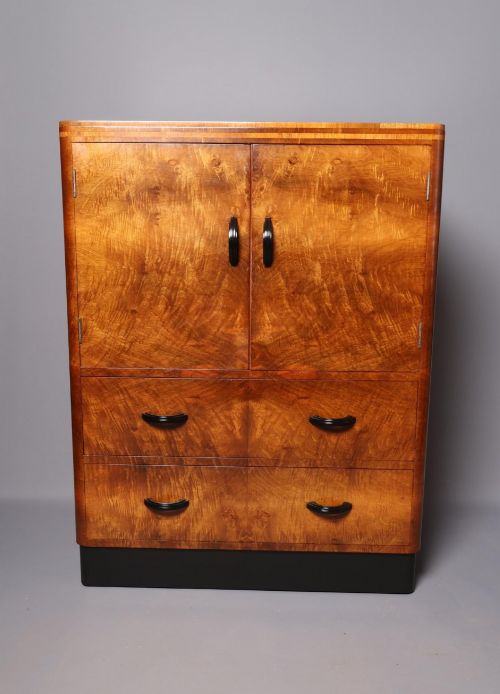


Burr Walnut Compactum
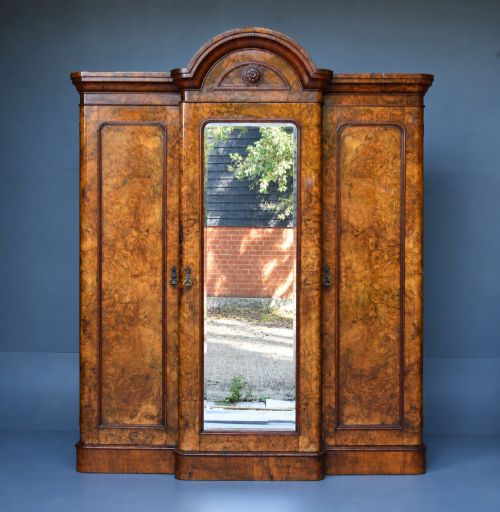
A burr walnut compactum combines fitted interior storage with figured timber surfaces, serving as a substantial bedroom cabinet for hanging garments and drawers.

Burr Walnut Compactum
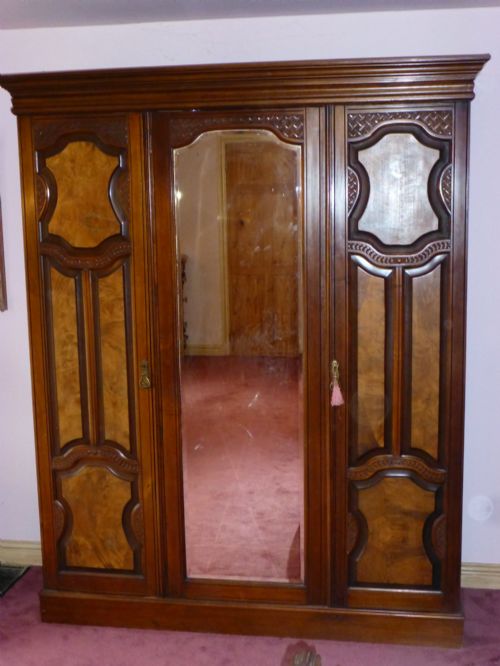
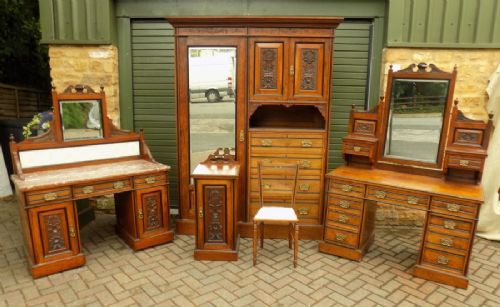
A burr walnut compactum functions as a large multi-purpose wardrobe, integrating hanging space with internal drawers and shelving behind doors. These pieces date from the Victorian period through to the Art Deco era of the nineteen thirties.
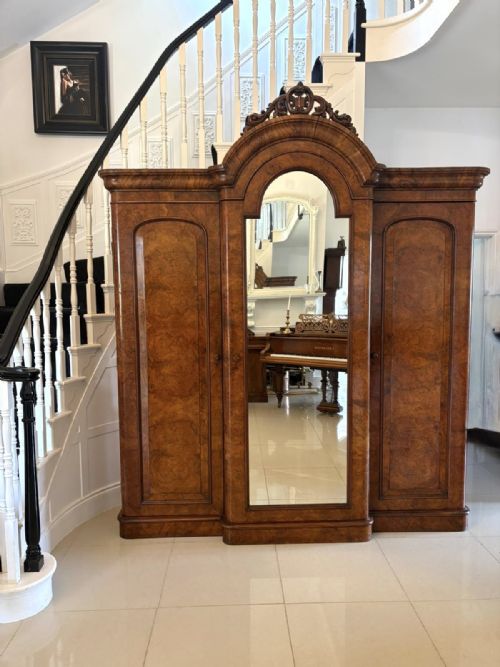
The Victorian examples often appear as large triple wardrobes with central mirrored doors and breakfront layouts. Later pieces from the nineteen twenties and nineteen thirties favour streamlined Art Deco forms.
Buyers encounter single, double and triple configurations designed to organise gentleman's attire or general bedroom linen. The construction incorporates walnut, ash and mirror glass.
How they were made
Cabinet makers utilised burr walnut veneer applied over solid timber carcases to create swirling, highly figured grain patterns across the primary surfaces. Walnut and ash provide the structural foundations for these large wardrobes and tallboys.
Brass hardware secures the doors and internal fittings, whilst bevelled mirror glass is frequently integrated into the central door panels. Bakelite and marble appear in specific decorative or functional contexts within the interior compartments.
The listings span the Victorian period, eighteen sixties, eighteen seventies, eighteen eighties, eighteen nineties, nineteen twenties, nineteen thirties and nineteen forties.
What varies in quality
The selection of veneer determines the visual impact, with tightly curled burr patterns representing the higher end of cabinet making. The symmetry and book-matching of these grain figures across large wardrobe doors separate standard production from superior examples.
Internal configuration also defines the standard of a compactum, with fitted linen slides, jewellery drawers and brass-mounted hanging rails demonstrating thoughtful execution. Maker attribution, such as Holland and Sons or Gordon Russell, indicates elevated workshop standards.
Holland and Sons·Gordon Russell·A and W Stewart·Denby and Spinks·H Ogden Manchester
The Burr Walnut Compactum Glossary
- Burr walnut
- A wood harvested from the warted growths on walnut trees, yielding irregular and highly decorative grain patterns used for veneers.
- Compactum
- A fitted wardrobe that combines hanging spaces, shelves and internal drawers within a single multi-compartment cabinet.
- Tallboy
- A tall chest of drawers, or a combination of a wardrobe and chest, originating in various periods including the Art Deco era.
- Breakfront
- A piece of furniture whose central section projects forward from the flanking outer wings.
- Linen press
- An enclosed piece of furniture designed originally for storing folded linens, frequently incorporated into compactum designs.
Burr Walnut Compactum: Frequently Asked Questions
What is a burr walnut compactum?
A burr walnut compactum is a multi-compartment wardrobe that integrates hanging space, shelving and internal drawers within one unified cabinet.
These pieces use decorative burr veneer across the exterior doors and drawers to highlight the swirling grain of the timber.
How do I tell Victorian from Art Deco compactums?
Victorian compactums typically feature heavy carved mouldings, breakfront layouts and central mirrored doors with traditional proportions.
Art Deco examples from the nineteen thirties rely on geometric symmetry, streamlined surfaces and minimalist handles rather than applied ornamentation.
Where should I place a compactum?
These large wardrobes require substantial wall space and adequate clearance for hinged doors and internal pull-out drawers.
Positioning them away from direct sunlight and radiators protects the delicate burr walnut veneer from drying out and cracking.
What storage do these pieces offer?
Compactums provide a combination of full-length hanging space for garments alongside stacked internal drawers and dedicated shelving compartments.
Many incorporate specialist storage for gentleman's accessories, collars and folded linens behind closed doors.