



Mirrored Triple Wardrobe
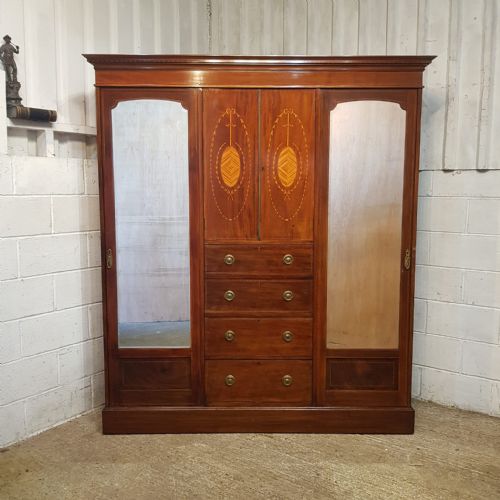
A mirrored triple wardrobe provides substantial bedroom storage through a three-section carcass centred by a large glass door, combining full-length hanging space with extensive shelving and drawers.

Mirrored Triple Wardrobe
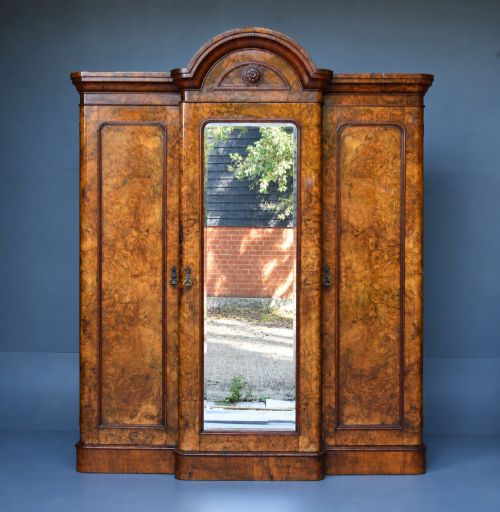
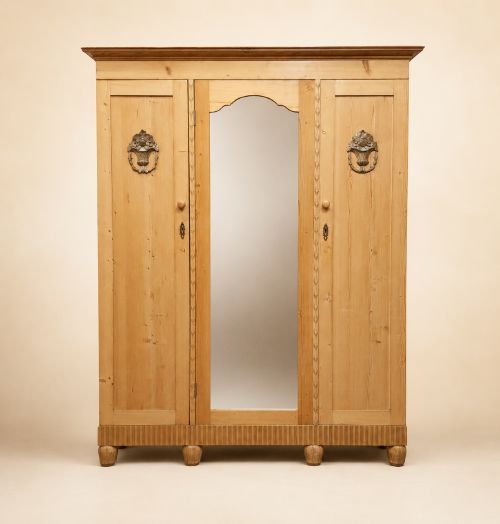
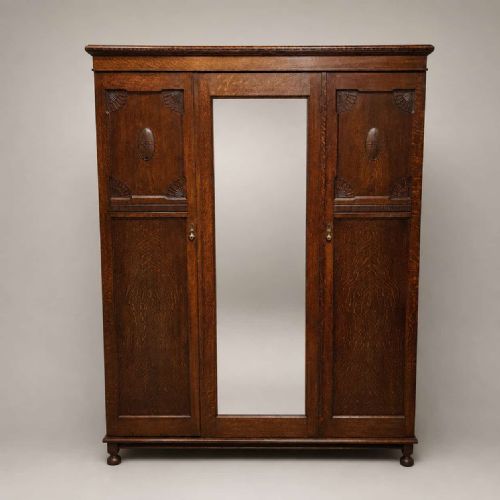
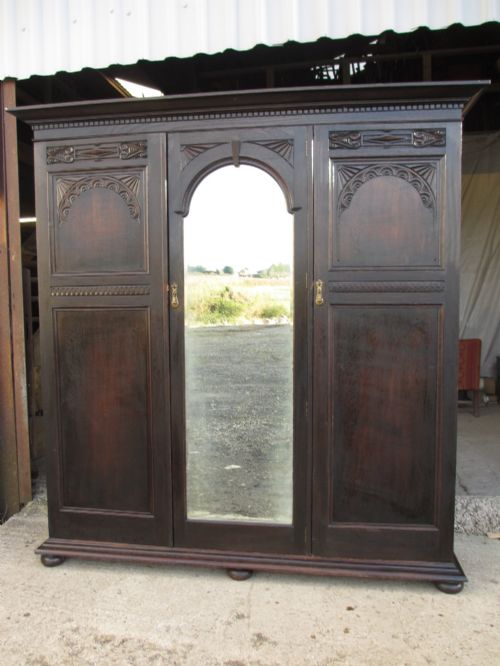
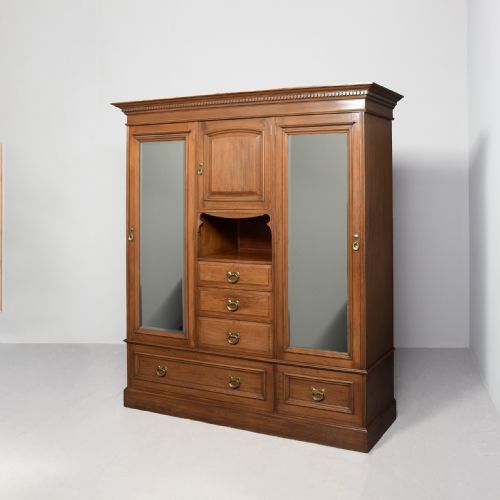
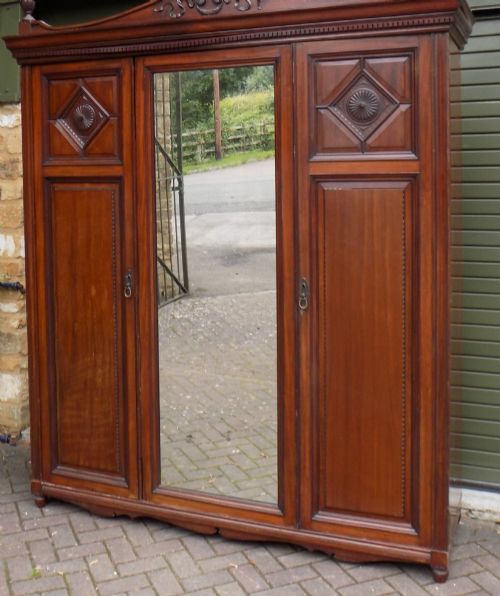
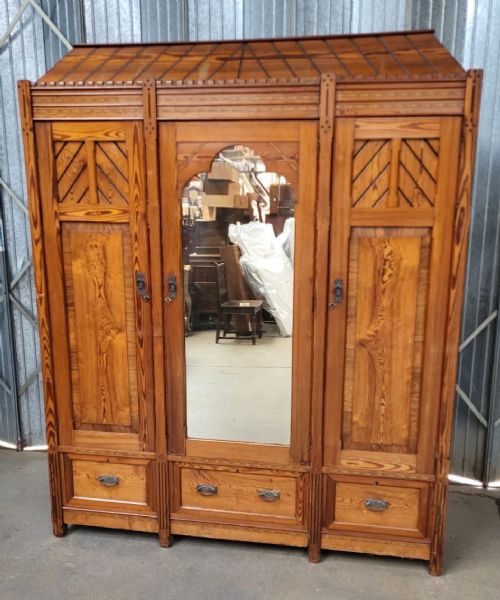
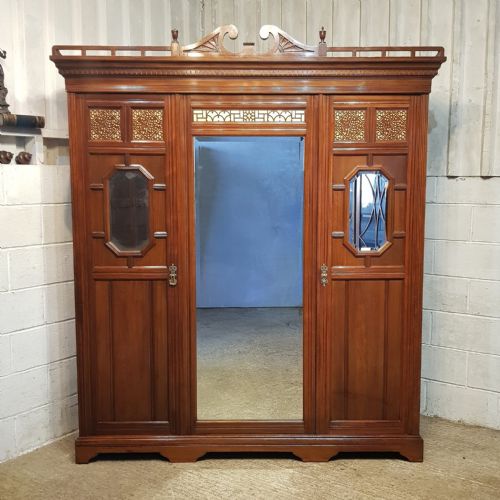
A mirrored triple wardrobe is a large piece of bedroom furniture designed to house garments across three connected internal compartments, typically flanked by two side sections and a central door holding a glass plate. The pieces seen here span the Victorian, Edwardian, and early twentieth-century periods, with numerous examples utilising substantial timbers such as mahogany, walnut, and pine.
Buyers searching for a mirrored triple wardrobe will frequently encounter Victorian and Edwardian iterations, alongside French armoires and compactums. These large storage units often feature symmetrical configurations where flanking hanging spaces enclose central drawer banks, linen slides, or smaller compartments.
How they were made
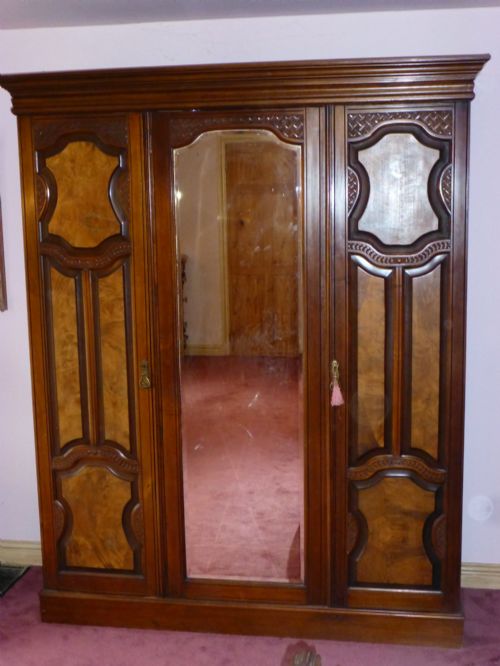
Cabinetmakers constructed these large three-section carcasses primarily from solid and veneered hardwoods like mahogany, walnut, oak, and satinwood, frequently applying burr veneers to the central door panels for dramatic grain patterns. Pine served as the main structural timber for softer or painted regional examples, while brass fittings secured the doors and internal mechanisms.
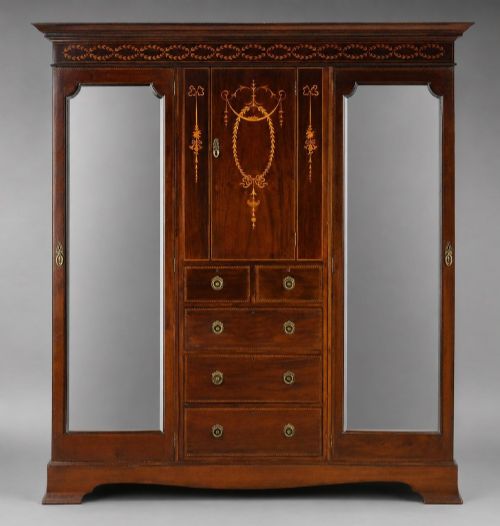
Many of these large pieces were engineered to dismantle into modular sections - comprising a cornice, base, and three vertical carcass units - allowing them to be transported and assembled within domestic bedchambers. Glass plates were bevelled and set into heavy wooden door frames, while decorative elements incorporated carved ornamentation, marquetry inlay, and panel moulding.
French architectural influences appear alongside English vernacular styles, including bleached oak armoires and breakfront designs.
What varies in quality
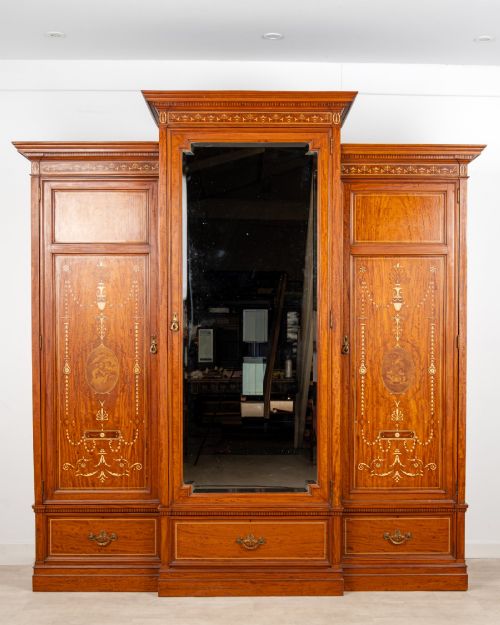
The degree of craftsmanship in a mirrored triple wardrobe reveals itself in the selection of timber veneers, such as figured burr walnut or straight-grained mahogany, and the precision of inlaid details like satinwood stringing. Finer iterations display deep hand-carving, sophisticated internal configurations with sliding trays, and robust dovetail joinery on all internal drawers.
Structural integrity and the quality of the original glass plate distinguish the execution of these pieces. Heavier cornices, well-fitted brass hardware, and doors that hang true without sagging demonstrate superior workshop standards from periods spanning the nineteenth and twentieth centuries.
Holland and Sons·Maple and Co
The Mirrored Triple Wardrobe Glossary
- Compactum
- A multi-functional wardrobe that incorporates internal drawers, linen slides, and hanging space within a single combined carcass. These fitted interiors maximised bedroom storage efficiency during the Victorian era.
- Armoire
- A large freestanding cupboard or wardrobe, frequently of French origin, possessing deep proportions and double or triple doors. These pieces often feature bleached oak or carved walnut surfaces.
- Linen slide
- A shallow internal wooden tray used for storing folded garments and textiles rather than hanging items. They slide on internal runners within the central sections of larger wardrobes.
- Cornice
- The decorative moulded projection that crowns the top of the wardrobe carcass. It visually caps the large three-section structure and often conceals dismantling bolts.
- Knockdown
- A piece of furniture engineered to be disassembled into flat or modular components for ease of transport. This construction method was essential for moving large bedroom units up staircases.
Mirrored Triple Wardrobe: Frequently Asked Questions
Do mirrored triple wardrobes dismantle for moving?
Many examples are designed to break down into modular sections, including a separate cornice, base, and side carcasses, making them manageable for transport.
This knockdown construction was standard practice for large nineteenth and early twentieth-century bedroom furniture to allow passage through domestic doorways.
What is the difference between a wardrobe and a compactum?
A standard wardrobe focuses primarily on full-length hanging space behind large doors, whereas a compactum integrates extensive internal drawers and linen slides alongside the hanging compartments.
Compactums offer a more comprehensive storage solution for folded garments within the same triple-door footprint.
How do I distinguish Victorian from Edwardian wardrobes?
Victorian pieces tend to utilise dense, dark timbers like heavy mahogany and burr walnut, often featuring rich deep polish and formal carved mouldings. Edwardian examples frequently showcase lighter woods such as satinwood, simpler inlaid marquetry, and a generally airier aesthetic.
Art Nouveau and Arts and Crafts influences also emerge around the turn of the twentieth century, introducing stylised botanical motifs and distinct metal hardware.
How do I care for the mirror glass?
Clean the original bevelled glass plates using standard glass cleaner applied to a soft cloth rather than directly onto the mirror surface, preventing moisture from seeping behind the silvering.
Inspect the wooden door frame periodically to ensure the heavy glass remains securely seated within its rebate.