

Burr Walnut Chest of Drawers
When you search for a burr walnut chest of drawers, you are seeking figured timber and deep grain patterns shaped into traditional storage.
Burr Walnut Chest of Drawers
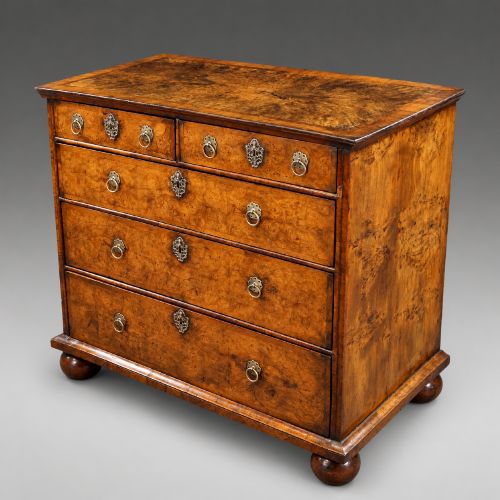
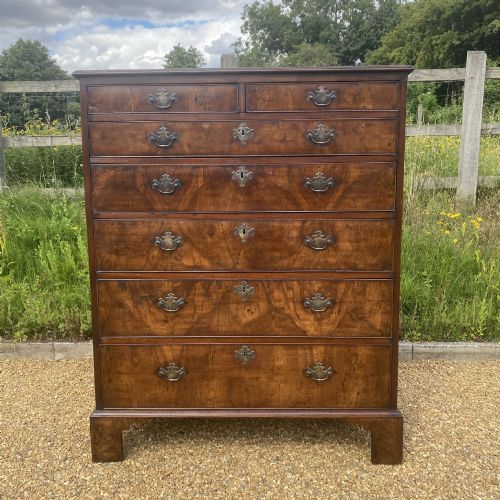
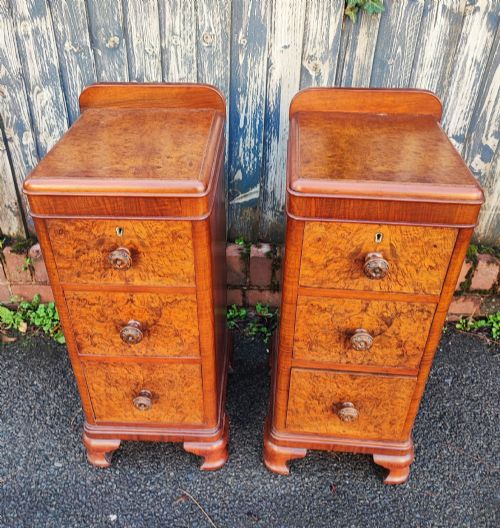
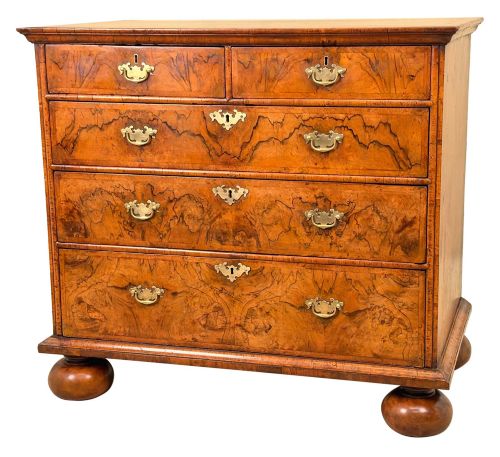
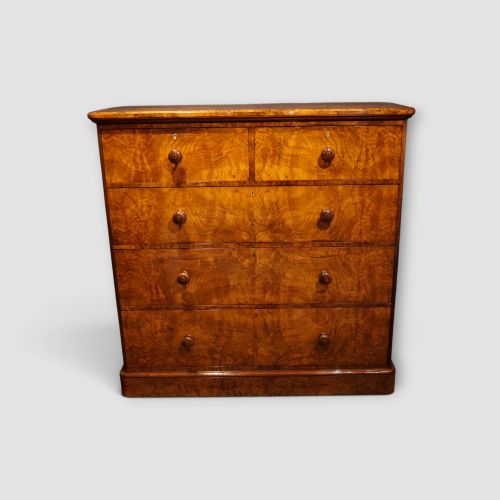
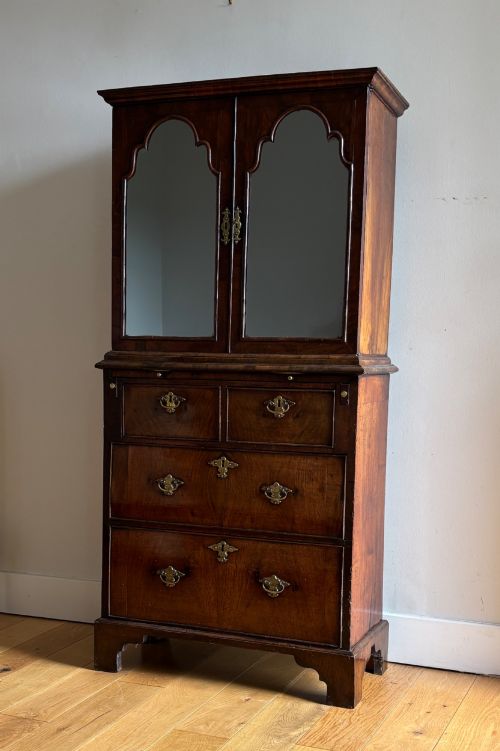
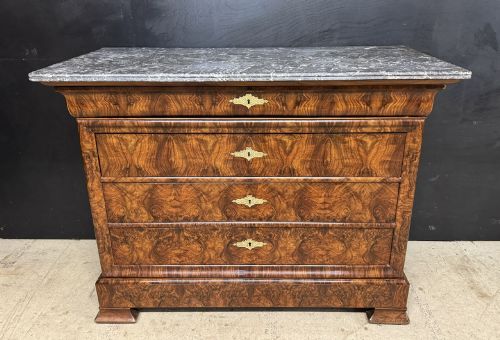
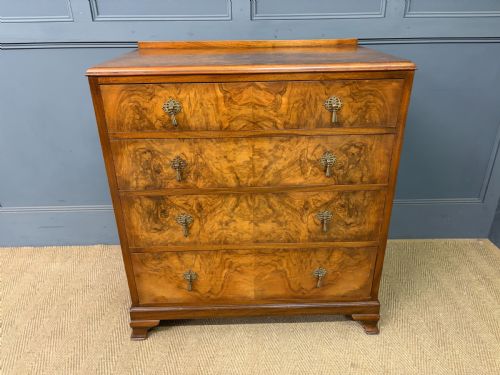
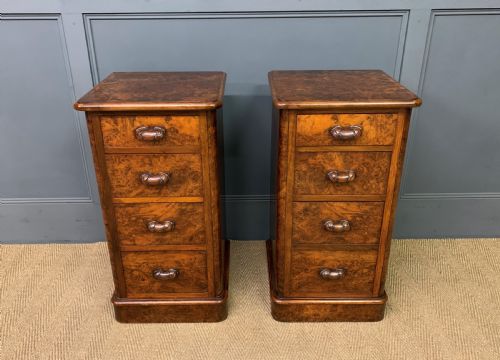
A burr walnut chest of drawers brings together figured timber and practical storage, appearing in various forms from compact bedside tables to tallboys and large commodes. Buyers encountering this phrase will find pieces spanning several centuries, including 18th century examples from the Georgian, Queen Anne, and George periods alongside later 19th-century Victorian works and 1920s or 1930s revivals.
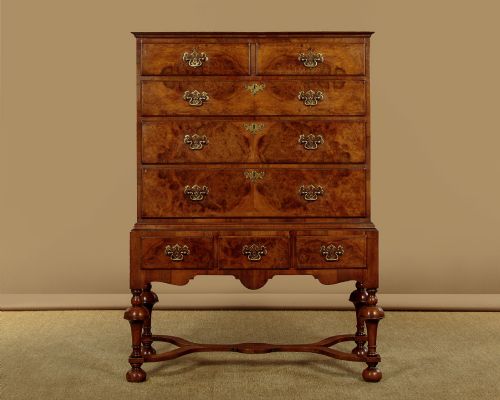
The selection ranges from straightforward low chests to complex formats like chests on stand, secretaires, and bureau desks fitted with interior drawers. Alongside standard English pieces, Dutch, French, and Swedish examples appear, utilising local cabinet-making traditions and distinct proportions.
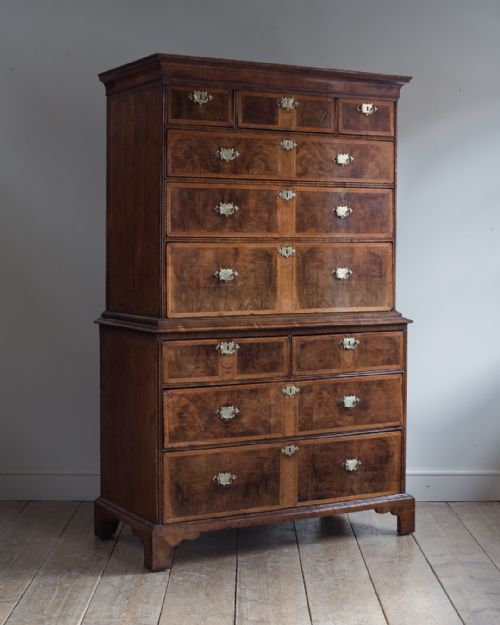
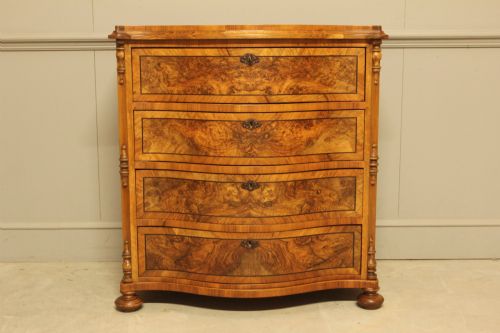
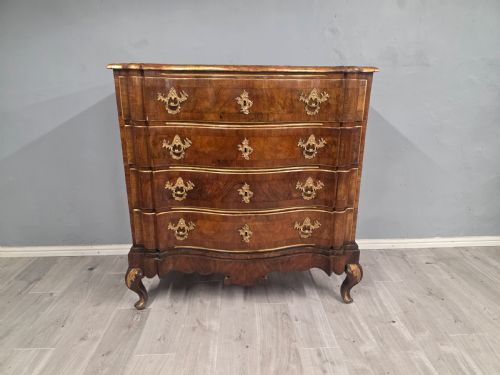
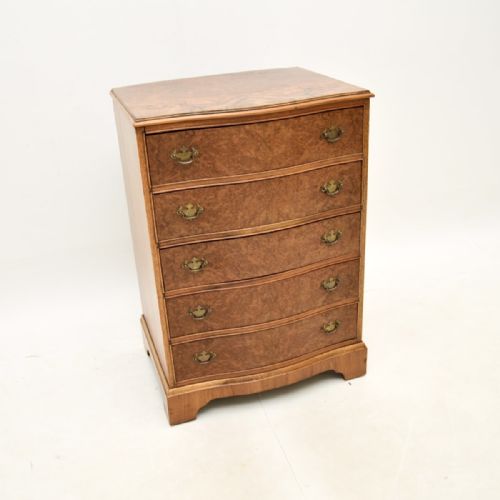
Smaller configurations such as narrow bedside chests and bachelor chests sit alongside substantial tallboys and linen presses. Many incorporate serpentine, bow front, or bombe shapes that showcase the swirling patterns of the wood across curved surfaces.
How they were made
Cabinet makers utilised walnut veneer applied over secondary carcassing woods like oak, pine, and general timber to display the swirling figures of burr walnut grain. Crossbanding and line inlay frequently frame the drawer fronts and top surfaces, creating crisp geometric borders.
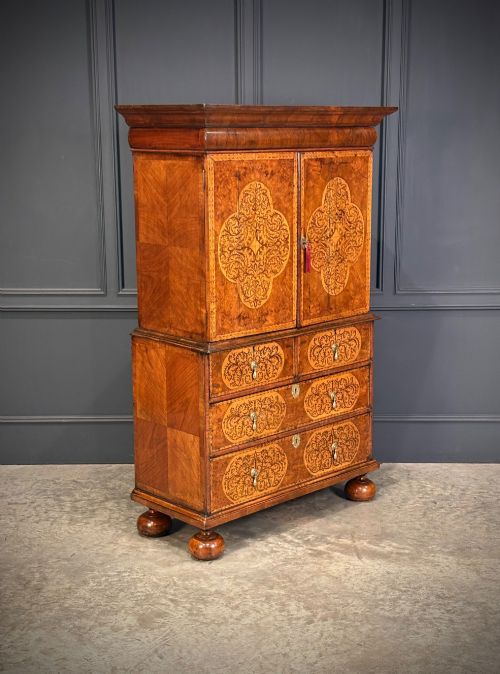
Brass hardware such as drop handles, backplates, and escutcheons punctuate the facades, while secondary woods support internal drawer linings and carcass structures. Fruitwood marquetry and floral inlay add ornamental detail on select 18th-century bureau and commode surfaces.
Burr Walnut Chest of Drawers Retail Price Guide 2026
Typical asking prices for burr walnut chest of drawers among the pieces listed under this phrase on Sellingantiques today, from the lower quarter to the upper quarter. They describe what is for sale here now, not the wider market.
Materials recorded across the inventory include solid oak, pine, fruitwood marquetry, and brass hardware supplementing the primary burr walnut veneer.
What varies in quality
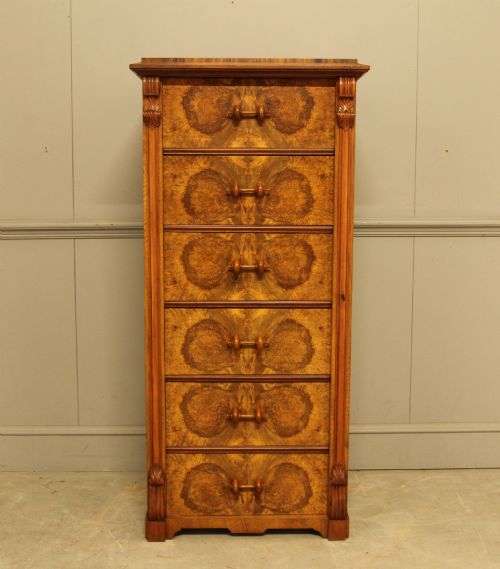
The visual impact of a burr walnut chest of drawers relies heavily on the matching and symmetry of the veneer grain across the drawer fronts and top. Superior examples demonstrate careful book-matching where the natural patterns mirror each other seamlessly.
Proportion and execution distinguish the levels of craftsmanship, particularly in the handling of curved serpentine or bombe forms and the crispness of inlaid crossbanding. The integrity of the underlying timber carcass and the survival of original brass hardware further separate standard production from exceptional pieces.
Gillows
The Burr Walnut Chest of Drawers Glossary
- Burr walnut
- A specialised wood cut from walnut tree growths that produces intricate, swirling grain patterns. It is typically sliced into thin veneers for application onto furniture surfaces.
- Crossbanding
- A decorative technique where strips of veneer are laid across the grain direction around the perimeter of a drawer front or top. This frames the central wood panel with a contrasting border.
- Tallboy
- A tall storage furniture form consisting of one chest stacked directly upon another, often taking the form of a chest on chest. These provide substantial vertical drawer space.
- Serpentine
- A furniture shape featuring a front edge that curves outward centrally and inward at the sides in a gentle 'S' wave. This contour requires precise woodworking to fit drawers accurately.
- Marquetry
- The art of applying pieces of veneer to a structure to form decorative patterns and pictorial designs. Artisans use various tinted woods to create floral or geometric motifs.
- Bombé
- A swelling, bulging contour found on the sides and fronts of commodes and bureaus. This voluptuous 18th-century profile highlights advanced veneering techniques.
Burr Walnut Chest of Drawers: Frequently Asked Questions
How do I date a burr walnut chest?
Dating relies on carcass construction, handle hardware types, and prevailing architectural styles visible in the feet and moulding details. Earlier 18th-century pieces often feature feather banding and oak linings, whereas 1920s revivals adopt lighter internal woods and commercial manufacturing traits.
Examining the drawer sides for hand-cut dovetails versus machine joints provides further clarity. Comparing the overall silhouette against known period forms helps narrow down the decade of manufacture.
Where should I place a walnut chest?
These chests function well in bedrooms as primary storage or in hallways and living spaces as statement console units. Smaller bedside versions fit easily beside low bed frames.
Keeping them away from direct sunlight and heat sources protects the fragile walnut veneers from drying out or splitting. Stable indoor humidity preserves the polish and timber stability over time.
What is a bureau desk?
A bureau desk combines a sloping writing flap that opens down with a chest of drawers positioned underneath. Inside the fold-down flap, small pigeonholes and concealed compartments provide organised storage for correspondence.
This form gained popularity during the 18th century as a dual-purpose piece for both writing and storing garments. Later revival periods continued producing these versatile hybrid items.
How do I maintain walnut veneer?
Maintenance requires dusting with a soft, dry cloth and avoiding silicone-based polishes or harsh chemical cleaners. Applying traditional beeswax sparingly helps nourish the timber and maintain a soft lustre.
Maintaining a consistent room temperature prevents the underlying wood and veneer from expanding or contracting at different rates. This simple care routine prevents lifting or cracking across the patterned surfaces.