
Burr Walnut Bedroom Furniture
Burr walnut bedroom furniture brings magnificent swirling grain patterns and deep honey tones straight to the sleeping quarters.
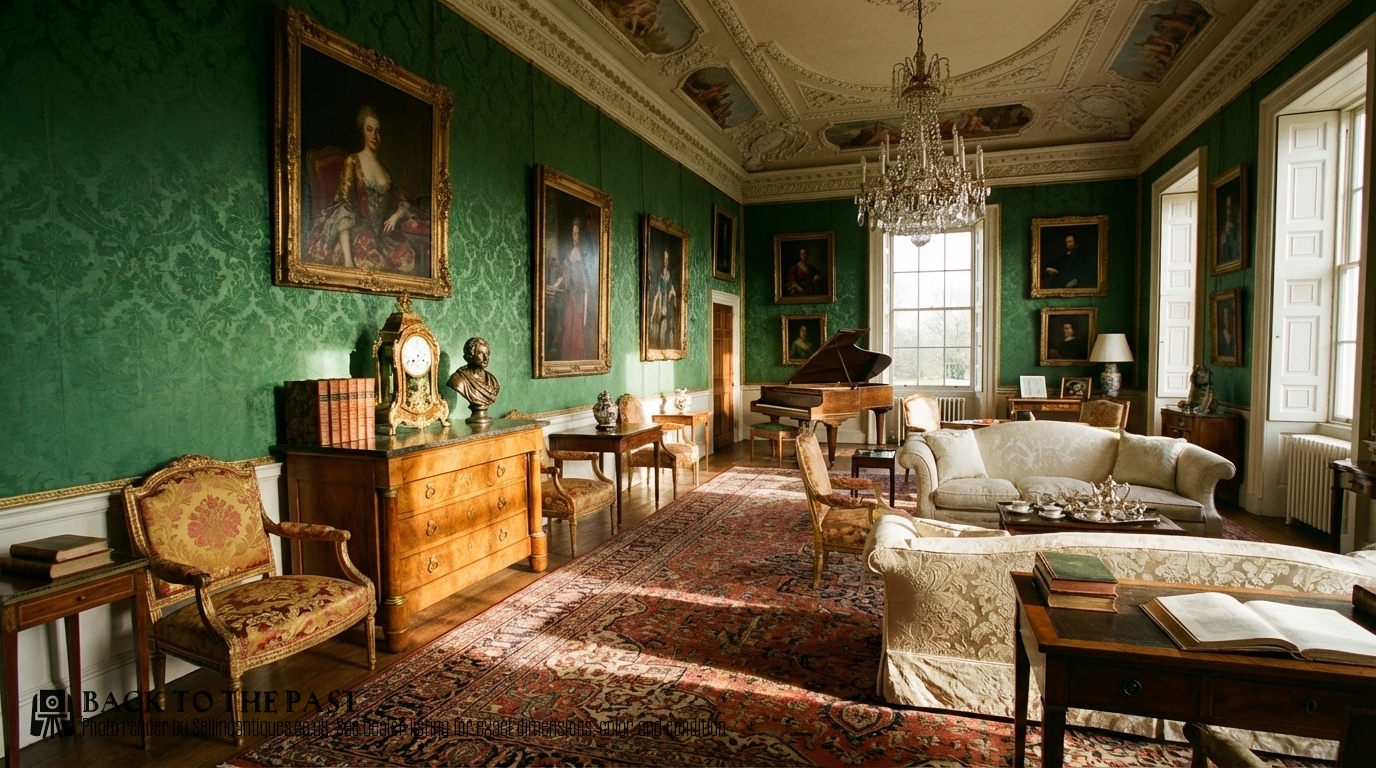
What burr walnut bedroom furniture is
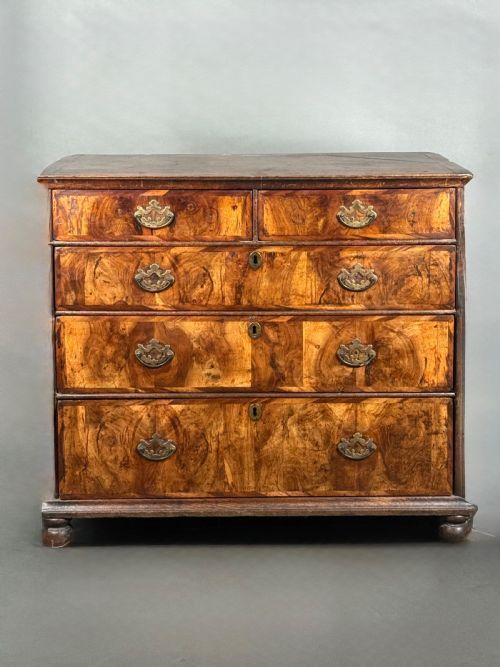
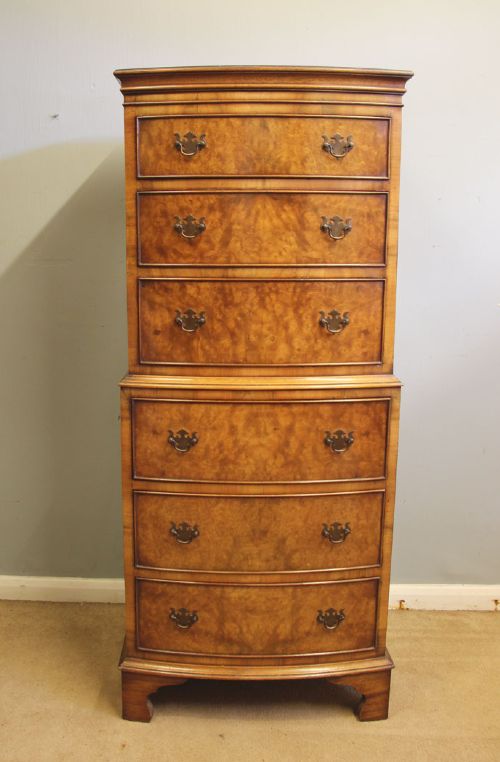
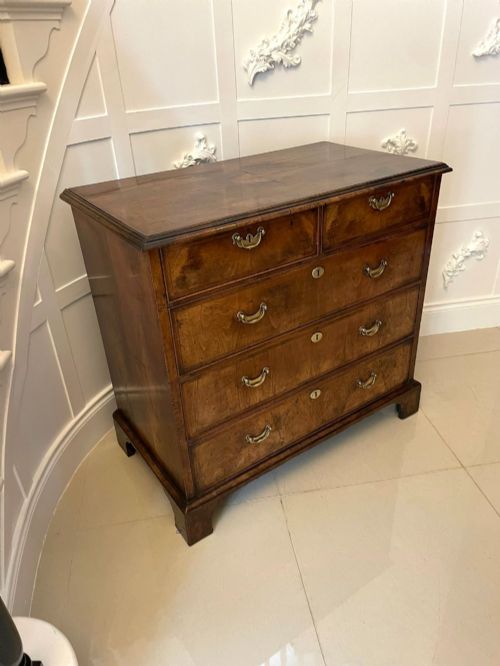
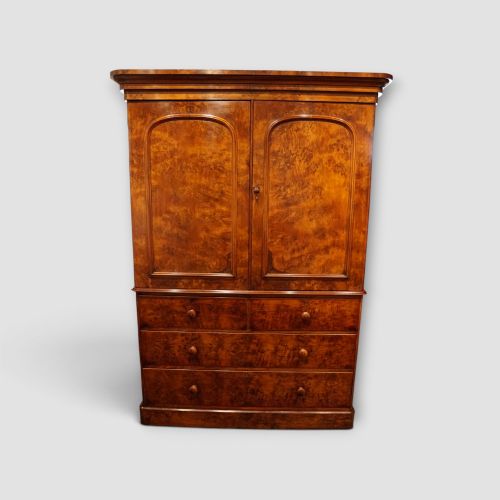
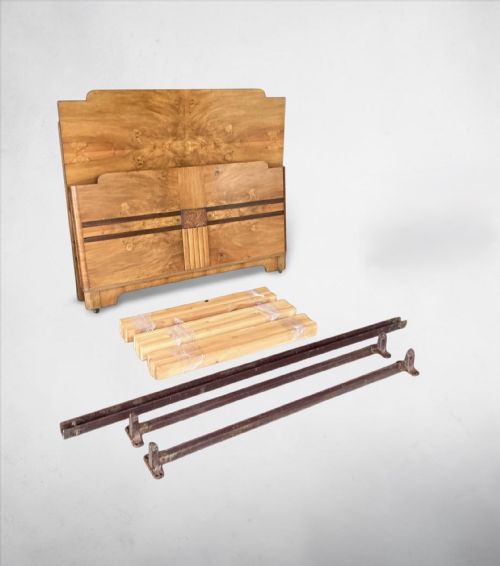
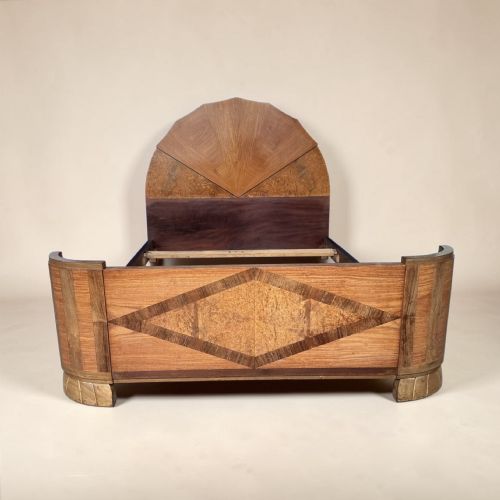
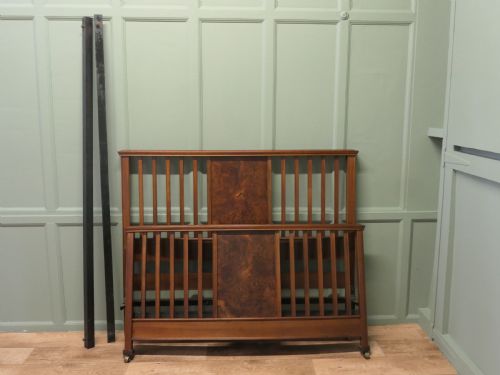
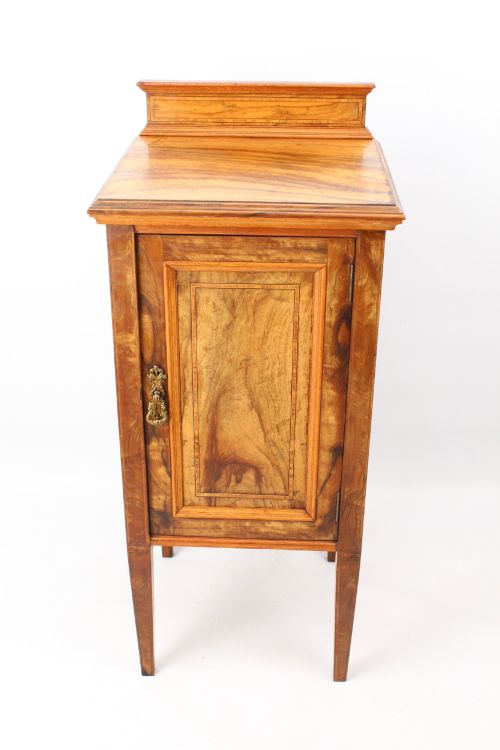
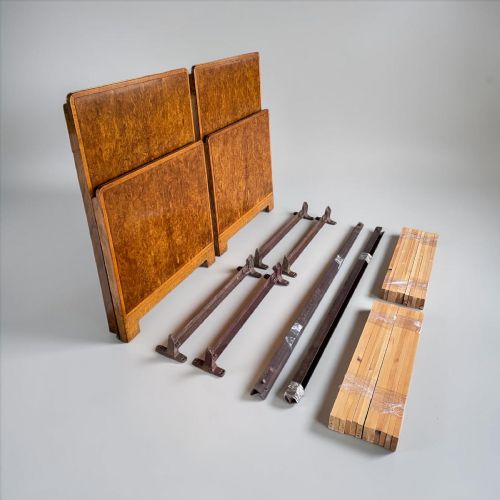
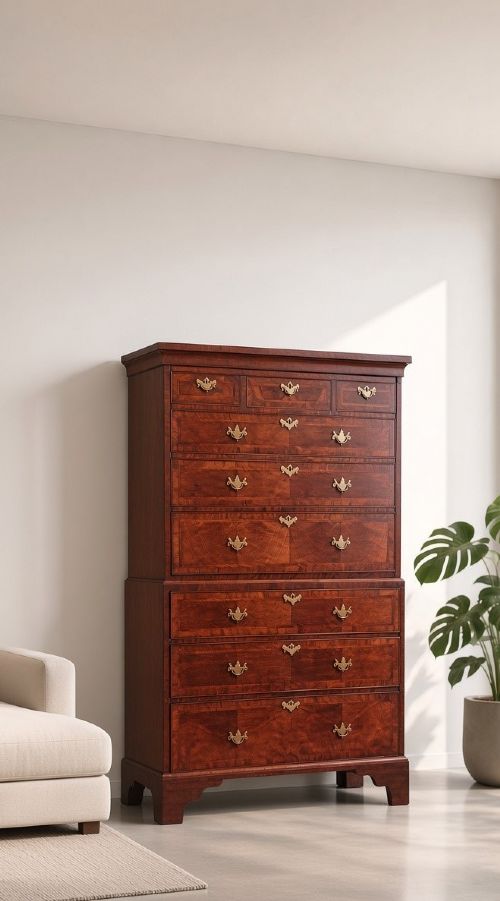
Burr walnut bedroom furniture consists chiefly of chests of drawers, tallboys, commodes, and single beds produced across several centuries. The selection ranges from early eighteenth-century walnut chests and George II masterpieces to Victorian Wellington chests and nineteen-twenties Art Deco suites.
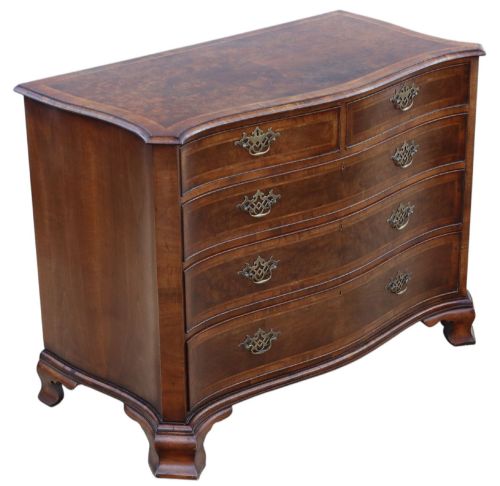
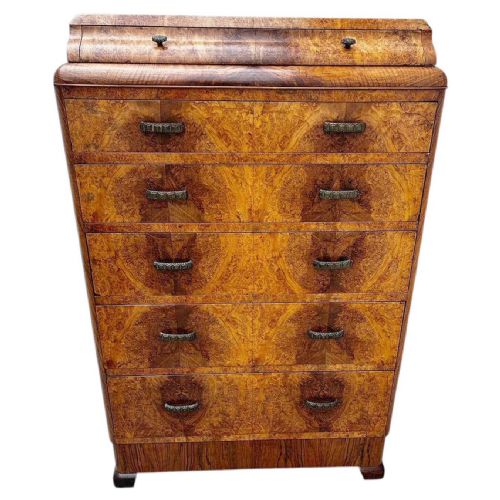
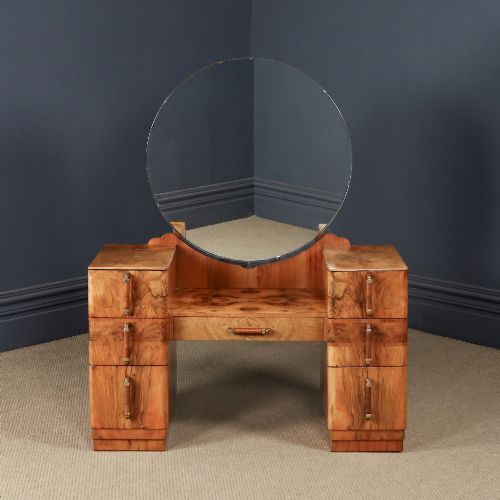
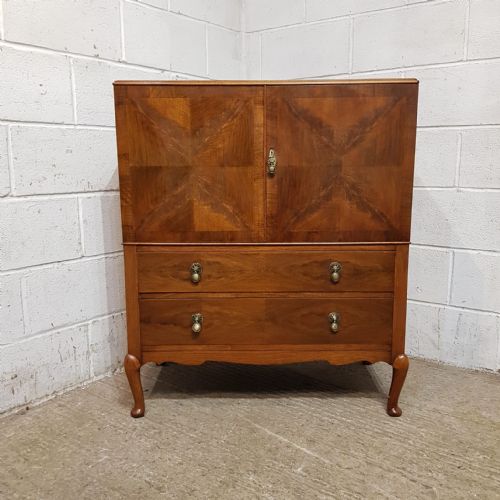
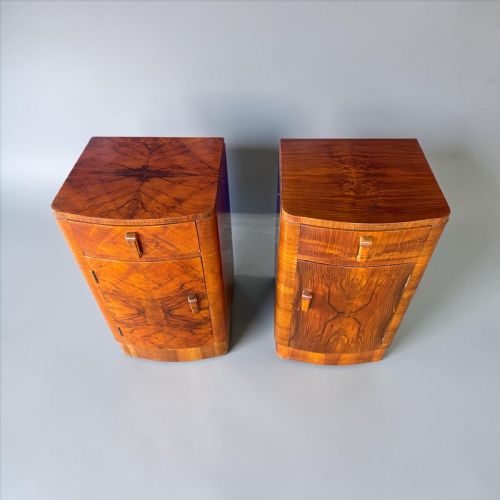
The version most commonly met on this page is the nineteen-twenties or nineteen-thirties chest of drawers, often featuring crossbanding and serpentine fronts. Pieces from the Georgian and Victorian eras also appear, alongside occasional French Empire or Queen Anne revival examples.
These items were designed for grand domestic settings to store garments and adorn the room with rich timber textures. Buyers seek them for their striking decorative presence and the warmth that burr veneers bring to traditional and modern interiors alike.
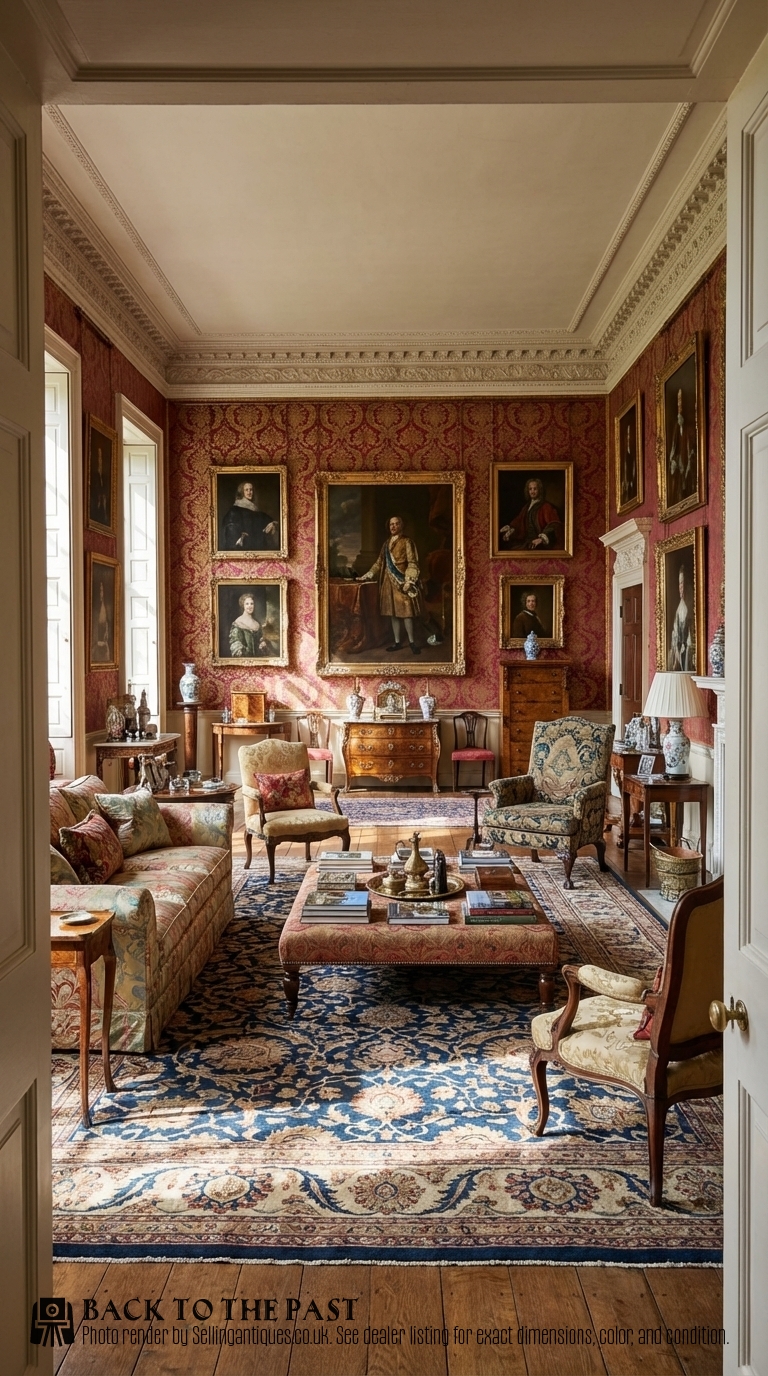
How they were made
Cabinet makers utilised highly figured burr walnut veneers applied over secondary woods such as oak, pine, and general wood. These thin slices of timber reveal intricate knot formations and swirling grain patterns derived from growths on the walnut tree.
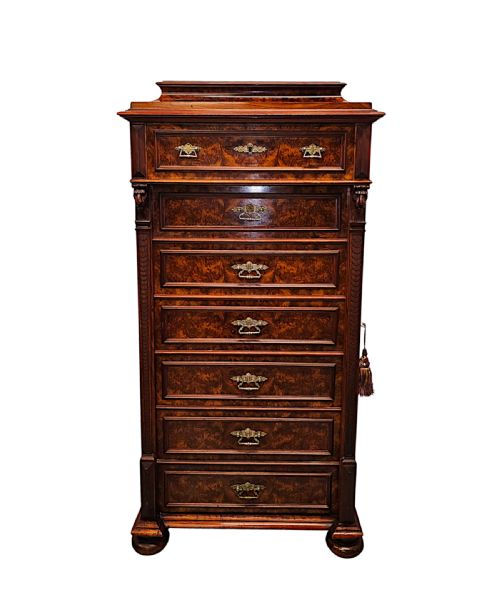
Fine brass handles, escutcheons, and occasional marble elements complete the construction of these decorative items. Crossbanding in straight-grained walnut often frames the drawer fronts to create a neat geometric contrast against the wild figuring of the burr.
Retail Price Guide 2026
Typical UK retail prices for burr walnut bedroom furniture, calculated from the Sellingantiques database of over a million retail prices indexed since 2003. This retail price guide relies exclusively on Sellingantiques data; no external sources or auction records are used, so the figures do not describe the wider market.
Even a humble sock drawer gets the royal treatment when wrapped in swirling burr walnut.
What varies in quality
The visual impact of the burr walnut veneer dictates much of the distinction between average pieces and exceptional ones. Finer examples display symmetrical, dense figuring across the entire surface rather than plain patches or mismatched grain directions.
Construction methods and secondary woods also separate the grades, with solid oak linings and precise crossbanding marking out the superior items. The fluidity of serpentine fronts and the crispness of applied mouldings reveal the hand of a more accomplished cabinet maker.

M. P. Davis Furniture of London
The Burr Walnut Bedroom Furniture Glossary
- Burr walnut
- A veneer sliced from the knotty growth of a walnut tree, prized for its swirling, highly decorative grain patterns. It requires great skill to apply smoothly to large surfaces.
- Crossbanding
- A narrow strip of veneer laid around the border of a drawer front or tabletop with the grain running perpendicular to the centre panel. This technique creates a neat framing effect.
- Serpentine
- A front shape defined by a gentle convex curve flanked by two concave curves, typical of finer eighteenth-century and revival commodes. It adds dynamic movement to case furniture.
- Wellington chest
- A tall, narrow chest of drawers secured by a hinged vertical locking stile that fastens with a key. This form originated in the nineteenth century.
- Chest on chest
- A tall storage unit formed by stacking a smaller chest of drawers directly upon a larger base chest, sometimes called a tallboy. This imposing form provides substantial capacity.
Frequently Asked Questions
What periods do these pieces come from?
The selection spans several centuries, including eighteenth-century pieces, nineteenth-century Victorian designs, and early twentieth-century examples.
Art Deco and revival styles from the nineteen-twenties and nineteen-thirties appear frequently alongside earlier Georgian forms.
How do I identify burr walnut?
Burr walnut is recognisable by its swirling, highly figured patterns filled with small knot clusters and rich tonal variations. It differs significantly from straight-grained walnut by offering a wilder, more organic texture.
Cabinet makers used these figured veneers on prominent surfaces like drawer fronts and tops to create striking visual appeal.
Are these items suitable for modern bedrooms?
These pieces provide ample storage through various chest configurations while adding warmth and texture to contemporary spaces. Their rich timber tones mix well with minimalist or traditional interior schemes.
Single beds and various drawer counts accommodate different room layouts without overwhelming the floor space.
What is a serpentine commode?
A serpentine commode is a chest of drawers featuring a front edge curved in an undulating wave pattern. This sophisticated shape demands precise carpentry and high-grade veneers.
Such pieces represent some of the finest decorative cabinet making found within these periods.