

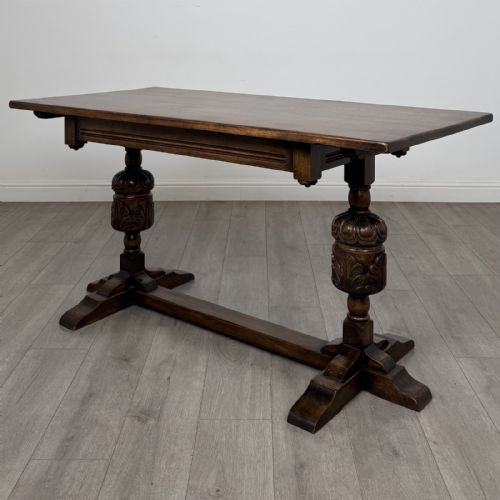
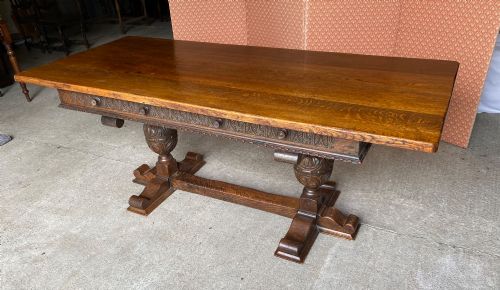
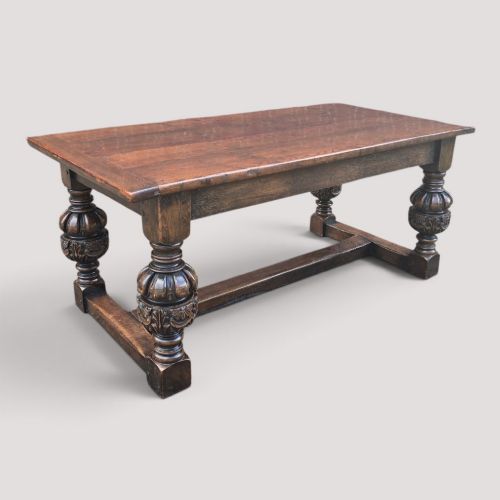
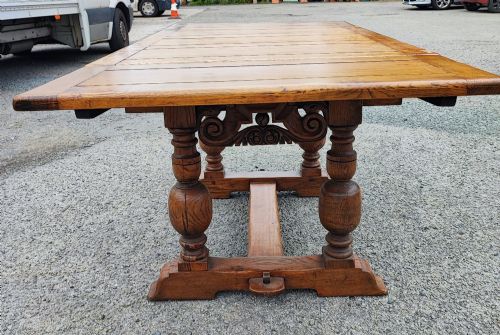



Bulbous Leg Oak Table
A bulbous leg oak table anchors a room with heavy turned supports and rich timber, built for centuries of gatherings.
Bulbous Leg Oak Table
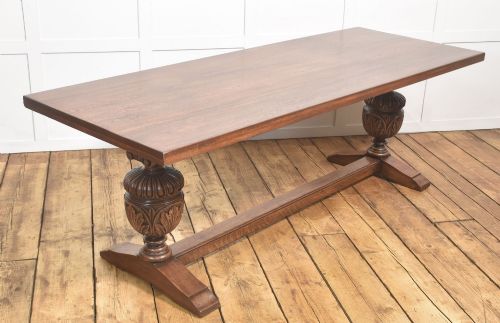
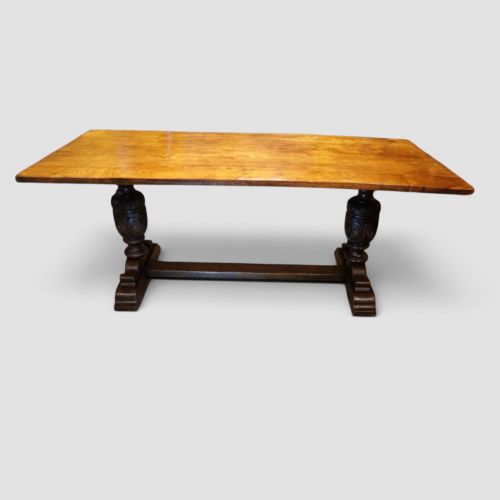
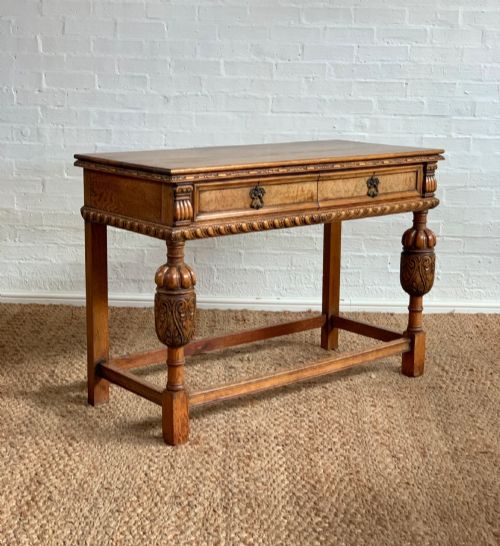
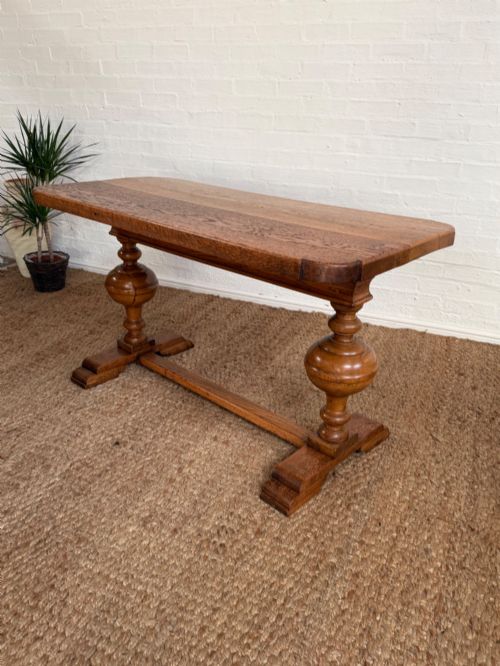
A bulbous leg oak table is a substantial dining or serving surface defined by swollen, heavily turned uprights that support the framework. Buyers seeking this phrase usually encounter large refectory or farmhouse formats designed to seat families and guests comfortably.
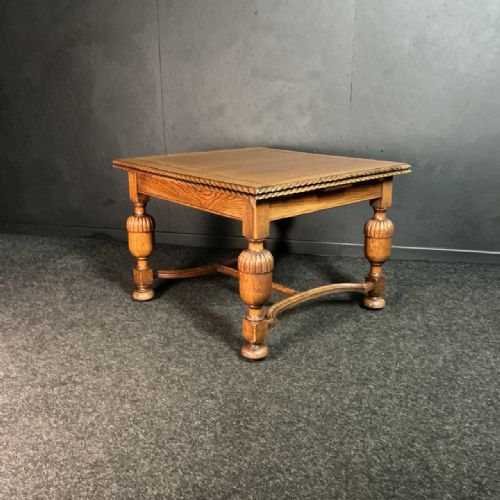
The pieces appearing here span from seventeenth-century originals to later twentieth-century revivals in Jacobean, Elizabethan, and Gothic styles. Dining tables dominate the selection, though smaller coffee tables, side tables, and occasional tables also feature.
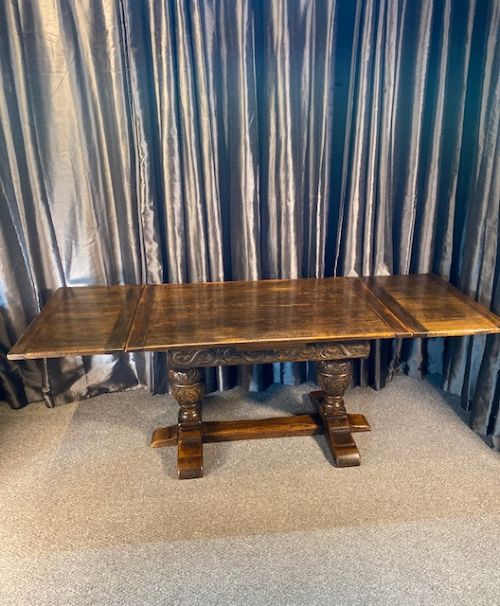
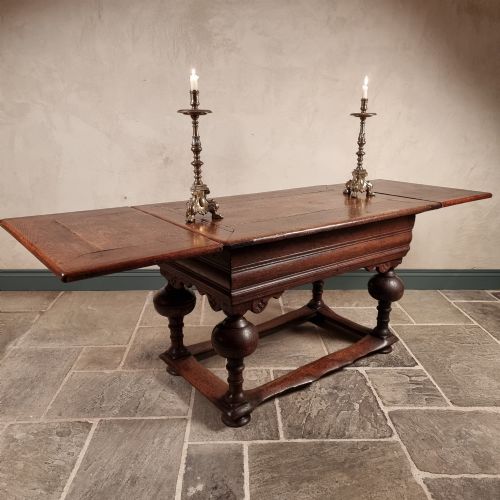
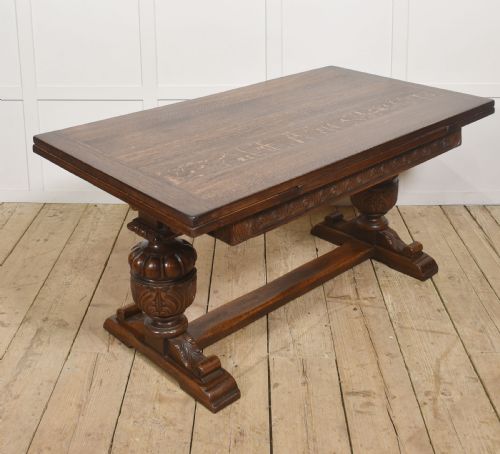
Makers often incorporated clever mechanical extensions such as draw leaves or pull-out sections to enlarge the surface area when needed. The combination of solid oak construction and prominent turned supports creates an unmistakable historic silhouette.
What varies in quality
The standard of a bulbous leg oak table rests on the depth and crispness of the hand carving upon the turned supports. Superior examples display balanced proportions where the heavy base harmonises with the thickness of the top.
Materials also dictate the grade, with dense, mature timber and subtle wood inlay or brass accents elevating the piece. The smoothness of extending mechanisms, such as draw leaves, indicates the precision of the original workshop carpentry.
Bulbous Leg Oak Table Retail Price Guide 2026
Typical asking prices for bulbous leg oak table among the pieces listed under this phrase on Sellingantiques today, from the lower quarter to the upper quarter. They describe what is for sale here now, not the wider market.
Some oak trolleys arrive equipped with lift-off trays, proving that tea service mobility predates modern wheels.
Beresford and Hicks·Maple and Co
The Bulbous Leg Oak Table Glossary
- Refectory table
- A long, narrow dining table traditionally used in monasteries and great halls. This form often incorporates side stretchers near the floor for added stability.
- Draw leaf table
- A dining table with two sliding leaves hidden beneath the main top. These pull out to extend the surface area instantly.
- Jacobean revival
- A nineteenth and twentieth-century design movement copying seventeenth-century English furniture characteristics. It relies heavily on dark oak, geometric moulding, and turned supports.
- Turnery
- The method of shaping wood by rotating it on a lathe against cutting tools. This technique produced the characteristic swelling profile of the legs.
- Stretcher
- A horizontal wooden brace connecting the legs of a table to increase rigidity. These structural elements often sit close to the floor.
Bulbous Leg Oak Table: Frequently Asked Questions
How do I care for an oak table?
Feed the timber periodically with a suitable wax to maintain its natural lustre and protect against drying out.
Avoid placing the table near direct heat sources or in strong sunlight, which can cause the solid wood to warp or split.
Are these tables suitable for everyday dining?
Solid oak surfaces withstand daily use remarkably well and develop a deeper character from minor knocks and marks over time.
Using heat mats and coasters helps protect the historic finish from stubborn stains or moisture rings.
How do I distinguish a seventeenth-century piece from a revival?
Examine the underside and joints for tool marks, peg construction, and timber shrinkage that indicate genuine age.
Revival pieces from the nineteenth and twentieth centuries often feature more uniform machine tooling and standardised hardware.
How do draw leaf extensions work?
The main top remains stationary while two secondary leaves slide out smoothly from underneath each end.
As the leaves pull into place, the main surface drops slightly to lock the extended top into a flat plane.