




Period Oak Refectory Table
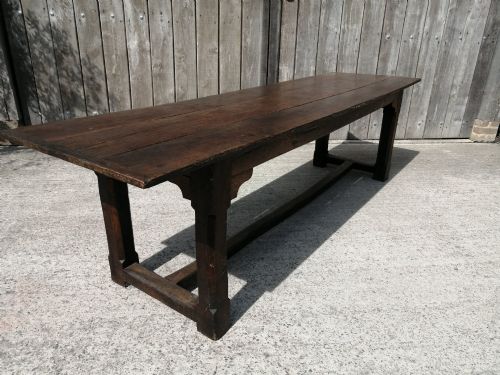
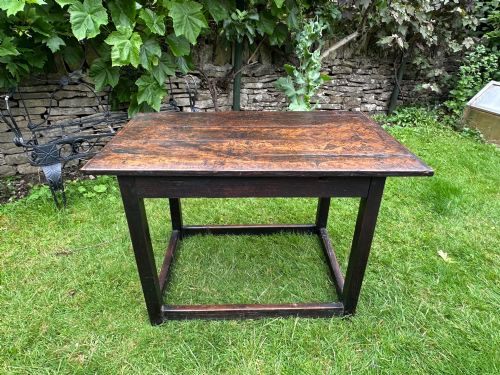
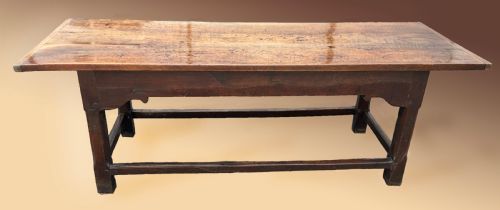
A period oak refectory table anchors a room with enduring strength, offering long timber planks and sturdy timber framing built for communal dining.
Period Oak Refectory Table
A period oak refectory table provides a substantial wooden surface designed originally for communal dining in large halls and monastic refectories. Buyers searching this phrase encounter long timber dining boards supported by trestles, turned legs or robust structural framing.
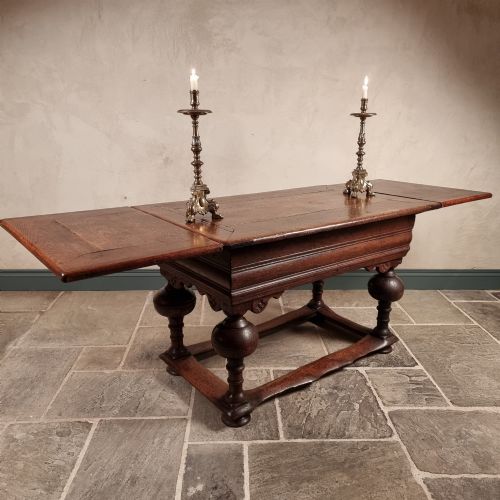
The pieces appearing on this page span several centuries, with seventeenth century and eighteenth century examples forming the bulk of the selection alongside later period revivals. Common forms include large ten seater variants, plank top dining boards and farmhouse tables built primarily from native hardwoods.
Jacobean, Charles II, George I, George II and George III styles define the aesthetic progression of these tables, shifting from severe seventeenth century joinery towards more refined eighteenth century proportions. Later Arts and Crafts interpretations and nineteen-twenty revivals also appear among the dining tables.
Assessing quality in early dining furniture
Quality rests in the original relationship between the top boards and the structural base, particularly where table surfaces remain matched to their original undercarriages. Tables retaining single plank tops or three-plank boards demonstrate superior material selection from mature trees.
The crispness of seventeenth century turned elements and the integrity of early joined stretchers distinguish finer workshop production from plain utilitarian output. Proportion and timber figure dictate visual balance, separating standard farmhouse pieces from formally styled George I and George II dining tables.
Materials recorded across the archive comprise solid oak, elm, and pine, utilised primarily in refectory, trestle, and farmhouse table formats.
Gordon Russell
The Period Oak Refectory Table Glossary
- Refectory table
- A long dining table traditionally used for communal meals in monastic or large domestic halls. These forms evolved from heavy boards on trestles into joined seventeenth century dining furniture.
- Plank top
- A table surface constructed from boards joined edge to edge rather than veneered or panelled. Single plank and three-plank configurations are particularly valued by collectors.
- Jacobean
- The stylistic period spanning the reign of James I, characterised by sturdy proportions and geometric carved ornamentation. Furniture from this era often employs heavy oak framing.
- Trestle base
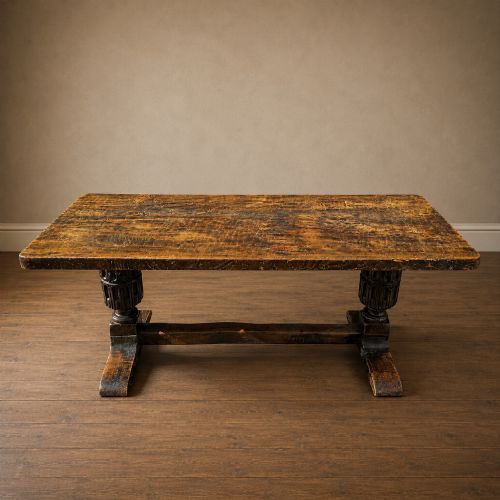
- A structural support system where the table top rests on vertical frames connected by a central stretcher. This design allows maximum legroom along the length of the table.
- Joyned
- An archaic spelling for joined, referring to furniture constructed by skilled joiners using traditional frame and panel techniques. Such pieces rely on close-fitting pegged joints rather than nails.
Period Oak Refectory Table: Frequently Asked Questions
How do I seat ten people?
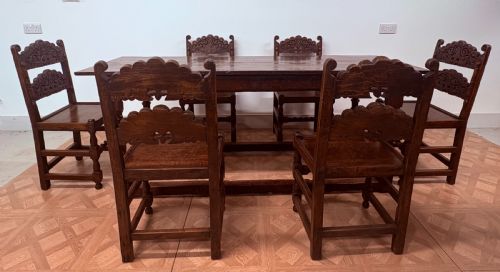
Ten seater refectory tables require substantial length and generous underframe clearance to accommodate chairs along both long sides. Selecting a table with inset trestles or well-placed stretchers ensures diners can sit comfortably without obstruction.
Measuring the floor space around the table is essential to allow adequate room for pulling chairs out. Long seventeenth and eighteenth century formats naturally provide the linear span needed for large gatherings.
What is a plank top?
A plank top consists of solid timber boards running the full length of the dining table, joined edge to edge. These boards display the natural grain, knots and ageing of the original oak or elm.
Tables featuring single plank tops or three wide planks represent traditional construction methods from earlier centuries. Over time, these thick boards develop an undulating surface and rich patina.
How do I date a table?
Dating relies on observing construction techniques, wood species and stylistic markers such as turned legs or carved rails. Seventeenth century pieces typically display heavier framing and pegged joinery, while eighteenth century George I and George II examples show lighter, more refined proportions.
Matching the wear patterns on the top boards to the age of the base helps confirm originality. Period revivals from later centuries often copy these historical styles with slight variations in timber preparation.
Are elm and oak mixed?
Makers frequently combined oak and elm within the same piece, using oak for structural frames and elm for table tops. Elm provides a tough, interlocking grain that resists splitting on heavy dining surfaces.
This combination appears across various periods, reflecting the practical sourcing of native hardwoods by historical carpenters. The distinct grain of elm contrasts subtly with the tighter figure of quarter-sawn oak.