
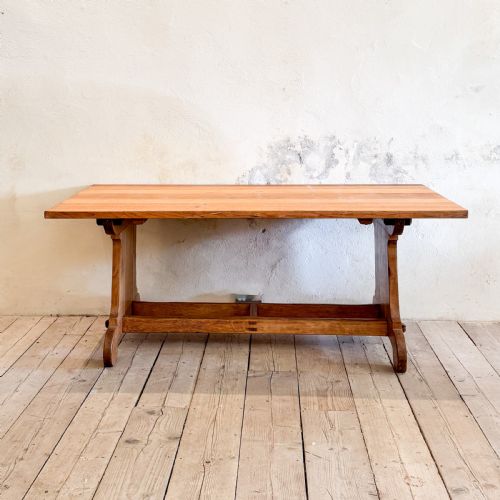
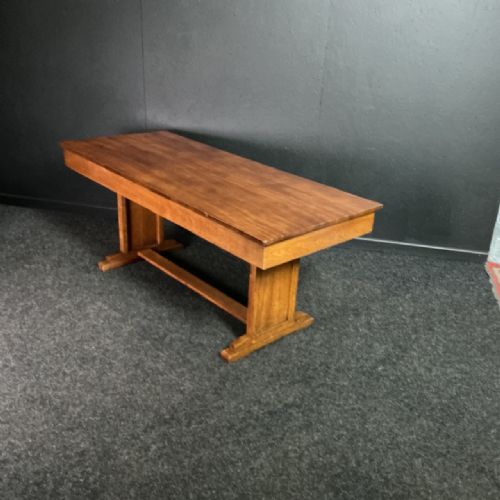


Solid Oak Trestle Desk
These solid oak trestle desk options span the Edwardian era to the 1930s, offering robust utility and enduring grain.
Solid Oak Trestle Desk
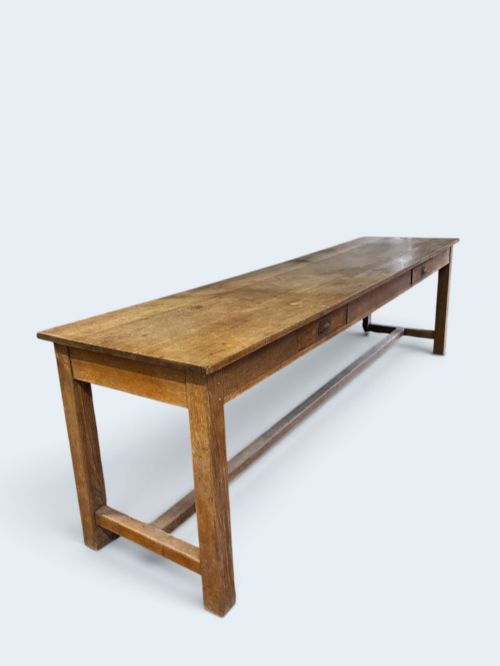
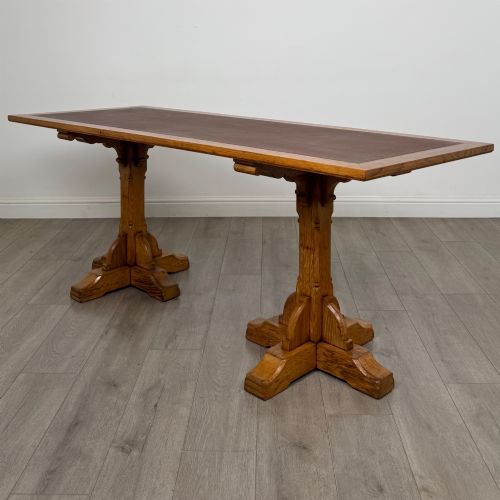
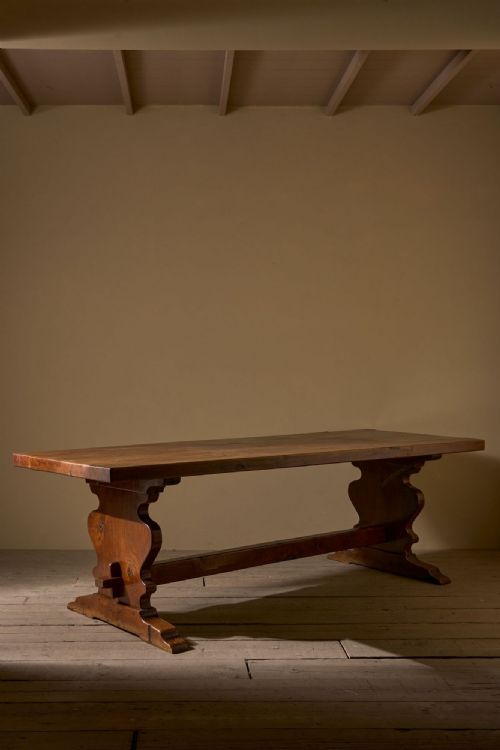
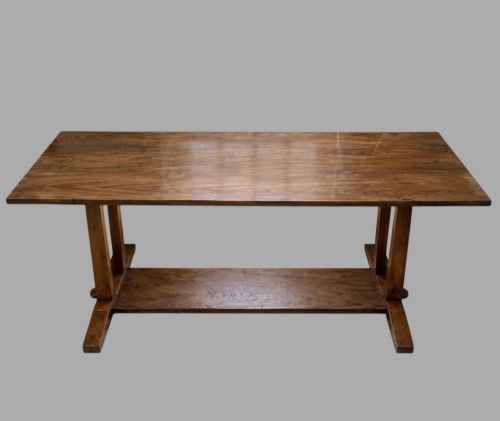
When searching for a solid oak trestle desk, a buyer encounters heavy timber working furniture originating from the nineteenth century up to the 1930s. The selection includes library tables, refectory dining tables, and serving tables adapted for writing use, reflecting period styles such as Arts and Crafts, Jacobean Revival, and Industrial.
Most examples originate from the Edwardian period or the 1920s, showcasing straightforward plank construction and substantial wooden frames. These utilitarian forms provide generous surface space supported by trestle ends or metal bases rather than standard corner legs.
How they were made
Makers utilised solid oak and quarter-sawn oak to construct durable tops that display distinct medullary rays within the grain. Iron and cast iron components appear in metal table bases, providing structural rigidity alongside traditional joinery.
Surfaces frequently feature inset leather panels for writing, while frames combine heavy timber stretchers and pegged joints. Construction methods focus on physical strength, relying on the natural weight of the timber and metal supports to keep the structure stable.
The listings span the 19th Century, Edwardian era, 1910, 1920, and 1930, utilising solid oak, iron, leather, and cast iron.
What varies in quality
Quality rests in the selection of the timber, particularly where quarter-sawn oak displays pronounced figuring across the surface. Plain utility boards sit at one end of the scale, while golden quartered oak and carved detail define finer workshop output.
The integration of metal hardware and the integrity of the trestle supports also dictate the character of the piece. Heavier iron bases and substantial timber thicknesses separate standard commercial tables from works associated with specific makers like Heals.
Heals
The Solid Oak Trestle Desk Glossary
- Quarter-sawn oak
- Timber cut radially from the growth rings to produce distinctive figure patterns. This method yields stable boards less prone to warping.
- Trestle base
- A support structure consisting of two or more vertical frames connected by a horizontal beam. This design maximises legroom beneath the top.
- Arts and Crafts
- A design movement prioritising traditional craftsmanship and simple forms. Pieces from this style emphasise visible construction and natural materials.
- Refectory table
- A long narrow table traditionally used for communal dining. Their sturdy proportions make them suitable for large writing surfaces.
Solid Oak Trestle Desk: Frequently Asked Questions
What is a trestle desk?
A solid oak trestle desk uses vertical supports connected by a stretcher rather than four corner legs. This design provides open leg space beneath a heavy wooden top.
Such tables often derive from library or refectory forms adapted for daily workspace use.
How do I date an oak desk?
Dating relies on stylistic clues and construction methods spanning the nineteenth century through the 1930s. Edwardian and interwar pieces often show simpler lines than Victorian revival equivalents.
Materials such as quarter-sawn oak and cast iron bases help narrow the period of manufacture.
Are these desks sturdy?
Solid oak construction and heavy iron or timber trestle bases ensure high structural stability. These pieces were originally built for schools, public libraries, or heavy dining use.
Their substantial weight keeps them firmly planted during daily writing tasks.
What styles are available?
The inventory encompasses Arts and Crafts, Gothic Revival, industrial metal bases, and Jacobean Revival influences. Each style alters the leg architecture and edge detailing of the oak top.
Rustic farmhouse variations offer a simpler aesthetic compared to carved Edwardian library tables.