
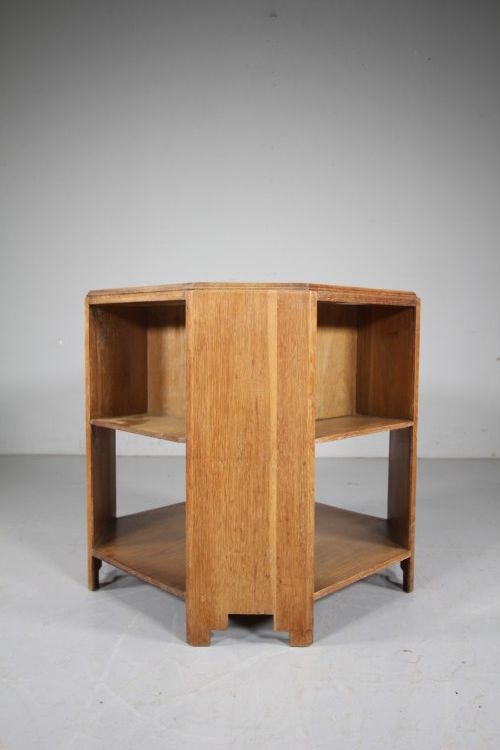
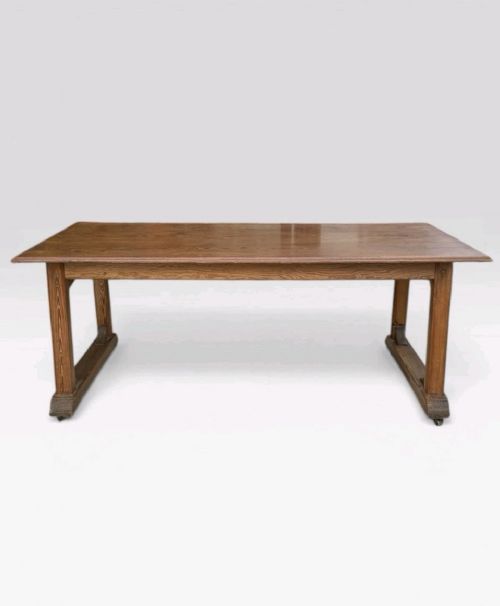


Heals Style Oak Table
These heals style oak table pieces offer practical surfaces built with honest joinery, suiting everyday modern life as much as period rooms.
Heals Style Oak Table
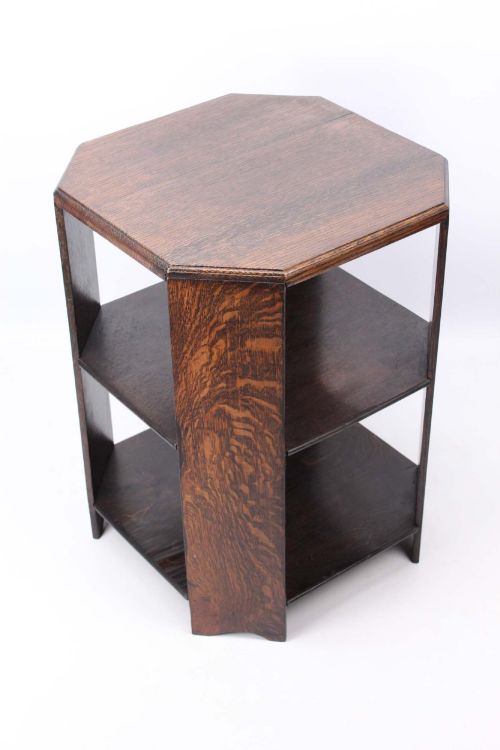
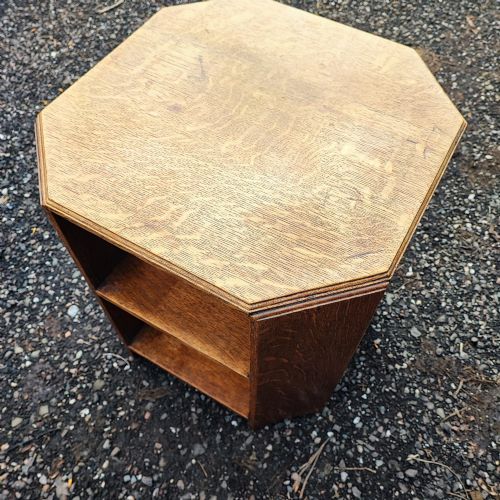
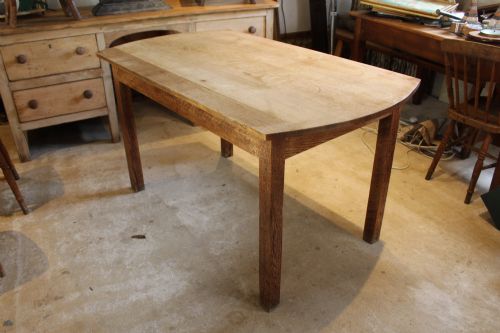
When you search for heals style oak table, you encounter diverse forms spanning dining tables, coffee tables, side tables, and book tables originating from the early twentieth century. The selection ranges from Edwardian pieces and 1910 designs to 1920s work and 1930s examples reflecting Arts and Crafts, Art Deco, and Mid-Century Modern influences.
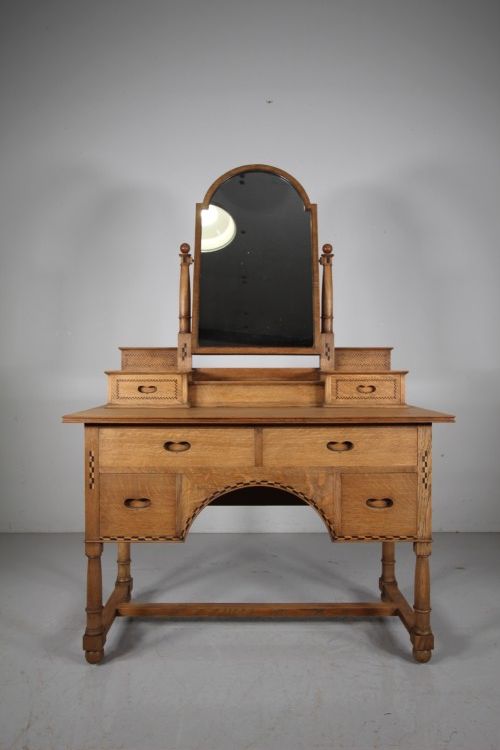
Dining tables and refectory forms appear alongside smaller occasional pieces like octagonal side tables, cricket tables, and book tables. Desks, dressing chests, and pedestal partners desks also emerge within this grouping, often showing attribution or stylistic links to London workshops.
Most pieces date from the Edwardian era through the interwar years, capturing a distinct British aesthetic focused on utilitarian form and clean lines. Solid timber construction dominates the surviving examples, whether finished in natural golden tones or limed surfaces.
What varies in quality
The degree of craftsmanship separates standard utilitarian production from pieces showing finer detailing and deliberate proportion. Selection of timber figure, particularly quarter-sawn figuring, elevates the visual presence of individual tables.
Presence of maker documentation, original labels, or distinct structural configurations distinguishes closely attributed items from general commercial equivalents of the period.
Listings feature oak combined with ceramic, glass, leather, and brass across Edwardian, 1900, 1910, 1920, and 1930 periods.
Heals of London
The Heals Style Oak Table Glossary
- Quarter-sawn oak
- Timber cut radially across the growth rings to produce distinct decorative grain patterns. This method yields stable boards historically favoured for quality British cabinetmaking.
- Limed oak
- A wood finishing technique where a white pigment is rubbed into the open pores of the timber. This treatment gained popularity during the interwar decades for modern interiors.
- Refectory table
- A long dining table traditionally supported by substantial legs connected by a central stretcher. Versions in this tradition prioritise sturdy horizontal lines.
- Cricket table
- A small three-legged occasional table with a triangular frame designed for uneven floors. These functional items appear in early twentieth-century vernacular contexts.
Heals Style Oak Table: Frequently Asked Questions
How do I date a heals style oak table?
Dating relies on stylistic markers, construction methods, and materials recorded across the eras. Edwardian and 1910 pieces often display traditional Arts and Crafts influences.
Items from the 1920s and 1930s frequently incorporate Art Deco geometries or limed finishes. Comparing structural details against documented pieces helps narrow the decade of production.
Are these tables suitable for daily dining?
Solid timber construction makes these tables robust for regular everyday use. Dining and refectory forms provide stable surfaces designed to withstand family life.
Careful consideration of dimensions ensures the chosen table fits modern seating arrangements. Simple maintenance preserves the timber surfaces over decades.
What is quarter-sawn oak?
Quarter-sawn oak is timber sawn perpendicular to the annual growth rings. This cutting technique produces a striking figure characterised by silver flecks and medullary rays.
Historically chosen for stability and appearance, this material indicates superior cabinetmaking standards. It remains a defining visual trait of better-quality period furniture.
How do I care for limed oak?
Limed oak surfaces require gentle cleaning with a soft, dry cloth to remove dust. Avoiding abrasive cleaners prevents damage to the pigmented grain infill.
Occasional application of suitable wax maintains the protective barrier without altering the finish. Keeping furniture away from direct heat sources prevents timber splitting.