

Antique Joint Stool Table
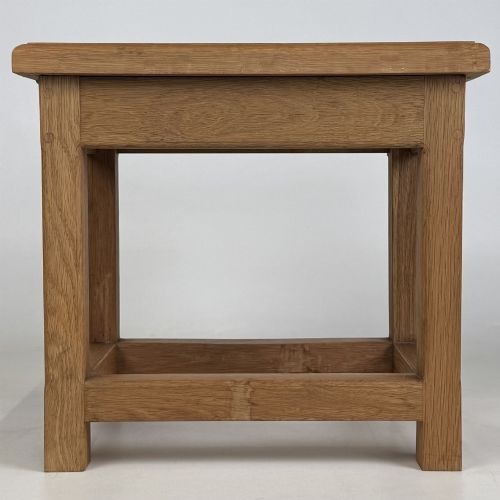
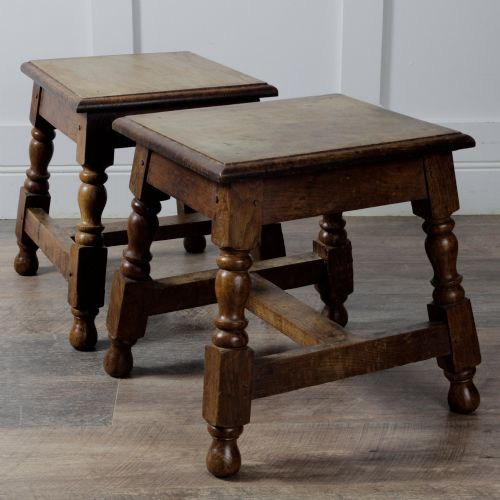
These heavy timber seats double as low tables, built with pegged mortise and tenon joints to last generations.
Antique Joint Stool Table
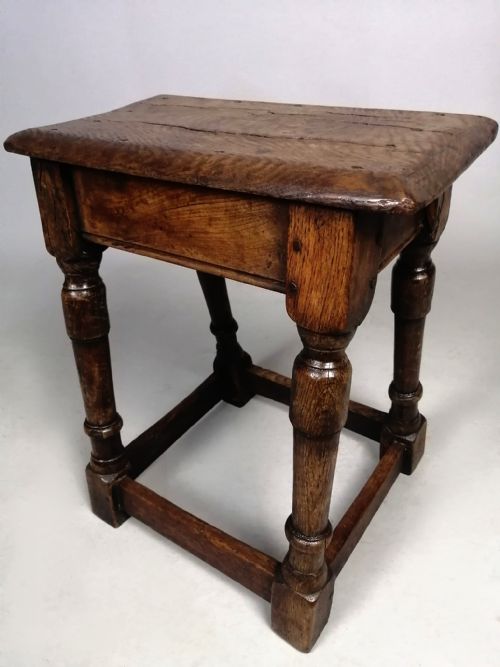
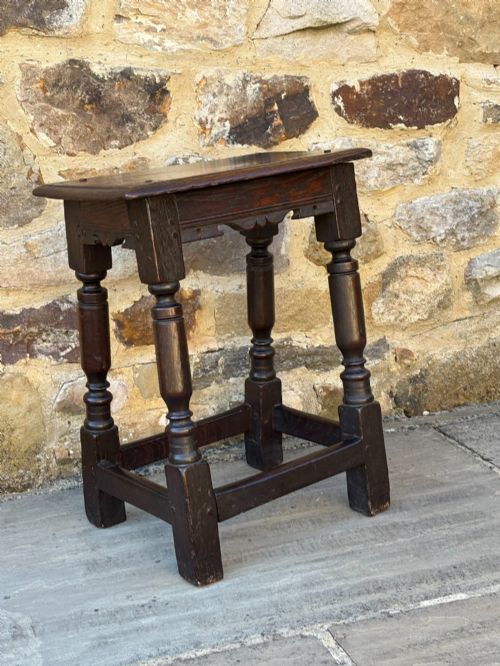
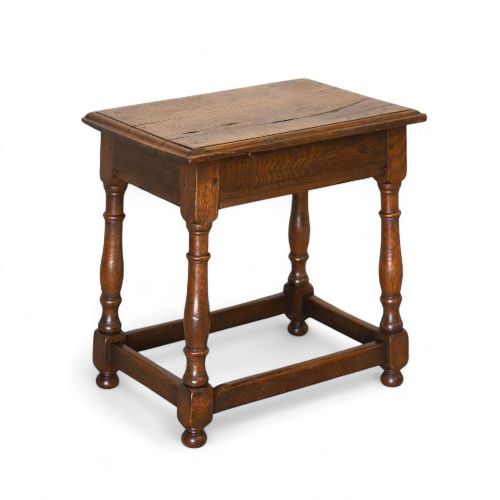
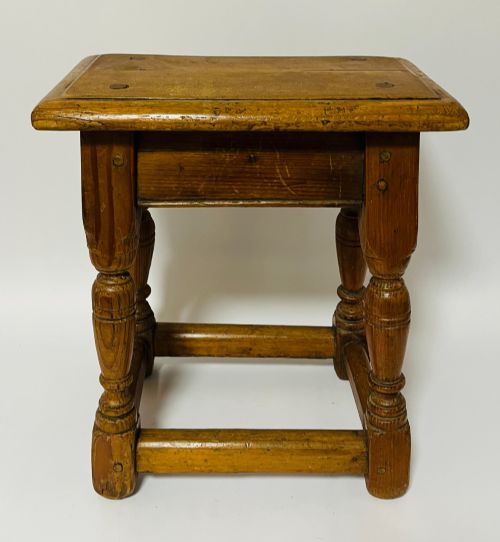
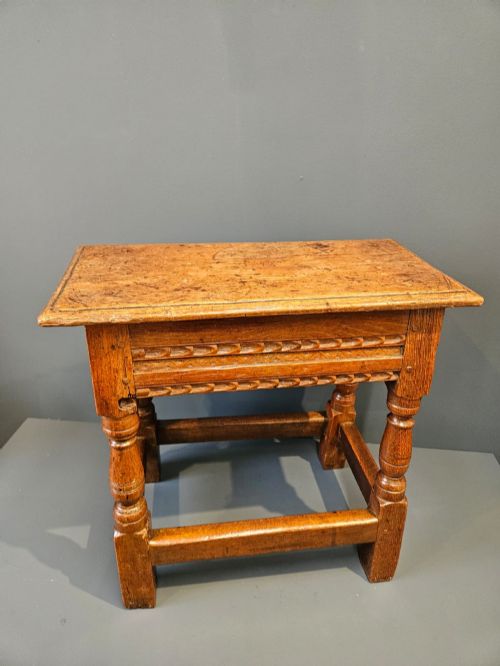
An antique joint stool table combines the sturdy frame of a traditional seating piece with the surface utility of a small table, often appearing in oak, elm, and yew wood. When you search for antique joint stool table, you encounter forms ranging from authentic seventeenth-century survivors to later revival pieces from the nineteenth and twentieth centuries.
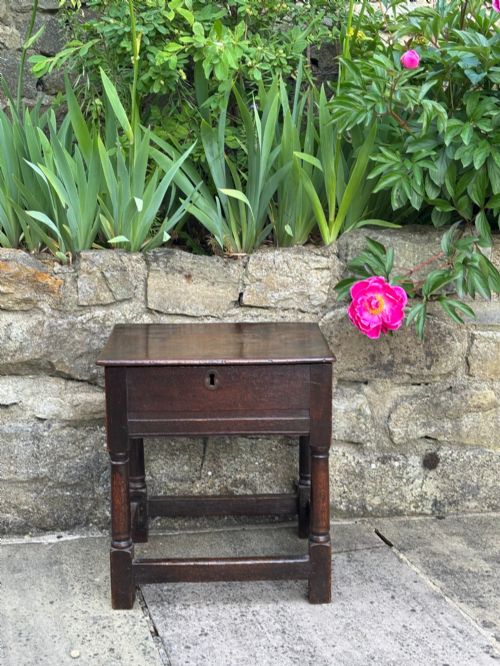
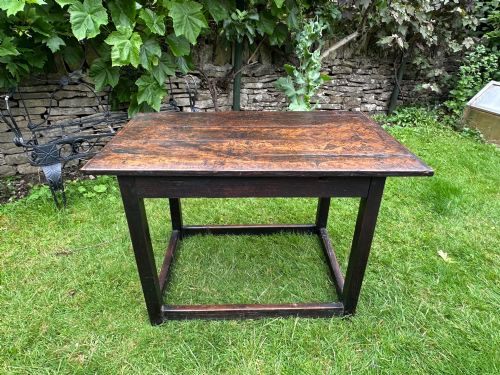
Makers constructed these objects primarily as seating or small stands, though their flat plank tops naturally lend themselves to use as side tables, lamp stands, or occasional tables today. The inventory spans simple plank-top designs, box stools with internal storage, and carved examples reflecting Jacobean and Georgian provincial styles.
How they were made
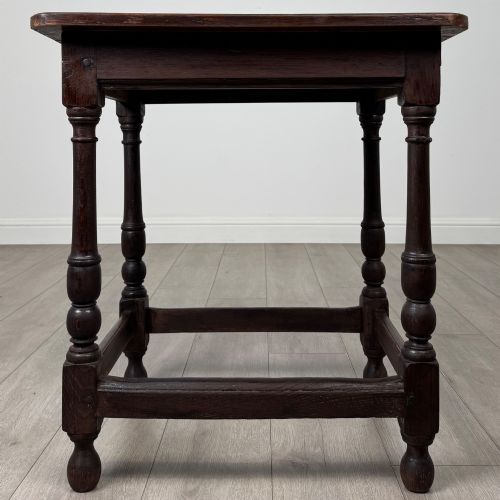
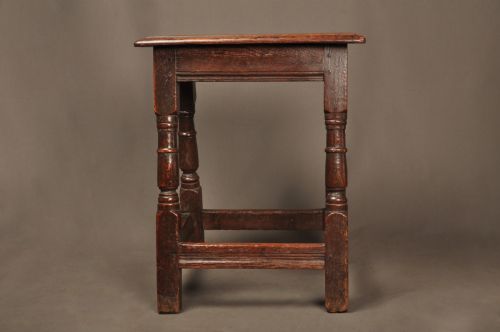
Joiners built these pieces using solid English oak, elm, and yew wood, assembled with pegged mortise and tenon joinery rather than metal nails. This rigid framing technique creates the signature squared undercarriage and straight legs connected by low stretchers.
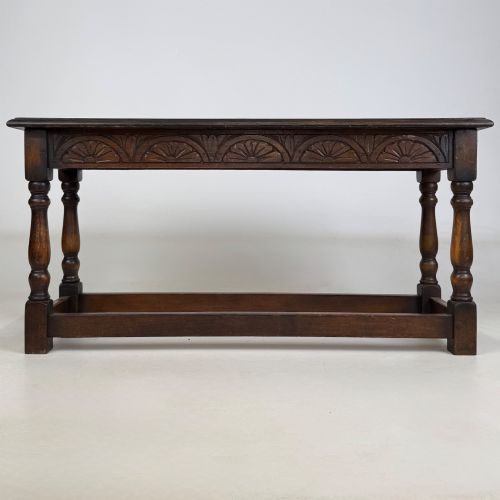
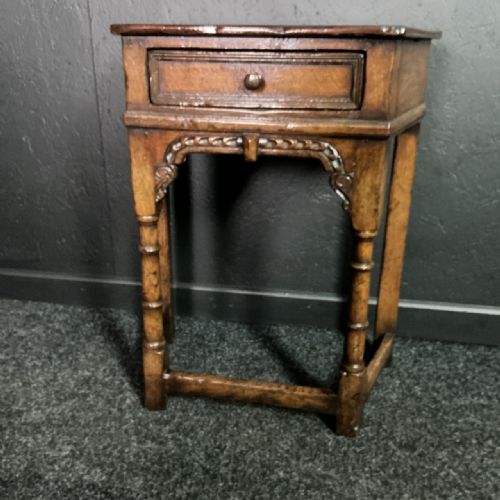
Surfaces frequently show adzed or planked tops, sometimes enhanced with hand-carved detailing along the rails or aprons in styles spanning the Elizabethan to the Jacobean Revival periods.
Some miniature examples served as apprentice pieces, testing a joiner's skill on a tiny scale.
What varies in quality
The degree of original timber retention and the integrity of the pegged joints separate standard examples from superior pieces. Period authenticity heavily influences standing, distinguishing seventeenth-century originals from later nineteenth-century revival interpretations.
Surface depth and colour matter immensely, as centuries of wax polishing create a rich, patinated skin on the hardwood. Subtle details in hand-carving and the thickness of the top planks further define the character of the piece.
The Antique Joint Stool Table Glossary
- Joint stool
- A wooden stool constructed using fine joinery techniques rather than simple carpentry. These pieces rely on pegged mortise and tenon joints.
- Stretcher
- The horizontal wooden rod connecting the legs of a stool or table near the base. It provides structural rigidity and prevents the legs from spreading.
- Plank top
- A solid wooden surface constructed from thick boards joined lengthwise. This construction method forms the flat utility surface of the table.
- Box stool
- A variant featuring a hinged or lidded seat allowing for internal storage. It combines utility as a side table with concealed compartment space.
- Pegged construction
- A method of securing joints by driving wooden pins through overlapping timber sections. This avoids metal fastenings entirely.
Antique Joint Stool Table: Frequently Asked Questions
What is a joint stool table?
A joint stool table is a heavy wooden seating item constructed with pegged joinery that functions equally well as a small side table or stand.
These versatile objects originate mainly from seventeenth-century traditions, though revival pieces from the Victorian and Edwardian eras are common.
How were joint stools used historically?
Historically, households utilised these sturdy wooden items primarily as seats at the dining table or near the hearth. Their flat tops also made them convenient portable surfaces for holding small household items.
Over time, their sturdy height and flat surfaces led to their adoption as occasional tables and lamp stands.
How do I tell an old one from a revival?
Authentic seventeenth-century pieces display genuine timber shrinkage, hand-tool marks, and deep wax patination accumulated over centuries of use. Revival pieces from the nineteenth or twentieth century often show more uniform machine-sawn elements and tighter, less varied wood grain.
Examining the underside and the wear around the foot stretchers reveals much about the true age of the timber.
What woods were used for these tables?
English oak serves as the primary material for the vast majority of these pieces, prized for its strength and durability. Elm and yew wood also appear frequently, particularly in regional provincial pieces.
Secondary woods like pine sometimes appear in later nineteenth-century variations.
Can I use an antique joint stool as a side table?
These pieces function ideally as side tables, lamp stands, or bedside surfaces due to their compact footprint and sturdy flat tops. Their substantial height matches standard chair and sofa levels.
Placing them in a modern room provides a practical surface while introducing historical texture.