


Georgian Plank Top Table
A georgian plank top table brings centuries of honest domestic history into a modern interior.
Georgian Plank Top Table
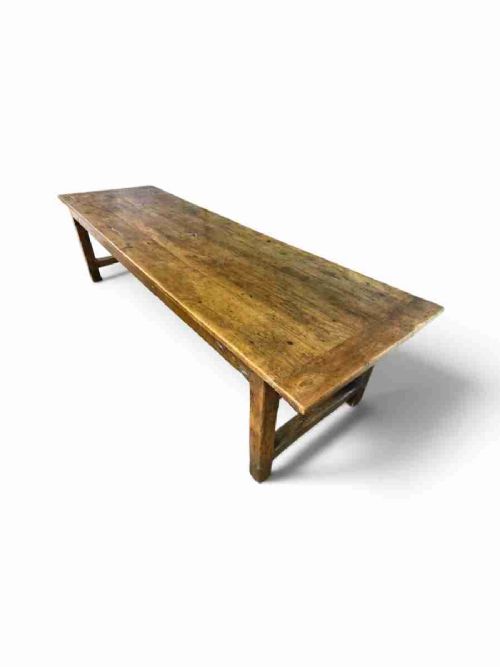
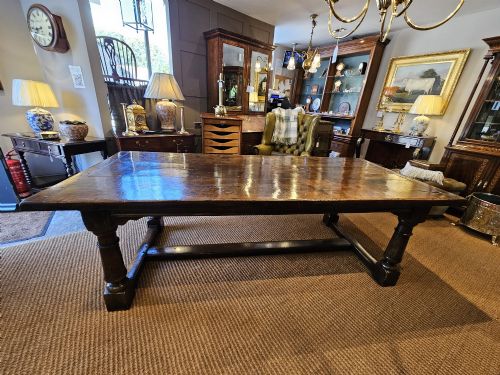
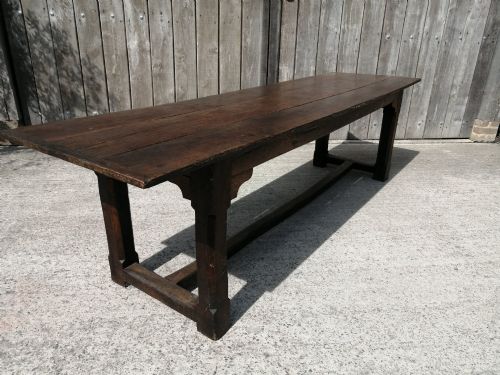
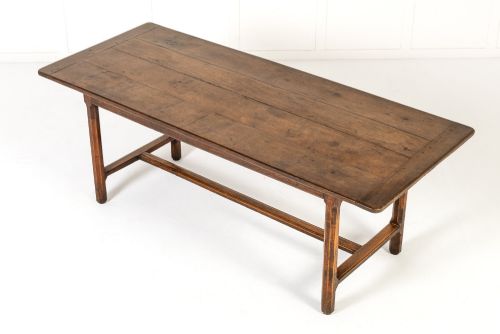
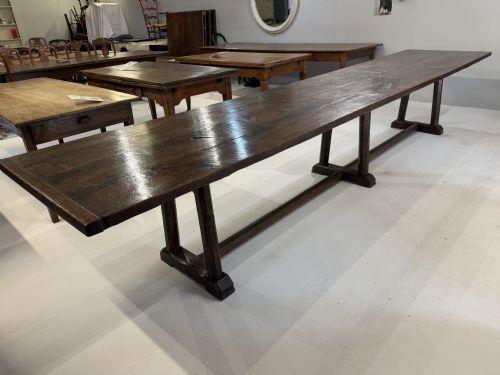
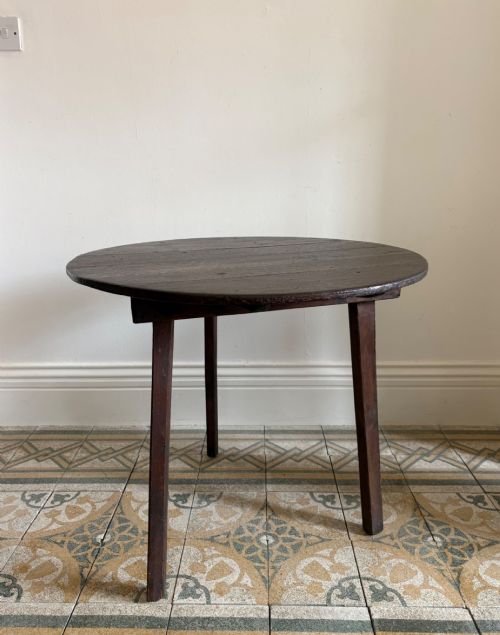
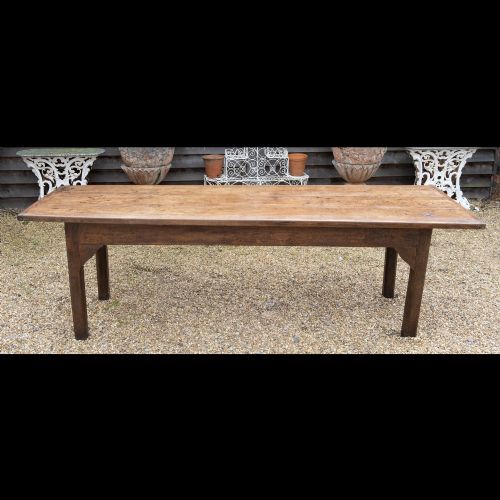
A georgian plank top table is a practical working piece of domestic history constructed with wide boards joined together to form the surface. These tables originate primarily from the eighteenth century, spanning periods such as George III and George I, and often manifest as robust farmhouse or refectory dining tables.
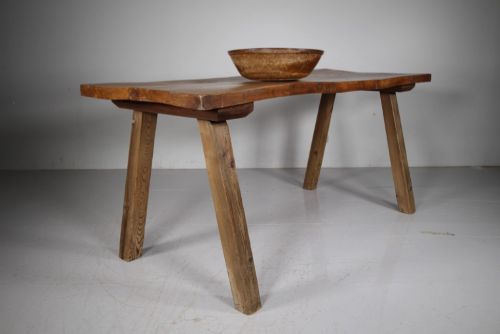
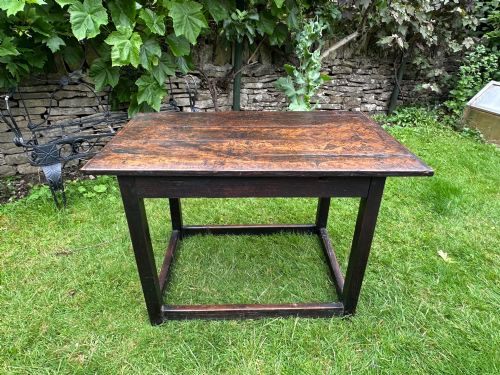
The pieces available here lean heavily into country vernacular and rustic formats, ranging from large eight-seater dining surfaces down to compact wine tables and cricket tables. Woods like oak, elm, and fruitwood dominate the construction, reflecting the domestic British origins of these functional domestic objects.
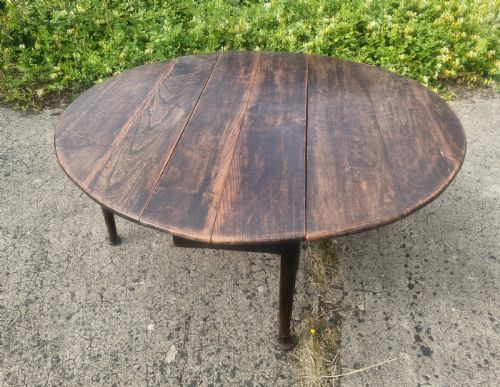
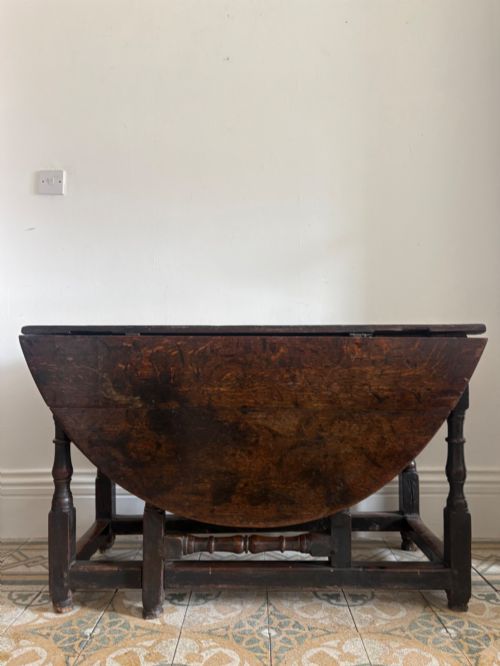
Buyers seeking a georgian plank top table will encounter both fixed refectory frames and flexible formats including gateleg, drop-leaf, and tilt-top tables. The character of these boards shows decades of use, bearing the marks of daily domestic life upon sturdy timber bases.
How they were made
Makers constructed a georgian plank top table using solid native hardwoods, selecting thick boards of oak, elm, or fruitwood for the surface and pairing them with sturdy underframes of pine, beech, or iron. Joinery relied on traditional methods such as pegged mortise and tenon joints to secure the legs and rails firmly beneath the heavy timber tops.
The surface boards were planed down by hand from single logs, creating wide continuous expanses that display natural grain patterns and growth rings. Bases often utilised turned baluster legs or simple tapered supports to bear the substantial weight of the heavy plank tops above.
Some tilt-top tables still retain the original wooden catch mechanism that audibly clicks into place when lowered.
What varies in quality
Quality in a georgian plank top table rests upon the integrity of the timber selection and the retention of original structure. Single-board tops or wide multi-plank assemblies that remain flat and stable demonstrate superior material choice by the original country cabinetmaker.
The degree of original surface patination and the harmony between the top and its base dictate the standing of the piece. Tables retaining their early underframing without excessive timber replacement hold greater integrity than those rebuilt over successive generations.
The Georgian Plank Top Table Glossary
- Plank top
- A table surface constructed from wide boards joined edge to edge rather than a collection of narrow strips. This method provides a broad expanse of solid timber.
- Refectory table
- A long, narrow dining table traditionally used for communal meals. These forms utilise sturdy stretcher bases to support heavy timber tops.
- Tilt top
- A mechanism allowing the tabletop to pivot vertically on its base for convenient storage when not in use. Common on smaller circular or square side tables.
- Gateleg table
- A drop-leaf table featuring swinging legs that pull outward to support the hinged leaves. This design allows the table to expand or contract according to space needs.
- Country vernacular
- Furniture built by local tradesmen for domestic utility rather than grand urban commissions. These pieces employ regional timbers and straightforward construction methods.
Georgian Plank Top Table: Frequently Asked Questions
How do I care for an old timber table?
Feed the dry timber surface periodically with natural beeswax to maintain a protective barrier against moisture and everyday wear.
Keep the table away from direct heat sources and sudden temperature shifts to prevent the ancient boards from splitting.
Can I use a antique dining table daily?
These robust surfaces were built for centuries of heavy domestic use and handle daily family meals with ease.
Simply employ placemats and coasters to protect the historic timber from excessive moisture and heat marks.
What woods were used in these tables?
Oak and elm form the primary surfaces, valued for their durability and strong grain patterns in British country houses.
Secondary woods like pine, beech, and fruitwood often appear in the structural bases and smaller occasional formats.
How do I identify a period piece?
Examine the underside and joints for hand-planed tool marks, pegged tenons, and signs of genuine historical wear.
Examine the patination of the timber, as centuries of polishing and handling create a depth hard to replicate artificially.