

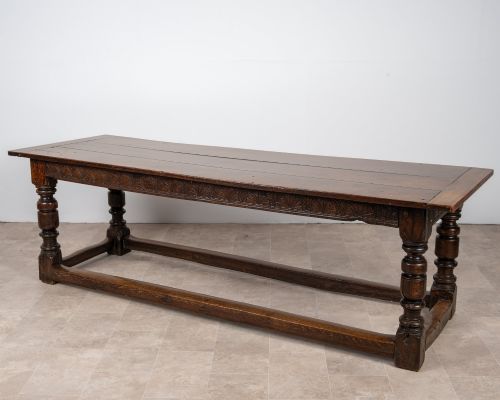
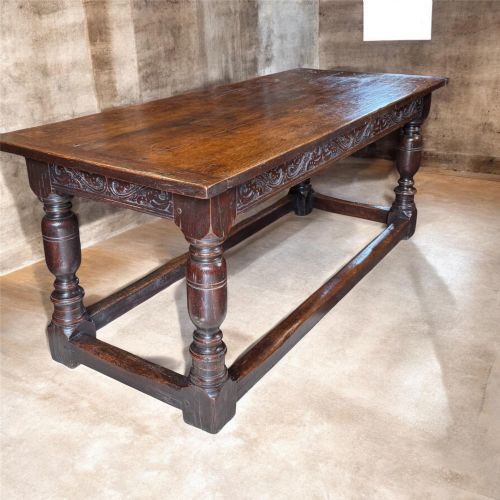
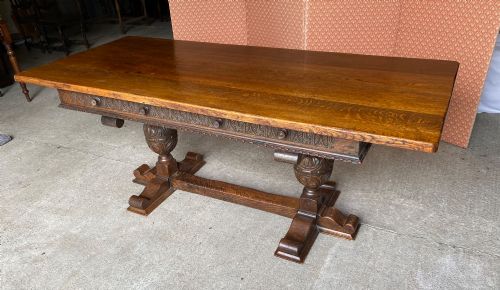
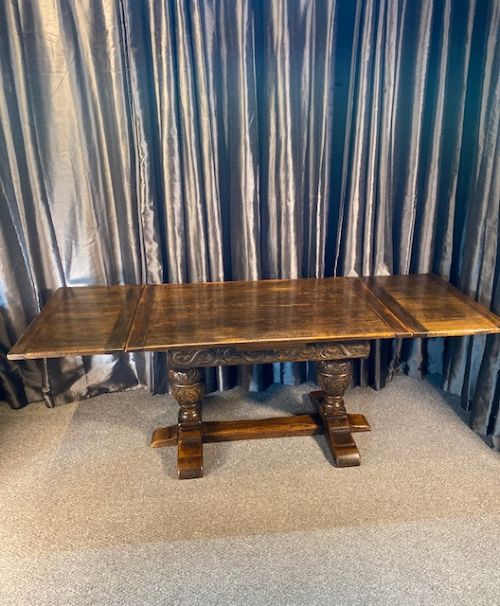


Carved Frieze Dining Table
A carved frieze dining table brings substantial presence to a room, offering robust construction and striking decorative woodwork rooted in centuries of historic design.
Carved Frieze Dining Table
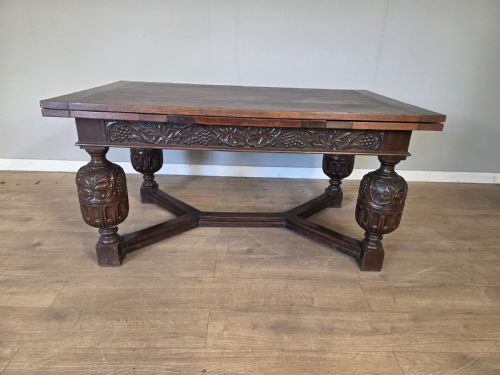
A carved frieze dining table is a dining table defined by decorative carving along the horizontal band beneath the top. Buyers seeking this phrase typically encounter sturdy timber forms designed for communal dining.
The selections available here range from early seventeenth-century refectory examples to Edwardian revivals and twentieth-century interpretations. These tables bridge utilitarian domestic functions with elaborate craftsmanship seen in styles like Jacobean, Elizabethan, Gothic, and French Country.
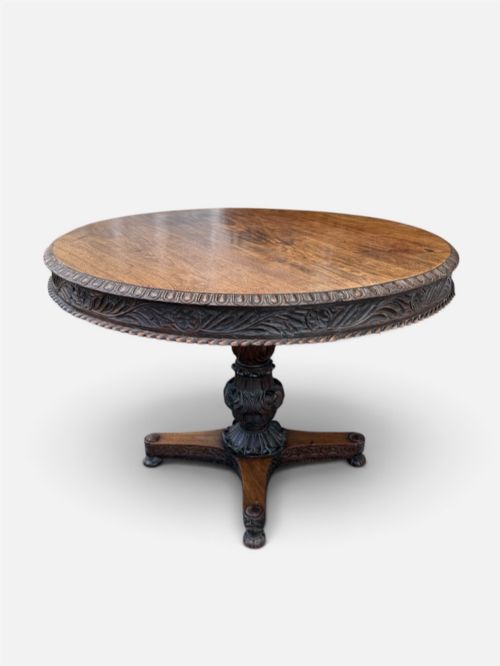
Common regional variations also appear, including Anglo-Indian rosewood centre tables featuring tilt-top mechanisms and intricate carvings. Most pieces rely on substantial oak construction, balancing long dining surfaces with ornamented borders.
Materials and Construction Methods
Solid oak serves as the predominant timber across these listings, complemented by occasional uses of rosewood, pine, and iron structural elements. Artisans utilised heavy planks for table tops and supporting frameworks, ensuring long-term durability.
Carving was executed directly into the solid timber friezes, displaying motifs such as florals, leaves, lion heads, and mythical creatures. Joinery methods included draw-leaf extensions, sturdy trestle supports, and pivoting tilt-top mechanisms on specific centre tables.
Carved Frieze Dining Table Retail Price Guide 2026
Typical asking prices for carved frieze dining table among the pieces listed under this phrase on Sellingantiques today, from the lower quarter to the upper quarter. They describe what is for sale here now, not the wider market.
The listings here span multiple centuries, incorporating 17th-century pieces alongside Edwardian revivals and 1920s farmhouse tables.
Distinctions in Quality and Make
Quality separates simple utilitarian boards from deeply sculpted showpieces through the depth and complexity of the woodwork. Crisp hand-carving along the frieze and supports indicates superior artistic execution.
The integrity of the timber frame, the choice of dense solid oak or exotic rosewood, and the retention of original mechanisms like draw-leaves or tilt-tops define the upper tier of these dining tables.
The Carved Frieze Dining Table Glossary
- Frieze
- The decorative horizontal band situated immediately beneath the tabletop. This area frequently displays the carved motifs that characterise these tables.
- Refectory table
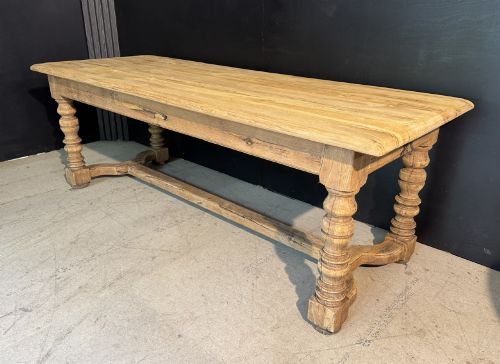
- A long, narrow dining table historically used in monastic dining halls. These pieces often feature stretcher bases and solid timber construction.
- Draw-leaf table
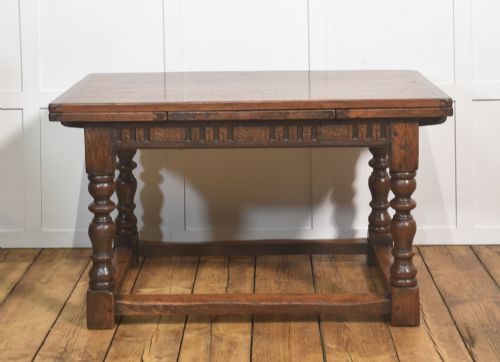
- A table equipped with under-leaves that pull out from beneath the main top to extend the surface area. This mechanism increases seating capacity without removing the central top.
- Tilt-top table
- A table featuring a mechanism allowing the top to pivot into a vertical position when not in use. This design saves space and appears frequently on smaller centre tables.
- Jacobean Revival
- A nineteenth- and twentieth-century style imitating early seventeenth-century English furniture. It is characterised by dark oak, geometric mouldings, and robust turning.
Carved Frieze Dining Table: Frequently Asked Questions
What is a carved frieze dining table?
A carved frieze dining table is a wooden dining table featuring ornamental carving along the horizontal wooden band beneath the top. These pieces span multiple centuries and revival styles.
They function primarily as dining surfaces while providing significant visual interest through carved borders and sturdy timber legs.
What are draw-leaf tables used for?
Draw-leaf tables provide adjustable dining lengths through hidden leaves stored beneath the main surface. Pulling these leaves outwards extends the table quickly for larger gatherings.
When not in use, the leaves slide back under the main top to maintain a compact footprint for daily dining.
How do I care for solid oak tables?
Solid oak requires regular dusting with a dry cloth and protection from excessive moisture and direct heat sources. Maintaining stable indoor humidity prevents timber movement and cracking.
Applying occasional appropriate wax preserves the natural finish and protects the carved details from everyday wear.