



English Oak Extension Table
An english oak extension table brings solid timber grain and practical stretch to the dining room, built for daily gathering.
English Oak Extension Table
An english oak extension table spans several centuries of design, with pieces originating from the seventeenth, eighteenth, nineteenth, and early twentieth centuries. Buyers search for these dining tables to anchor a room with heavy timber, traditional construction, and generous proportions.
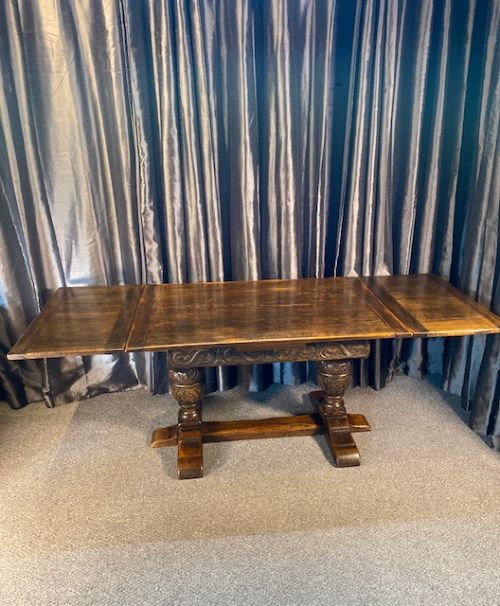
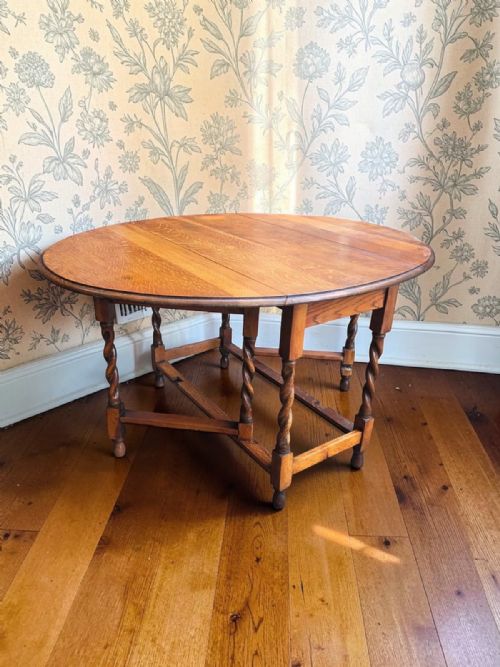
The selections available here lean heavily toward early twentieth-century interpretations, particularly Jacobean revival draw-leaf models and barley twist gateleg variants. Alongside these revival pieces, traditional farmhouse refectory forms and drop-leaf tables appear in solid oak.
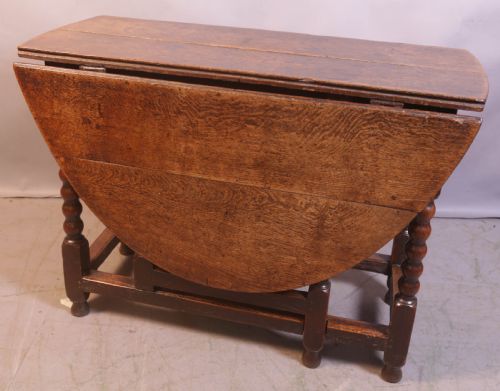
Forms vary between oval drop-leaf tops, rectangular refectory boards, and draw-leaf mechanisms that expand the surface area. Each piece utilises oak construction, sometimes accented with iron hardware, designed primarily for dining and entertaining.
How they were made
Cabinet makers constructed these dining tables using solid oak timber, relying on the natural strength and distinct grain pattern of the wood. Iron components appear in mechanisms and structural bracing where additional reinforcement is necessary.
Joining techniques vary from seventeenth-century gateleg pivot frames to nineteenth and twentieth-century draw-leaf sliding systems. Turned legs, including barley twist configurations, demonstrate traditional woodworking lathe skills across the periods.
English Oak Extension Table Retail Price Guide 2026
Typical asking prices for english oak extension table among the pieces listed under this phrase on Sellingantiques today, from the lower quarter to the upper quarter. They describe what is for sale here now, not the wider market.
Current listings feature oak dining tables spanning the seventeenth century through to the 1920s, incorporating iron hardware and Jacobean styles.
What varies in quality
Quality in an english oak extension table rests upon the weight of the timber and the integrity of the extension mechanism. Early seventeenth-century examples display hand-carved joinery, whereas twentieth-century revival pieces rely on heavier industrial milling.
The sophistication of the turning on the legs, particularly detailed barley twist carving, separates standard production furniture from finer workshop pieces. Surface finishing and timber selection dictate whether the grain reads as uniform or displays deep medullary rays.
The English Oak Extension Table Glossary
- Draw-leaf
- A dining table style featuring pull-out leaves stored beneath the main top that extend the surface length. This clever mechanism allows the surface to double in size with minimal effort.
- Gateleg
- A table with hinged leaves supported by hinged legs that swing out like a gate. This form provides a large dining surface when open and folds down compactly.
- Refectory
- A long, narrow dining table traditionally used in communal dining halls. These sturdy forms typically feature strong stretcher bases to prevent wobble.
- Barley twist
- A decorative turning style resembling a twisted rope, popular in seventeenth-century furniture and revived in later periods. It adds dynamic visual texture to table legs.
- Jacobean revival
- A nineteenth and twentieth-century style imitating the heavy, dark-finished oak furniture of the early seventeenth century. It often incorporates geometric mouldings and turned supports.
English Oak Extension Table: Frequently Asked Questions
How do draw-leaf tables work?
A draw-leaf table contains two hidden leaves stored underneath the main central top surface. When guests arrive, you pull the main top slightly upward and slide the hidden leaves out from each end.
The central top then drops back down into place, creating a flush, extended surface without requiring separate loose boards stored elsewhere.
What is a gateleg table used for?
A gateleg table provides a versatile dining surface that adapts to different room sizes throughout the day. With the drop leaves folded down against the narrow base, the table occupies minimal floor space.
When you swing the hinged support legs outward and raise the leaves, the table opens into a wide oval or rectangular surface ready for dining.
How do I care for oak furniture?
Solid oak benefits from regular dusting with a soft, dry cloth to prevent grit accumulation on the grain. Avoid placing timber tables near direct heat sources or in strong sunlight to prevent warping and finish fading.
Applying a traditional beeswax polish periodically nourishes the wood and maintains a natural, protective sheen across the surface.
How do I identify a revival piece?
Revival furniture often combines seventeenth-century stylistic elements like barley twist legs with twentieth-century mechanical fittings. Examining the underside hardware and screw types helps distinguish an early twentieth-century reproduction from a seventeenth-century original.
Machine-cut timber marks and standardised joinery also point toward later revival periods rather than hand-hewn historical construction.