




Brown Wooden Workbox
A brown wooden workbox is a treasured receptacle for sewing implements and needlework, crafted to keep threads and thimbles orderly while looking handsome upon a table.
Brown Wooden Workbox
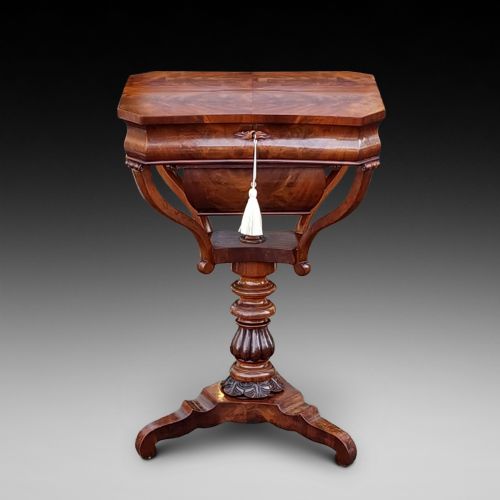
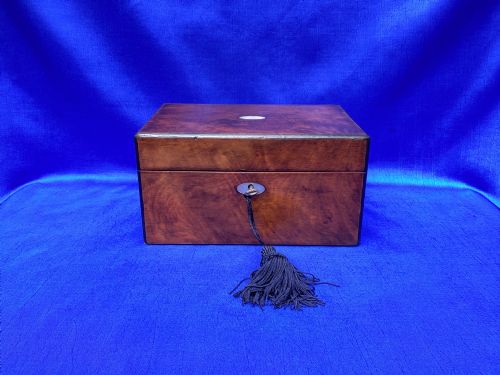
A brown wooden workbox encompasses small lidded caskets, freestanding sewing tables, and fitted cases designed for needlework and domestic crafts. You will most commonly encounter pieces fashioned from walnut, mahogany, and rosewood, originating from Victorian, Edwardian, and Georgian periods.
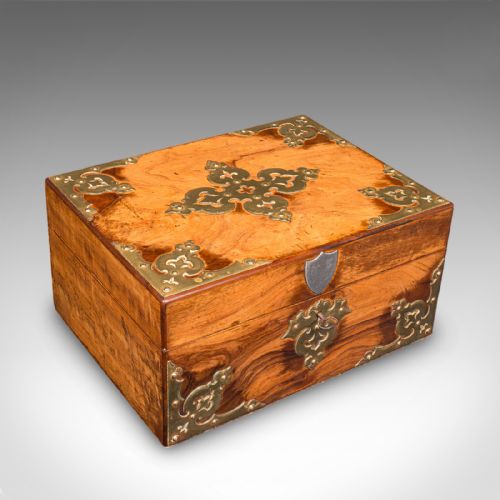
The selection ranges from compact desktop boxes with inlaid decoration to larger tables fitted with compartments and interiors for sewing paraphernalia. Styles stretch from Gothic Revival and Anglo-Indian designs to Tunbridge ware and continental work boxes on stands.
These items served as essential desk or table companions for ladies managing household mending and fine embroidery. Their survival reflects both their utility and the decorative appeal of figured timbers in period interiors.
Materials and construction
Cabinet makers utilised dense hardwoods such as walnut, mahogany, and rosewood, often selecting figured burr walnut veneers to create striking surface patterns on the lid and sides. Boxwood inlay and brass mounts frequently provided contrast and structural reinforcement to the corners and lock escutcheons.
Interiors were routinely organised with lift-out trays, compartmentalised sections, and storage areas lined with textile to house delicate needles, threads, and bobbins. Construction relied on traditional joinery methods suited to small-scale cabinetry, ensuring the lids and fitted drawers aligned precisely with the outer carcase.
Brown Wooden Workbox Retail Price Guide 2026
Typical asking prices for brown wooden workbox among the pieces listed under this phrase on Sellingantiques today, from the lower quarter to the upper quarter. They describe what is for sale here now, not the wider market.
Listings feature walnut, mahogany, rosewood, and boxwood materials across Victorian, Edwardian, Georgian, and Art Deco periods.
Assessing quality and execution
The hierarchy of quality rests upon the selection of timber veneers, the precision of boxwood inlay, and the complexity of the internal fittings. Superior examples display carefully matched burr walnut or detailed Tunbridge ware mosaics rather than plain surfaces.
Construction details such as dovetailed drawer boxes, intact textile linings, and original brass hardware distinguish finer workshops from standard production. The retention of fitted compartments and working locks further elevates the interest of a piece.
The Brown Wooden Workbox Glossary
- Tunbridge ware
- A form of woodworking originating in Kent where small mosaic tiles of naturally coloured woods form pictorial or geometric designs. This technique frequently decorates the lids of Victorian boxes.
- Burr walnut
- A prized timber harvested from the irregular growth knots of the walnut tree, yielding swirling grain patterns. Cabinet makers valued it for decorative veneering.
- Work table
- A freestanding piece of furniture incorporating a sewing box or drop bag beneath the top surface. These combined a writing or display surface with practical storage for needlework.
- Boxwood inlay
- Contrasting light-coloured wood inserted into recesses cut into darker timber to create linear borders or geometric patterns. It provides crisp definition on period boxes.
- Escutcheon
- A protective plate surrounding a keyhole, usually fashioned from brass. On workboxes, it acts as both a functional reinforcement and a decorative accent.
Brown Wooden Workbox: Frequently Asked Questions
What is a brown wooden workbox used for?
These boxes served to organise sewing tools, threads, needles, and small personal items used in needlework and embroidery. Their fitted trays kept delicate implements secure and accessible during domestic tasks.
Today, they function as decorative storage containers on dressing tables, sideboards, or desks, holding modern trinkets or letters.
How do I date a wooden workbox?
Dating relies on observing the timber choice, construction techniques, and decorative style such as Gothic Revival or Art Deco. Victorian pieces often feature burr walnut and Tunbridge ware, while Georgian examples tend to use plain or figured mahogany.
Internal fittings and hardware styles also offer clues to the decade of manufacture, matching the broader trends of the nineteenth and early twentieth centuries.
Are these boxes difficult to maintain?
Maintenance requires simple dusting with a dry cloth and avoiding placement near direct heat sources or strong sunlight. Preserving the timber and any textile linings keeps the materials stable.
Applying occasional appropriate furniture wax helps maintain the lustre of walnut and mahogany surfaces without harming historical finishes.
What is the difference between a box and a work table?
A box is a portable desktop or tabletop container designed to be lifted and moved between rooms as needed. A work table is a freestanding piece of furniture featuring legs and often a permanent storage compartment underneath.
Both serve the same primary function of housing sewing materials but occupy different spaces within a domestic interior.