


Brown Wood Windsor Chair
A brown wood windsor chair brings tactile warmth and vernacular character to an interior through centuries of English country seating tradition.
Brown Wood Windsor Chair
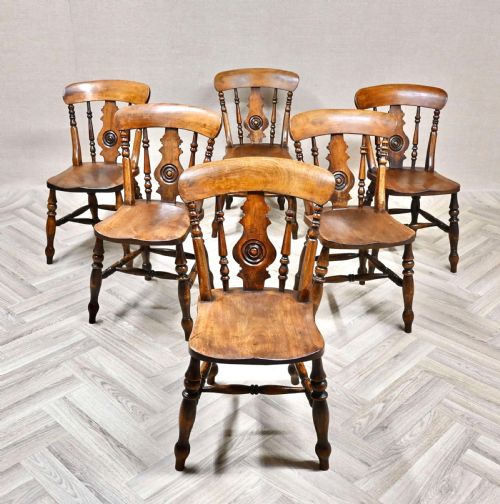
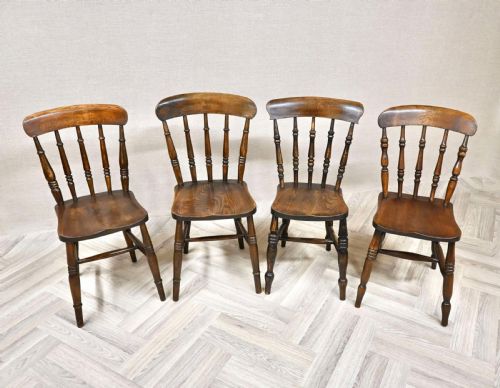
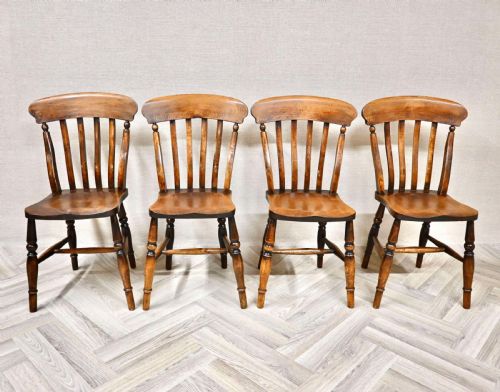
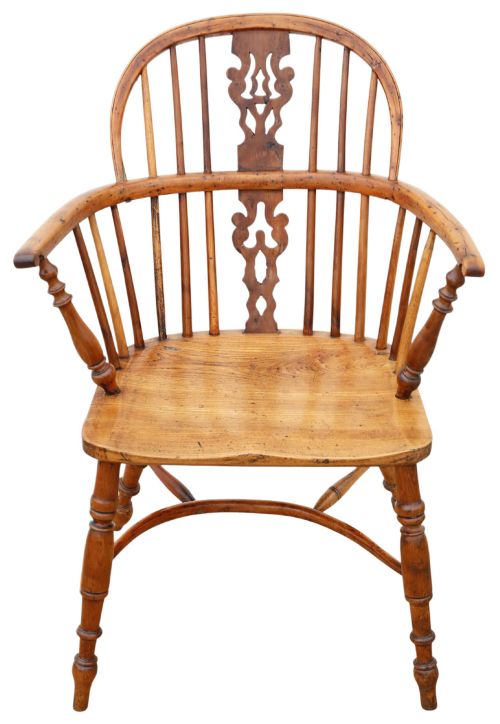
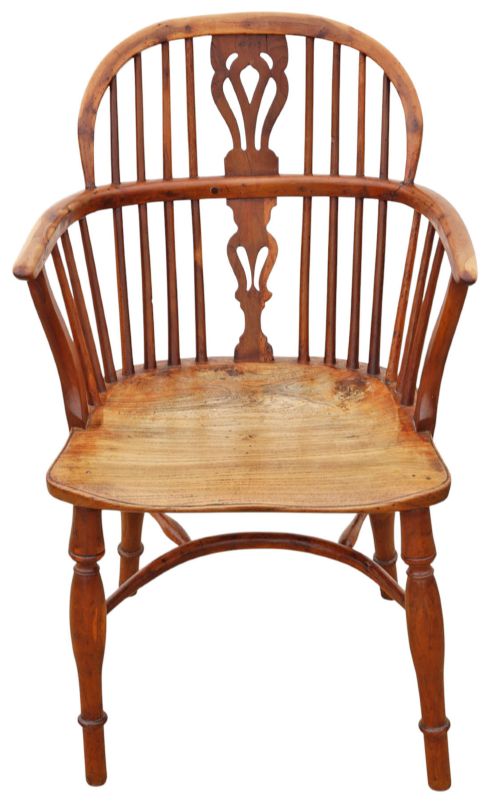
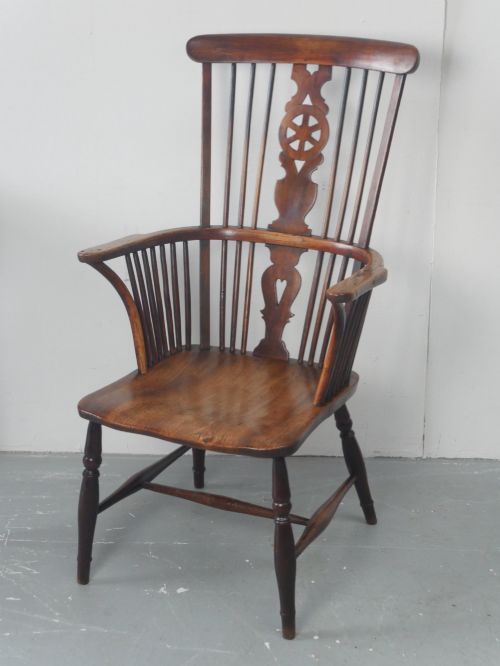
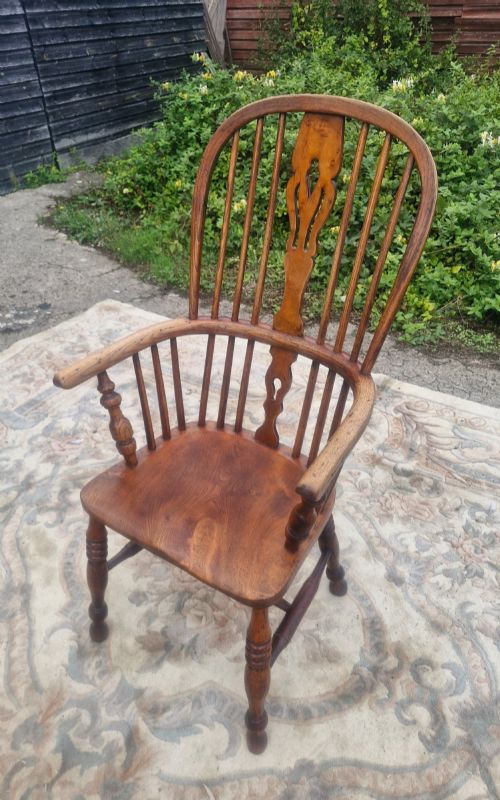
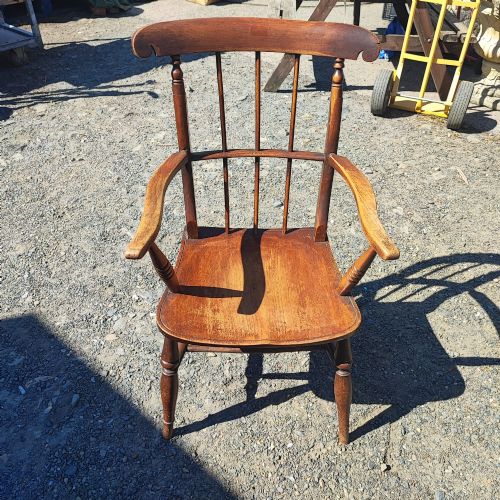
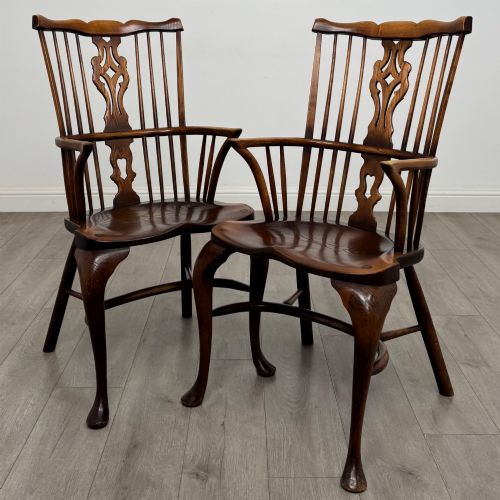
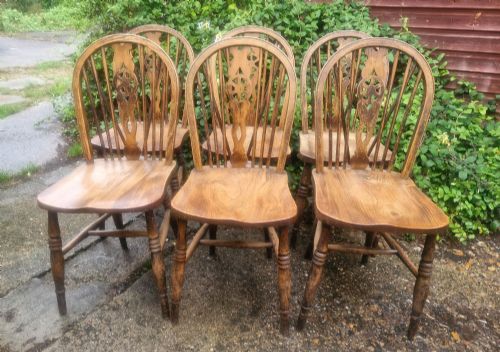
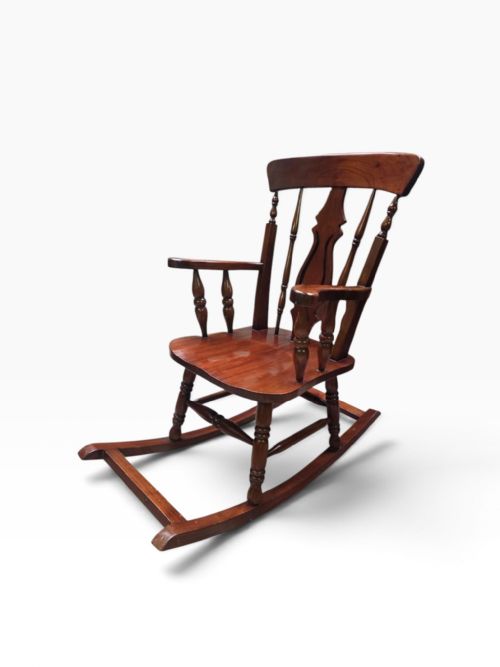
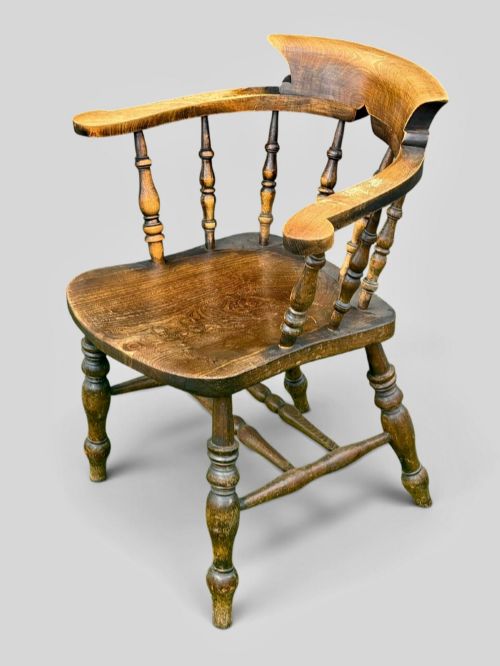
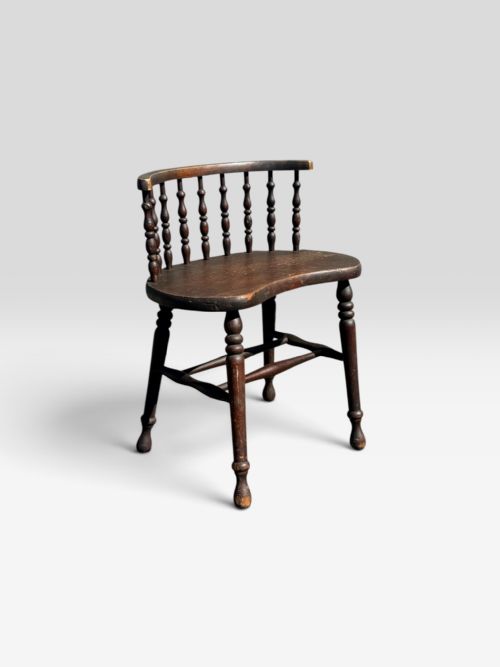
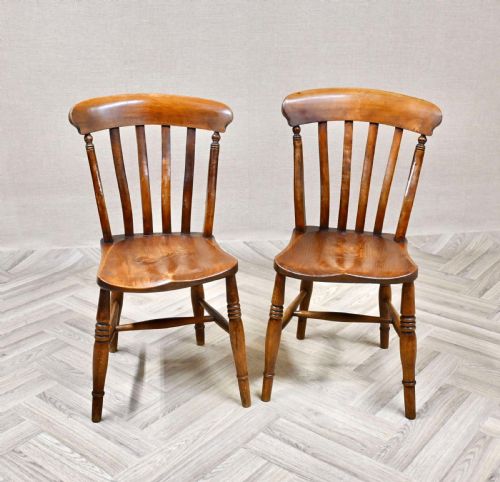
A brown wood windsor chair is a seating form defined by a solid sculpted wooden seat into which the legs and back spindles are wedged directly, moving away from framed upholstery. The listings show these pieces appearing primarily as individual armchairs, carvers, rocking chairs, and matched dining sets originating from the eighteenth, nineteenth, and early twentieth centuries. Makers created varied back designs across these periods, ranging from high-back and hoop-back variants to comb-backs, lath-backs, wheel-backs, and smokers bows.
The regional English country vernacular heavily influences the style, drawing from periods spanning the Georgian era, the Regency, and the Victorian age. Dining chairs and kitchen chairs appear frequently in sets, whilst larger armchairs often serve as singular focal points in a room. Buyers encounter these chairs styled within traditional country settings, farmhouse interiors, and vernacular domestic spaces.
Materials and construction
Makers utilised a combination of native timbers, predominantly pairing elm for the heavily carved, concave seats with ash, beech, yew, fruitwood, or oak for the structural turnings, bows, and spindles. This multi-wood construction allowed craftsmen to exploit the specific properties of each timber, using tough elm to prevent splitting under the wedged legs and flexible ash or yew for steam-bent hoops.
The traditional construction method relies on socketed joints where legs and spindles pass straight through bored holes in the seat slab, secured underneath with wedges. Additional stability comes from interlocking under-stretchers connecting the legs, creating a robust framework without relying on modern adhesives or complex joinery.
Brown Wood Windsor Chair Retail Price Guide 2026
Typical asking prices for brown wood windsor chair among the pieces listed under this phrase on Sellingantiques today, from the lower quarter to the upper quarter. They describe what is for sale here now, not the wider market.
Distinctions in quality
The hierarchy of quality in a brown wood windsor chair rests heavily on the choice of timber and the depth of figuring in the wood, particularly in yew and elm examples. Grain patterns with rich colour variation and patination elevate an individual piece above plain utility grades, whilst the subtlety of the carved saddle seat dictates the comfort and sophistication of the form.
Structural integrity and the preservation of original turned components also divide everyday vernacular seating from finer examples. Finer pieces maintain well-proportioned spindle turnings, clean steam-bent hoops without excessive repair, and makers' marks or stamps that confirm provenance.
J SPENCER
The Brown Wood Windsor Chair Glossary
- Windsor chair
- A chair built with a solid wooden seat that directly receives stick legs and back spindles, rather than possessing a separate framed back and legs.
- Comb back
- A Windsor chair style featuring a low hoop or flat horizontal crest rail intersected by vertical spindles that project upwards, resembling the teeth of a comb.
- Hoop back
- A continuous steam-bent piece of wood forming the top rail and arms of an armchair in a single curved sweep.
- Smokers bow
- A low-backed Windsor armchair with a rounded, continuous arm rail supported by short spindles, traditionally used in smoking rooms or kitchens.
- Carver
- An armchair designed to match a set of dining chairs, typically positioned at the head of a table.
Brown Wood Windsor Chair: Frequently Asked Questions
What is a windsor chair?
A windsor chair is a traditional wooden seat characterised by individual spindles and legs fitted directly into a thick carved wooden seat plank.
Unlike upholstered furniture, its strength comes from this peg-and-socket construction rather than an internal frame.
How do I date a windsor chair?
Dating relies on identifying specific back styles, timber combinations, and construction techniques associated with periods like the Georgian or Victorian eras.
Early pieces often utilise yew and ash with comb-back designs, whilst later nineteenth-century examples frequently feature wheel-backs or beech framing.
Where were these chairs used?
These chairs served primarily as functional seating in English country houses, farmhouses, kitchens, and vernacular domestic spaces.
Their robust construction made them suitable for daily dining, reading by the hearth, or kitchen work.
Are windsor chairs comfortable?
Comfort comes from the ergonomically scooped or saddled wooden seat base, which distributes weight evenly without requiring cushions.
High backs and supportive arm rails on carver variants provide additional support for extended sitting.