




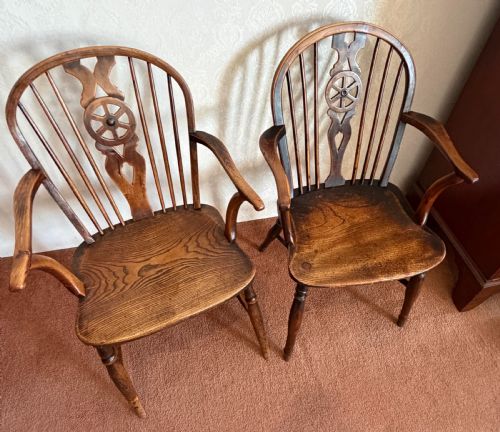


Antique Wheelback Armchair
An antique wheelback armchair brings sturdy regional character and time-worn timber into any room.
What these armchairs are
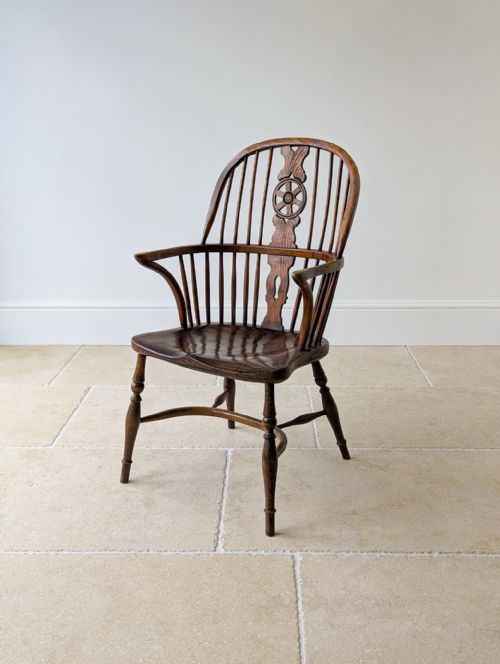
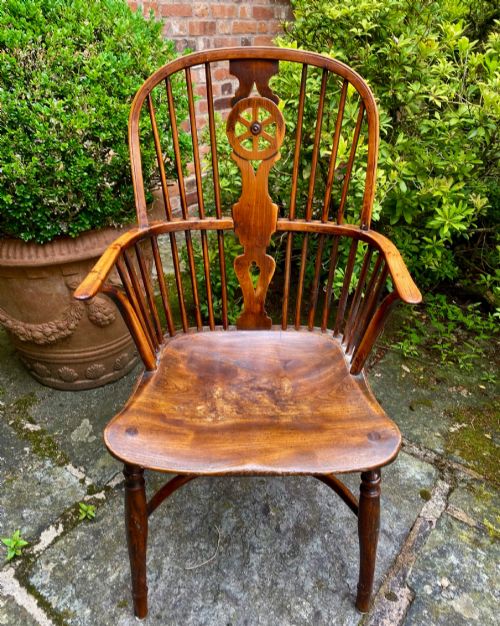
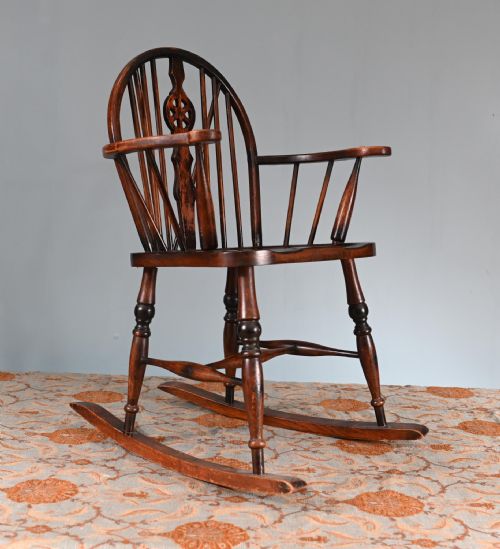
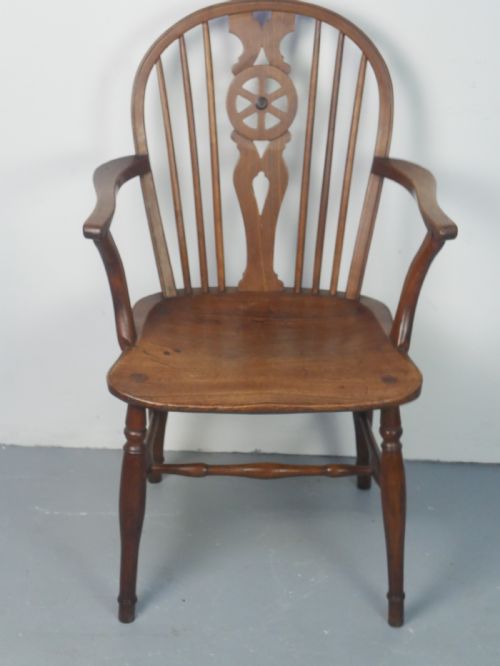
An antique wheelback armchair is a traditional seating form defined by its pierced splat shaped like a cartwheel, set within a stickback or comb framework. These substantial chairs serve as working seating, originating in English country workshops and kitchens where durability mattered most.
Most examples found here date from the nineteenth century, including Victorian and Regency periods, alongside specific years such as 1850, 1860, and 1920. The predominant configuration relies on an armchair or carver format featuring wooden arms integrated directly into the spindle structure.
The most common variations on this page combine elm seats with beech, ash, or fruitwood elements, occasionally finished in painted wood. Collectors encounter forms ranging from broad arm designs to high back kitchen armchairs and grandfathers.
How they were made
Craftsmen built these armchairs using traditional bodging techniques, turning green timber on pole lathes in woodland settings before assembly. Seats were typically carved from single thick slabs of solid elm, hollowed out with adzes to create deep saddle shapes.
Back assemblies combined steam-bent wood for the arched bows with turned spindles and central wheel motifs secured by wedges. Legs and underframes were joined to the thick seat base using wedged through-tenons and mortise joints, ensuring lasting structural stability.
Retail Price Guide 2026
Typical UK retail prices for wheelback armchair, calculated from the Sellingantiques database of over a million retail prices indexed since 2003. This retail price guide relies exclusively on Sellingantiques data; no external sources or auction records are used, so the figures do not describe the wider market.
Listings span the nineteenth century, Victorian era, and Regency period, utilising elm, beech, ash, fruitwood, yew, and painted wood.
What varies in quality
Quality in an antique wheelback armchair rests on timber selection, particularly the grain figure and thickness of the solid elm seat slab. Superior pieces display carefully chosen native woods with rich natural patination, whilst lesser examples utilise plain timber or heavy over-finishing.
The refinement of the turning work on the spindles and legs separates standard kitchen seating from finer parlor versions. A crisp, well-proportioned wheel splat and balanced arm scrolls indicate higher workshop skill during manufacture.
The Antique Wheelback Armchair Glossary
- Wheelback
- A wooden chair back featuring a pierced central splat carved and pierced in the shape of a spoked cartwheel. This decorative device became popular during the nineteenth century.
- Elm
- A tough, interlocking native hardwood heavily utilised for chair seats because it resists splitting when nailed or dowelled. Its dense grain creates a distinct swirling pattern.
- Carver
- A traditional term for an armchair, usually designed to sit at the head of a dining table or serve as a fireside seat. These pieces match simpler side chairs in a set.
- Splater
- The upright central piece of wood in a chair back, positioned between the stiles. In these chairs, it takes the characteristic wheel form.
- Bodging
- The traditional woodland craft of turning green wood components on a pole lathe. Bodgers supplied rough-hewn chair parts directly to urban and rural Windsor chairmakers.
Frequently Asked Questions
What is a wheelback armchair?
A wheelback armchair is a traditional wooden seat featuring a characteristic pierced splat shaped like a cartwheel.
These pieces combine sturdy country construction with comfortable timber seats, originating mainly from nineteenth-century workshops.
Which woods were used?
Makers relied on native British hardwoods, pairing thick solid elm seats with bent ash or beech for the bows and spindles.
Some examples also incorporate fruitwood or yew wood, occasionally finished with painted surfaces.
How do I date an armchair?
Dating relies on construction methods, tool marks, timber wear, and stylistic indicators from periods like the Regency or Victorian eras.
Earlier examples often display broader proportions and hand-turned components unique to regional bodger production.
Where should I place one?
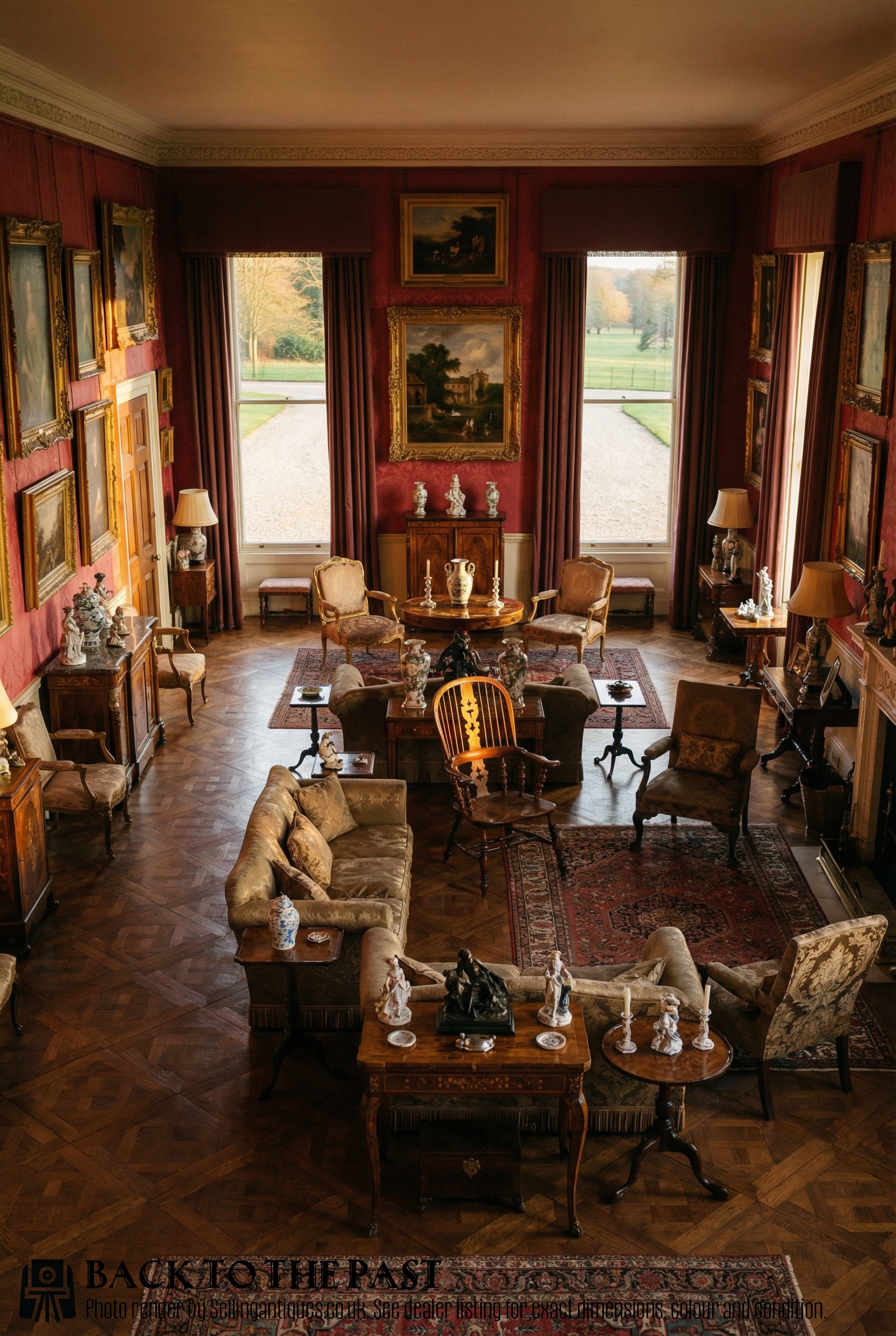
These armchairs suit studies, hallways, and living rooms as functional seating or standalone decorative accents.
Their warm timber tones and robust frames blend easily into both traditional and modern interiors.