






Wheelback Carver Chair
These wheelback carver chair examples bring solid country comfort to any room, offering robust construction and distinct timber character.
Wheelback Carver Chair
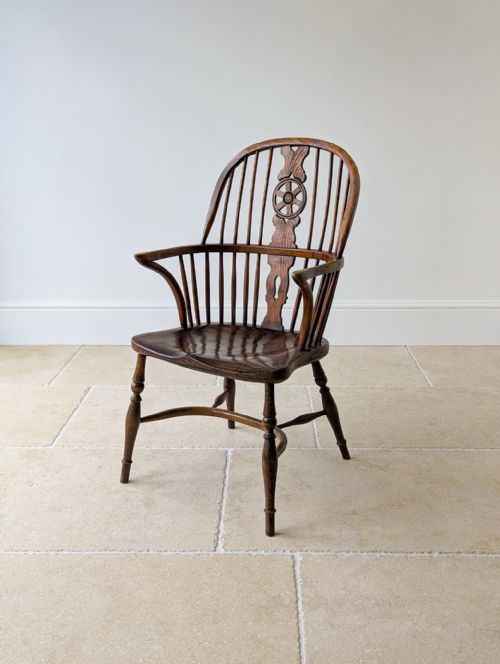
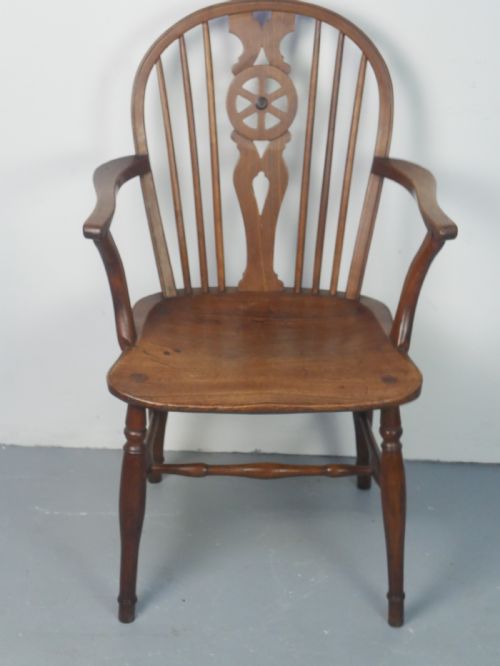
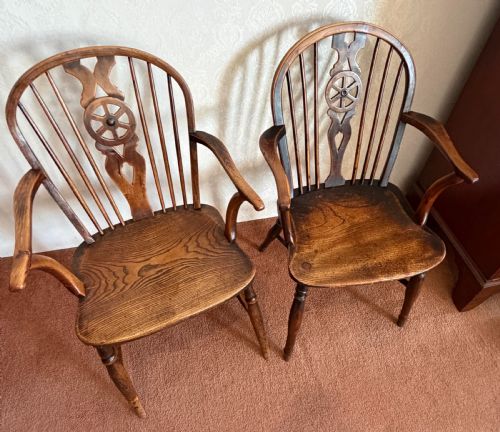
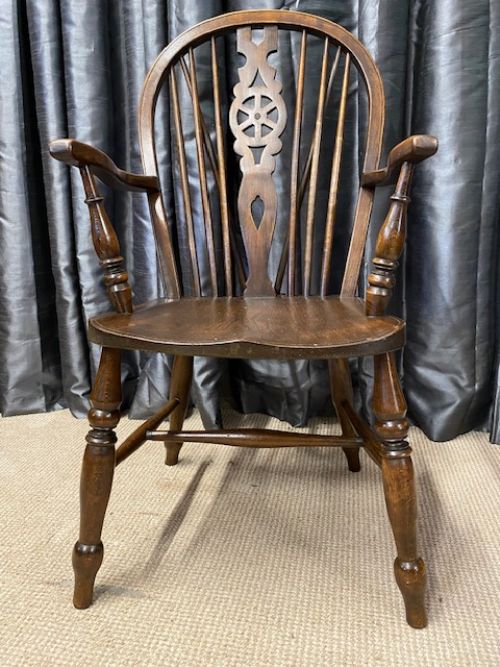
A wheelback carver chair is a substantial Windsor armchair featuring a distinctive pierced splat shaped like a wheel in the centre of the backrest. Buyers searching this phrase will find sturdy wooden armchairs designed for dining or fireside use.
The selections available here span several distinct periods, including Georgian, Victorian, Edwardian, and Regency eras. Many examples hail from rural English traditions, taking the form of robust farmhouse or kitchen seating.
These pieces function as both practical armchairs and sculptural focal points within a room. The armrests and carver proportions distinguish them from standard dining chairs.
How they were made
Traditional makers built these chairs using a combination of native timbers, frequently pairing an elm seat with ash or beech spindles and legs. Yew, fruitwood, and oak also appear, showing how regional craftsmen utilised available local woods.
The construction relies on Windsor techniques, where individual turned spindles and legs are wedged directly into a thick, scooped wooden seat. Steam-bending created the curved back bows and armrests that give the chairs their strength.
Makers occasionally carved tiny heart motifs into the wheel spokes to delight the household.
What varies in quality
Quality in these chairs rests upon the selection of timber and the crispness of the turned components. A well-figured elm seat with rich graining and a carefully pierced wheel splat distinguishes finer examples.
Structural integrity depends on the tightness of the original joints and the survival of the arm assemblies. Chairs that retain their original timber patina without excessive replacement parts hold greater architectural presence.
The Wheelback Carver Chair Glossary
- Carver chair
- An armchair, traditionally placed at the head of a dining table or used as a fireside seat. These pieces feature integrated armrests attached to the back bow.
- Windsor chair
- A chair built with a solid wooden seat into which the legs and back spindles are directly inserted. This method creates a sturdy, resilient frame without requiring heavy corner blocks.
- Splati
- The vertical central strip of wood within a chair back. In these pieces, that strip takes the pierced form of a wheel.
- Stickback
- A chair back constructed entirely from vertical turned spindles rather than a solid central splat. Several regional variations combine this form with the distinctive wheel motif.
- Bow
- The curved wooden upper frame that forms the top rail and arms of the chair. This component was typically steam-bent from a single piece of hardwood.
Wheelback Carver Chair: Frequently Asked Questions
Are wheelback carver chairs comfortable for daily dining?
These armchairs offer supportive high backs and sculpted wooden seats designed for extended sitting at a table. Their sturdy proportions provide a stable and upright posture.
Many owners add loose squab cushions to soften the elm seat for longer meals or reading sessions.
How can I tell a Georgian chair from a Victorian one?
Georgian examples often display finer turning on the spindles and lighter proportions in the ash and elm framework. They date from the late eighteenth or early nineteenth century.
Victorian and later nineteenth-century pieces tend to feature slightly heavier turnings and broader seats, reflecting changing domestic tastes and industrial improvements.
Can I mix different wood types around one table?
Mixing woods such as elm, beech, and ash is entirely appropriate for country seating traditions. Makers historically used whatever native timber was available locally.
Similar proportions and shared wheelback designs will unify the appearance even when the timber tones vary across the set.
What is the difference between a carver and a standard chair?
A carver includes integrated armrests attached to the back assembly, making it wider and more substantial than a side chair. These were traditionally reserved for the head of the household.
Standard chairs lack arms and were designed to tuck neatly beneath the dining table when not in use.