
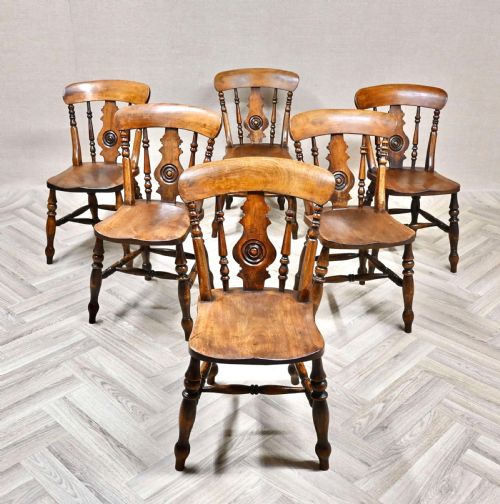
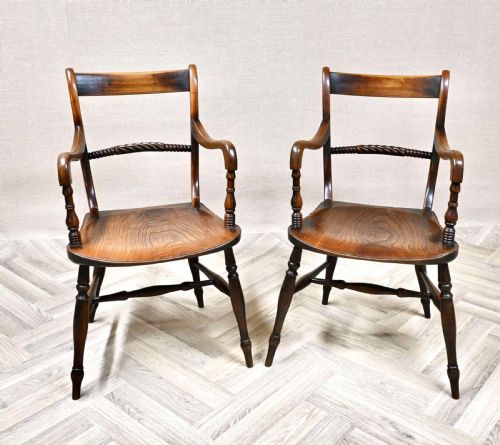
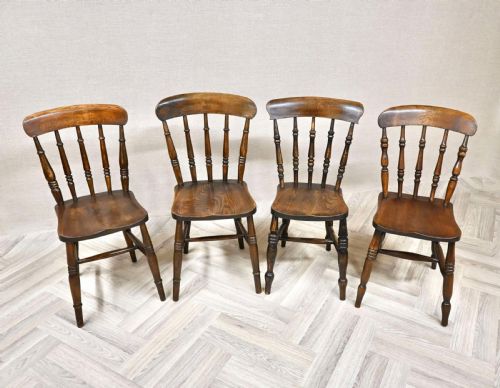
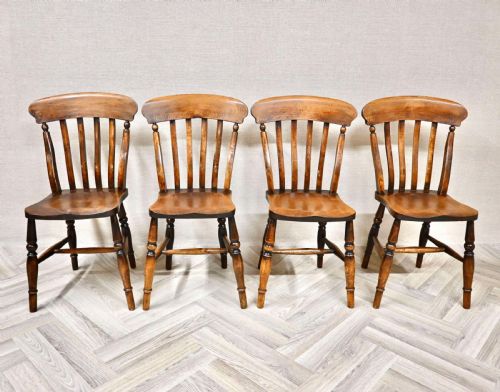
Elm Wood Dining Chair
An elm wood dining chair brings rustic character to a room through traditional vernacular craftsmanship and robust timber construction.
Elm Wood Dining Chair
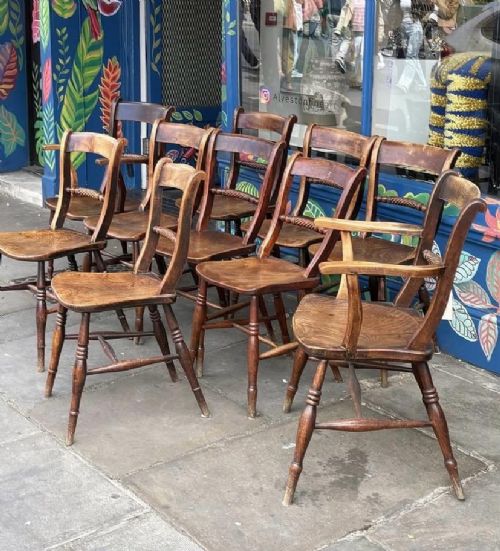
An elm wood dining chair encompasses vernacular seating forms designed for domestic dining and kitchen use across rural England. These pieces span centuries of production, appearing in single formats, pairs, and large matched sets.
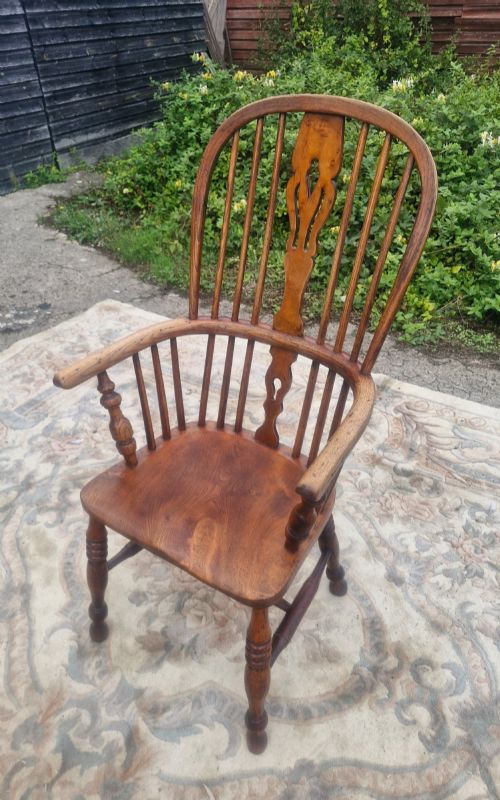
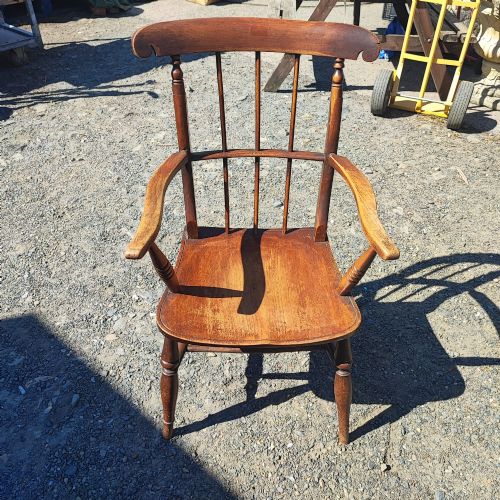
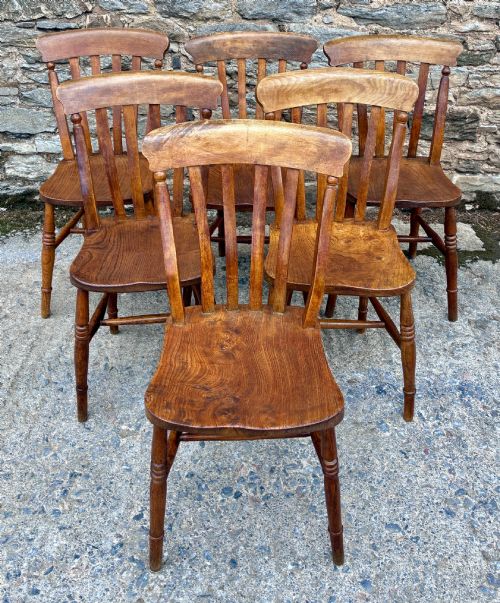
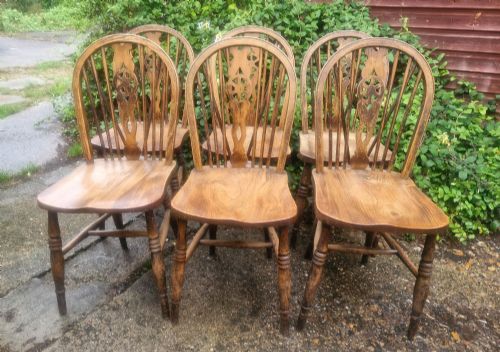
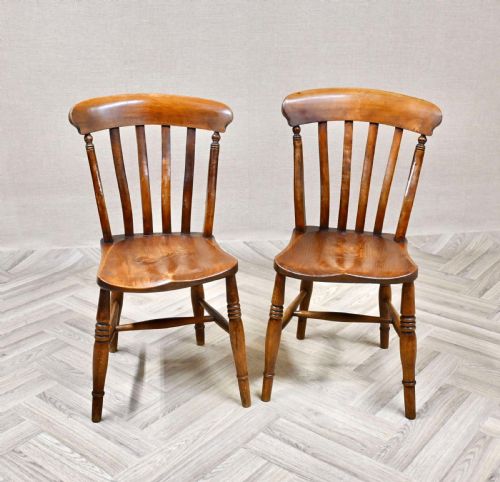
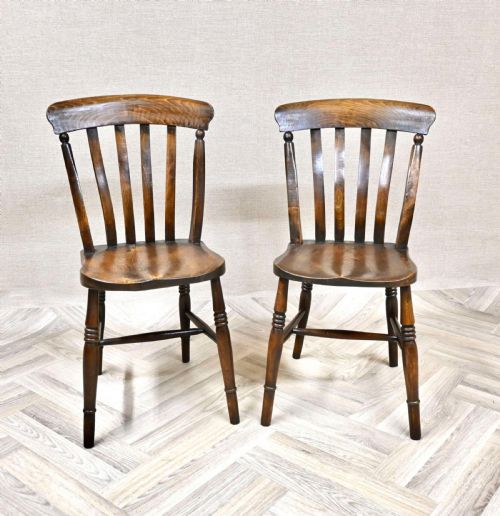
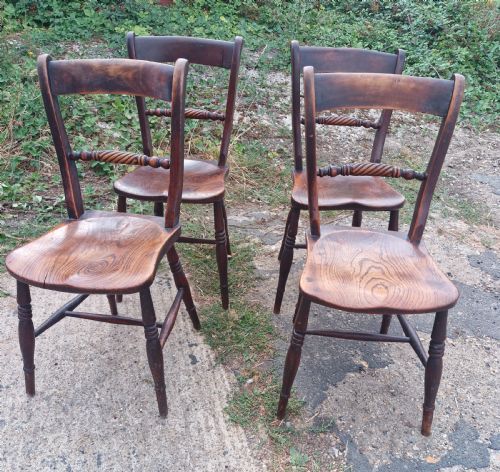
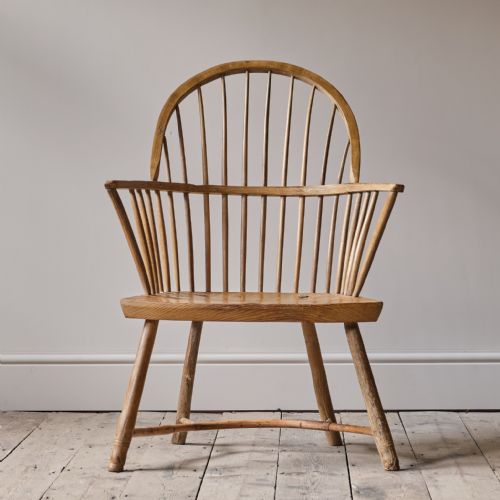
The most common examples on this page are Windsor chairs and farmhouse kitchen chairs originating from the 18th century, the Victorian era, and the early 1900s. These domestic seats utilise regional styles such as lathback, hoop back, barback, and stick back designs.
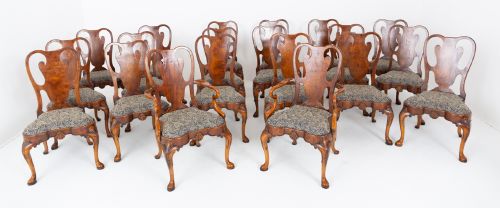
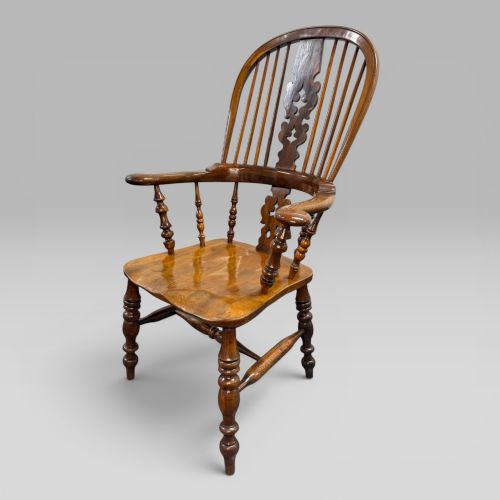
Buyers also encounter related seating forms including carver chairs, armchairs with crinoline stretchers, and side chairs. The historical origins range from simple country workshops to formal interpretations like Queen Anne style dining chairs.
Materials and Construction Techniques
Makers utilised elm for its tough, interlocking grain, which resists splitting and makes it ideal for shaped solid seats. Cabinetmakers and country joiners frequently combined elm seats with supporting timbers such as ash, beech, fruitwood, and yew for legs, spindles, and bentwood backs.
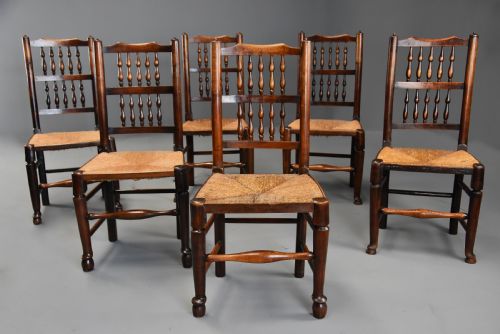
Traditional construction relied on bodging and Windsor framing techniques, where turned legs and back spindles fit directly into bored holes within a thick wooden seat slab. Steam-bending produced continuous hoop backs and armrests, while rush seating provided woven alternatives to solid wood.
Listings feature periods spanning from the 18th century through the Regency era and Victorian times up to 1920.
Assessing Quality and Character
Quality in these chairs rests upon the harmony of the timber selection and the elegance of the turning. Pieces featuring contrasting secondary woods like yew or fruitwood alongside richly figured elm display superior workshop ambition.
The integrity of the original construction dictates distinction, particularly where steam-bent components retain their fluid lines and turned stretchers remain tight within the seat. Surface wear that reveals a deep, warm patina enhances the visual weight of the timber.
The Elm Wood Dining Chair Glossary
- Windsor chair
- A wooden chair built with a thick solid seat slab into which the legs and back spindles are driven directly. These traditional seats often feature bentwood hoops and carved saddle seats.
- Crinoline stretcher
- An arched or curved underframe connecting the legs of a chair to provide structural stability. This horseshoe-shaped brace is typical of better quality 19th-century Windsor armchairs.
- Lathback
- A chair back featuring flat wooden slats or laths arranged vertically within a frame. This design offers robust support and appears frequently on farmhouse kitchen seating.
- Rush seat
- A seating surface woven from dried marsh rushes twisted into cords. This traditional technique creates a textured, supportive base often found on country dining chairs.
- Patina
- The surface sheen and mellow colour developed by wood over decades of handling and use. A deep patina reflects age and continuous domestic service.
Elm Wood Dining Chair: Frequently Asked Questions
How do I care for an antique elm chair?
Keep wooden chairs away from direct heat sources and sudden temperature fluctuations to prevent the elm seat from splitting.
Apply a microcrystalline wax periodically to nourish the timber and maintain the natural surface sheen.
Are these chairs comfortable for daily dining?
Many traditional country chairs feature ergonomically scooped wooden saddle seats designed for extended sitting during meals.
Adding loose seat pads provides extra cushioning while preserving the exposed timber aesthetic.
How can I date an elm kitchen chair?
Examine the construction marks, tool traces beneath the seat, and the wear patterns on the feet and stretchers. Earlier examples from the 18th century often display hand-carved saddle contours and distinct timber grain.
Victorian and later 19th-century pieces tend to show machine-turned spindles alongside standard assembly methods.
Can I mix different styles around a dining table?
Country dining furniture adapts readily to mixed seating arrangements through shared material palettes like elm and ash. Pairing carver chairs at the table heads with simpler side chairs along the sides creates a balanced room layout.